
Japan’s Anime Revolution! is a very good book by Jonathan Clements, one of the most respected English-language authorities on anime. It’s worth saying that right off, as this book is saddled with an issue that might deter readers from picking it up in the first place.
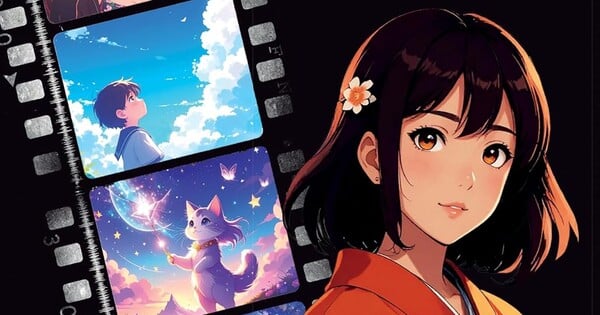
The cover, by all appearances, is AI-generated. The images might just about pass as cheesily off-model promo artwork, but they don’t depict any anime I can identify, and certainly none of the anime covered in the book. Moreover, in the review PDF I’ve received, there’s no mention of the cover art at all, no copyright or artist credit.
The conclusion is obvious and insulting, but I believe in the saying about books and their covers. My comments below, and the score I give at the end, are based on the book’s interior, which I think is the only fair way to judge it.
At the risk of annoying Clements, I’d suggest an alternative title for the book could be Anime: A Popular History. It takes the reader on a journey from the 1940s to the 2020s, using twenty anime films as stage posts. A few could be described as deep cuts, especially the first in the book, which is the 1945 war propaganda film Momotaro’s Divine Sea Warriors, the first ever anime feature.* But most of the films are far more familiar, and several are icons today.
Akira and Ghost in the Shell are here; so are Totoro, Spirited Away and Pokémon: The First Movie, and your name. and A Silent Voice. Then there are The First Slam Dunk, Perfect Blue, Honneamise, and a look-in for videogame adaptations with Street Fighter II: The Animated Movie. Going back a bit, there are also the first films of both Yamato and Gundam. Many anime fans will be familiar with all of these.
Clements ties them together in an ongoing story, highlighting the changes in technology and target audiences, and how these changes could coincide. For instance, there was a surge in the number of older self-identified anime fans in Japan in the 1970s and 1980s, which Clements describes vividly in the chapters on Yamato and Gundam. That coincided with the birth of OVAs, anime specifically for home video, which were suddenly freed from the restrictions of TV.
In such ways, Clements’ book goes beyond just discussing cinema films, although he includes an eloquent defence of the cinema experience. “A constant surprise to me, in my festival activities, has been the number of attendees who have never seen an anime in a cinema before,” he writes. (Clements is the long-standing host of the Scotland Loves Anime festival.) “They are amazed by the sight of a giant robot that really towers above them, the end of the world delivered in surround sound, and the collegial atmosphere not only of an audience that enjoys the film together, but of the presence of the director themselves, ready to talk about their work.”
Nor does Clements keep himself out of this history. As he puts it, “It is sometimes difficult for me to separate my own life experience from the stories of the films I discuss.” Of the twenty films in the book, he was involved in promoting the English-language releases of thirteen of them. In many cases, he’s spoken to the directors, both on festival stages and privately.
During the book, Clements describes the fearsome father of Gundam, Yoshiyuki Tomino, slapping a Gainax producer with a fan during a stage event. But he also recalls, “Tomino and his wife would happily sit for hours in their limo, traversing the winding roads of the Alps, to look at a single bucket-list painting or statue in a museum or cathedral.”
Clements describes Naoko Yamada crying at a screening of her own film A Silent Voice; how Makoto Shinkai was keener to study the designs of Edinburgh door handles than appear at public events; and how Mamoru Hosoda lamented that his children preferred PAW Patrol to the films they had inspired their dad to make.
These are great stories, and Anime Revolution’s chapters each read like good, chunky tales in themselves. Other books go through outstanding anime titles, but in restricting himself to only twenty films, covered in up to ten pages each, Clements’ accounts are detailed and grounded.
Hence my joke at the start. As many ANN readers know, Clements previously wrote the magisterial Anime: A History (I interviewed him about the first edition in 2014, and then about the extended second edition in 2023.) That History was an invaluable study, but heavy-going by nature. Its focus was on anime as an ongoing, transforming, industrial process through the decades, not on any of its landmark titles nor the people who made them. Clements’ History is also full of the really deep historical cuts that Anime Revolution mostly omits, such as anime’s silent short films and the 1950s explosion in animated advertising.
Anime Revolution is much lighter reading, which doesn’t stop it from offering many illuminating points along the way. Clements notes, for example, how Ghibli’s improbable double-bill of My Neighbor Totoro and Grave of the Fireflies in 1988 allowed Japanese viewers to look back at Japan’s (relatively) recent history of the 1940s and 1950s, just as that era was ending. Emperor Hirohito, or the Showa Emperor, was fading after a reign that had started in 1926; he would die in 1989.
The book also points out how 1958’s Hakujaden, Japan’s first color animated feature, was based on a Chinese legend and aimed at that country’s market, only for that plan to be scuppered when Japan and China’s relationship suddenly soured. (How little times change.) Thirty years later, it was a different story when Akira conquered foreign markets. That film had Japanese-looking characters and kanji-spattered neon. It was aimed at domestic audiences, but also, Clements writes, “served an unexpected purpose overseas, emphasising Akira as a work of oriental mystery and dazzle.”
The book has an array of “did you know?” points. For instance, given the current release of The Mandalorian and Grogu, it’s fun to read that The Wings of Honneamise was double-billed in Japanese cinemas with Ewoks: The Battle for Endor. The First Slam Dunk had special “cheering screenings” in Japan where parents and kids cheered along as if they were at a real basketball match. A Silent Voice makes subtle use of a Japanese song called “The Kaiju Ballad,” about a lovelorn monster, reflecting the self-images of both of the film’s leads.
Then there’s a discussion of a battle in Street Fighter II, involving the woman fighter Chun-Li just after she emerges from a shower. The scene appeared in a range of cuts of varying explicitness, provoking fan reactions from bro leering to punch-the-air empowerment.
Of course, there’ll be inevitable complaints about the book’s omissions. There are no Masaaki Yuasa films, for instance (Mind Game would have been an obvious candidate). There’s nothing by Yoshiaki Kawajiri, and no anthologies like Robot Carnival or Memories. Other readers won’t forgive the omissions of Belladonna of Sadness, or End of Evangelion, Promare, INTERSTELLA 5555: The 5tory of the 5ecret 5tar 5ystem…
Some readers may especially complain about the book’s lack of Shonen Jump-related titles, with only The First Slam Dunk getting in. The blockbuster One Piece Film Red is an obvious recent omission, and two 2025 films could have gone together in a single chapter. I’m talking about Demon Slayer: Kimetsu no Yaiba Infinity Castle and Chainsaw Man – The Movie: Reze Arc, which conquered territories around the world despite being neither self-contained nor (in the eyes of many ratings boards) child-friendly.
Of course, these films were probably too recent to go into the book, a reminder that any print guide to anime is likely to date in months or weeks. Nonetheless, Japan’s Anime Revolution is a greatly enjoyable, informative read, even on films you thought you knew back to front. Hey, Pokémon fans! Did you know Mewtwo’s Japanese voice actor, Masachika Ichimura, was picked for that role because he’d played the masked hero in the stage musical of The Phantom of the Opera?
*To be precise, Momotaro’s Divine Sea Warriors was the first anime narrative feature. However, Clements acknowledges in a footnote that there was an earlier film, now lost, which may have been the first anime feature overall. It wasn’t a story but an instructional film made to train soldiers, with the thrilling title, Principles of the Wireless: Triodes.