
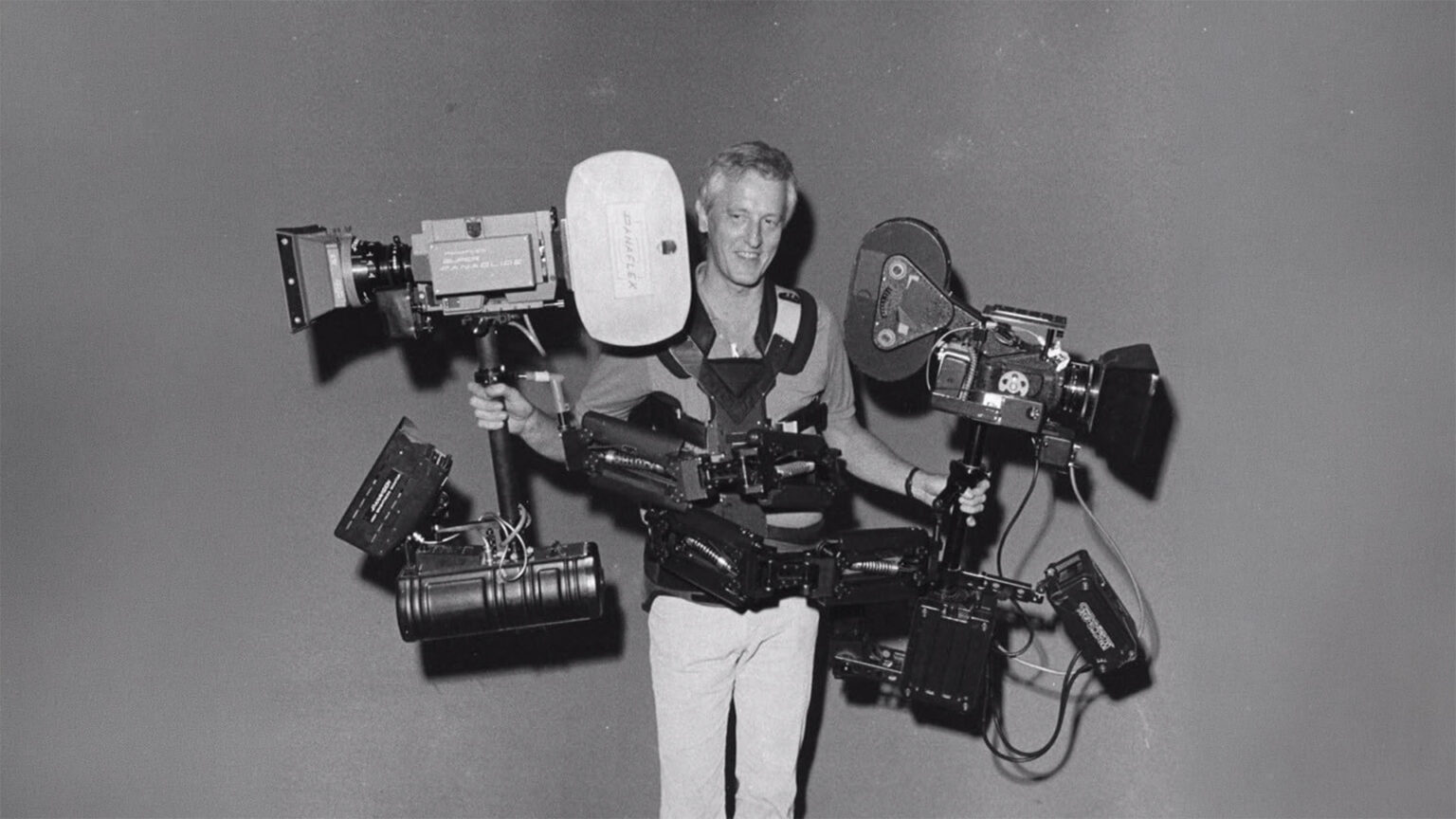
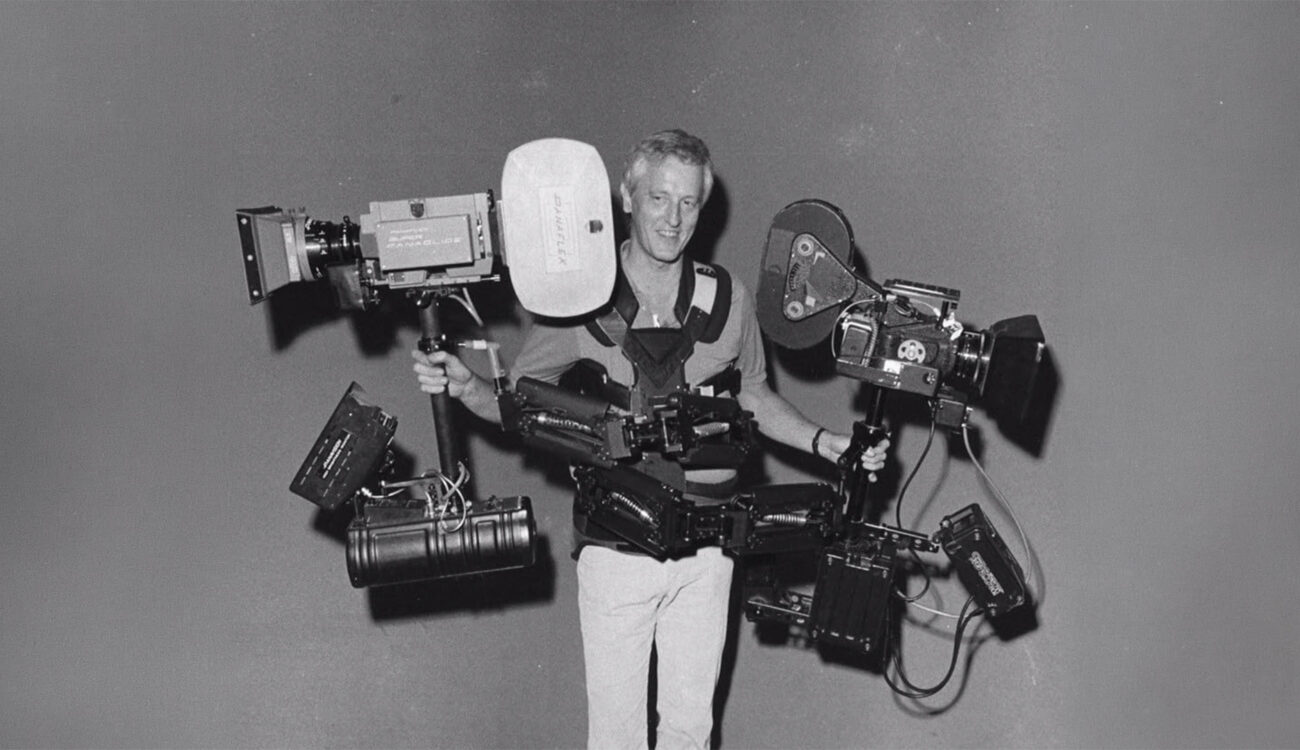
A feature documentary on Garrett Brown, the cameraman and inventor who freed the camera from tripods and dollies with the Steadicam, has begun principal production. Titled “Thank You Mr. Brown” and directed by longtime Brown collaborator Andrew Schwartz, the film counts Francis Ford Coppola among its executive producers and is shooting now in Philadelphia, New York, and Los Angeles.
For anyone who has ever balanced a rig on an arm and vest, walked a shot backward down a flight of stairs, or simply marveled at how a camera can seem to float, Garrett Brown‘s name carries enormous weight. The Steadicam he built in the mid-1970s reshaped how movies move, and its DNA runs through nearly every stabilization tool we use today, from mechanical sleds to the motorized gimbals that now dominate sets. This new documentary sets out to put the person behind those inventions on screen, tracing a career that touched cinema, television, music videos, and live sports.
Who is Garrett Brown, and why does this matter
Brown is credited as the inventor of the Steadicam, the body-worn camera stabilizer that made smooth, untethered moving shots possible without laying dolly track. Before his system arrived, a fluid tracking move generally meant a dolly on rails, a technology that had been around since the earliest days of filmmaking but that could only reach as far as the track allowed. The Steadicam changed that calculus, and its impact was immediate and lasting.
He did not just invent the tool, he operated it on some of the most recognizable sequences in film history. Brown flew the camera up the museum steps in “Rocky,” moved through the hedge maze in Stanley Kubrick’s “The Shining,” and captured the speeder bike chase in “Return of the Jedi,” beginning with his early work on Hal Ashby’s “Bound for Glory.” His inventiveness extended well beyond the Steadicam to systems including the SkyCam and the DiveCam, cable-suspended and specialty rigs that transformed how live sports and events are covered for television.
(For an amazingly insightful article featured on “The Steadicam and The Shining Revisited” by Garrett Brown originally published in American Cinematographer in August 1980, and republished in 2022, click here.)
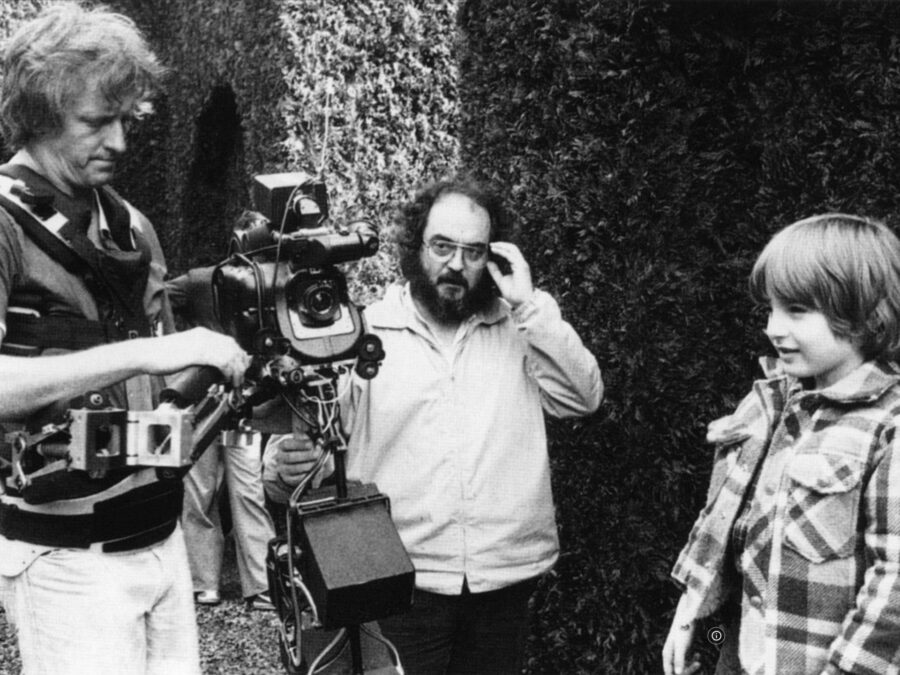 Garrett Brown alongside Stanley Kubrick and Danny Lloyd on the set of The Shining (1980). Image courtesy of Garrett Brown
The Motion Picture Academy has recognized Brown repeatedly. He received a 1978 Academy Award of Merit for the invention and development of the Steadicam, a 1999 Technical Achievement Award for the Skyman flying platform for Steadicam operators, and a 2006 Scientific and Engineering Award for the concept behind the SkyCam flying camera system. That trio of honors spans nearly three decades and underlines just how sustained his contribution to the craft has been.
The people behind the film
The documentary is directed by Andrew Schwartz, who describes Brown as a mentor and friend of nearly two decades. In a statement, Schwartz called Brown one of the most curious and energetic minds he has encountered, and framed the subject’s life story as equal parts Albert Einstein and Forrest Gump. He added that while Brown works on his own book, the film aims to pull back the curtain on someone who reshaped storytelling and image-making across movies, television, music videos, and sports.
Francis Ford Coppola executive produces alongside Lauren Zarelli Renaud for C’est What Studio. The start of production was announced by EBE Productions owner William Forbes, who also produces, together with Nick Ditri, who serves as producer and music supervisor, and Douglas Skinner (Name of the Game, John Henry) as line producer. Co-producers include Kim Berrios Lin, Colin Geddes, and Katarina Gligorijevic (Name of the Game, Mad God). Forbes said that everyone can learn from the persistence and grit that took Brown from building contraptions in his barn to changing movies, television, and sports.
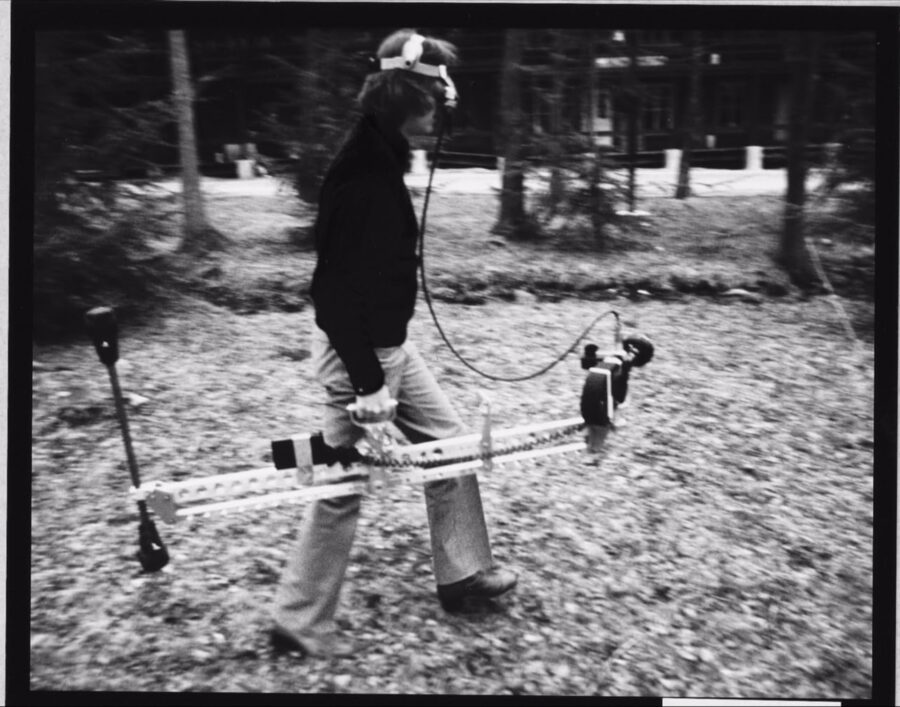 Garrett Brown with a prototype of the Steadicam. Image courtesy of Garrett Brown
The production has also lined up voices from the operating community. Among those interviewed is Larry McConkey, a pioneering Steadicam operator whose credits include Django Unchained, World War Z, 12 Years a Slave, Shutter Island, Carlito’s Way, and Sleepless in Seattle. McConkey has spoken about the Steadicam as more than a technical feat, describing it as a genuinely powerful way to tell a story that resonated with audiences and filmmakers alike.
This sequence from “Rocky” (1976) includes the legendary “stairs shot”, when Garrett Brown followed Sylvester Stallone up the stairs of the Philadelphia Museum of Art using the newly-invented Steadicam. From barn workshop to the modern gimbal era
Part of what makes this film timely is the moment the stabilization market finds itself in. The Steadicam brand was acquired by Tiffen in the year 2000, and the company has continued to develop the platform, most recently with electronically assisted systems like the Tiffen Steadicam Axis and the Volt technology we examined in our Volt 3 first look. Brown himself has remained a visible presence, lending his voice to products such as the Steadicam Volt smartphone stabilizer and speaking about what mechanical rigs can still do that gimbals cannot.
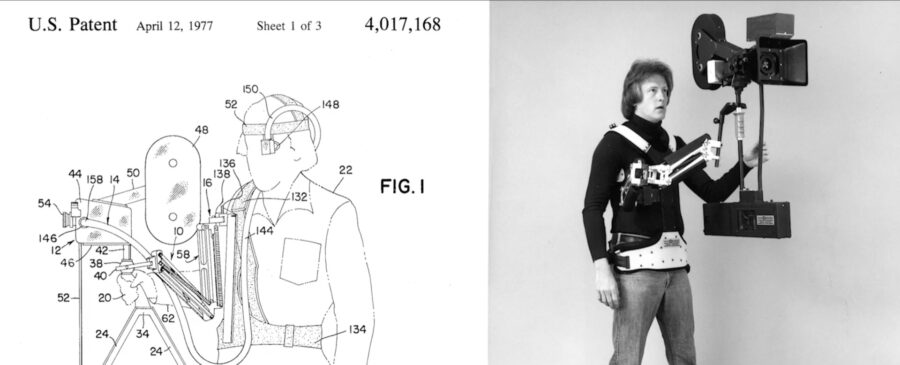 Garrett Brown protected his revolutionary invention of the Steadicam with a lot of patents. Image credit: Garrett Brown via Andrew Schwartz’s pitch reel for the documentary
At the same time, the broader category has shifted dramatically. Since Freefly launched its Mōvi line in 2013, motorized gimbals have flooded the market and made the idea of flying a camera far more affordable, a trend we have tracked through releases like the DJI RS 5 and high-end hybrids such as the ARRI TRINITY 2 and ARTEMIS 2. Steadicam-style rigs and electronic gimbals now coexist, each serving different camera weights, budgets, and shooting styles. A film about the origin of that entire lineage lands at a fitting moment, when the tools Brown inspired are more varied than ever.
The tradition Brown started also runs through the operators who carried it forward, including the late Dan Kneece, the David Lynch collaborator we paid tribute to and who learned directly in Brown’s orbit. Documenting the inventor’s own story helps connect those threads for a new generation of camera professionals who may know the gimbal in their hands far better than the barn workshop where it all began.
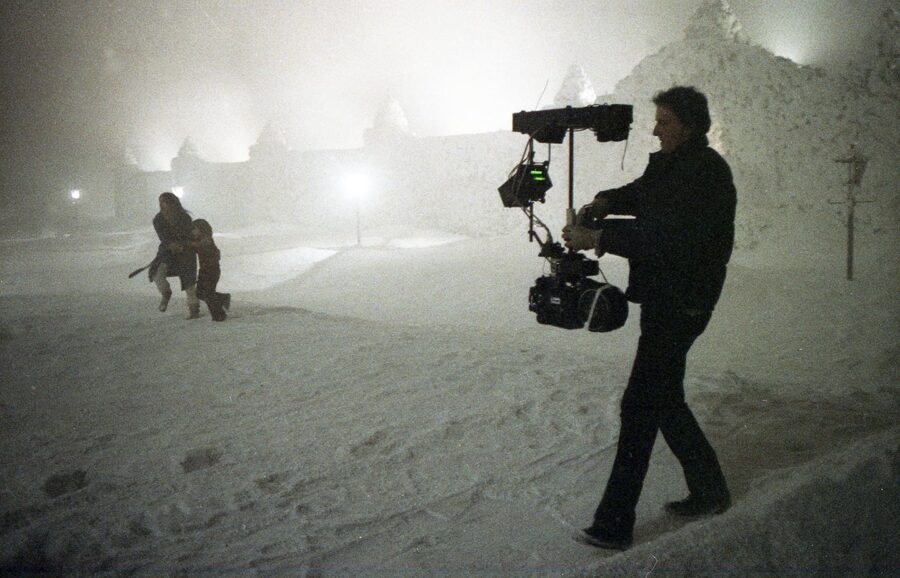 Garrett Brown on the Steadicam (right) tracking actors Shelly Duvall and Danny Lloyd through artificial snow on the Overlook Hotel and hedge maze exterior set at EMI Elstree Studios. Image courtesy of Garrett BrownWhen and where it is being shot
Filming is underway in Brown’s hometown of Philadelphia, the setting of “Rocky,” as well as in New York and Los Angeles. The production has not yet announced a release window or distribution plan, so for now the news is the start of principal photography and the notable names attached to it. We will follow the project as more details, including a release timeline, are confirmed.
A documentary finally putting the mind behind the Steadicam on screen feels overdue. Are you still flying a mechanical rig, or has a gimbal taken over your kit? Don’t hesitate to let us know in the comments below!