
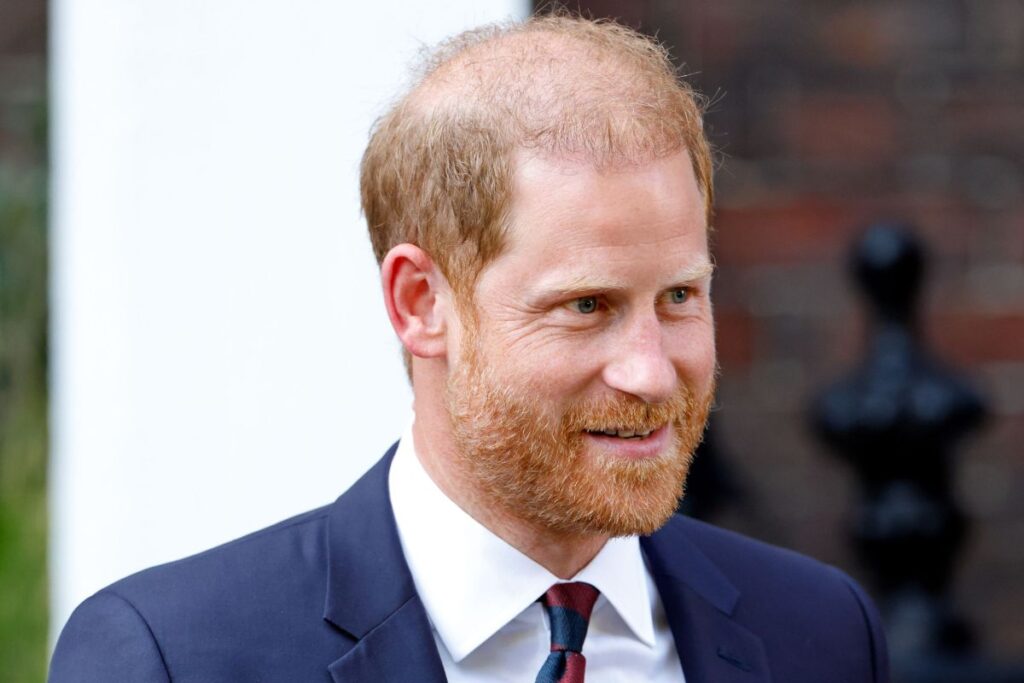
Prince Harry’s visit to the United Kingdom was intended to promote the Invictus Games and presented a potential opportunity for reconciliation with King Charles III. However, three major setbacks have overshadowed the trip and complicated his relationship with Britain.
Just two weeks ago, discussion around Harry’s return to Britain centered on plans to bring Prince Archie and Princess Lilibet to see their grandfather for the first time in four years. The context concerned rebuilding bridges and giving his children a chance to form lifelong memories with their grandfather, whom they hadn’t seen since they were aged 3 and 1, respectively—all positive developments for the Sussexes.
However, over 11 days, the narrative shifted dramatically as three significant setbacks pushed those more positive stories into the background.
Read More on Celebrity News
 Prince Harry’s First Crisis: Police Protection
The lead-up to the tour began well with a report by news.com.au on June 17 that the Sussexes would bring their children to the U.K., which was later officially confirmed on Friday, June 26, when outlets, including Newsweek, were sent an embargoed program for the visit.
Within hours, on Friday night, Harry was told by the U.K. Home Office that he would not be provided police protection for the trip, a decision Newsweek was later told left him “distraught.”
The following day, the couple’s team briefed news organizations that Harry was reconsidering whether it was safe to bring his wife, Meghan Markle, and their children to Britain, given that there was no police team to protect them while in the country.
Newsweek was told that King Charles had offered Harry accommodation at a royal residence but that the monarch could not intervene to request protection for Harry because it was a decision for the British government to make. Buckingham Palace has armed police guards, so the couple would have had de facto protection while inside.
A spokesperson for the Sussexes went on the record on June 29 with a statement to Newsweek: “Safe accommodation is only one element of an effective protective security plan because risk follows the person, not the place. The issue has never been accommodation.”
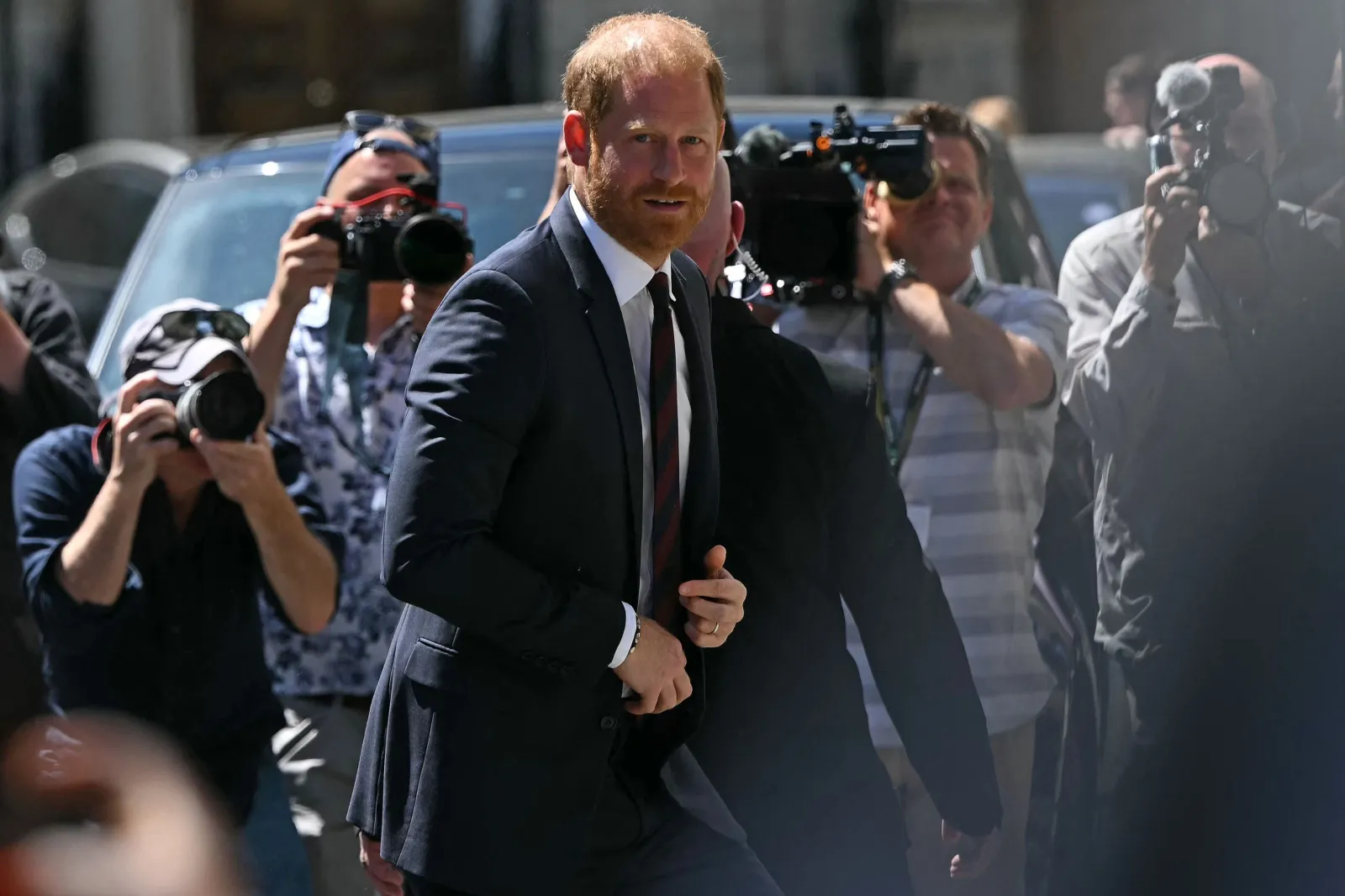
Newsweek was told at the time that there was deep suspicion in the Sussex camp of the palace’s position because members of the Royal Household sit on RAVEC (the Royal and VIP Executive Committee), the Home Office panel that takes decisions on who gets protection.
Among them is the king’s most senior aide, Sir Clive Alderton, a man who Harry nicknamed “The Wasp” in his book Spare, writing that “without warning, he’d give you such a stab with his outsized stinger that you’d cry out in confusion.”
Newsweek was told that some in the Sussex camp believed Alderton could have helped secure the prince’s police protection through his position on RAVEC, and there was mistrust about his role. The palace has always maintained that decisions on who gets protection are a matter for the government.
A court filing seen by Newsweek from a past lawsuit Harry filed against the British government to try to get his protection team back suggests royal aides sat on the committee to advise “the Chair on any specific matters relating to members of the Royal Family” and “help inform the Chair’s decision on whether any vulnerability mitigation and/or protection measures are appropriate at public expense.” The passages quoted RAVEC’s Terms of Reference.
Whatever the merits of each side’s position, a visit that began as a positive news story for the Sussexes focused on Invictus, an adaptive sports tournament for veterans, and reconciliation with family, had become about suspicion and mistrust between the two camps.
Newsweek was told, though, that Harry was not letting the dispute affect his relationship with his father.
Harry’s Second Crisis: Accommodation
That first setback directly contributed to the second, Newsweek was told. The news Harry would not get police protection meant he had to scramble over the following days to arrange additional private security. The Sussex camp said this delayed Harry’s decision on whether to accept the king’s offer of accommodation at Buckingham Palace.
Newsweek has been told that Harry pushed back on the offer that week, telling the palace it was not his first choice and urging that other royal residences be considered.
Driving his concerns was frustration with their belief that Charles’ aides had briefed the media that Buckingham Palace was the residence that had been offered, which they felt created security concerns, as it told photographers and any would-be attackers where to find the family.
On the other hand, Newsweek has been told that the palace asked Harry on multiple occasions during that week whether he wanted to accept the offer and that he repeatedly said he did not consider it suitable accommodation.
On Saturday morning, Harry rejected the offer in writing only to reverse course and accept it later in the day, by which point the palace told him the offer had been withdrawn. Newsweek was later told that this was communicated to Harry after consultation with the king, though none of this information had been made public at that point.
This media contains content some readers may find distressing or offensive. Viewer discretion is advised.
Click to display
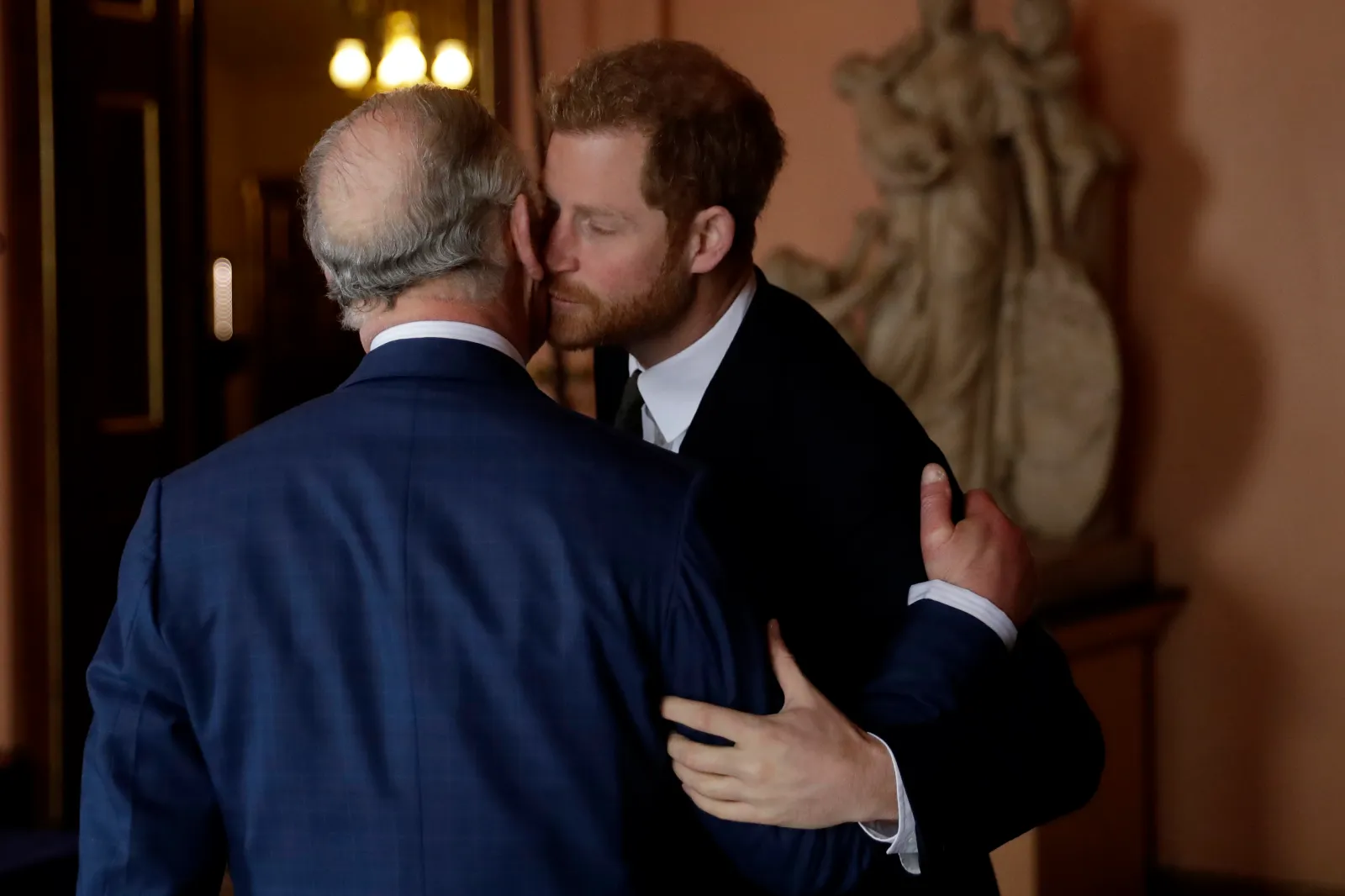
On Monday, the Sussex team told journalists Harry had accepted the offer of accommodation but would go to London alone, without Meghan, Archie and Lilibet, who might still join the visit at a later stage. This prompted a series of news stories.
Minutes later, the media, including Newsweek, were told the palace had, in fact, withdrawn the offer, stating that by the time he accepted, it was too late to provide the necessary staff and hospitality. The palace also flagged concerns over the proximity of his planned stay with the judgment, released on Tuesday, in his lawsuit against the publisher of the Daily Mail.
Hours before Harry’s arrival in Britain on Monday, his camp was dealing with competing accounts from the palace over who was to blame for the collapse of the offer of accommodation.
“The Duke spent last week making alternative security arrangements,” Harry’s spokesperson told Newsweek. “Once those arrangements were in place, he was able to formally accept the offer of accommodation for himself over the weekend. It is therefore disappointing that the offer has now been withdrawn.”
Newsweek was told the Sussexes felt the palace account was contradictory because of the two explanations: the timing of the acceptance and the proximity to the court judgment. Concerns were raised with Newsweek that the palace may have never expected Harry to accept the offer and therefore never intended to honor it. This clashes with the palace’s perspective that they asked Harry on multiple occasions to confirm whether he planned to accept the offer.
Newsweek was told that Harry still wanted to see his father and hoped it would be possible despite the friction. His team ensured there were multiple gaps in the schedule when time could potentially be found to meet.
Either way, the positive aspects of Harry’s visit to the U.K. were once again overshadowed by behind-the-scenes palace tensions over the logistics.
Prince Harry’s Third Crisis: A Court Defeat
The first two disputes had already created a complicated backdrop to Harry’s arrival in Britain on Monday night, but he put that behind him with a visit to Picturehouse Central in London for the premiere of Shoot The People, executive-produced by his friend Misan Harriman.
On Tuesday, Harry attended the first official engagement of the trip, a conversation about his Invictus Games Foundation at respected think tank Chatham House, in London. Harry told delegates: “Every one of us believes that those who have served their country, and in particular those whose lives have been changed by that service, deserve more than our gratitude. They deserve opportunity.”
About half an hour after his arrival, the High Court released its judgment in his lawsuit against Associated Newspapers Limited, the publisher of the Daily Mail and The Mail on Sunday, in which Associated Newspapers successfully defended all claims. Harry was one of seven claimants.
The prince had accused journalists and private investigators of breaking the law to get stories about him, including hacking his voicemail, tapping phone lines and “obtaining private flight information for my former girlfriend, Chelsy Davy, amongst other criminal methods.”
Judge Matthew Nicklin ruled none of the seven claimants, including singer Sir Elton John and actors Sadie Frost and Elizabeth Hurley, had proven illegal practices took place, while the court accepted the lawful explanations offered by the Mail’s journalists, who gave evidence in court.
Amber Melville‑Brown, global head of media and reputation at international law firm Withers, told Newsweek: ”Put simply, however badly they believed the media may have behaved, they were unable to prove, on the balance of probabilities, that the articles about which they complained were the product of unlawful information gathering (UIG) by this defendant.”
Legal costs in the case have been reported at around £50 million ($67 million), and a hearing will be held on July 29 and 30 to determine who should pay.
Harry and Meghan have won a number of past lawsuits, including against Associated, so the prince may wish to reconcile this defeat against those wins.
However, several factors mean the PR implications of the loss are more complicated than that. Firstly, in January 2023, Harry said that reforming the British press would be his “life’s work.”
As this was the final case Harry filed against Associated Newspapers, the outcome may complicate efforts to present his wider campaign against alleged press wrongdoing as an unequivocal success.
“Litigation can be a powerful tool to restore a damaged reputation, but it is not for the faint-hearted,” Melville‑Brown said. “Until judgment is handed down, the claimant can tell the story—afterwards, the judgment tells it. When asking a court to determine legal rights, litigants must be alive to the likelihood that the court result will, inevitably, also influence the court of public opinion.”
Harry released a statement alongside a fellow claimant, racial justice activist Baroness Doreen Lawrence, suggesting the ruling was “a complete and obvious whitewash, but sadly not altogether unexpected.”
“The lengths to which the Court has gone to exonerate the Mail is as shocking as it is totally unwarranted,” they said. “When the Court says there is not sufficient evidence of wrongdoing, despite the documents showing otherwise, then one does wonder how justice was ever going to be achieved.”
Melville-Brown said: “There an old saying that a bad workman blames his tools—a losing litigant may equally be tempted to blame the judge. But neither response is a good starting point for reputation restoration.”
That mirrors his earlier statement about another lawsuit he lost against the British government to have his police protection reinstated, which was dismissed by the Court of Appeal in May 2025. At the time, Harry gave an interview to the BBC in which he described the ruling as a “good old-fashioned establishment stitch-up.”
This means there is a common thread among all three major setbacks and his wider campaign to get his police team back through the courts.
The more distinct claims of institutional wrongdoing a public figure advances, the more cumulative demands are placed on the audience’s belief. Judgments that audiences reach about one claim may influence how they assess the others.
In Harry’s case, the narrative extends beyond the palace and RAVEC to include judicial decisions by two High Court and three Court of Appeal judges. As more institutions become linked to the same overarching account, public perceptions of those disputes may become interconnected.
The three controversies are distinct but linked by a common theme: Harry’s contention that powerful institutions have treated him unfairly.
As a result, public perceptions of each dispute may not be formed in isolation. Readers who find one of those claims persuasive may be more inclined to accept the others, while those who doubt one may begin to question the wider narrative. The effect is that each new controversy raises the stakes for the others.
Contact Newsweek editors on this story: Daniel Orton and Sam Wilson.