
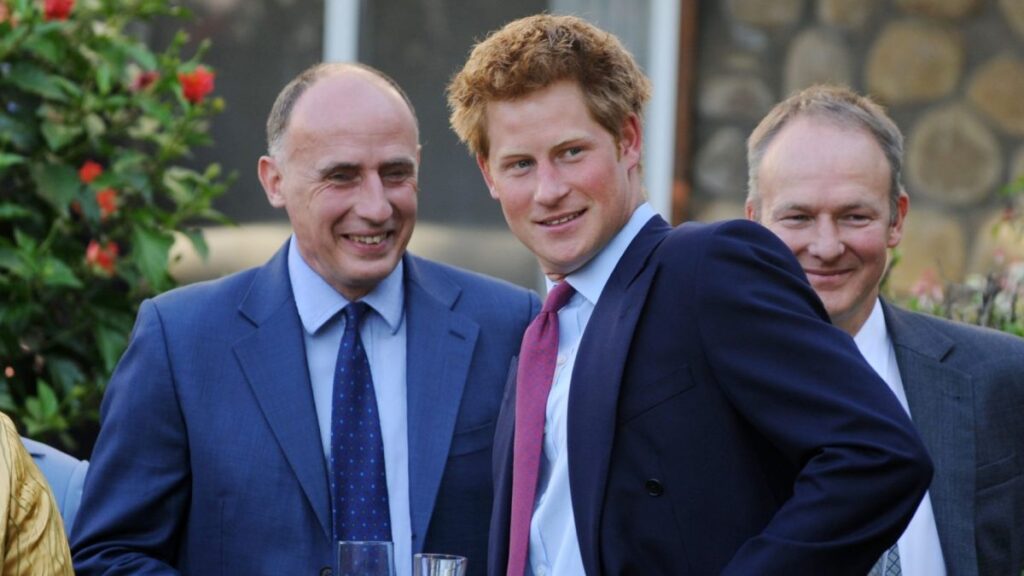
Jamie Lowther-Pinkerton has never been to Club H, the infamous club in the basement at Highgrove House, where Princes William and Harry used to invite their friends to party away from the prying eyes of the press. In fact, he’s never even heard of it, he says, which seems bizarre for someone who was private secretary to the princes (and, latterly, Catherine, now the Princess of Wales) for eight years from 2005, when the boys were in their twenties. “Oh that,” he nods when I explain what it actually was. “Oh, I do remember it, but, you know, I was working for them, there had to be a line. They were very sweet, but if I had gone to this club and reverted to scallywag type it would have been very difficult.”
In Harry’s wildly successful and controversial memoir Spare, Lowther-Pinkerton (or JLP as the princes used to call him) is not a scallywag but one of the few royal staffers about whom the Prince is nice. He describes him as “deeply calm, slightly stiff… he didn’t deal in bullshit. He didn’t give it, didn’t take it… his finest trait was his reverence for the truth.”
JLP was the man to whom Harry went when he wanted to see photos from the night his mother, Diana, Princess of Wales, died, and the man whose counsel helped fix the bad press after young Duke dressed up as a Nazi at a fancy-dress birthday party. “That particular occasion was just lack of thought,” says Lowther-Pinkerton now. “Nothing needed to be explained to him, the moment it came out he went, ‘what an idiot’… and afterwards it was his motivation to go back to Berlin and honour the people he had offended. They were both bright lads, in their own way.”
My own experience of JLP, now 65, as we meet over video call ahead of the launch of his (really rather good) debut novel – he in his study in his home in Suffolk – is that he is indeed deeply calm, although not especially stiff. He is careful in his references to his former employers but warm too. There’s clearly a lot of residual affection for both the future king and his brother, and a deep sadness at what has happened between them.
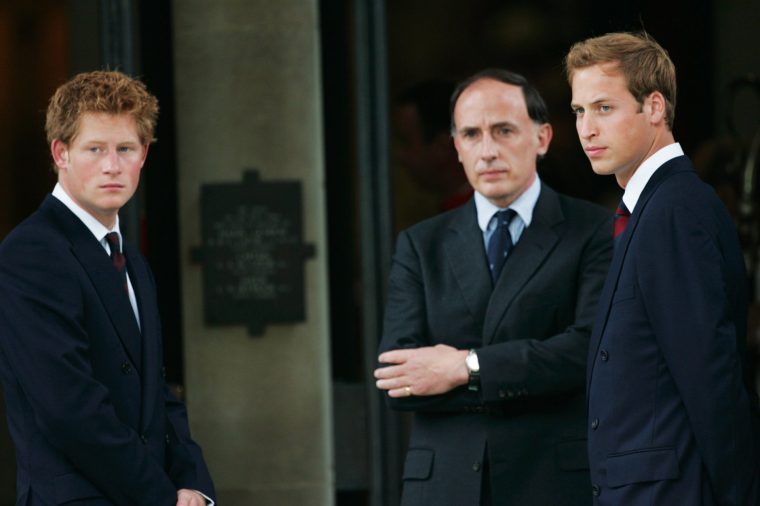 Lowther-Pinkerton with the princes at the 10th anniversary memorial service for Diana, Princess of Wales, in London in 2007 (Photo: Getty)
“I wasn’t around when the break happened, but what I can say is that when I worked for them the bond was very strong. No two ways about it. In their own ways, they are both remarkable people. So different. When they did things together, which actually you sort of had to ration because you didn’t want them to be insolubly joined at the hip, they were powerful. I always say William was like the Lion King, a natural born leader standing on his rock, and Harry was roaring around like a buzzy bee at the bottom.”
I wonder if he thinks the much-documented estrangement between the brothers, seemingly ongoing since Harry and the Duchess of Sussex left the UK in 2018, and since followed by the younger Prince’s explosive memoir, a Netflix series, an Oprah interview and other interviews arguably damaging to the Royal Family, can be mended. Lowther-Pinkerton sighs and smiles. “I am a perennial optimist.”
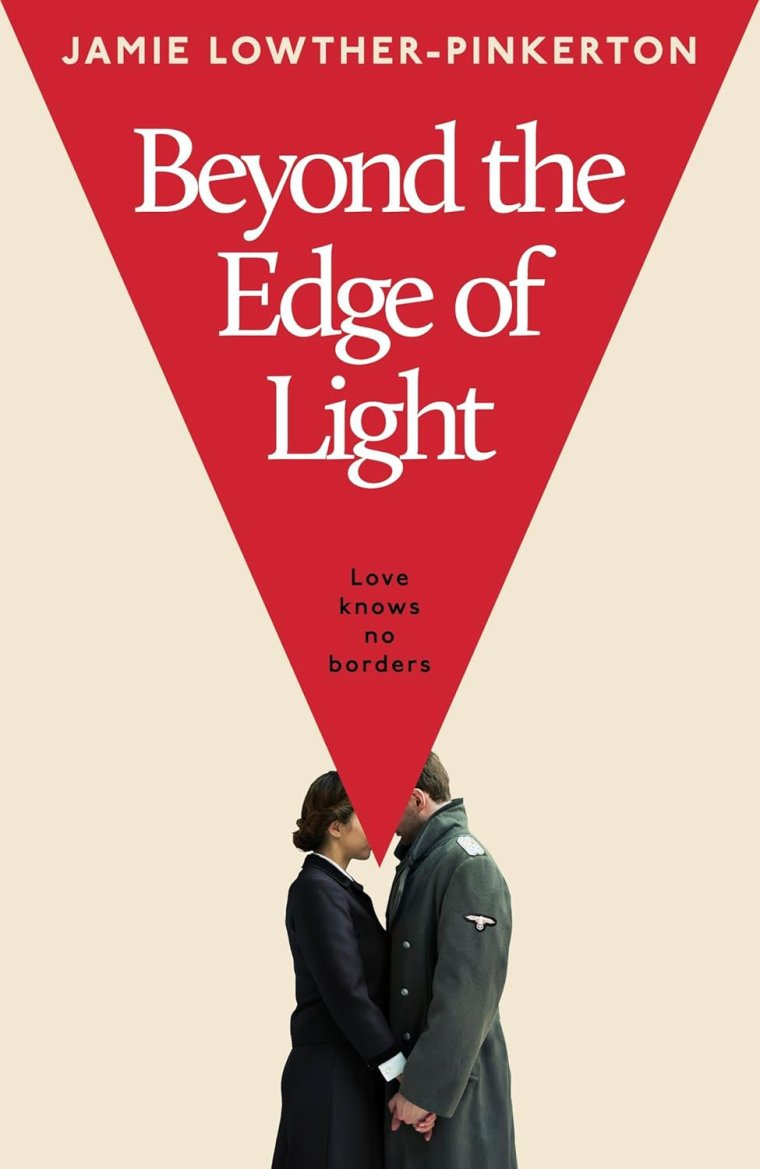
His book, Beyond the Edge of Light, is a historical romance that, it should be said, touches a lot on the subjects of honour, country and family. Given Lowther-Pinkerton’s background as a military man (he was an officer in the British Army for 20 years, serving in both the Irish Guards and the SAS, and went to Sandhurst and Eton, like his former employer, Harry) and royal staffer (he was also equerry to the Queen Mother between 1984 and 1986), his sudden turn to novelist seems surprising. Especially so when he tells me that he’s “not a big fiction reader at all” (“at Eton I really just read The Hobbit, The Lord of the Rings and Ned the Lonely Donkey”), although he has always kept a diary. He started writing the novel five years ago. “I just thought it would be the most fantastic escape, and it was.”
The book is an energetic and sensitively written tale about the Second World War, in which Missy, a young English woman fresh out of finishing school, finds herself in Berlin in the late 1930s as Europe teeters on the brink of war. There, she falls for Conrad, a thoughtful German who is horrified by the Nazis but finds himself conscripted into the Luftwaffe. Later, when war strikes, Missy is recruited as a translator at the wartime code-breaking centre Bletchley Park, and Conrad unhappily flies planes for the enemy: can their romance survive?
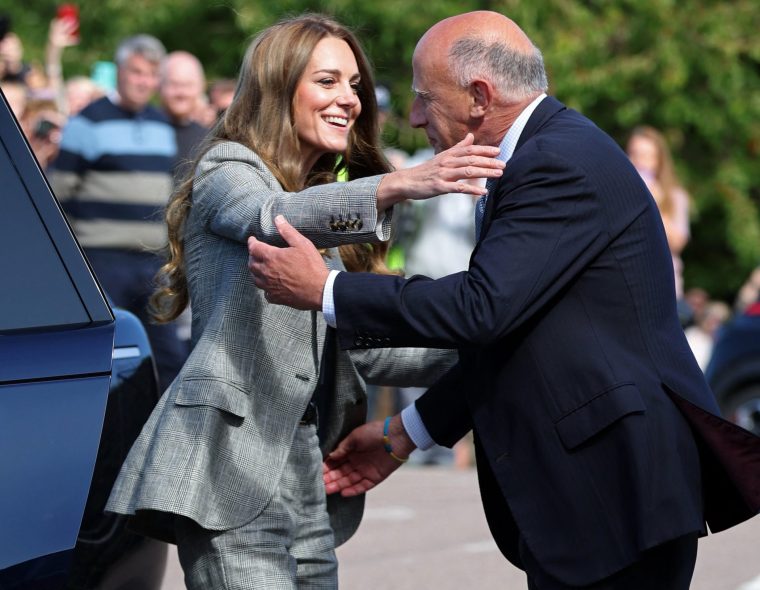 Lowther-Pinkerton with Catherine, Princess of Wales. Kate, he says, has ‘got a great moral compass and she’s a great partner’ (Photo: Chris Radburn/AFP)
It’s hard not to read into this story wry observations about love across national divides, themes that Lowther-Pinkerton must have known might easily be read as reflections on problems within the current British Royal Family. At one point, he references Wallis Simpson and King Edward VIII, that other member of the House of Windsor who abandoned his royal duties for an American divorcée. Was an American actress always going to be an essential challenge for the Royal Family?
“I don’t actually know. If people are right for each other, then it doesn’t matter where they come from. My mother and father were poles apart.” Lowther-Pinkerton’s mother, on whom the character of Missy was partly based (“If she thought somebody was behaving badly, she could be tough as hell”), was, like Missy, a “daughter of Empire”, growing up in India with her father a major in the Punjab. His father was of Anglo-Irish landed gentry stock, although also in the Army, so perhaps not to most people’s eyes quite as different as a British translator and German solider in wartime. Or indeed, an English prince and an American actress.
At one point in the book, Lowther-Pinkerton writes: “Conrad or country? Duty or love?” In fact, the whole premise of the novel is, I observe, the exploration of whether or not one can have both. I wonder if he thinks it’s something the Royal Family think about a lot. “One of the things I don’t get – and I sound like my father – is this idea of, you know, family always comes first. If you’re a bomber pilot whose wife is expecting a child and you go over the border and that night she has the child, and someone says family comes first. Well, sometimes it simply doesn’t.”
Does he mean that duty has been a little forgotten in the younger generations? “Yes, I think probably it has.”
I believe Lowther-Pinkerton when he says he is a perennial optimist though, and can see how he might have been a source of great joy and kindness to two young men under a lot of public scrutiny. He is easy to talk to, jolly but serene. He talks with deep fondness about his wife (“I married the girl next door”) and his four children, now aged 18 to 27. And despite the confession that he himself usually reads historical non-fiction, he’s clearly a bit of a dreamer. “It’s a funny thing about soldiers; they are actually quite sentimental and romantic. Your thoughts flick back to home and you know who’s waiting for you there.”
His first job with “The Firm” was as equerry to the Queen Mother, when he was just 22. “I adored her. The thing that annoys me about The Crown is the way they portrayed her. They made her look like this sort of whiskey-guzzling, ineffectual [sort of person]. She was the most extraordinary, tough, kind woman.”
Then later, when he was in his forties, he became private secretary to the princes. “That a was completely different job. With the Queen Mother, that was really an Edwardian household. If you’d taken it and plonked it down in the middle of Downton Abbey it would have been run the same way. Nowadays it’s a much more corporate environment. I wasn’t a proper private secretary, I was a sort of companion. I guided and mentored them. And kept people off their backs. Because it was really important, you know, that in their twenties they had their time.”
Later, Catherine joined the household too. “[She] really is a remarkable person. If William had crawled the kingdom, north, south, east, west, he couldn’t have found anyone better than her. She’s got a great moral compass and she’s a great partner.”
He is godfather to William’s eldest son, Prince George, who, it has been announced just before we speak, will be going to Eton College, where William went and where Lowther-Pinkerton also went, as did his son. “I loved it, but it has also changed for the better since I was there. I think there’s a much better understanding now that children need to be with their parents.”
Does he keep in touch much with William, Harry and Catherine? “A bit, yes.” How do they feel about him writing this book? “The answer is I don’t know because I haven’t asked them. I just know that if I did I’d get a snort down the phone, saying, ‘come on Pinky, we know your background, we know you’re a bit of a scallywag’. Oh, if they see the steamy bits in there… I’m dreading people reading those.”
There are indeed some (rather beautifully written) steamy bits in Beyond The Edge of Light. But perhaps after the steamy bits in Spare, Harry, at least, will feel it’s all par for the course.
‘Beyond the Edge of Light’ is published by Bantam, £16.99