
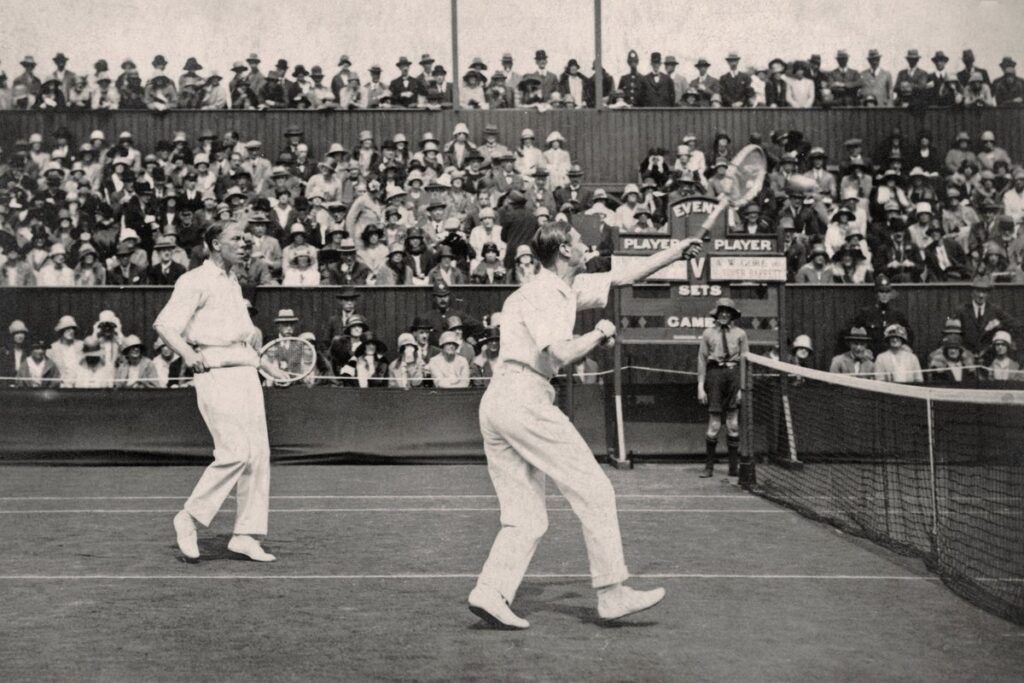
The Princess of Wales is a yearly presence in the royal box at Wimbledon, and when the winners are crowned this weekend, she will likely be on Centre Court to hand out the trophies. But over nearly a century and a half of the world’s most prestigious tennis tournament, only one member of the royal family has actually taken part in the competition.
One hundred years ago, a 30-year-old Prince Albert, the man who would become better known as King George VI, clutched his wooden racquet and walked out onto the All England Lawn Tennis Club’s No 2 Court, ready to compete in a first-round men’s doubles match. His partner was his long-time friend Sir Louis Greig, the grandfather of The Independent’s editor-in-chief Geordie Greig.
Not only was it Greig who had taught Albert, then the Duke of York, how to play tennis, but this no-nonsense Glaswegian doctor was also a mentor and confidant, helping the notoriously timid prince – who was never meant to take the throne – to grow into one of Britain’s most popular monarchs. One courtier even declared him to be “the man who made the Duke of York”.
As they took their places on the court, though, Albert seemed to return to being that self-conscious, timid schoolboy, overwhelmed by the scale of this sporting theatre. It would be up to Greig, the more confident sportsman, to take the lead. Albert’s wife Elizabeth watched on tenterhooks from the royal box, while the media watched her watching.
Greig’s friendship with Albert dated all the way back to the royal’s teenage years. The pair first met when the prince was a 13-year-old cadet at Osborne, the naval college on the Isle of Wight; he was shy, struggling with a stammer and sick with whooping cough. As a surgeon-lieutenant, Greig, the son of a Scottish merchant who had trained at the University of Glasgow before joining the navy, was called upon to treat the young Albert.
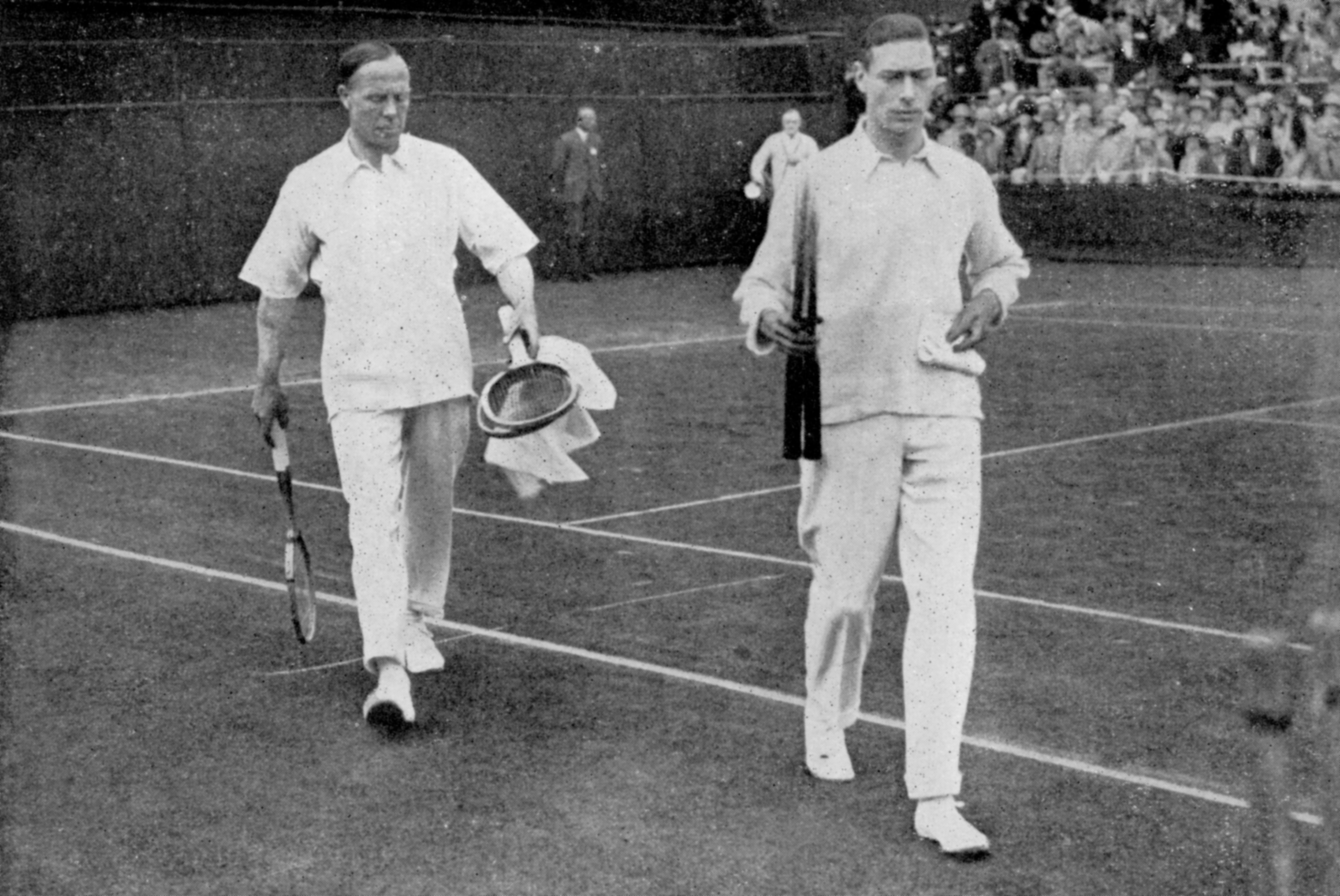 Multi-talented sportsman Greig, left, taught the prince to play tennis (Print Collector/Getty)
His assistance gained him the royal family’s favour – although Greig, who had a fondness for colourful language, had previously caught King George V’s attention during a rugby match, when he dropped a ball in front of the royal box, then hastily self-censored his outburst to “oh b-…other” after realising who was watching. Greig played for Scotland and took part in the British Lions tour to South Africa in 1903; audiences, it was said, didn’t go to see him play so much as to hear him.
The King, it seems, was taken by the Scot’s straightforward nature, which stood in stark contrast to the polished servility of some of their courtiers. For George, Greig was a “tonic”, and the pair would come to be nicknamed “the King and tonic”.
As a second son, Albert was not groomed to become a future monarch; instead, he was seen as the “spare”, with his older brother Edward in line to become the heir (Edward would, of course, abdicate the throne in 1936 to marry the American divorcée, Wallis Simpson). Still, his father seemed to realise that Greig could be a good influence on his quiet, hesitant son. He made sure that Greig and Albert served on the same ships, at least until the former became a prisoner of war during the First World War.
During his stint in the navy, Albert suffered with his health and was forced to take medical leave after the Battle of Jutland. On Greig’s recommendation, the prince underwent an operation that revealed he had an ulcer in his small intestine. He would go on to make a good recovery – and Greig, who was part of the surgical team, once again earned the gratitude of the royal couple, who insisted that he stay by their son’s side for the next few years.
When the prince headed to Cambridge for his degree, Greig rented a house there – paid for by the king – so that Albert could live with him. When Albert swapped the navy for the air force after the First World War, Greig learned to fly. And the young royal’s mentor would also turn Cupid to assist his romantic pursuit of Lady Elizabeth Bowes-Lyon; he encouraged Albert to persist in his attempts to win her over after she rejected his marriage proposals because of her worries about the pressures of royal life.
He could not get his game going at all, at times simply lashing out wildly with his racket
Frank Pakenham, Earl of Longford
After the Duke eventually married Bowes-Lyon in 1923, he and Greig inevitably drifted a little. But when Greig won the RAF’s tennis championship a few years later, gaining automatic entry into Wimbledon as a result, he asked his old friend to partner with him (they had previously emerged victorious in another RAF doubles competition in 1920).
And so the diffident, spotlight-shy Albert found himself on No 2 Court, dressed all in white. Well aware of the inevitable attention that a royal contestant would attract, the Wimbledon committee tried to schedule the game on Centre Court. Albert, meanwhile, wanted somewhere smaller and less ostentatious, so No 2 was their concession.
But it was still the largest crowd that the duo had faced, and Albert did not fare well under this scrutiny. “The Duke got on very badly,” Frank Pakenham, the Earl of Longford, would later recall of the match. “He was left-handed, and the crowd tried to encourage him by calling out, ‘Try the other hand, sir.’” Despite this, Pakenham said, “he could not get his game going at all, at times simply lashing out wildly with his racket”. He was, it seemed, “clearly overcome by the whole experience”.
Even the support of his wife, who had given birth to their first daughter, the future Queen Elizabeth II, just two months before, couldn’t buoy his spirits. Grainy newsreel footage from the match politely describes her as “the Duchess of York keenly interested in the game”, but she struggled to watch her husband flounder on such a public stage.
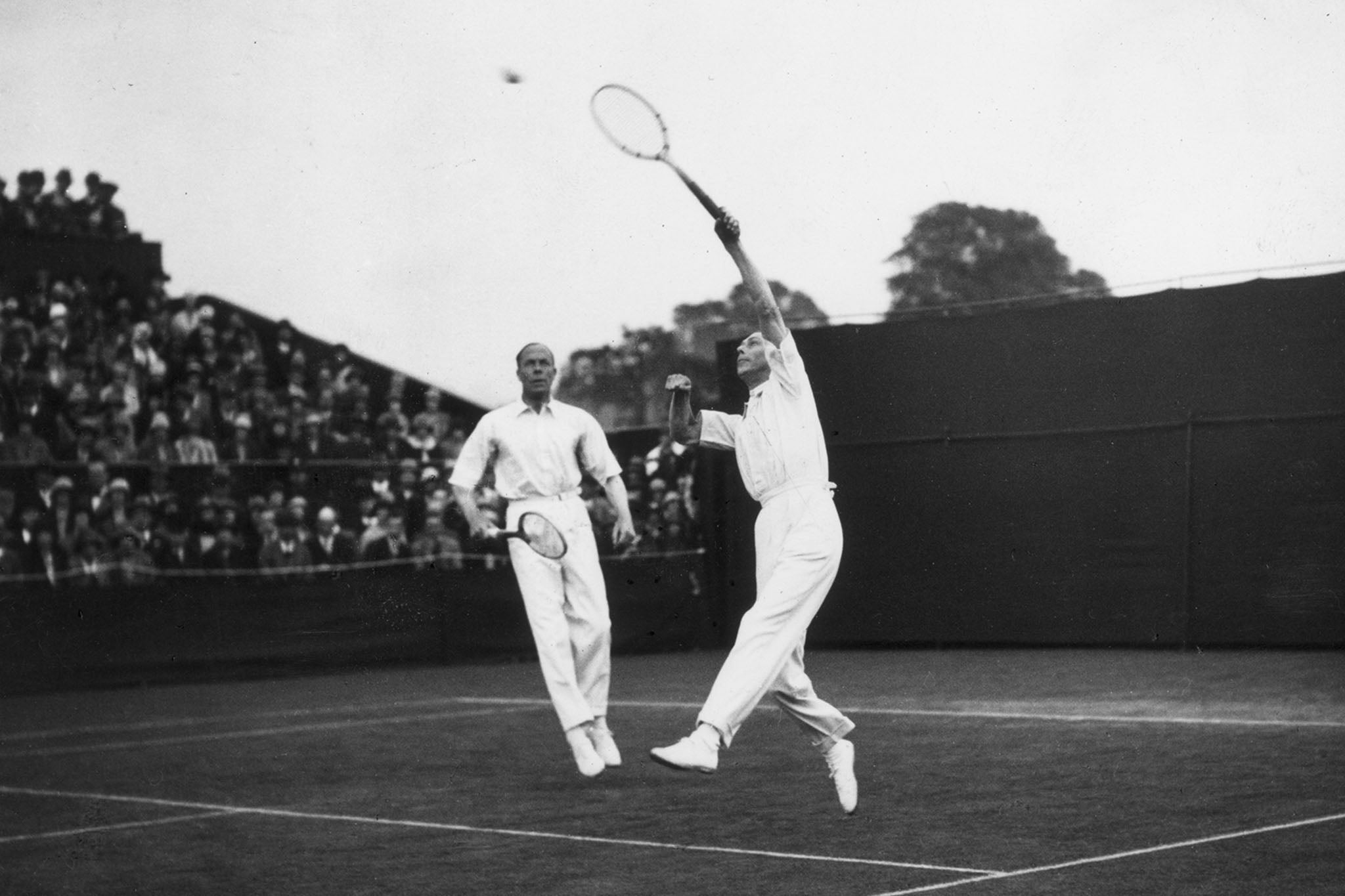 The pair struggled against their opponents, both celebrated Wimbledon veterans (Getty)
Their opponents were two veterans of the game, both three-time Wimbledon winners. Arthur Gore, 58, had taken the men’s singles title in 1901, 1908 and 1909, while 52-year-old Herbert Roper Barrett had won the doubles tournament in 1909, 1912 and 1913.
The press made much of the fact that the prince’s opponents had a combined age of 110, but still managed to beat Albert and Greig in straight sets.
Greig’s connection to Wimbledon would continue for the rest of his life. In 1937, he became the chair of the All England Club, a position he would hold for 16 years; his innovations included introducing Barnardo’s Ball Boys to the tournament in 1946, starting a 20-year partnership with the charity.
And when Prince Albert became King George VI in 1936, he took on the mantle of patron of the All England Club (the role now held by the Princess of Wales).
Albert and Greig’s game might have ended in a humiliating defeat, but on that day, they still made sporting history – and cemented one of the most important and enduring friendships between a royal and a civilian.