
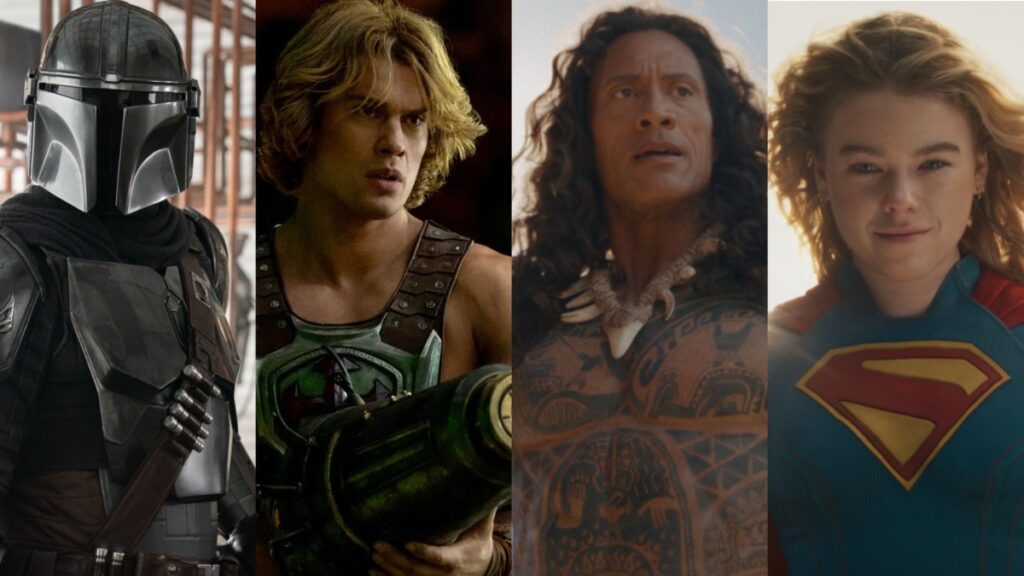
He might have pointed specifically to superheroes and Westerns, but the larger scale of this reminds me just as much of the collapse of musicals alongside the Western and historical/biblical epic in the 1960s. All three were the meat and potatoes of Hollywood during the 1950s if not earlier. The Arthur Freed Unit at MGM, a bit like Marvel Studios in the 2010s, was turning out hit after hit throughout the ‘40s and ‘50s: Meet Me in St. Louis, Easter Parade, Gigi, the 1951 remake of Show Boat, and of course Singin’ in the Rain. It laid the groundwork for the even bigger mega-musicals of the 1960s that, for a time, were the biggest hits on the block via My Fair Lady, Mary Poppins, and The Sound of Music. But come 1969—a year that saw Spielberg’s Boomer contemporaries like Dennis Hopper and Peter Fonda making Easy Rider and the X-rated Midnight Cowboy win Best Picture—the musicals Hello, Dolly! and Paint Your Wagon absolutely crashed at the box office.
Join our mailing list
That last one, Wagon, was furthermore a musical-Western hybrid, complete with Clint Eastwood in a dubiously tuneful role. But like the musical’s rapid decline in the late ‘60s, the Western and other increasingly creaky “epics” were suddenly strangling their studios. Joseph Mankiewicz and Elizabeth Taylor’s enormous Cleopatra nearly bankrupted 20th Century Fox in 1963, and then left the door for the moribund musical Doctor Dolittle to finish the job, at least by the old economic standards. And while Spaghetti Westerns and deconstructionist Oaters made on a budget flourished in the ‘60s, many of the big studio epics like The Alamo (1960) and 1967’s The Way West fizzled. The latter came out in the same year as box office juggernauts The Graduate and Bonnie & Clyde, and one year before horror movie Rosemary’s Baby and the sci-fi 2001: A Space Odyssey were rewriting the commercial and artistic limits of “genre” moviemaking.
None of which is to say franchise movies are going away. Disney/Pixar’s Toy Story 5 is one of the best movies of the year and its biggest hit. The historical epic also had a major resurgence in the early 21st century thanks to movies like Gladiator, Braveheart, and Troy, and the musical came back in a big way during the same period thanks to Moulin Rouge! and Chicago, and never left. The “historical” epic might also resurface again after this coming weekend’s The Odyssey.
But that is the point: things move in cycles, and what seems to still be working at the moment is prestige “event” cinema—as well as things studios have largely eschewed or neglected. While the horror movie has remained one of the few genres to thrive with original titles over the last decade, it’s also among the few that studios continually invest in. But a new crop of filmmakers breaking through those testing grounds via YouTube? That’s new.
Conversely, The Devil Wears Prada 2 is absolutely another legacy sequel to a popular movie, but its over-performance this summer suggests audiences of all ages are starved for adult-aimed comedies. The same might be applied to high-concept sci-fi movies not part of a franchise, like Project Hail Mary. And like Christopher Nolan with The Odyssey, Phil Lord and Chris Miller are directors with strong followings among Gen-Z and millennial audiences.
What we might be seeing is the collapse of a system that relies purely on name and brand-recognition for a built-in audience. For the last 20-some years that has been a winning formula in Hollywood. But so was the Western and musical once upon a time.