
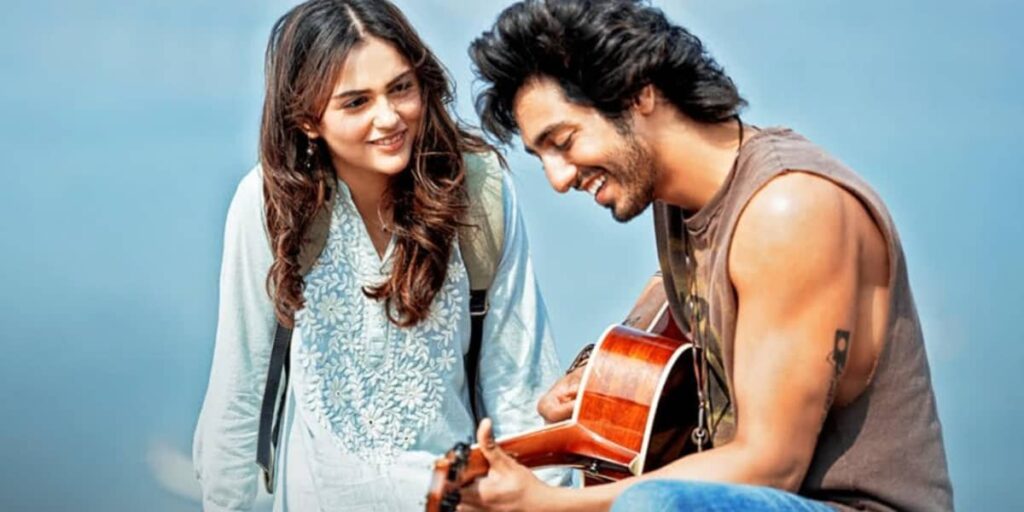
A year has passed since Saiyaara arrived in cinemas, and remarkably, its heartbeat hasn’t faded. In an era where multiplexes had increasingly populated with spectacles — larger-than-life action franchises, patriotic dramas, sprawling historical epics and biopics, and cinematic universes — Mohit Suri chose to tell a story that was startlingly simple. He asked audiences to surrender vulnerability. To longing. To music. To the terrifying possibility of losing someone before life has truly begun. It was a gamble. One that paid off spectacularly. Today Saiyaara stands not merely as one of the year’s biggest commercial successes but as one that reminded Hindi cinema of something it once knew by heart: when told with pure sincerity, romance still holds extraordinary power. For many moviegoers, it felt like the return of a language Bollywood had almost forgotten how to speak. Of late, conversations around mainstream Hindi cinema are accompanied by the same refrain. “Where have all the love stories gone?” The question has surfaced repeatedly, although romance never disappeared entirely, but its emotional directness often gave way to irony and spectacle. Saiyaara resisted that shift with a story with characters whose greatest battles unfolded within themselves rather than against external villains. There was something refreshingly old-fashioned about that conviction. Yet paradoxically, it never felt dated. Mohit Suri translated the same emotional grammar that had long defined some of Bollywood’s most beloved romances into a vocabulary today’s audiences instantly recognised within a contemporary emotional landscape.
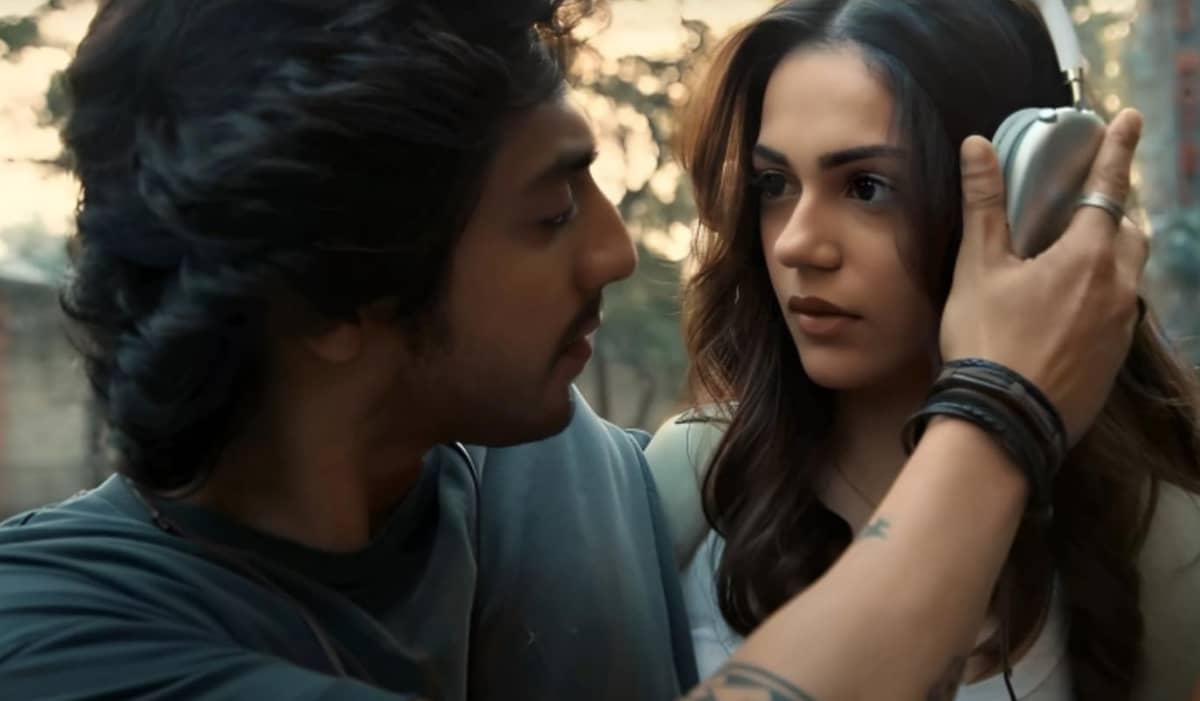
Across films such as Aashiqui 2, Ek Villain and Hamari Adhuri Kahani, Mohit Suri has consistently explored characters carrying invisible wounds — people searching for redemption, healing and love while confronting profound emotional loss. Those familiar signatures are instantly recognisable in this 2025 musical. Yet reducing Saiyaara to a repetition of Suri’s earlier work would be an injustice. Rather than recreating his earlier works, especially Aashiqui 2 that audiences could not cease to compare Saiyaara to, Suri appeared to reinterpret the emotional blueprint that made his romances resonate, reshaping it for an entirely new generation, in a way that Saiyaara connected simultaneously with audiences who had grown up on Suri’s earlier romances and younger viewers discovering his filmmaking for the very first time.

Another aspect was the casting. Hindi cinema has often relied on established stars to sell romance. Saiyaara chose belief over familiarity. While Aneet Padda was not exactly a new-comer, having already begun carving a space for herself through projects including Big Girls Don’t Cry and Salaam Venky, she entered the film without the weight of celebrity expectations. Opposite her stood debutant Ahaan Panday. The absence of star baggage proved invaluable. Audiences encountered Krish and Vaani as though they were meeting real people. Ahaan brought an intriguing combination of youthful vulnerability and quiet intensity to Krish Kapoor, the fiercely ambitious independent musician whose confidence often concealed deeper emotional fractures. Aneet made Vaani instantly relatable.They were two young adults gradually discovering comfort in each other’s presence. By the time love blossomed, audiences had already begun believing in the relationship. And belief is perhaps romance’s most precious currency.

And a conversation regarding Saiyaara remains fundamentally incomplete without mentioning its soundtrack. Mohit Suri has built much of his cinematic identity on unforgettable soundtracks, and Saiyaara continued that tradition — something increasingly rare in today’s fragmented entertainment landscape. The audience hummed the melodies before they knew Krish and Vaani. They felt the ache before they understood its source. That emotional familiarity is paramount. The soundtrack represented an intriguing convergence of Bollywood’s musical heavyweights and emerging independent voices. Composers including Tanishk Bagchi, Faheem Abdullah, Arslan Nizami and Sachet-Parampara collectively balanced emotional intimacy with voices such as Arijit Singh and Shreya Ghoshal breathing life into the compositions. In classic Mohit Suri fashion, the music seemed to articulate what the characters themselves struggled to express aloud.
The film’s visual world felt incredibly resonant. Krish and Vaani were normal people. They belonged to everyday India. She was an aspiring writer and journalism intern, carrying emotional scars left behind by betrayal. He was a fiercely talented but struggling independent musician, attempting to find artistic recognition. They arrived from different worlds, yet discovered common ground through creativity. Writing. Music. Dreams. Disappointment. Hope. Their romance evolved organically as they became the emotional refuge each had unknowingly been searching for. That grounded emotional foundation made everything that followed infinitely more devastating. Because by the time fate intervened, audiences had already fallen in love with their ordinary happiness. As the film progresses, Saaiyara transforms into something far more haunting: an exploration of the quiet devastation of watching life slip away before it has truly begun. The film reframes one of humanity’s oldest fears, and at its heart lies a question that is almost impossible to confront: what happens when love remains, but the memories that sustain it begin to disappear? It is this emotional premise that gives Saiyaara its profundity. While the screenplay traces the familiar trope of two people finding one another against the odds, romance becomes inseparable from loss, making every tender moment feel precious precisely because the audience knows how fragile it is.

The plot’s greatest strength lies in its unbearable possibility that grand gestures may one day mean nothing to the person they were meant for. The story was originally conceived by Mohit Suri as a potential third instalment of the Aashiqui franchise before evolving into a standalone film with its own identity. The screenplay, written by Sankalp Sadanah, reportedly drew inspiration from the acclaimed 2004 South Korean romantic drama A Moment to Remember, while reshaping its emotional foundation for Hindi cinema. And Saiyaara absorbs the emotional essence of its inspiration and filters it through Mohit Suri’s distinctly Bollywood sensibility. The film also occupies territory rarely explored in mainstream Hindi cinema. While films such as Black, Maine Gandhi Ko Nahin Maara and U Me Aur Hum had previously examined dementia and Alzheimer’s disease, those stories largely centred on characters in later stages of life. Saaiyara shifts that perspective dramatically. Vaani is only 22. She is still discovering adulthood, still chasing ambition, still learning what love means, when she is confronted by the terrifying reality of early-onset Alzheimer’s. That single creative decision transforms the emotional stakes. Abandoned by her fiance, Mahesh, on the very morning of their wedding after he chooses financial security over their relationship, Vaani enters the story carrying wounds she has scarcely begun to process. Then she meets Krish Kapoor. He is impulsive where she is composed. Restless where she is grounded. A gifted independent musician struggling to find his place, Krish recognises in Vaani something that even she has forgotten — her ability to write, to dream and to believe in herself again. Their connection grows through shared creativity where music becomes the conversation, writing the intimacy. Slowly their companionship evolves into love. It is in these quieter passages that Saiyaara earns the emotional investment it later demands from its audience. Saiyaara unfolds with the tentative uncertainty familiar to anyone who has ever fallen in love after believing they never would again. As the film advances, the audience is left to witness Vaani struggling with episodes that seem fleeting at first, before realising they are symptoms of an illness neither she nor those around her fully understand. One of the film’s most emotionally devastating sequences arrives when Mahesh unexpectedly re-enters her life. His return is not driven by romance but by circumstance. Yet his presence triggers an episode of profound psychological disorientation, accelerating the progression of Vaani’s condition. In a shocking moment, she mistakes Krish for a complete stranger, reacts with fear and violence, and stabs the very person who has become the emotional centre of her life. The scene alters the trajectory of the film. For Krish, the moment arrives as the unbearable realisation that love alone cannot protect the person he loves. For Vaani, it marks the beginning of a reality in which past and present collapse into one another for her as faces increasingly become unfamiliar. She begins to believe she is still with Mahesh, forgetting entirely the humiliation of being abandoned before their wedding, forgetting the creative bond she had built with Krish, forgetting the music that drew them together and, most painfully, forgetting the love that transformed both their lives.

As Vaani’s illness progresses, the film shifts towards quiet acts of selflessness. Rather than burden Krish with the truth, she chooses disappearance. Convinced that revealing her diagnosis will derail his rapidly ascending musical career, she suppresses her fears and distances herself from the one person capable of standing beside her. It is an instinct deeply rooted in classic Bollywood storytelling. Love, in Saiyaara, like many great love stories, is measured by sacrifice. The trope is hardly new. The fear of becoming someone else’s burden. But these are feelings that transcend generations. They are precisely what give Saaiyara its emotional universality.
The criticisms surrounding the film’s handling of early-onset Alzheimer’s were not without merit. Yet Saiyaara feels more invested in an emotional exploration of the consequences of a medical condition. Its focus lies squarely on the human experience of memory loss — the fear of forgetting, the pain of being forgotten and the devastating uncertainty that accompanies both the lead characters. Within Suri’s framework, Alzheimer’s is not employed merely as a plot device but as the ultimate metaphor for impermanence, inviting viewers to reflect on memory, illness and the fragility of human connection in ways few mainstream romances attempt.
Another aspect of Saiyaara’s success was the film’s sartorial language. A distinct authenticity grounded every frame. Krish and Vaani looked like ordinary young middle-class people one might encounter on a college campus, at a local cafe or on a suburban train. Their wardrobes reflected that aspiration. Costume designer Sheetal Iqbal Sharma created a visual language rooted in the everyday realities of India’s middle class. The creative team is said to have visited colleges across Mumbai to observe how Gen Z actually dresses, studying silhouettes, layering, colour palettes and styling habits rather than relying on preconceived notions of youth fashion.
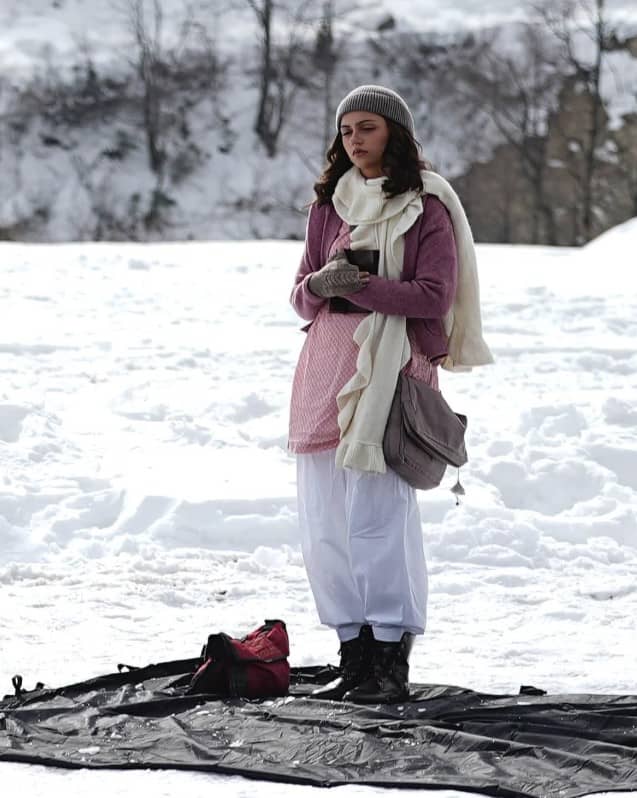
For Vaani, authenticity became the guiding principle. Reports suggest that several of her outfits were sourced from flea markets on Hill Road in Bandra and Hasnabad Lane in Santa Cruz, paired with everyday denim from accessible high-street labels and classic white PT shoes. That simplicity of her wardrobe made her feel like someone audiences might already know. Krish’s styling followed a similarly understated philosophy, his clothing reflecting the uncertain financial reality of an independent musician still searching for his breakthrough, allowing his personality to define him. Saiyaara endured because it offered something many viewers felt had become increasingly scarce in mainstream Hindi cinema: emotional sincerity. The traditional publicity blitz preceding its release was absent. Instead, the audience was left with a grounded love story that favoured authenticity. Perhaps that is Saiyaara’s greatest legacy.
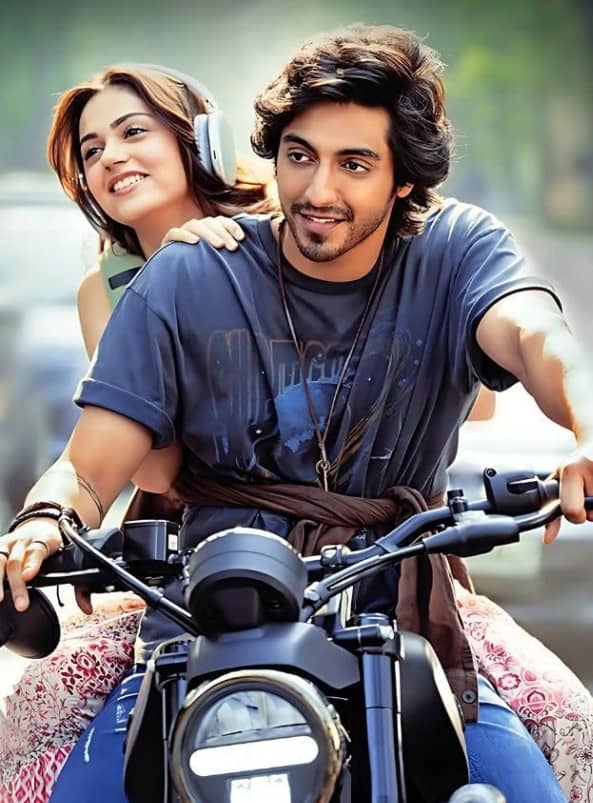
Pictures courtesy: IMDB
!function (f, b, e, v, n, t, s) {
if (f.fbq) return; n = f.fbq = function () {
n.callMethod ?
n.callMethod.apply(n, arguments) : n.queue.push(arguments)
};
if (!f._fbq) f._fbq = n; n.push = n; n.loaded = !0; n.version = ‘2.0’;
n.queue = []; t = b.createElement(e); t.async = !0;
t.src = v; s = b.getElementsByTagName(e)[0];
s.parentNode.insertBefore(t, s)
}(window, document, ‘script’,
‘https://connect.facebook.net/en_US/fbevents.js’);
fbq(‘init’, ‘877586283401283’);
fbq(‘track’, ‘PageView’);