
SPOILER ALERT: This article contains spoilers for “Avatar Aang: The Last Airbender.”
Team Avatar is back!
At long last, fans of “Avatar: The Last Airbender” can (legally) watch the next onscreen adventure of Aang and his loyal friends, thanks to the release of “Avatar Aang: The Last Airbender” on Paramount+.
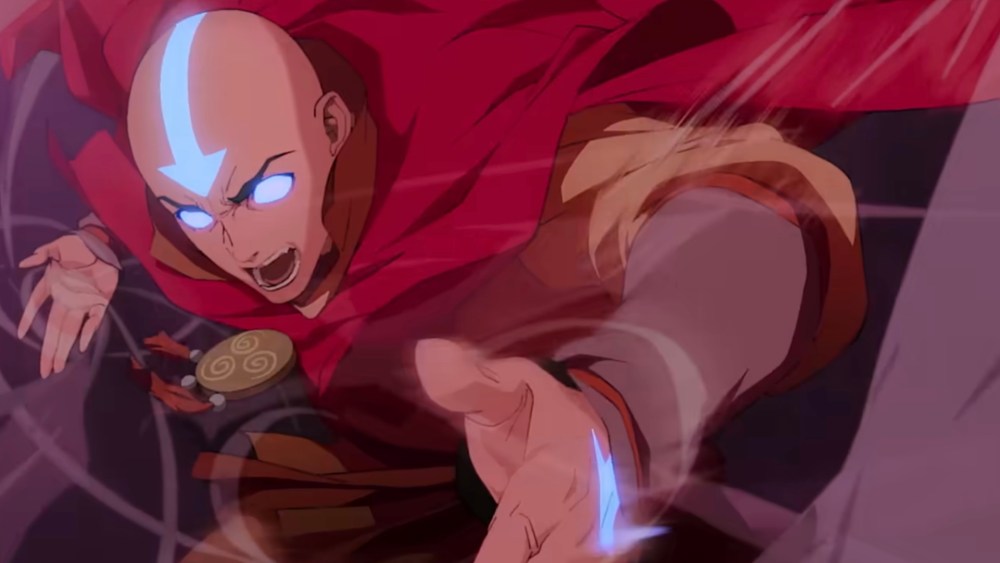
The film ages up Aang, Katara, Sokka, Toph and Zuko. Aang is well-established as the Avatar, but he is haunted by the fact that he is still the last airbender in the world.
After a battle with a group of anti-benders calling themselves The Denied, Aang learns of the existence of a “lost Avatar,” an airbender named Sonam, who possessed a staff of immeasurable power. In his search for the staff, Aang discovers an ancient airbender named Tagah (voiced by Dave Bautista) frozen on top of a mountain.
Upon awakening Tagah, he tells the group that Sonam granted him and others the ability to become airbenders with her staff thousands of years ago. Figuring The Denied plan to use the staff to upset the fragile peace that now exists in the world, Team Avatar and Tagah set out to stop them. But along the way, they learn that Tagah witnessed the massacre of the other airbenders at the hands of the Earth Kingdom. He tried to overthrow Sonam and to use the staff to get revenge, leading to his imprisonment and Sonam exiling herself.
Aang and his friends must now battle Tagah and The Denied to once again save the world.
Variety spoke with “Avatar” creators Michael Dante DiMartino and Bryan Konietzko and the film’s director, Lauren Montgomery, about the launch of the movie, bringing “Avatar” back to the screen, and what ideas and characters didn’t make it into the final cut.
Check out the full Q&A below.
Why was this movie and story the point at which you wanted to re-enter the world of “Avatar?”
Michael Dante DiMartino: Obviously, Bryan and I came back to Nickelodeon to start Avatar Studios and start developing new projects to expand “Avatar” in TV and film. But film was the first priority for the studio, so we set to work thinking about what that would look like. There wasn’t too much debate that we would focus on the original characters since they were the most iconic and most beloved characters we had so far. Then we quickly sort of settled on — for this to feel bigger and different, and an extension of the story we had already told, that aging them up, meeting them at a later point in their life, seemed like a good way to drop into the world again.
Bryan Konietzko: I might be an outlier, but — I still wanted to work in the “Avatar” world, but I wasn’t hungry to go back to the original characters because that was the story that Mike and I set out to tell, and we were lucky enough to be able to complete it. And I wanted those characters to kind of have some peace and privacy and go on with their lives, and explore other parts of the Avatar world. But yeah, the studio and Mike said, if we’re going to do a big feature film, it does make sense to focus on the main characters. But it wasn’t until Mike pitched to me the idea of them at this age that the door sort of opened for me creatively.
We had originally thought of it being when Aang and Katara were about to start their family, and for a lot of good reasons, we moved away from that later in development. But I still found this moment in Aang’s life to be really interesting. It’s like, you look like an adult, you have adult responsibilities, but you haven’t quite shed your adolescence. He’s also the age that I was when Mike and I created “Avatar.” I was 25 going on 26, and so I had a lot of youthful enthusiasm, but I had a lot to learn about the world…We had this cool poster that Joaquim Dos Santos had drawn during “Korra” of the original Team Avatar all around that age, and I think all of us and a lot of fans just kind of wondered, like, “Wow, what would that be like?”
Lauren Montgomery: These are the characters that you fell in love with…How are you going to tell another really satisfying story about [Aang]? And I think like the beauty of what we found is the only really personal story left to tell about Aang, and just the fact that it was always in the title, was being the last Airbender. We’ve seen his arc of becoming the Avatar, but now we handle that other side. There was something really beautiful and emotional still to tell in that story. I was excited just because I very much love a tortured, emotional story. Even though I dislike drama in my life, I love it in my content.
Like the shows, there are some crazy big action sequences in this. What was different about making them for a movie versus a series?
Montgomery: The craziest thing was we were making it, and I’m looking at this movie, and I’m like, “There’s not enough action!” There’s just so much action, but there’s so many things, so many ideas, like for Tagah. We had so many awesome conversations about his fighting style, and we didn’t even get to get all of it in there. There were so many things we discussed, and I wish we could have fit it, but ultimately, there was a lot of story to be told.
It was really exciting to be able to work with Alfred Hsing. Bryan and Mike had met him at Netflix. He’s an amazing choreographer, and we worked together just discussing concepts of how the characters would have evolved in their fighting styles and discovering Tagah’s style and what that means as an airbender, but as an airbender that uses his air bending in different ways. There was a lot in this movie as far as using bending to fight like other martial artist opponents and also using bending to fight natural disasters. So we tackled everything, and yet I still feel like there’s so much we didn’t get to do.
Konietzko: We had the benefit of doing [previsualization] this time, which we kind of dabbled in “Korra” with just one compositor, but Lauren and the team were able to — like you said, these set pieces, they involved such a much more cinematic and kind of active camera. One that could flow through a three-dimensional space, but with two-dimensional, hand-drawn characters, and that process always takes a lot of pre-planning.
DiMartino: When we were doing the series, our ambition in our brains was always thinking cinematically, but we were limited by time and money and the old aspect ratio of television back in the day. But when we made the finale of “Avatar,” we did screen it as — and we have screened it since then — the four parts as one movie, and it does hold up. You know, it feels like a big experience, a movie experience, even though the visuals aren’t quite at the level that this movie is at.
This also has a pretty different art style than both “Last Airbender” and “Legend of Korra.” Why did you go that route?
Konietzko: We always want each “Avatar” project to have its own distinct visual identity. At the same time, we want them all to feel like they hang with each other. That way they’re different windows into the same world. And a common factor or characteristic of that is that each one is a love letter to Japanese anime…
I learned a lot in in making the first series, but we also had some incredible talent that rose to the surface between “Avatar” and “Korra.” And one of those folks was Ki Hyun Ryu. He did some amazing stuff on “Avatar,” and then he ended up being a supervisor, alongside Lauren, on “Korra,” and so even on Korra, we started basing the character design largely inspired by Ryu’s style.
DiMartino: There is an incredible amount of handcrafted attention to this movie, even though obviously computers are used for all the camera moves, and everyone’s drawing on tablets or whatever, but these look like oil paintings come to life. Every frame, somebody drew that multiple times. They roughed it out, and someone had to clean it up, and someone had to paint every frame. And then there’s the whole compositing aspect to it too, which is another process. Every frame is being gone over very carefully to make sure it all works and feels cohesive.
Montgomery: There’s a lot of technology used, but those are just the tools. Human artists crafted everything, and human artists used that technology to direct those shots. Nothing was just like plug it in and boop boop, it happens. There’s none of that
This project and what I’ve seen of “Seven Havens” have distinctly Indian influences. From Avatar Sonam being voiced by Freida Pinto to even the music. There’s one singer in particular —
Konietzko: Varijashree Venugopal! Jeremy [Zuckerman], our composer, he was connected with her by a friend. We’re working with Jeremy and Varijashree together on another one of our projects. And I’m just like, “You two are a match made in the spirit world.”
With “Seven Havens,” it was very deliberate. The concept and even the word “avatar” all comes from Indian culture and tradition and Sanskrit. So we had done a bit in “Avatar,” the original series. We’re obviously inspired by and draw from a lot of real world cultures for our fantasy world. But that said, I kind of felt like with the first two series, we had underserved that inspiration, and so it was very deliberate with Seven Havens to to code Pavi as a South Asian-inspired character.
Montgomery: We definitely wanted to lean into those ancient cultures’ mysticism, more fantasy, more spirituality, and I think a lot of that is apparent in a lot of the Indian cultures. Then we were just trying to really add to that ethereal quality of [Avatar Sonam], and Varijashree’s voice just gives you that. It’s so haunting.
Talk to me about the challenges of trying to make a story that follows “Last Airbender” but also stays consistent with the story you established later in the timeline with “Legend of Korra.” How challenging is that?
Konietzko: Oh, it’s a nightmare [laughs]. It’s really hard.
DiMartino: I do like that part of the job where it’s just like figuring out the puzzle pieces. It gets more complex, obviously, with every year and every project we’re adding to this stuff. But yeah, part of what I do now is — whether it’s publishing or games or whatever — it’s like, does this feel like it actually fits in the overall universe? It’s not completely contradicting something else in another project. There are little tweaks we make, but if someone in a comic said this line, and it doesn’t match with this, we might be like, “That’s not the end of the world.” Because there’s so many different writers at this point who contribute ideas and stuff. So it’s hard to police every line of dialog or every line in a novel or something.
Obviously, we couldn’t end the movie where the airbenders are back. That obviously would not work. So there’s those kind guardrails on it where it’s like, okay, we know that’s not the end of the movie. So what is a satisfying end to this where Aang still feels like he achieved something and is in a better place?
And Tagah is obviously very central to the film. Talk to me about establishing him as this very dark airbender, and also what it was like getting to work with Dave Bautista as the voice of the character.
DiMartino: That character, like with a lot of things in the movie, went through a big evolution. There was a point where he wasn’t in the movie, and then there was a version of Tagah that came into the movie, but he was named something else. But then once we settled that Aang finds another airbender, that’s the crux of this film, this brotherhood, this bond they form, and their different points of view. Since he’s from this time long ago, they would have these interpersonal conflicts. But also there’s the idea that they kind of mirror of each other. They’ve both gone through this genocide of their people, just at different times in the history of universe. Then we see how they both deal with that conflict in different ways and how that brings them closer and pulls them apart.
Montgomery: I didn’t follow wrestling. I didn’t know Dave. I just knew him from his movie roles. But either way, Drax and his wrestling persona are big personas, and I think I was expecting him to be a very big persona guy, and he’s actually like the gentlest, kindest human I have met. He doesn’t speak very loudly, he’s very respectful, and he really feels like the good version of Tagah that we see. He’s like this monk who is saving a bird in the middle of the ocean. So it was really incredible that it kind of wound up that way, because like Mike said, there was a different character originally that was just a very different personality. And when we found this character of Tagah, who just brought so much more to the story, it’s kind of amazing how beautifully Dave was able to make that character feel like he has so much more of a history and a depth.
Can you tell me any ideas you had that didn’t make it into the movie?
DiMartino: I know fans are going to be upset. Suki’s not in the movie. She’s in one shot at the end. We did try versions where Suki was in the movie. You just have to make these decisions where it’s like, we only have 85 minutes to tell the story. We were already having a hard time giving our beloved main characters their spotlight and enough screen time… The Kyoshi Warriors are out there! They were off saving somebody else while the events of this movie were going on. Doesn’t mean they’re not around. They have their own comic book series now, so they are busy ladies.
Montgomery: There was a scene that I really loved that didn’t quite make it into the final film, and it was this parade that was the celebration of Republic City… It was so beautiful, and you saw a lot of fun Easter eggs of people. I think King Kuei was there, Suki was there with the Kyoshi Warriors, and it was this magnificent celebration of everyone celebrating their cultures…and then the final person in this parade is Aang on Appa, and it becomes a perspective shift where you realize what is so joyous for everyone is very isolating for Aang, and he never feels more alone than in this moment, where everyone else can celebrate with their culture, and his is absent.
Finally, the movie is getting a limited awards qualifying run in theaters instead of a full theatrical release. But the tickets for the awards screenings sold out in a day, I think.
DiMartino: I think it sold out in like 10 minutes or something.
Konietzko: Yeah, it was pretty quick.
DiMartino: I think that just shows that people really want to see this movie.
Konietzko: I’m still trying to get tickets to a Paramount screening! I got locked out of that. I’m texting my executive like, “Hey, can I maybe get a couple tickets?” [laughs]
This interview has been edited and condensed for clarity.