
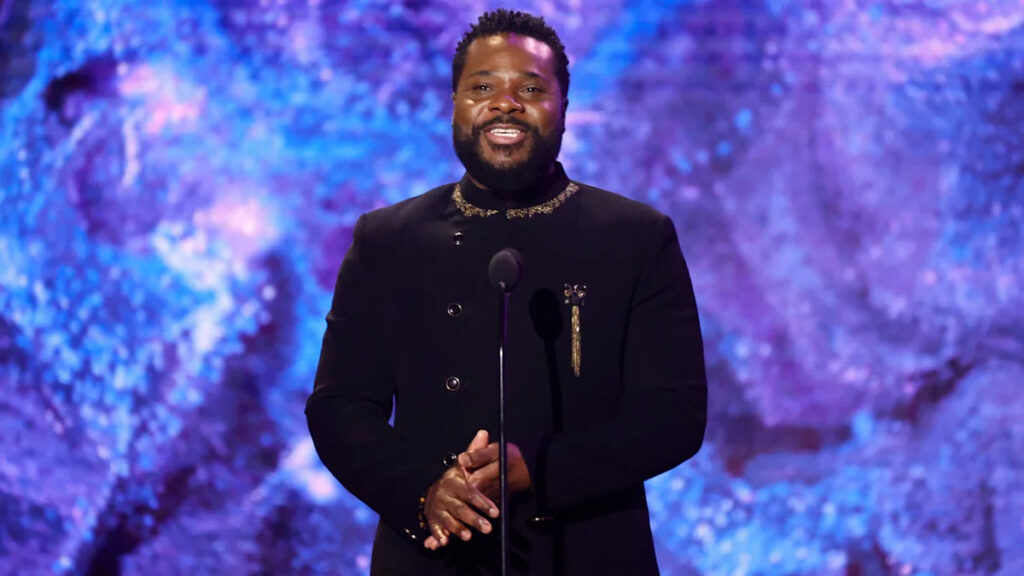
 Frazer Harrison/Getty Images
Tenisha Warner, the widow of Malcolm-Jamal Warner, recently filed a lawsuit against the late actor’s mother, claiming she is entitled to more than $1.2 million from a family trust.
Malcolm-Jamal Warner, who portrayed Theodore Huxtable on The Cosby Show, died in an accidental drowning in July 2025 in Costa Rica.
Must Read
Tenisha Warner filed the lawsuit on July 21 with Georgia’s DeKalb County Superior Court against Pamela Warner, the successor trustee of the Warner Family Trust, which the actor set up in 1996, according to an Atlanta Journal-Constitution report.
The lawsuit includes a copy of the prenuptial agreement the couple made before their May 2022 wedding, which states the actor was to purchase and maintain a $1-million life insurance policy, with Tenisha Warner listed as the sole beneficiary. The complaint alleges that Malcolm-Jamal Warner failed to establish the policy before he passed away, the Journal-Constitution reported.
The complaint reportedly says the actor’s estate — the administration of which is currently contested — “will be inadequate to satisfy” the terms of the prenuptial agreement.
Tenisha Warner’s lawsuit alleges that property in the family trust, which is California-based, “is liable for his debt to her and that her rights are particularly vulnerable while the administration of his estate is contested,” the Journal-Constitution reported.
The report says the lawsuit claims Tenisha Warner is owed “at least $1,276,042 plus interest and attorney fees.”
Tenisha Warner’s attorneys did not respond to inquiries about the case, according to the Journal-Constitution, and the paper was unable to reach Pamela Warner for comment.
Inheritance laws in California
State laws determine what spouses and children are entitled to when it comes to inheritances.
In California, spouses are subject to both community property law and “omitted spouse” law. With community property laws, property and debts acquired during the marriage are considered to be owned equally by both spouses, but property and debt owned before the marriage are not.
California’s omitted spouse laws assume that if a couple is married after a trust or will is established, and the spouse was never added, that it was not intentional they were left out, but an omission, and the spouse is entitled to what they would be under community property laws.
Story Continues
Read More: Vanguard reveals what’s coming for U.S. stocks — and it could be bad news for this group of investors
In a statement given to media outlets, Tenisha Warner said had “attempted to privately settle my beloved husband’s complicated estate and honor his last wishes.”
“He was close to finalizing a new estate plan to replace the stale plan created in 1996 when he was 26 years old, 20 years before we met and well before we gave birth to our beautiful daughter,” the statement said, while adding that Malcolm was “unable to do so before we lost him.”
“I have been struggling to care for our daughter as a single mom and now as her sole provider.”
The statement also points to the timing of the lawsuit. “Legally, I had no choice but to take action to protect our rights before any potential statute of limitations expired.”
Why Tenisha Warner’s lawsuit may be successful
Jeffrey R. Loew — managing partner and chief legal officer of California-based Trust Law Partners LLP, who is not involved in the case and has not reviewed the complaint — told Moneywise a spouse left out of a testamentary instrument such as a trust or will would be presumed to be an omitted spouse.
“There’s a presumption that if that happens — the spouse is accidentally left out, that she’s an omitted spouse — that she should receive her inheritance that she would have received if there were no trust at all,” Loew told Moneywise.
However, exceptions include incidences where the spouse is left out intentionally — “usually they will say that in the trust,” Loew said — if there is a valid prenuptial agreement, or if there is “some other provision made for the spouse that the evidence shows was intended to be in lieu of a gift under the estate plan.”
Loew said that if a court found a prenuptial agreement was waived or invalid because of a breach, “the court can rule that it would be unfair to keep the contract in place” and it would then be thrown out, a remedy known as rescission. If a contract is severable, meaning a breach of one provision doesn’t invalidate the entire contract, a party could seek damages for the breach even though the contract stands.
“In California, spousal rights are held to be extremely important,” Loew said.
Loew noted that the state strengthened laws around prenuptial agreements and added protections for spouses after the case “In re Marriage of Bonds,” which upheld a prenuptial agreement between baseball player Barry Bonds and Susann Margreth Blanco.
The prenuptial agreement noted that both Bonds’ and Blanco’s earnings after marriage would be their own respective property, and the court found that Blanco had no entitlement to Bonds’ earnings following their divorce.
What To Read Next
Join 250,000+ readers and get Moneywise’s best stories and exclusive interviews first — clear insights curated and delivered weekly. Subscribe now.
This article originally appeared on Moneywise.com under the title: Malcolm-Jamal Warner’s widow sues his mother for more than $1 million in battle for the late Cosby Show actor’s estate
This article provides information only and should not be construed as advice. It is provided without warranty of any kind.