

Nineteen-year-old Anthony Bourdain (Dominic Sessa) finds himself spending the summer working in a small Provincetown restaurant under the tutelage of a local chef (Antonio Banderas).
How exactly do you make a film about Anthony Bourdain? He was a gargantuan figure, one of the most famous chefs in history, a man who proved how a $6 bowl of noodles could break down barriers between those who feel worlds apart. From his time in New York’s culinary underbelly to getting blackout drunk on the streets of Seoul, no film could ever fully encapsulate the man’s life or find the time to reckon with the complex legacy he left behind. Matt Johnson’s biopic Tony is far less interested in painting a whole picture (look to the excellent documentary Roadrunner: A Film About Anthony Bourdain for that) and instead focuses on one summer from the opening chapters of his acclaimed memoir Kitchen Confidential, when Bourdain spent a summer cooking in the coastal resort of Provincetown, Massachusetts.
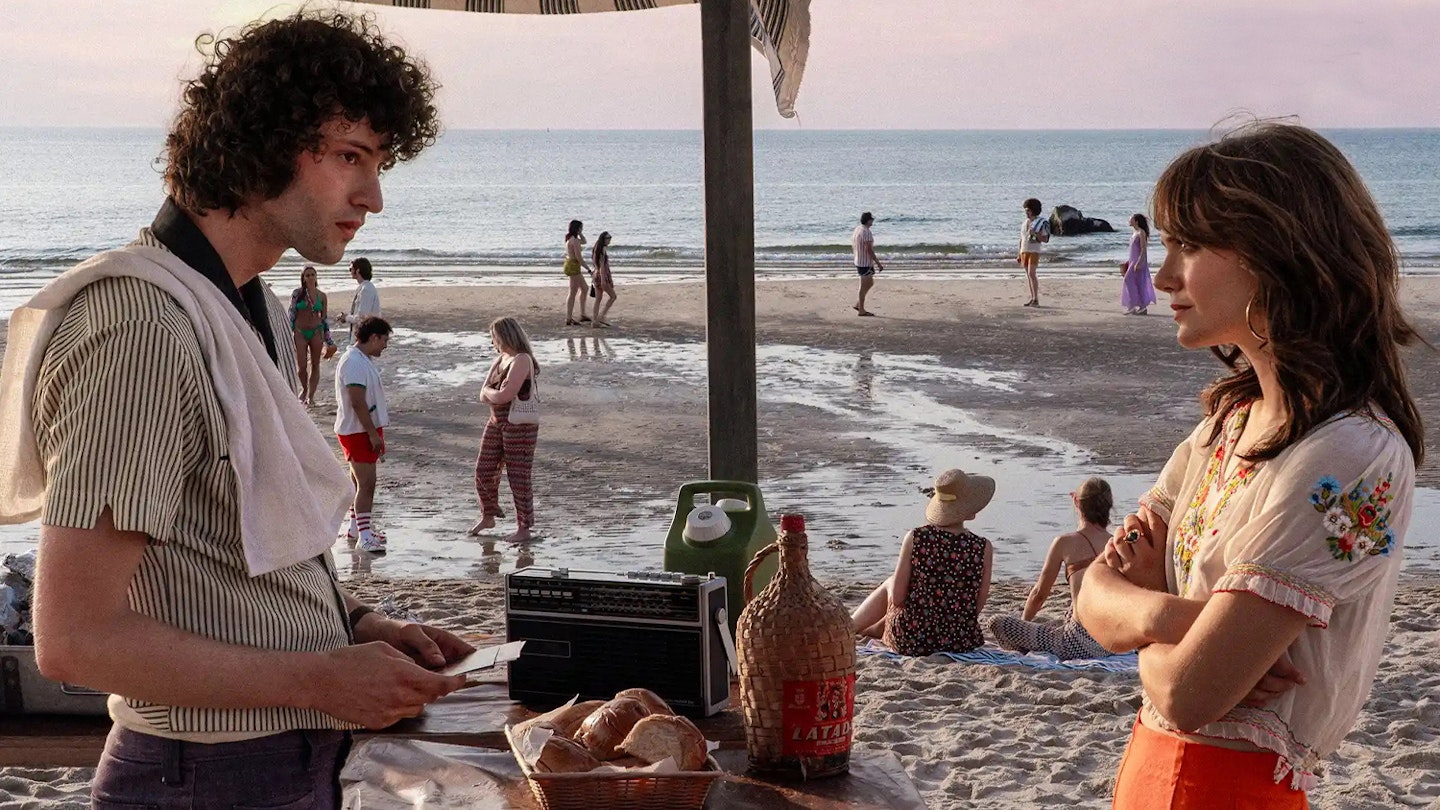
It quickly becomes clear that Tony is a hangout movie. Wandering into parts unknown after failing to secure a writing scholarship and chasing a girl (an incredibly underserved Emilia Jones), Dominic Sessa’s Bourdain is aimless, full of misplaced confidence, and a barefaced liar. To be frank, he’s a bit of a dick. Dominic Sessa can do this sort of thing in his sleep. Much of his performance here feels like an extension of his role in The Holdovers, always entertaining but not revolutionary. While it never feels like he fully steps into the personality of the famous chef, you can see some of the DNA there.
Those wanting to see an icon immortalised on screen may not leave fully satiated.
What feels most alive here is Provincetown. From bustling parties to late-night cookouts, it’s a film that mostly lets you soak in its summer. For the most part, Johnson’s hands feel very light on this film — no Nirvanna The Band The Show The Movie shenanigans here — but it’s in the kitchen where his style feels most prominent, capturing chaotic acts of chef hedonism that play like vignettes of a summer that won’t soon be forgotten.
It’s a shame, then, that for all the culinary excellence on display, Tony’s exploration of food doesn’t extend beyond Antonio Banderas’ head chef. The film never really does the work to allow us to understand why Bourdain was eventually won over by this world. That disconnect leaves much of its third act feeling adrift. In the end, those wanting to see an icon immortalised on screen may not leave fully satiated.
However, it’s hard not to be reeled in by the quintessential Bourdain charm of taking in a culture and its people. “Travel changes you,” the man himself once wrote. “As you move through this life and this world you change things slightly, you leave marks behind, however small. And in return, life — and travel — leaves marks on you.” Johnson’s film never fully captures the man Bourdain became, but in appropriate fashion it finds its story in the people and the place that left their mark on him.
A hangout movie is perhaps the most fitting way for Bourdain to be brought to the screen. Though its ambitions never quite match its subject, it depicts a summer you’ll be hard-pressed not to be charmed by.