

When people hear that I won my High Court case against my friend Amy Winehouse’s father Mitch earlier this year, they usually respond the same way. “That must have been such a relief.” It was. And while I do feel victorious, it has come at an enormous personal cost. More than anything, I am exhausted.
After almost five years of litigation, the court dismissed every claim brought against me by Mitch – that I’d profited over £1m from dishonestly selling dozens of Amy’s personal effects at auction. Following a six-day trial, the judge rejected the case in its entirety. Permission to appeal was later refused on every ground, with the judge describing Mitch’s defeat as “total and comprehensive”, and the court ordering that my legal costs be paid on the indemnity basis.
People often imagine that this is the moment when life begins again. Legally, the matter is over, but personally, I have to come to terms with what those five years have actually cost.
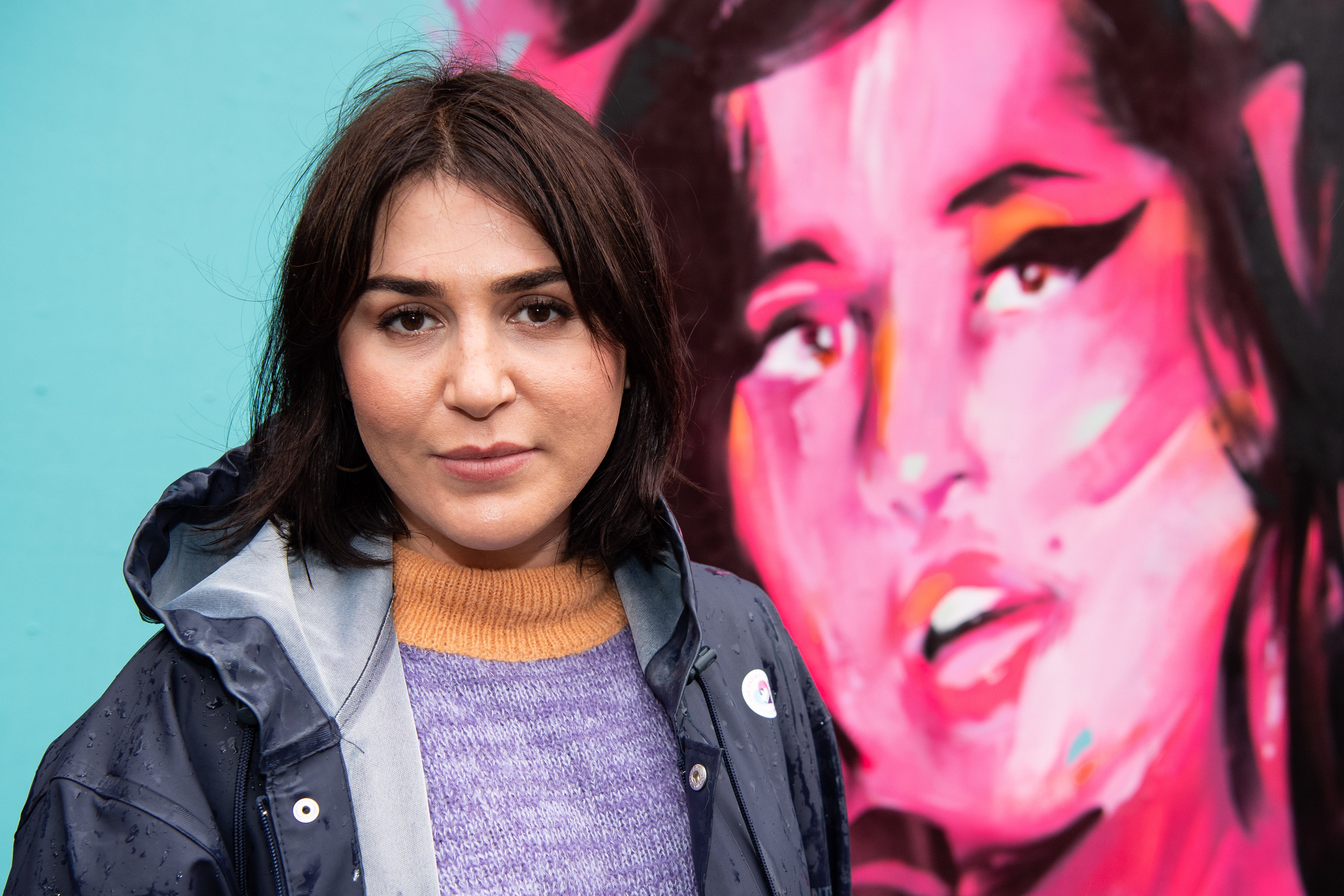 Parry wanted to preserve her friend’s legacy following her death (Getty)
Most people know my name, if they know it at all, because of Amy Winehouse. I met Amy when I was 19, before she became one of the most recognisable musicians in the world. I was her stylist, creative collaborator and friend. We worked together through years that were exciting, chaotic, creative and, at times, incredibly difficult.
Together we developed looks that have since become part of popular culture, but at the time we were simply doing what young creative people do: experimenting, sharing ideas and trying to create something original. Over five years of working together, I accumulated what every stylist eventually depends upon: an archive.
Suitcases filled with clothes, reference pieces, designer gifts, mood boards, sketches, discarded shoes and garments that had become part of the creative process. Some pieces belonged to me. Some had been gifted by Amy. Others had been given to me by designers or were items I had sourced myself.
Much of it ended up boxed away in my mother’s attic because, like so many creative people, I kept everything. Not because I imagined it had financial value, but because it represented years of my work and one of the most important creative collaborations of my life.
After Amy died in 2011, I devoted much of my professional life to preserving her creative legacy with the care and respect I believed it deserved. That work culminated in exhibitions, a book and years spent ensuring that the focus remained on Amy’s extraordinary talent rather than her difficult personal life.
I never in my wildest dreams imagined that my own life would eventually become consumed by a legal battle over a legacy I had spent years trying to protect.
In 2021, Catriona Gourlay and I – a close friend I met through Amy in the early 2000s – entered into an auction with Amy’s father Mitch Winehouse. After several of the items from my archive, which I had accumulated working with her, sold for far more than anyone had anticipated, Mitch launched a legal campaign against me, and subsequently Catriona.
 Parry and Catriona Gourlay in 2020 – who were both hit with claims from Amy’s father (Getty)
What followed was not simply a disagreement over ownership. It became, in the judge’s words, a campaign conducted “relentlessly and aggressively”, undertaken “deliberately, in order to intimidate them into giving him what he wanted”. Again, those are not my words. They are the findings of the High Court.
We live in an age of instant opinion, where reputations can be formed in minutes and reinforced by repetition. For nearly five years, I lived with allegations that questioned not only my actions, but my integrity. During that time, the complexity of my life and the litigation disappeared behind a single description: the woman accused of selling Amy Winehouse’s belongings.
Winning a case establishes your legal position; it does not automatically repair your reputation, rebuild your business or return time that has already passed.
Most people’s only experience of litigation is on TV in a courtroom drama, so it is easy to think that it is contained within the court’s four walls. In reality, it seeps into every corner of your life. It affects your work, your relationships, your confidence and your sense of reality. It is such a bizarre situation to find yourself in; it can leave you questioning every decision you have ever made. It also affects how you plan for your future.
Catching up with friends, I would be asked how it was coming along, to which I would answer “it’s still going”, and they would respond, surprised, “still?!” Eventually people stopped asking, not because it was over, but because it had become impossible to imagine it ever ending. Meanwhile, life carried on around me. Other people changed jobs, started families, launched businesses and moved forward.
I remained suspended in litigation, measuring each week by the correspondence between lawyers, disclosure deadlines and trial dates. And despite having such a wonderful support network of friends and family, there is a real loneliness in that experience. There is currently a misconception that the circa £1m Mitch has been ordered to pay is for damages, when in actual fact it is just to cover our costs, and even then, we have still lost something.
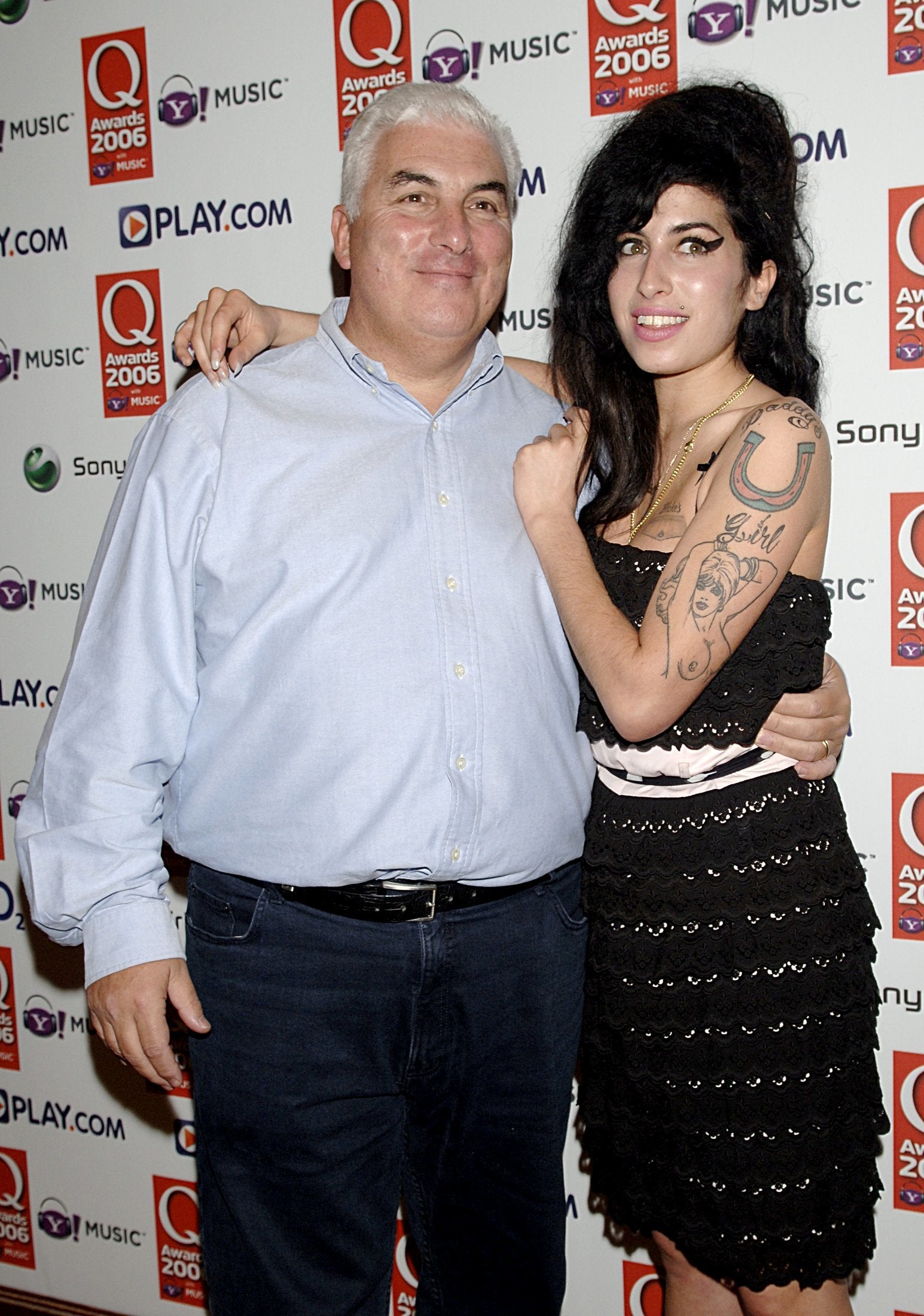 Mitch Winehouse with his daughter at the Q Awards in 2006 (PA)
Not just some legal fees, but work and years of uncertainty. The deeper losses are impossible to calculate; how many potential clients decided that controversy, however unfounded, was simply too much risk? How many opportunities quietly disappeared because someone searched my name online? How many conversations changed before I even entered the room?
There is also no accounting method for lost momentum. No compensation that restores years spent living under a veil of uncertainty. Winning a case establishes your legal position; it does not automatically repair your reputation, rebuild your business or return time that has already passed.
At no point during all that time, had the defendants ever done anything but behave with honesty, integrity and care for Amy, the claimant and his family.
Judge Sarah Clarke KC
The litigation made me visible for entirely the wrong reasons. Instead of being known for exhibitions, books or creative projects, I became known for defending myself. That is not how anyone wants their professional life to be defined. The judgment did something that no headline ever had. It examined the evidence, tested every allegation and set out its conclusions in painstaking detail. In doing so, it didn’t simply dismiss the claim; it recognised the human cost of bringing it.
Judge Sarah Clarke KC found that Mitch Winehouse had embarked on a “deliberate course of action” against Catriona and me “with the aim of damaging the defendants’ reputations and professional prospects”. She concluded that, “At no point during all that time, had the defendants ever done anything but behave with honesty, integrity and care for Amy, the claimant and his family.”
She went on to say that what made his conduct particularly serious was that it had been directed at “two young women who had stood faithfully by Amy and by him and his family”. I don’t write this to elicit sympathy. I write it because I don’t think we talk enough about the damage caused when allegations are allowed to run rampant online and in the press, before ever being properly tested.
By the time my name was cleared, almost five years had passed. I’m now 40. The court restored my reputation in law, but no judgment can return the time it took to get there. I am incredibly proud that I stood up for myself. Proud that I refused to be browbeaten, intimidated or worn down.
It came at an enormous personal cost, and winning cannot give me back those years I lost. But if I were faced with the same choice tomorrow, I would make exactly the same decision. Because there are some things that are worth fighting for, my reputation was one of them.