
Stay ahead of the curve with our weekly guide to the latest trends, fashion, relationships and moreStay ahead of the curve with our weekly guide to the latest trends, fashion, relationships and more Stay ahead of the curve with our weekly guide to the latest trends, fashion, relationships and more
What makes you think you have the right to comment on another woman’s body?”
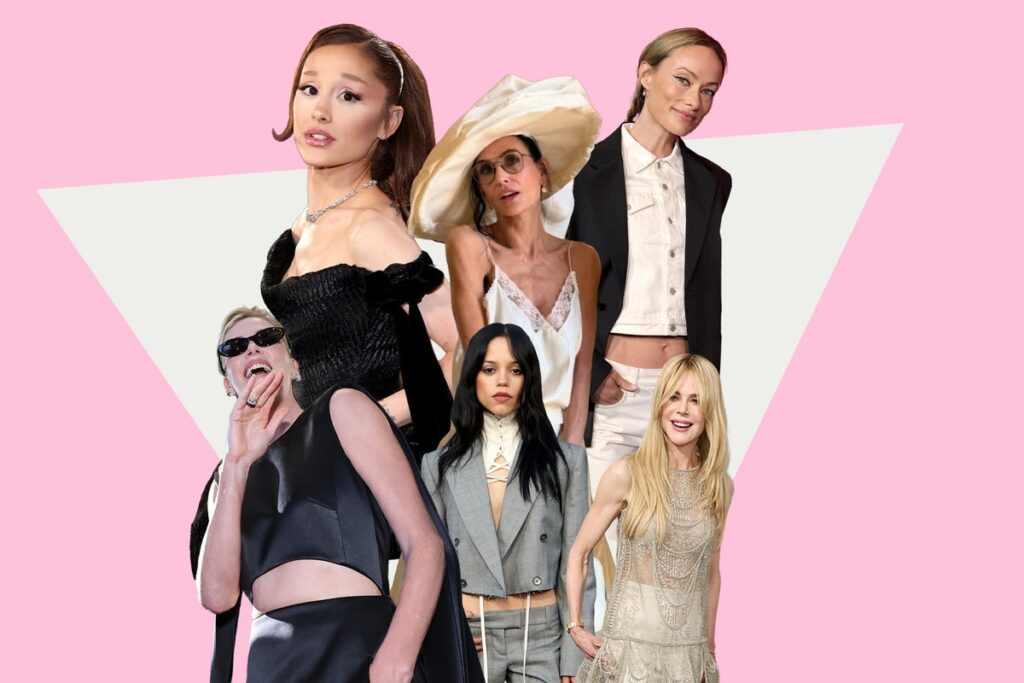
This admonition, and hundreds of others like it, has been cropping up a lot recently. Once upon a time, it would have been in response to trolls taking aim at a woman deemed too fat. Now, it’s being deployed against users expressing concern for women deemed too thin, a social media storm sparked after Ariana Grande was “called out” over her weight after the release of the music video for “Petal”, at the end of last month.
It is, in theory, a good sentiment: your body is nobody else’s business. We have lived through countless iterations of women in the public eye being torn to shreds in the media, their appearances dissected and scorned, their every imperfection circled in red and splashed across magazines and internet pages in high definition.
In an ideal world, body neutrality would be the norm, and we would be able to simply live our lives without comment or censure, no matter what the vessel we happen to be moving through the world in looks like. The problem is, we don’t live in an ideal world – far from it.
It has been impossible not to notice the way that the arrival of GLP-1 drugs – initially developed to treat Type 2 diabetes but now widely available off-label for weight loss – has coincided with a shockingly skinny aesthetic taking over the world of female celebrity. Whether or not these particular women have been on weight loss jabs themselves is irrelevant; the introduction of Ozempic, Mounjaro and the rest has ushered in a new era in which noticeably shrinking down is fashionable, and there is seemingly no such thing as too thin.
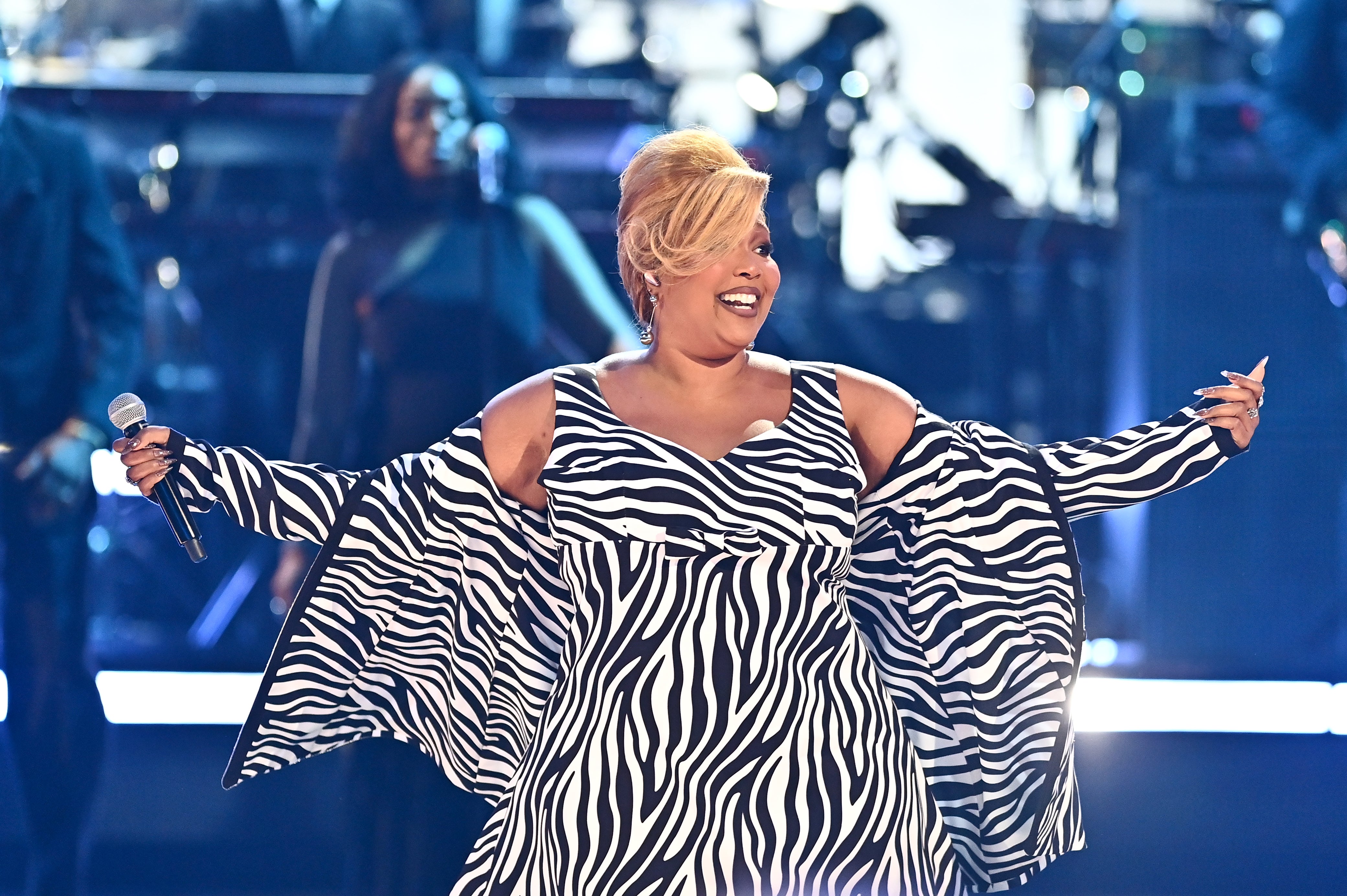 Some celebrities, like singer Lizzo, have been vocal advocates for body neutrality (Getty)
Multiple times over the past month I’ve audibly gasped at the sight of a beloved singer or actor: the jut of her collarbone; the sharp edges of her shoulders; the hard bumps of her ribcage; the nobs of every vertebra along her spine. Skeletons designed to be hidden by flesh are suddenly made visible, papered over by nothing more than fragile skin.
Some have called it a throwback to the size zero culture of the Noughties, when the grotesquely named “heroin chic” trend was held up as the warped ideal of feminine beauty. I’d argue this latest resurgence is even worse – in part, because one of the tenets of the too-short-lived body positivity movement that gained momentum in the 2010s has been hijacked and co-opted to condone and even support toxic thinness, tying us all up in knots.
That movement taught us that “commenting on people’s bodies is wrong”, whatever they look like – so the only option is to stay silent and pretend that the latest craze is normal. This stance, it seems to me, is fast becoming far more dangerous than calling out that what we’re witnessing is anything but.
This isn’t about body shaming individuals or diagnosing them with eating disorders or other illnesses, be it physical or mental, when we have neither any credentials to speak of nor access to a stranger’s medical records. No one wants to make another woman’s life harder by subjecting her to more scrutiny and pressure – particularly when she may already be unwell.
Failing to even mention the tiny elephant in the room has the potential to cause real and lasting harm
And none of these women exists in a vacuum. They are all victims of the same twisted culture that tells twentysomethings they need “preventative” Botox and fortysomethings they need facelifts; that our bodies are a series of problems to be “fixed” by spending the requisite amount of money on drugs, diets, tweakments and treatments to stay forever smaller and smoother.
It’s why I’m loath to specifically call out many of the celebrities in question in this article – though I’ll wager a few immediately sprang to mind for you regardless.
Failing to mention the tiny elephants in the room, however, can cause real and lasting harm. Worse still are the headlines that acknowledge yet normalise what we’re seeing, referring to certain women as looking “toned”. When we can see the very sinews holding together a person’s arm, that is not “toned”; that is surely a body in or approaching starvation mode.
When those pictures pop up on my news feed and people say nothing or applaud the “body transformations” on display, I can’t help but view all this through the eyes of my nieces, aged seven and 10. I imagine them exposed to this imagery while being told by the world, be it explicitly or implicitly, that looking this way is natural or healthy or glamorous #goals. I quail at them being bombarded with stick-thin figures, only achieved by a woman who eats so little that her body starts eating itself, and informed that this is what beauty looks like in 2026.
In the end, I simply cannot sit back and allow them to absorb a dialogue that holds up malnutrition and calls it normal – or, worse still, something enviable to strive for.
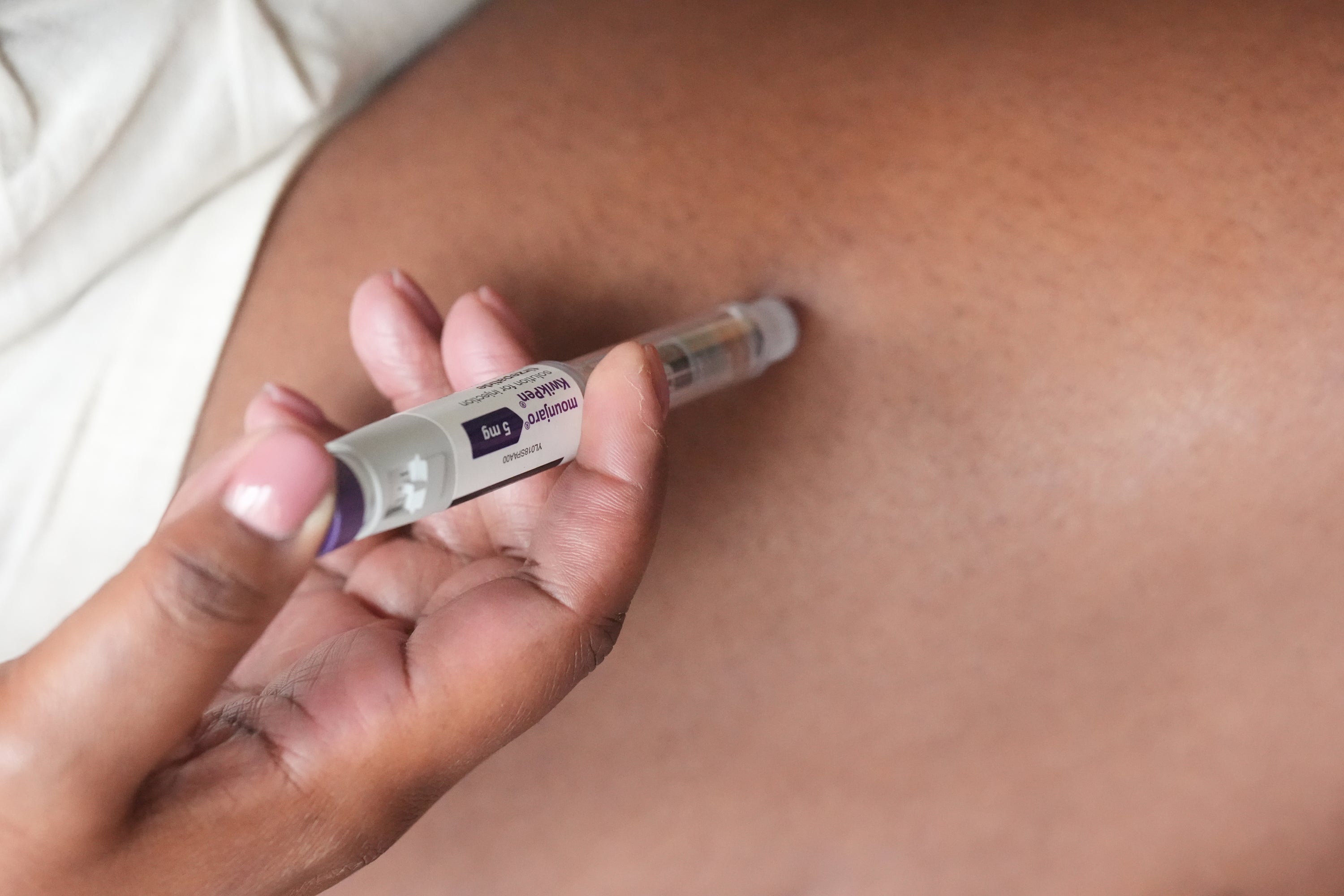 GLP-1s are helping drive the skinny aesthetic (PA)
Of course, everyone’s body is different and some people are born into skinnier frames. What we’ve seen playing out in the world of A-listers recently is something else entirely. These are women who once looked healthy and nourished who swiftly swap that for emaciated. It’s as if they’re fading away before our very eyes.
It’s important, too, that we consider the context to all of this. The connection between women’s size and politics was popularised nearly 50 years ago in psychotherapist Susie Orbach’s seminal 1978 book, Fat is a Feminist Issue. Thinness and the patriarchy go hand in hand, she argued: making us feel insecure about our bodies is a simple way to distract and control us; making us feel like we should physically take up less space in the world is a neat metaphor for keeping us quiet and submissive. (If you’re starving all the time, are you really going to have the energy to challenge systemic inequality? Or be strong enough to run away from a predator, for that matter?)
Sadly, things have only further deteriorated since the Seventies’ revolutionary second-wave feminism when we consider the beauty “work” women are expected to perform on a daily basis to remain palatable. Social media and the subsequent rise of the beauty and wellness influencer have introduced yet more unattainable standards to fall short of – 12-step skin regimens, hour-long contouring make-up routines and 5am exercise classes – alongside the proliferation of cosmetic procedures now viewed as standard practice necessitated by the unpaid, full-time job of staying “hot” until we die. The worse we feel about ourselves, the more money we’ll spend trying to rectify it – and is only set to worsen as AI content floods our feeds. For how can we ever live up to perfect bodies that have never, and will never, consume a single calorie?
I feel like all the bodies I’m seeing online are tiny, and I’m not talking about naturally slim – I’m talking emaciated
Phoebe, aka @afitnesshun
It doesn’t feel like a coincidence that a return to skinny being in vogue has gone hand-in-hand with the upsurge in both the “tradwife” movement and the manosphere to the rolling back of reproductive rights in the US and a regressive president who finds nothing wrong with commenting openly on women’s looks and whether they are smiling enough or not. The message is clear for women: shut up and stay small.
The one thing that’s given me hope in the past few weeks is seeing women – normal-sized, healthy, happy women – intentionally making and sharing videos of their bodies – normal-sized, healthy, happy bodies – on social media. These posts show their tummies and paunches, their lumps, bumps and rolls, minus any sucking in or filters to help remind us what a regular person – the kind we see every day outside on the street but rarely online – actually looks like.
“The internet is making me feel like I’m going insane,” shared Phoebe, whose Instagram handle is @afitnesshun, in a post earlier this month that’s since gone viral. “Just in case you needed to see it today, here is a very, very, very normal body.”
Dressed in a crop top and shorts, she gives a 360-degree view, continuing: “I feel like all the bodies I’m seeing online are tiny, and I’m not talking about naturally slim – I’m talking emaciated.” Training for a third marathon, Phoebe says she’s the fittest she’s ever been, and yet “I still have a stomach that sticks out, my body moves and jiggles and that is so normal – this is not something to be scared of.”
Her video garnered tens of thousands of likes and comments, most of which were positive. However, it wasn’t long before negative responses started filtering through, such as “Why are we celebrating being overweight?”; “Yes you may be healthy but that doesn’t mean your body looks good”; and “That’s not normal, that’s naturally gross.”
It perfectly demonstrated how warped our perception of women’s bodies has become, argued Phoebe in a follow-up video. “People are not viewing normal bodies as healthy bodies,” she said.
It’s not the fault of the individual women who have adopted the ultra-skinny aesthetic, and it’s not up to us to name, shame and blame them. But we equally can’t stay silent when the prevalence of eating disorders in 11- to 16-year-olds increased five-fold from 0.5 per cent in 2017 to 2.6 per cent in 2023, according to NHS England data. We need to be louder and take up more space than ever.
For now, the antidote might just be encouraging young people (and ourselves) to put down the phone and take a look around at the people they know – their friends, family and communities – and remind ourselves that, as Phoebe says: “The goal is not to be tiny. The goal is always to be the happiest, the healthiest, the fittest – and have the most fun.”
For anyone struggling with the issues raised in this article, eating disorder charity Beat’s helpline is available 365 days a year on 0808 801 0677. NCFED offers information, resources and counselling for those suffering from eating disorders, as well as their support networks. Visit eating-disorders.org.uk or call 0845 838 2040.