
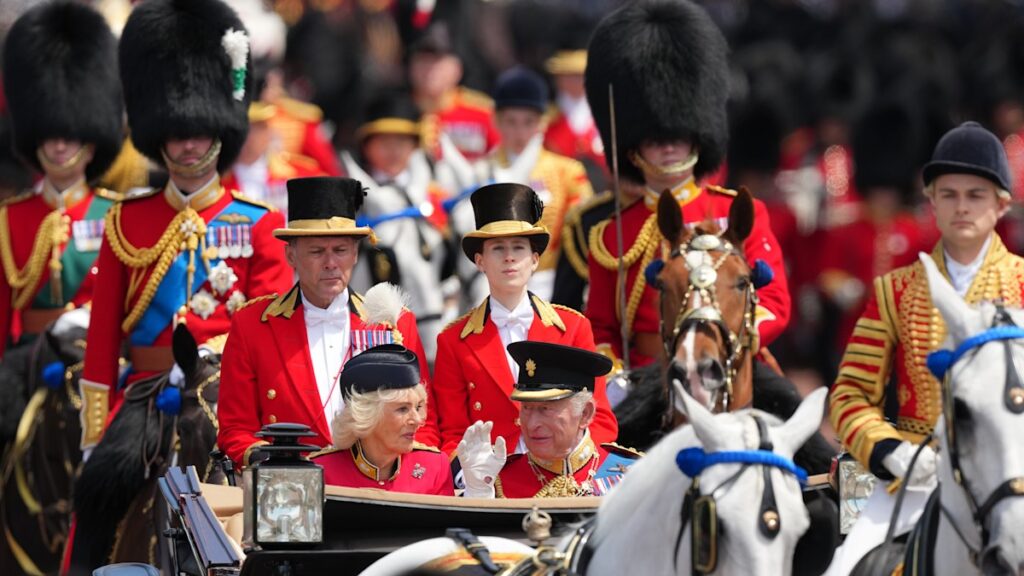
They are one of the most iconic symbols of the British monarchy, but concerns over animal welfare is behind a push to ban the bearskin hats worn by guards outside Buckingham Palace.
Members of the King’s Guard, dressed in their striking red uniform and tall black hats, are stationed outside the monarch’s London residence and the nearby St James’ Palace, and are a popular sight for tourists.

The iconic tall black bearskin hats, worn by the King’s Guard, could be banned with faux fur used instead. AP Photo/Kirsty Wigglesworth
Their hats, known as bearskins, have been used by the British Army since 1815 and were introduced to make its soldiers look more intimidating in battle.
But that part of the iconic uniform could soon be a thing of the past, despite it having become a symbol of the history and traditions of the British royal family.
A group of MPs in Britain are demanding faux fur or an alternative fabric be used instead, saying the use of real Canadian bearskin pelts was “impossible to justify”.
Politicians from Labour, the Liberal Democrats and the Green Party wrote to the UK’s defence minister last month asking for the bearskins to be swapped to “meet today’s ethical standards”.
“Both Parliament and the British public have consistently rejected the cruelty associated with the fur trade,” the letter said.
“You, yourself, have publicly expressed opposition to the use of fur.
“The Government’s continued use of real bearskin is impossible to justify. This moment calls for leadership and modernising the caps to meet today’s ethical standards.
“We call on you to instruct the Ministry of Defence and its suppliers to work proactively with manufacturers to develop and adopt a suitable faux fur alternative, in line with the Government’s commitment to advancing animal welfare.”

King Charles, seen at Trooping the Colour in 2023, wore a bearskin hat during the ceremonial procession down The Mall. Samir Hussein/WireImage
They added: “Most urgently, while this process continues, bears are still being shot with crossbows and killed, their cubs orphaned, and their pelts used to produce new caps.
“The Ministry of Defence must suspend any further orders of real bearskins pending a faux-fur replacement.”
Orders for the bearskin hats have risen in recent years, animal rights group Peta said. In 2024, 22 caps were requested but the following year that number rose to 96.
They are said to cost more than £2,000 (approx. $4000) each.
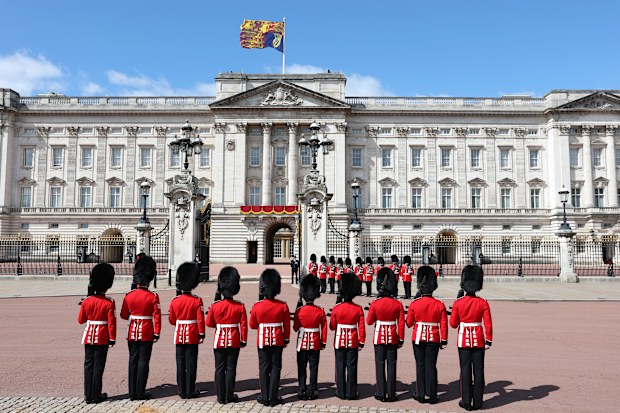
Coldstream Guards are among the guards who wear bearskin hats. They are seen here outside Buckingham Palace during Trooping the Colour in June. Chris Jackson/Getty Images
Members of the royal family wear bearskin hats during ceremonial events, including Prince William and Prince Edward at Trooping the Colour, the king’s annual birthday parade.
Only some of the guards are allowed to wear bearskin hats, signifying their importance.
The only foot guards permitted to wear bearskin hats include the Grenadier, Coldstream, Scots, Irish and Welsh Guards.
Armies in other countries around the world which traditionally used real bearskins, including Italy and Sweden, have now swapped to faux fur.
In response to the letter calling for the ban on real fur, a Ministry of Defence spokesperson said the government was open to looking at alternatives.
“The MoD backs replacing bearskin caps with a faux fur alternative and we have set five tests any alternative must pass,” the spokesperson said.
Other fabrics must need to be of equal quality to keep the soldiers warm and dry and able to sustain the hat’s famous tall shape, it added.
Previous governments have rejected the use of alternative synthetic fabrics, arguing no other materials can withstand the British weather.
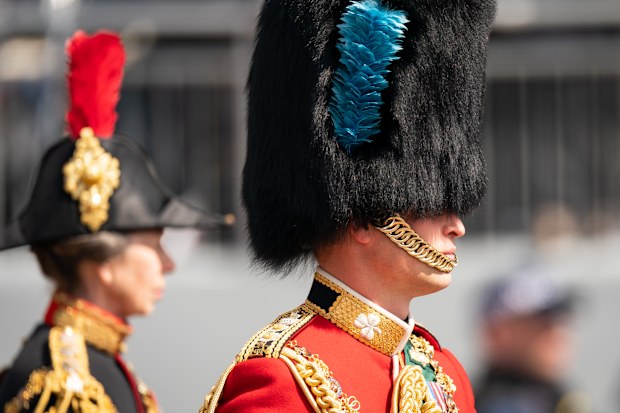
Prince William wore a bearskin hat in his role as Colonel of the Irish Guards at Trooping the Colour in 2022. Getty
A poll, done by the BBC after the issue was raised again recently, found 63 per cent of the public want real fur banned. Just 29 per cent were against it and eight per cent didn’t know.
In 2024, British actor Stephen Fry joined the calls to ban real fur.
“Tradition is never an excuse for cruelty,” he said in a video for PETA.
Fry said it took one bear to provide enough fur for each of the King’s Guard caps.
In 2019, Queen Elizabeth II stopped buying clothing made with real fur.
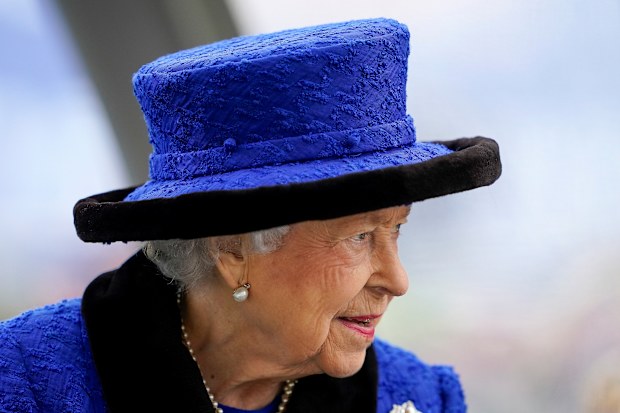
In 2019, Queen Elizabeth II’s dresser revealed the monarch would no longer buy new items of clothing with real animal fur. Getty
Her dresser Angela Kelly said the monarch would still wear items from her existing wardrobe with fur but no new pieces would be added.
“We are not suggesting that all fur on existing outfits will be replaced, or that The Queen will never wear fur again. The Queen will continue to re-wear existing outfits in her wardrobe,” said a Buckingham Palace spokesperson.