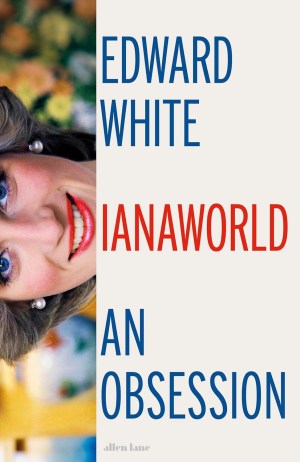
Tony Blair said that Princess Diana had invented a new way to be British. In the new biography Dianaworld: An Obsession, author Edward White says: “It might be more accurate to say that through Diana the British invented a new way of fantasising about themselves.”
Did we all become more compassionate, more ready to show our emotions and cry in public, because of the “People’s Princess” – or is that just a story we tell ourselves? Do we believe that someone could be both “dazzlingly ordinary and dazzlingly royal”, as White puts it – and is that even what we want?
Dianaworld, which is out now, has already been attracting attention, particularly for the report that Diana went out to a club, dressed as a gay man, with Freddie Mercury. This “revelation” was first published in 2013 – but the breathless current response shows Diana is still hot news.
There have been very good, even-handed, meticulous Diana biographies – Sally Bedell Smith, Sarah Bradford and Tina Brown produced three of the best – and they used the words of her “circle” throughout. What White tries to do differently is to focus on the other direction: the effect she had on the people around her – during her lifetime, and also her legacy among different generations and groups.
White says he wanted to write about “the layers of mythology and the people connected to them”. It is an interesting idea, but sentences early on exemplify his eccentric, at times erratic, approach. Looking at Diana’s background “appeals both to modern ideas about understanding the self through psychoanalysis and genetics, as well as to the mediaeval irrationality upon which British nobility rests”. But be reassured – as it goes on, Dianaworld gets a lot more robust.
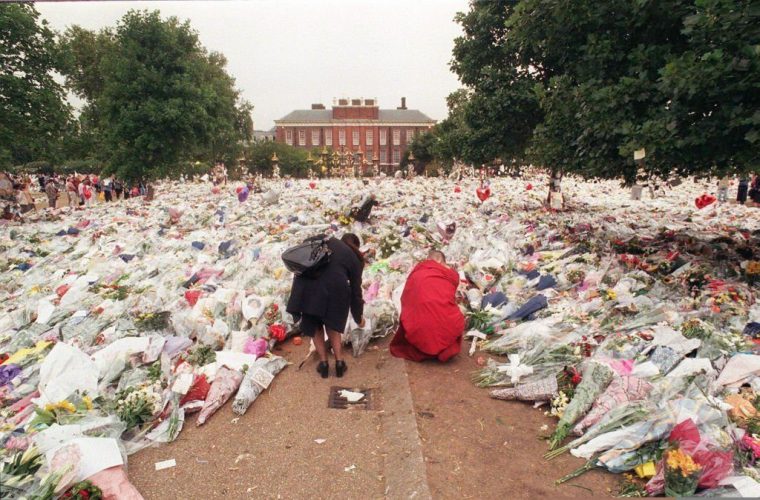 After Diana’s death in 1997, there was a huge public outpouring of grief (Photo: Paul Vicente/AFP/Getty)
There is one figure who appears in this book infrequently (five mentions) but runs through the reader’s head the whole time: Meghan, Duchess of Sussex.
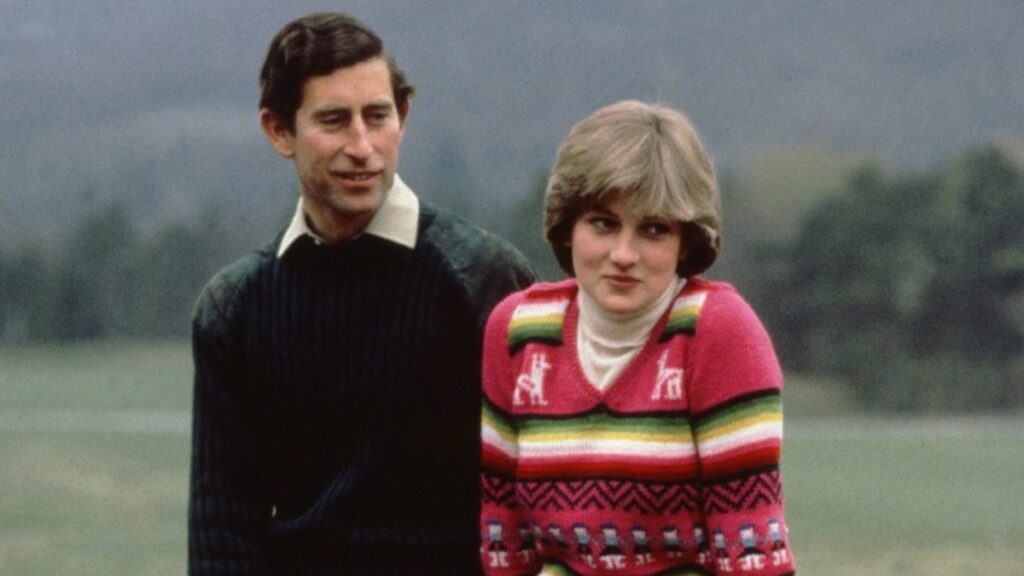
She was born just after Diana’s “fairy-tale” wedding to Prince Charles. When she married Prince Harry, she was 36, the age at which Diana died in the car crash in Paris. Both women went into a difficult situation – a royal marriage – with a lack of knowledge and preparation and little help.
But Meghan has better prospects than Diana had, because she has a husband, Prince Harry, who stands between her and difficult circumstances, and backs her up. Diana’s husband – then Prince Charles, now King – was the difficult circumstance.
Can studying Diana give us a clue to Meghan’s future? Will there one day be a book about “Meghanworld”?
White starts by describing Diana Spencer’s early life. By his account, her posh family were a dreadful, Gothic crew, with her parents’ murky divorce, poor communication and lack of overt affection creating a Larkin-esque multi-generational misery. Just like the House of Windsor, then.
Each subsequent chapter tells her story, but also looks at how she affected groups who had a special interest in her: the gay community; feminists saying “Don’t do it, Di” at the time of the 1981 wedding; people of south-east Asian background seeing her marital troubles as typical of their culture, with an arranged marriage, dominant mother-in-law and an auntyji in Princess Margaret.
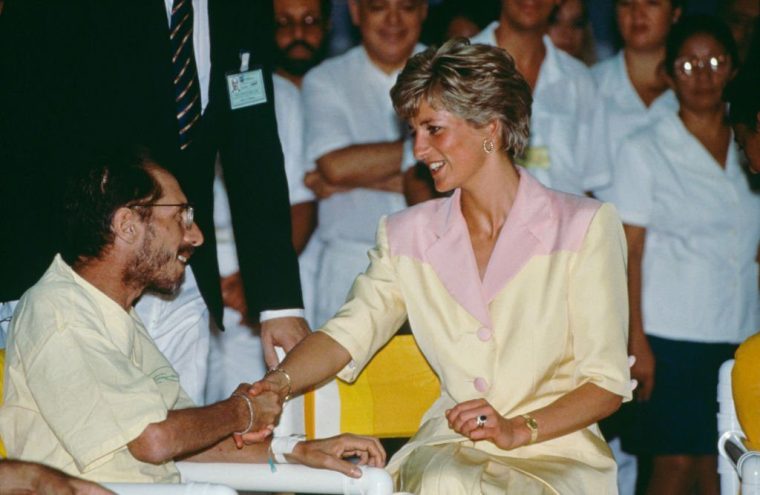 Diana visiting Aids patients in Brazil in 1991 as part of her humanitarian work (Photo: Tim Graham/Getty)
The author has consulted all the sources, and lays out the stories nicely, but some of his attempts to widen the focus fall flat – we don’t learn much, for instance, from the included diary extracts from people who didn’t know the princess. Luckily for us, these don’t take up too much of the book, and there is room for sharper perceptions, such as that when she visited those in dire straits, the media coverage was fixated on “her largesse rather than their wellbeing”.
With an enjoyably light touch, White takes apart the affectation of Diana and other famous people claiming that the love of their fans is “humbling” – surely, as he says, the last thing acclaim and adoration could do is “cause a flush of humility”. And I liked his spiky account of Diana attending the Humanitarian of the Year award “among a who’s who of selfless lovers of humanity, including Henry Kissinger and Donald Trump”.
White makes the argument that it’s not that everyone loved Diana; it’s that a section of people loved her to excess, almost alarmingly. She had an allure that was mesmerising to some. To her public, but also to those whom Tina Brown, in her excellent 2007 biography, The Diana Chronicles, called the Dianamen. A certain type found themselves unable to resist her – politicians, writers and sportsmen all fell for her. Sometimes the descriptions sound like Hilary Mantel writing of the conquests of Anne Boleyn (who famously mesmerised some, and repelled others) in Wolf Hall.
White highlights the mutual incomprehension of those who loved her and saw her as close to perfect, and those who thought she was lightweight, delusional and full of herself. There is, of course, no reason that she couldn’t be both delusional and (as she was convinced) badly treated.
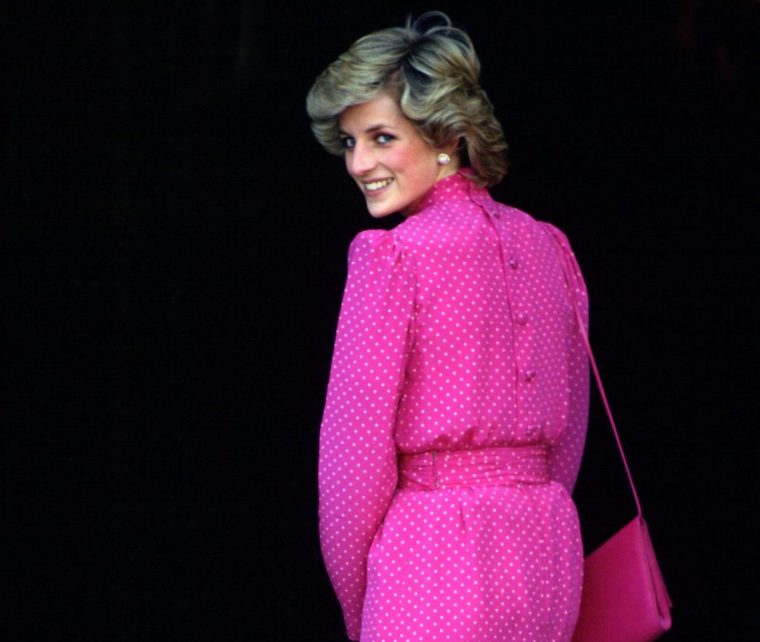 Diana had an allure that some found mesmerising (Photo: Tim Graham/Getty)
Even her biggest fans would surely agree that Diana had a vision that separated from reality sometimes, went in a direction that was a few degrees off. That is something Meghan shares with her. Everyone needs someone in their life who will tell them when that happens. Unfortunately, Harry seems most unlikely to say that to Meghan (he shares her vision), and Diana had no reason to listen to her husband (who wasn’t listening to anyone else, either) – and those who dared to point out her mistakes were too easy to sack or ghost.
But when you take a closer look, that is a problem among many of the royals, then and now. If you argue with them too much, you are gone.
White looks briefly at the idea of the “evil counsellor” in royal history, who “makes” a senior royal behave badly – but to me that sounds like a convenient fiction. What they need is better advice from someone who can’t be fired. After years of floundering, King Charles seems to have finally achieved that with Queen Camilla.
There has been a “lost” female royal for each recent generation: Wallis Simpson, the Duchess of Windsor, through the middle years of the 20th century (“She was not royal!” the Windsors would be saying), then Diana after her early 90s divorce, and now Meghan living her California life. What would have become of Diana if she had lived longer is the impossible question, but you can certainly imagine her having settled in California and welcoming her daughter-in-law Meghan as a kindred spirit. (And then falling out with her, repeatedly.)
Dianaworld ends on a downbeat note, suggesting that she is – finally – becoming less of an idol, more of a historical figure. But the book – highly entertaining, witty and just judgemental enough – makes good on White’s early assertion that “the princess and the universe that has woven itself around her allow us to examine so many aspects of life”.
You could take from the book that it is not our emotional intelligence that she changed, but the Royal Family. Their assurance about their position, the deference and discretion they expected, have all fragmented since: we view them differently. But White would say, we can all make our own choices from her legacy.
‘Dianaworld: An Obsession’ (Allen Lane, £25) is out now