Share
Tweet
Share
Share
The British monarchy, one of the world’s oldest institutions, remains a focal point of global interest with its meticulously defined line of succession, determining who will follow King Charles III on the throne. Since Charles ascended on September 8, 2022, following the death of his mother, Queen Elizabeth II, the royal hierarchy has taken a new shape, featuring names from Prince William to lesser-known figures like Lucas Tindall. This structure, rooted in centuries of tradition yet shaped by modern laws, reflects the monarchy’s enduring continuity amid familial and societal shifts. The current order lists 25 members, each with distinct roles and stories within the royal framework.
The line of succession is more than a list; it’s a mirror of the royal family’s recent history. Legal changes, such as the abolition of male primogeniture, have reshaped the positions of figures like Princess Charlotte. Personal decisions, including Prince Harry and Meghan’s withdrawal from senior royal duties, have also influenced the monarchy’s dynamics. Below are key aspects of the succession:
The order follows direct descent, prioritizing elder children.Members without royal titles, like Princess Anne’s children, remain in the line.Recent births, such as Athena Mapelli Mozzi, have shifted the hierarchy.
This framework ensures the British monarchy’s stability, even in times of change. The following sections detail the key figures and events shaping the line of succession to the throne.
First in line: Prince William
Prince William, the eldest son of King Charles III, holds the top spot in the line of succession. Born on June 21, 1982, he became the Prince of Wales and inherited the Duchy of Cornwall, a significant estate funding his royal duties. Married to Catherine Middleton since 2011, William is father to three children, all among the top successors. His education includes a degree from the University of St. Andrews, and his career spans military training with the Army, Royal Navy, and RAF.
William served as a search-and-rescue pilot and air ambulance co-pilot, balancing royal obligations with practical roles. Since 2017, he has taken on more duties on behalf of the monarchy, particularly after his grandfather, Prince Philip, retired from public engagements. As the heir apparent, William’s every move is closely watched by the media, with his family’s activities drawing widespread attention.
William’s children take center stage
Prince George, born on July 22, 2013, is second in line to the throne. At just 12 years old, he already participates in royal events, such as official ceremonies and public visits alongside his parents. Educated at elite schools, George is often seen at sporting events, reflecting his family’s passion for sports.
Princess Charlotte, born on May 2, 2015, holds the third position. Benefiting from the Succession to the Crown Act 2013, which eliminated male preference in succession, she remains ahead of her younger brother. Charlotte’s vibrant personality shines through in official photos released by Kensington Palace.
Prince Louis, born on April 23, 2018, is fourth in line. Less visible than his siblings, he appears at family events, such as Christmas celebrations at Sandringham. The three children of William and Catherine represent the monarchy’s next generation, with roles expected to expand in the coming years.
Harry and his family: A new path
Prince Harry, Duke of Sussex, is fifth in the line of succession. Born on September 15, 1984, he gained prominence through his military career, including two tours in Afghanistan as an Apache helicopter pilot. After leaving the Army in 2015, Harry focused on charitable initiatives, such as the Invictus Games, supporting injured veterans. His 2018 marriage to Meghan Markle marked a moment of modernization for the monarchy but also sparked controversies.
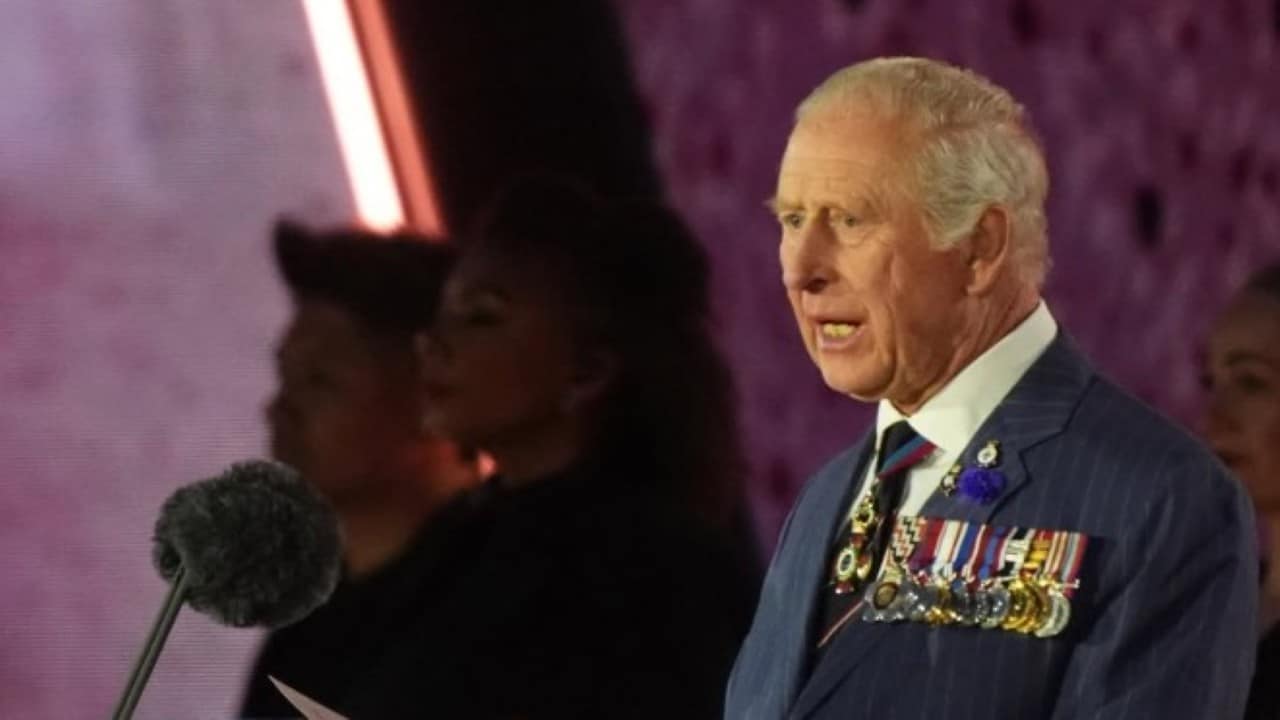 Rei Charles – Foto: Instagram
In 2020, the couple announced their decision to step back from senior royal duties, seeking financial independence in the United States. The move led to the loss of honorary military appointments and royal patronages. Despite this, Harry and his children, Archie and Lilibet, remain in the line of succession. Below are key milestones in Harry’s journey:
Military service: A decade in the Armed Forces, with notable service in Afghanistan.Invictus Games: Founded in 2014, hosting events across five continents.Life in the U.S.: The couple has resided in Montecito, California, since 2020.Media ventures: Partnerships with platforms like Netflix and Spotify.Archie and Lilibet in the succession
Archie Harrison Mountbatten-Windsor, born on May 6, 2019, is sixth in line. He was not automatically a prince at birth but gained the right to the title after his grandfather, Charles III, ascended. His parents, Harry and Meghan, have stated that Archie and his sister will decide whether to use royal titles in the future.
Lilibet Diana Mountbatten-Windsor, born on June 4, 2021, holds the seventh position. Her name pays tribute to Queen Elizabeth II, nicknamed Lilibet in childhood, and Princess Diana, Harry’s mother. The choice underscores the family’s ties to royal history, despite their distance from official duties. Both children live with their parents in California, largely out of the royal spotlight.
Prince Andrew and his daughters
Prince Andrew, Duke of York, is eighth in the line of succession. Born on February 19, 1960, he is the third child of Queen Elizabeth II. His career included 22 years in the Royal Navy, with active service in the Falklands War. However, his public image was tarnished by his association with Jeffrey Epstein, leading to his withdrawal from royal duties in 2019. In 2022, he settled a U.S. civil lawsuit, paying an undisclosed sum while denying the allegations.
Andrew’s daughters, Beatrice and Eugenie, hold the ninth and 12th positions, respectively. Beatrice, married to Edoardo Mapelli Mozzi, has two daughters, Sienna and Athena, born in 2021 and 2025. Eugenie, married to Jack Brooksbank, is mother to August and Ernest, born in 2021 and 2023. Below are details about Andrew’s daughters:
Princess Beatrice: Married in 2020, engaged in charitable organizations.Princess Eugenie: Active in causes like combating modern slavery.Children: Sienna and Athena (Beatrice); August and Ernest (Eugenie).Edward, the Duke of Edinburgh
Prince Edward, born on March 10, 1964, is 15th in the line of succession. He was granted the title Duke of Edinburgh in 2023, honoring his late father, Prince Philip. Married to Sophie, Duchess of Edinburgh, Edward has two children: James, Earl of Wessex, and Lady Louise Windsor. After a brief stint in the Royal Navy, he founded a television production company and later took on royal engagements on behalf of Queen Elizabeth II.
James, born in 2007, is 16th in line, while Louise, born in 2003, is 17th. Louise’s position below her younger brother reflects the succession rules at the time of her birth, which favored males. The family maintains a low profile, with Edward and Sophie focusing on royal duties and charitable causes.
Princess Anne and her descendants
Anne, Princess Royal, born on August 15, 1950, is 18th in the line of succession. The second child of Elizabeth II, she is renowned for her commitment to charities, such as Save the Children, and her equestrian career, including competing in the 1976 Olympics. Anne has two children from her first marriage to Mark Phillips: Peter Phillips and Zara Tindall.
Peter, born in 1977, is 19th in line and father to Savannah and Isla, born in 2010 and 2012. Zara, born in 1981, is 22nd and mother to Mia, Lena, and Lucas, born between 2014 and 2021. None of Anne’s descendants hold royal titles, as Mark Phillips declined an earldom upon marriage. Below are highlights of the family:
Princess Anne: President of Save the Children since 1970.Zara Tindall: Silver medalist in equestrian events at the 2012 Olympics.Peter Phillips: Divorced since 2020, leads a private life.Recent changes in the succession
The line of succession was updated with the birth of Athena Mapelli Mozzi, daughter of Princess Beatrice, on January 22, 2025. Born prematurely at 2 kg, she took the 11th position, shifting other members down the list. This event underscores the monarchy’s constant evolution, with new births reshaping the hierarchy.
The Succession to the Crown Act 2013 continues to influence the order. By abolishing male primogeniture, it ensured Princess Charlotte remained ahead of her brother Louis. The change, applied to births after October 28, 2013, modernized the monarchy, aligning it with contemporary gender equality values.
Role of Counsellors of State
Counsellors of State play a vital role in the monarchy, stepping in for the monarch during official duties when needed. Currently, Prince William, Prince Harry, Prince Andrew, and Princess Beatrice are among the counsellors, though Harry and Andrew do not undertake public roles due to their circumstances. Queen Camilla and Prince Edward are also eligible, ensuring continuity in royal functions.
The selection of counsellors reflects proximity to the throne but also considers availability and status. For instance, Harry remains eligible despite living in the U.S., though his participation is unlikely. This system ensures the monarchy operates smoothly under exceptional circumstances.
Marriages shaping the monarchy
Royal marriages often influence the line of succession, introducing new members and altering family dynamics. William and Catherine’s 2011 wedding solidified the image of a modern monarchy, while Harry and Meghan’s 2018 union brought diversity to the royal fold. Other marriages, such as Beatrice’s to Edoardo Mapelli Mozzi and Eugenie’s to Jack Brooksbank, expanded the family tree.
Each union produced children now in the succession, such as Sienna and Athena (Beatrice) and August and Ernest (Eugenie). These events, widely covered by the media, sustain public interest in the monarchy, even in an increasingly digital world.
Tradition versus modernity
The British monarchy balances centuries-old traditions with 21st-century adaptations. Charles III’s ascension at 73 marked the latest succession in British history, while the inclusion of women in higher positions, like Charlotte, reflects legal reforms. Harry and Meghan’s departure highlights a quest for independence within a historically rigid institution.
The line of succession also showcases generational diversity, with members ranging from 12-year-old George to 74-year-old Anne. This breadth ensures the monarchy remains relevant to varied audiences, from young fans following George and Charlotte to those admiring Anne’s longevity.
Recent royal events
King Charles III’s coronation on May 6, 2023, was a historic milestone. Held at Westminster Abbey, the ceremony brought together the royal family and global leaders, reinforcing the Crown’s continuity. Camilla, now queen consort, played a central role, while William and his children were prominently featured.
Other events, such as Elizabeth II’s Platinum Jubilee in 2022, underscored the monarchy’s enduring strength. Despite Harry and Meghan’s absence from some engagements, William, Catherine, and their children kept the focus on the next generation. These moments highlight the monarchy’s global relevance.
Fascinating facts about the succession
The British line of succession is rich with historical and unique details:
First great-grandchild: Savannah Phillips, born in 2010, was Elizabeth II’s first great-grandchild.Rule change: The 2013 Act ensured gender equality in succession.Optional titles: Archie and Lilibet may choose not to use royal titles.Military service: Members like Harry and Andrew served in the Armed Forces.Honored names: Lilibet and Diana reflect ties to Elizabeth II and Princess Diana.
These details add depth to the monarchy’s story, linking past and present. The line of succession, while formal, is also a narrative of family, tradition, and evolution.