Share
Tweet
Share
Share
The British monarchy is undergoing an unprecedented transformation. King Charles III, aged 76, is battling cancer diagnosed in February 2024, with his health deteriorating throughout 2025. As the monarch drastically reduces public duties, Prince William and Kate Middleton, both 42, emerge as central figures in preparing for a succession that may come sooner than expected. The pressure on the couple mounts amid personal and institutional challenges.
William has taken on roughly 80% of royal duties in 2025, leading diplomatic events and managing assets like the Duchy of Cornwall, which generated £24 million last year. Kate, despite her own cancer battle, diagnosed in January 2024, has gradually resumed public activities, focusing on causes like mental health and early childhood education. The monarchy, contributing £1.8 billion annually to the UK economy, faces questions about its relevance, particularly in Commonwealth nations.
Buckingham Palace remains tight-lipped about Charles’ cancer, but his public appearances dropped from over 200 events in 2024 to under 50 in 2025, signaling the severity of his condition. The preparation of William and Kate reflects the urgency of ensuring the Crown’s continuity.
Expanded commitments: William led 10 international trips in 2024, including the reopening of Notre-Dame Cathedral in Paris.Public support: The couple maintains 75% approval among Britons, compared to Charles’ 50%.Social projects: Kate’s initiatives benefited 2 million children in 2024.Financial management: William oversees the Duchy of Cornwall, focusing on sustainability.William’s intensive preparation
Prince William has ramped up his training to assume the throne, attending meetings with foreign policy experts and leading charitable projects that raised £50 million in 2024. His experience as a search-and-rescue pilot in the Royal Air Force shaped a pragmatic approach, blending traditional duties with modern initiatives like the Earthshot Prize, focused on climate solutions. In 2024, the project awarded 15 environmental initiatives, raising £10 million.
Managing the Duchy of Cornwall, valued at billions of pounds, also falls under his purview. Last year, William invested in renewable energy projects, aligning the monarchy with contemporary values. His schedule, up 30% since 2023, includes events like the Notre-Dame reopening, where he represented Charles in December 2024, strengthening diplomatic ties with France.
William faces internal and external pressures. The monarchy, costing taxpayers £100 million annually, is questioned by 40% of Britons, per recent polls. Six Commonwealth nations, including Jamaica and Australia, are debating severance in 2025, requiring the prince to actively preserve the Crown’s global influence.
Charles’ fragile health
Charles III’s cancer, identified after a procedure for benign prostate enlargement, has reshaped the monarchy’s dynamics. The king, who ascended the throne in September 2022 following Elizabeth II’s death, saw his schedule shrink dramatically. In March 2025, a brief hospitalization in London due to treatment side effects heightened concerns about his long-term leadership capacity.
Despite returning to work at a reduced pace, Charles canceled traditional events, such as the Remembrance Day ceremony in November 2024. His medical team continually adjusts treatments, but the lack of remission signs fuels speculation about potential abdication. Buckingham Palace maintains a reserved stance, releasing only essential updates.
Limited schedule: Charles attended fewer than 50 events in 2025, down from 200 in 2024.Recent hospitalization: Treatment side effects required medical observation in March.Power delegation: William took on core duties, like meetings with global leaders.Partial transparency: The Palace avoids details on the cancer’s type or stage.Camilla’s support: The queen consort handled solo events, like a visit to Italy in April.
The king’s health shapes public perception. While Charles strives to maintain leadership, Britons’ confidence in William and Kate grows, with 72% approving their ability to lead, per 2025 surveys.
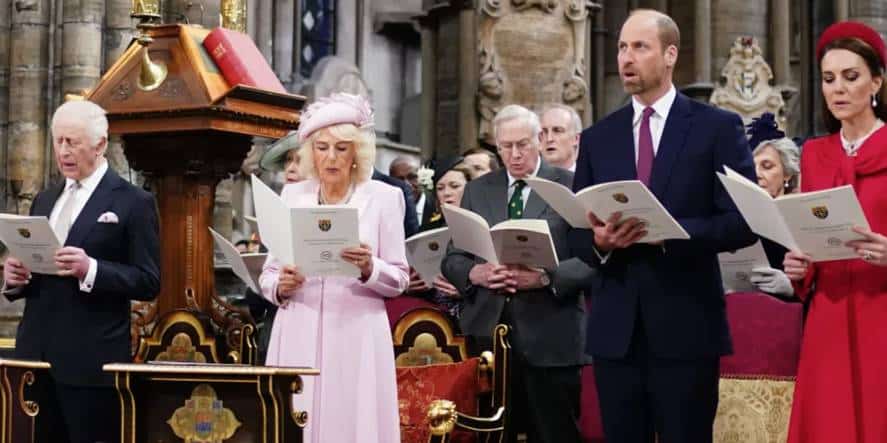 Charles, kate e Willians PA MediaKate’s gradual return
Kate Middleton faced a challenging 2024, stepping back from public life for months after a cancer diagnosis in January. Following abdominal surgery, the princess underwent preventive chemotherapy, resuming royal duties gradually in September 2024. Her first public appearance of the year, at the Trooping the Colour parade in June, drew applause despite heavy rain.
In 2025, Kate plans 20 public engagements, focusing on early childhood development and mental health. Her visit to the Royal Marsden Hospital in January 2025, where she met cancer patients, underscored her empathy and public connection. Projects like the Early Years Centre, praised by the World Health Organization, benefited 2 million children last year.
Kate’s recovery has reassured Britons, with 80% of 18- to 34-year-olds approving her work. Her schedule, down from 120 events in 2023 to 40 in 2024, is set to reach 60 engagements in 2025, reflecting her resolve to balance health and royal duties.
Succession line in focus
Charles’ declining health has spotlighted the line of succession. Should the king abdicate or pass away, William would immediately ascend as king, with Kate as queen consort. Queen Camilla would become queen dowager. Prince George, 11, would take the first spot in line, followed by Charlotte, 9, and Louis, 6. Prince Harry, William’s brother, remains fifth, behind his children, Archie and Lilibet.
George already joins public events, like charity visits, following William’s footsteps, who began at age 10. In 2024, the young prince attended five engagements, including a children’s hospital visit. Charlotte and Louis are also being introduced to royal activities, ensuring the lineage’s continuity.
Next in line: George, Charlotte, and Louis hold the top three spots after William.Early involvement: George attended five public events in 2024.Harry distanced: The prince remains fifth, with family tensions since 2020.Initial training: William and Kate’s children are prepared for future roles.
The next generation’s preparation reflects Buckingham Palace’s strategy to avoid instability, especially during institutional fragility.
Commonwealth under strain
The monarchy faces global challenges, with six Commonwealth nations debating severance in 2025. Barbados became a republic in 2021, and countries like Jamaica and Australia plan referendums on independence. William and Kate, with approval 20% above the royal average, made international trips in 2024, visiting Canada and New Zealand to bolster ties.
In 2024, William led 15 international trips, surpassing prior years. His presence at events like the Commonwealth summit in Australia underscored the importance of maintaining the Crown’s influence across 56 nations, home to 2.5 billion people. Kate, despite a reduced schedule, joined virtual engagements with community leaders, promoting education and sustainability.
The couple’s popularity is a strategic asset. Polls show 60% of Britons support the monarchy, with William and Kate as key figures in that backing. Their initiatives, like the Earthshot Prize, which raised £10 million in 2024, align the Crown with global values, such as combating climate change.
Crown modernization
William and Kate are working to make the monarchy more accessible and inclusive. Strategic social media use tripled their Instagram followers over the past five years, fostering direct public connection. At casual events, they adopt less formal attire, simplifying traditional protocols.
The Earthshot Prize, led by William, exemplifies modernization. Since its 2020 launch, it awarded 15 environmental projects, benefiting 5 million people in 2024. Kate’s Early Years Centre, with policies adopted by countries like Canada and Denmark, underscores her impact. These efforts reflect a monarchy aligned with 21st-century demands.
Social media: The couple tripled their online followers since 2020.Innovative projects: The Earthshot Prize raised £10 million in 2024.Early education: Kate’s initiatives benefited 2 million children.Simplified protocols: Less formal attire at casual events.Youth support: 80% of Britons aged 18-34 approve of the couple.
The couple’s approach blends tradition and innovation, maintaining the monarchy’s relevance in a changing world.
Camilla’s role
Queen Camilla has played a stabilizing role during Charles’ health crisis. In 2025, she took on solo events, like a TV set visit in March and a trip to Italy in April. Her presence at official engagements, such as diplomatic receptions, offsets the king’s reduced schedule.
Camilla, 77, also accompanies Charles at key events, like national celebrations. Her discreet yet active stance contrasts with William and Kate’s popularity but is vital for the Crown’s continuity. In 2024, she attended 100 events, up 20% from 2023, reflecting her importance in a delicate moment.
Historical transitions
The British monarchy has a history of significant transitions. In 1936, Edward VIII abdicated to marry Wallis Simpson, bringing George VI to the throne. In 1952, George VI’s sudden death crowned Elizabeth II at 25, launching a 70-year reign. In 2022, Elizabeth II’s passing marked Charles III’s ascension at 73.
Charles’ reign, potentially among the shortest since Edward VIII, is challenged by his frail health. William and Kate’s preparation reflects lessons from past transitions, emphasizing stability and public connection. Each succession required adaptations, and the current moment demands a modern approach to address internal and external pressures.
Public approval
The monarchy retains significant support despite challenges. 2025 polls show 60% of Britons approve of the institution, with William and Kate as central figures. The couple’s resilience, especially amid cancer diagnoses, strengthens their public bond.
William led mental health initiatives reaching 5 million beneficiaries in 2024, while Kate advanced early childhood education with global impact. The couple’s approval, hitting 75% in 2025, contrasts with Charles’ 50%, affected by his health. Public confidence is crucial for the Crown’s relevance amid uncertainty.