
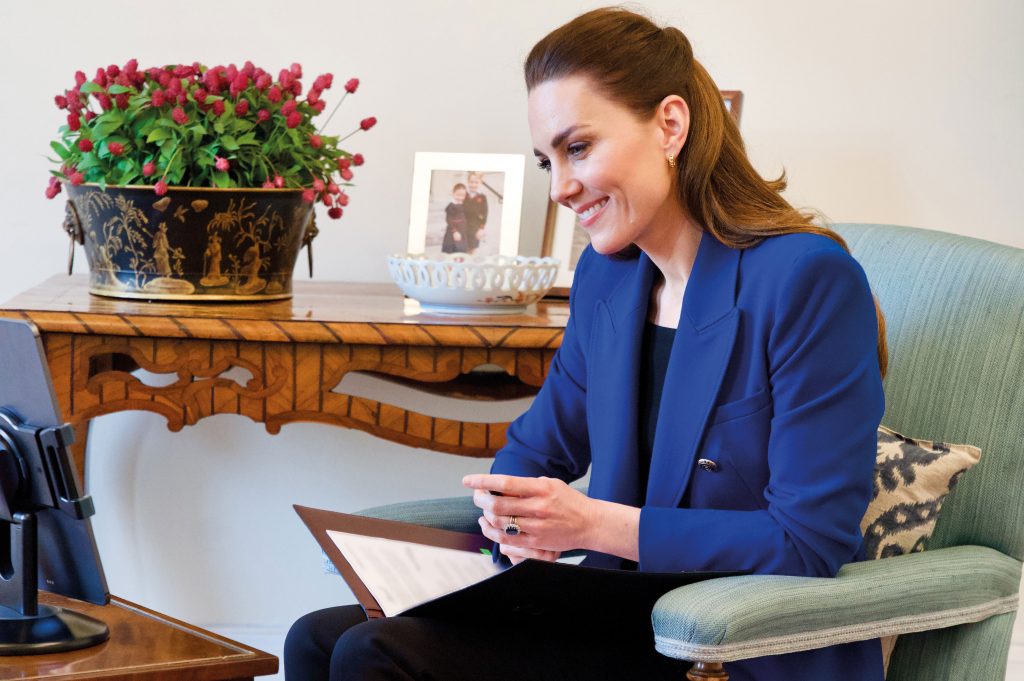
Nursing Now royal patron Her Royal Highness The Duchess of Cambridge has spoken to Harriet Nayiga, founder and director of Midwife-led Community Transformation, a charity bridging the gap between midwives and communities in Uganda by focusing on adolescent sexual health. The charity has participated in Nursing Now’s Nightingale Challenge
The interview, published on International Day of the Midwife 2021, forms part of a special set of articles to celebrate the three-year Nursing Now initiative, which is drawing to a close this month.
HRH: It’s very nice to meet you, Harriet. I’d love to hear a bit about you and what inspired you to become a midwife.
HN: Thank you so much. I have seven years of experience. What inspired me to become a midwife is a zeal to help women bring new life into existence, and also provide support throughout, especially that goes beyond physical healing to the care of the soul.
HRH: There’s a lot of pressure on a profession like yours because the women and families you care for are looking to you for advice and guidance. Do you feel that pressure in your career?
HN: Yes, that pressure has been more exaggerated during Covid-19 where you feel that you are also at risk and you also need care. You have a family, friends and you’re also worried about how they are, but yet you have to go and serve others.
HRH: In pre-Covid-19 times, what was your daily routine like? What’s a day in the life of Harriet?
HN: Before Covid I was still doing my internship – for my bachelor’s degree – so I used to travel a long distance (about 150km) to go work in clinical wards. It was a bit hectic and very tiring but I went through it.
HRH: In Uganda, do most women have their children at home or do they go to hospitals as a matter of routine?
HN: We do not have accredited home births but, because of a lack of resources, you find many women accidentally delivering at home and others on the way to hospital because of the long distance involved. Others have traditional birth attendants who enter someone’s house to help a woman deliver. We keep stressing that it is really dangerous.
These are the populations who face grave discrimination, so they tend to go to the hospital late, after complications have already emerged. I felt that I had to come and bridge this gap before the women reached me with serious complications.
Midwives are in a position to provide preventative initiatives on the ground before the complications have arrived or have emerged. This is the challenge that Midwife-led Community Transformation (MILCOT) is solving.
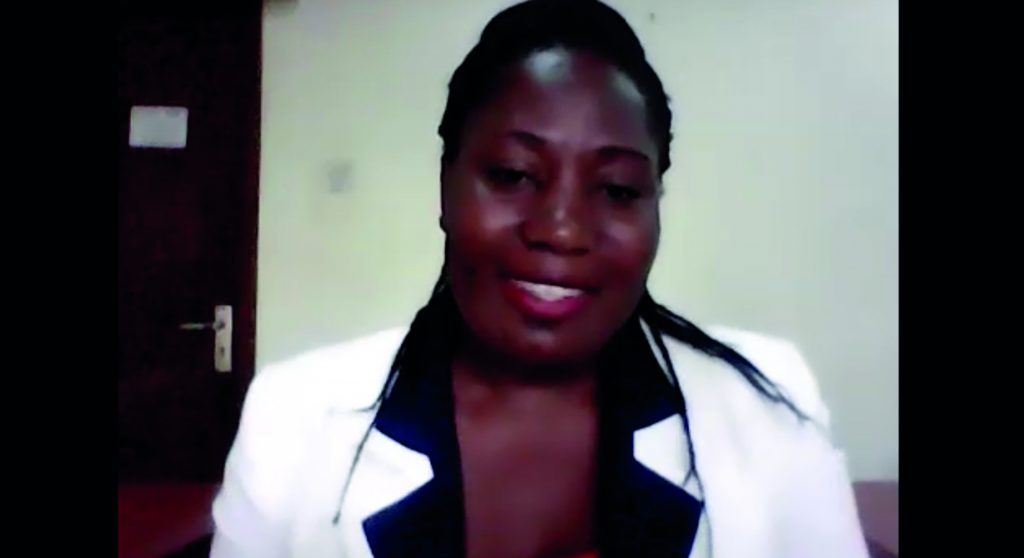
Harriet Nayiga, founder of Midwife-led Community Transformation (MILCOT)
HRH: MILCOT is such a fantastic initiative. Was it your idea?
HN: Yes, it was my idea; it was my vision. Five years back I worked with an organisation taking care of pregnant teenagers in crisis. I was caring for them day and night as a house mother and a midwife. I comforted them because many of them felt stigmatised. Through this, I realised the challenges these girls were going through – I was sharing them.
I would hug a young girl who is facing challenges – she’s crying, she was raped, she’s 10 years old. She’s seeing me as the mother, the sister, as everything – so I was caught up in the pain. I trained them in economic resilience, but that induced me to go back to school to learn how I can solve some of the challenges that they face. When I went returned to school, I got the evidence-based approach, the confidence and capacity to do something to contribute to their health.
When I went to a hospital for my practice, I found many young girls suffering complications. I met one 17-year-old who had nothing. Her baby had died and she had a high risk of bleeding. She over bled due to a post-partum haemorrhage and her uterus was not spared as she had to undergo a hysterectomy. That sent me to the community to help young girls like this and provide the information they need to prevent this.
HRH: How many communities are you working with through MILCOT?
HN: We serve Nansana Municipality, which is under one big district, Wakiso. Within that community, we have about 12 villages, but we are concentrating on five that are close to us.
There is huge demand in other villages and also across the country. We are looking to expand to the entire country, but because of limited resources we are concentrated at the moment in these five villages.
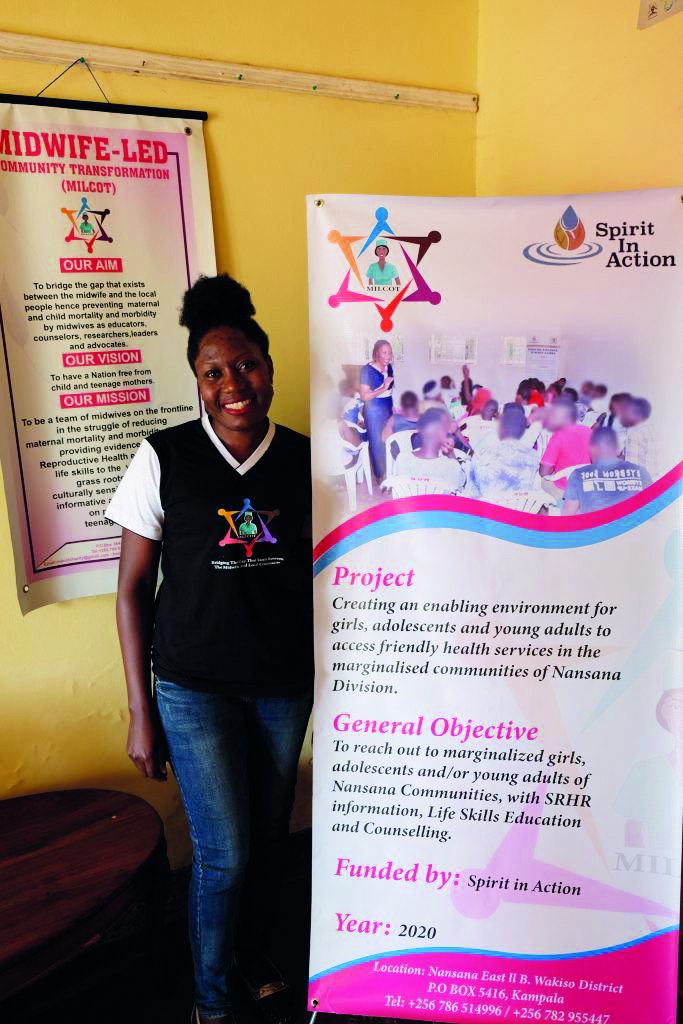
Harriet Nayiga
HRH: What is it that particularly works with your community-based care model?
HN: For these marginalised populations, to have someone to talk to, to have someone in their lives who understands what they’re going through, and who can help. That is what they need. As a midwife I need to be close, so that they speak to me, so that I listen to their concerns.
HRH: I can imagine Covid-19 has put you and your organisation, and all the work that you’re doing, under huge pressure. How has it been? How have you managed throughout Covid?
HN: Usually we do community outreach, we go to the community and reach out to check on them, but when Covid came we could not do it, especially during the lockdown. These key populations could not even get spare money to buy a mask. With funding support, we were able to respond to their needs.
We brought them sanitary pads, we made them masks, we gave them food and also detergent, because they could not buy soap. The only way we could reach out to them was via phone calls to check on them and how they are coping. And then it’s only to those who have phones.
HRH: One of the challenges here, that has been exacerbated because of the pandemic, is parental mental health. Is that part of the conversations you’re having with some of the families and the mothers, because that’s been put under a huge amount of pressure as well?
HN: Yes, some of the women are going through what we call intimate partner violence. She’s facing violence from her partner, the partner is not providing, the partner abuses her, beats her. Others who are doing sex work, they find a lot of abuse from the men they sleep with – so they are all stressed, they have depression. We have provided group psychotherapy and we assess the level of depression.
We are able to empower them, so they can set up small scale businesses to support themselves. Mental health is very important in the community and we have to prioritise it. I advocate that we centre on mental health, and it is a component [of our support] we cannot leave out.
HRH: It’s such a huge challenge. What do you feel needs to be done, what extra support do you feel is most needed by these communities?
Nursing Now special edition cover May 2021
HN: Most importantly, we need human resources in terms of staffing because the team and I are working on a volunteer basis. That means we are not receiving a salary. If we can get staff recruited to reach out to more [people] and also for them to be paid for – that could be amazing.
The office is my house. It is three rooms. I give out two to work as an office and then I sleep in one room, so it is not enough. That has challenged us. We just wish that we can get an office and a centre where we can build skills and train to provide care that is holistic.
So, a woman can get treatment, she can get counselling, have the resources and the information, and then she can also be empowered in vocational skills in the same centre. That will be amazing and is my dream.
We also need transport facilities. I find myself walking to reach out to the women I care for. Right now, I’m getting a car but it has failed to work. I have to buy a new battery and it is expensive. I struggle a lot, however, I love what I do. I’m standing as a midwife to empower others.
HRH: I’m in awe of all that you’re doing. It really is inspiring. We need more of you Harriet.
HN: Thank you.
HRH: It’s incredible and I can only imagine the challenges that Covid-19 and the pandemic have really put you and your team under, and the families you see. Hopefully there is a light at the end of the tunnel. It’s vital work that you’re doing. Are there things you’re looking forward to with MILCOT? Have you got challenges ahead of you?
HN: Definitely, but I’m standing strong because we are building organisational capacity and the support that we have got has really pushed us ahead. The funding we have received from the Burdett Trust for Nursing through our work with Nursing Now has been amazing.
We have trained nurses and midwives in provision and adult friendly health services. Where we are heading is to see that we partner more with health facilities that train nurses and midwives, so that it isn’t only MILCOT that trains communities.
We want to see ourselves at a centre which is free. We want to see ourselves with enough transport facilities, with enough staff where we provide these services, and we continue to show the world and our country that community-based services are a very important initiative that needs to be adopted.
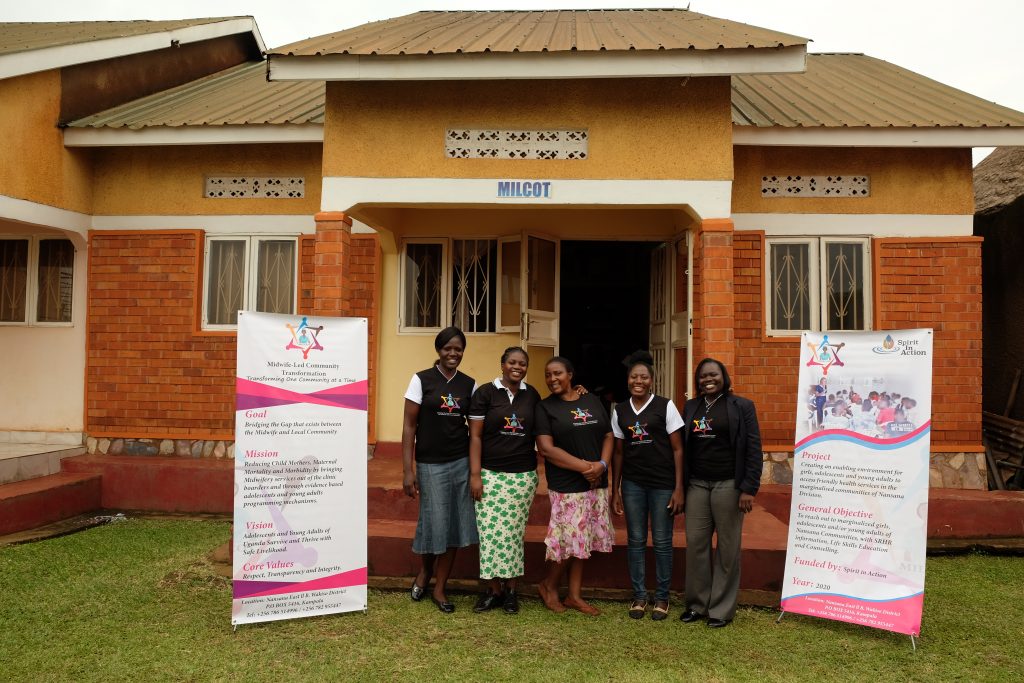
Harriet Nayiga (second from right) with her team at MILCOT
HRH: The work you and your team do, it’s needed now more than ever so I really wish it the best going forward. On top of all of this, I gather you took up Nursing Now’s Nightingale Challenge?
HN: MILCOT signed up for the Nightingale Challenge programme and we selected 11 nurses and midwives from five community health facilities.
Seeing as the maternal mortality rate is so high at 375 deaths per 100,000 live births, with teenage pregnancy at 25% and adults saying they receive unsatisfactory care, we felt that it was very important to try and train nurses and midwives at such facilities in preventative initiatives rather than focusing on response initiatives in the hospital.
This is lacking not only in Uganda but also around the world, especially in low income countries. So, at MILCOT, we are helping nurses and midwives to boost their confidence and resilience to lead in their health facilities, but also to go ahead so they can be at decision and policy making tables.
We want to raise the profile of nurses in our community but also the country at large, so we are training them in adult health friendly services, we have trained them on how to handle key populations, we are training them in counselling and we want them to see that they place themselves as community champions.
HRH: It’s fantastic to raise the importance and vital role that you play within those communities. Finally, I’d love to know how important Nursing Now has been for you and how important initiatives like this are for your profession?
HN: I always say that Nursing Now uncovered me and I got exposure to the entire world. I attended the World Health Assembly, and Nursing Now exposed me to a great network of connections.
I met people like Lord Nigel Crisp, co-chair of Nursing Now, and interacted with Dr Tedros Adhanom Ghebreyesus, director-general of the World Health Organization, so that alone has built my confidence – that I can be a global leader and what I’m doing is very important and very needed in the world.
Right now, I’m supporting nurses and midwives not only in my country but also from other countries, who contact me for advice on how to start community-based initiatives.
HRH: Hopefully one day I can come and see your amazing work first-hand. It’s so fantastic that organisations like MILCOT are on a global stage, being able to share their best practice. You should feel hugely proud of all the hard work and effort that goes into it. I can see your passion and dedication.
HN: Thank you so much for those kind works. I’m so blessed and honoured.
More from our special issue on Nursing Now
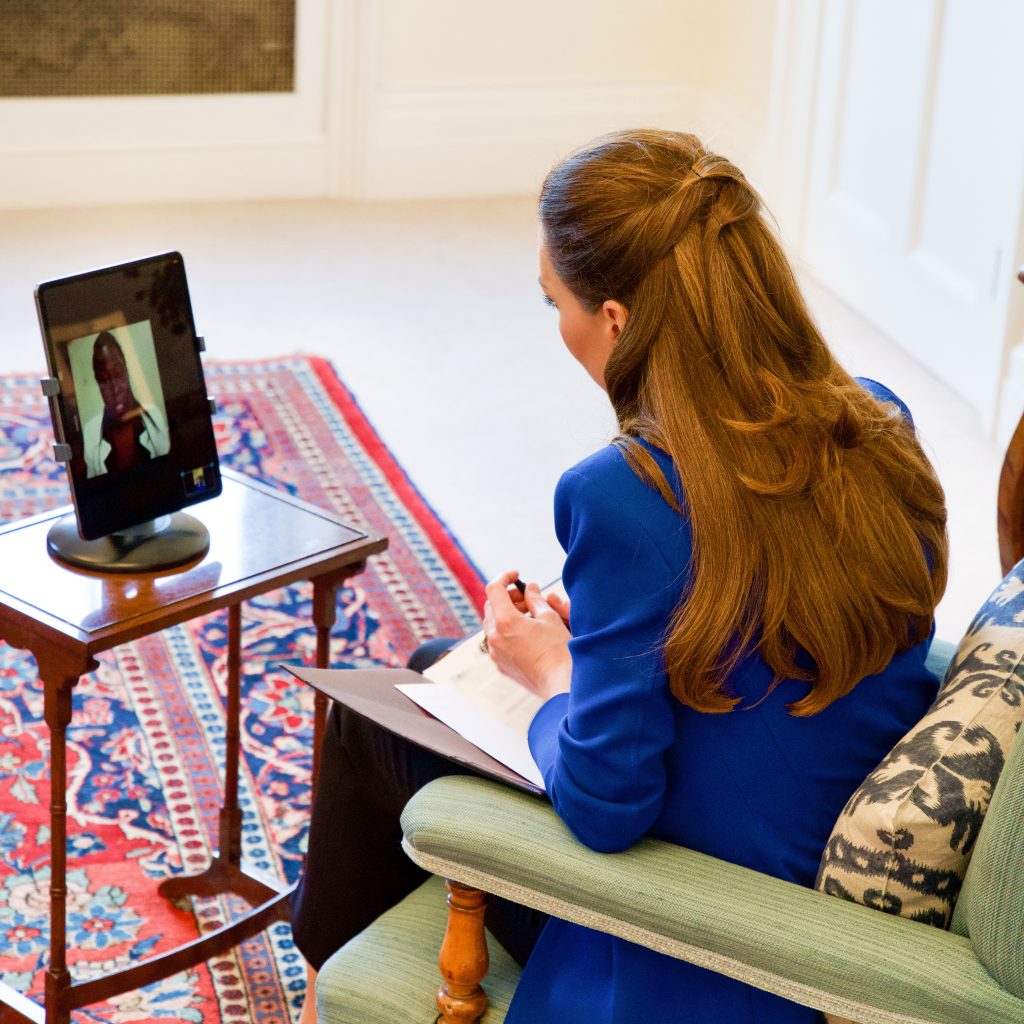
HRH Duchess of Cambridge and Harriet Nayiga, founder of Midwife-led Community Transformation (MILCOT)
Related articles on Nursing Now
Related articles on Nightingale Challenge