
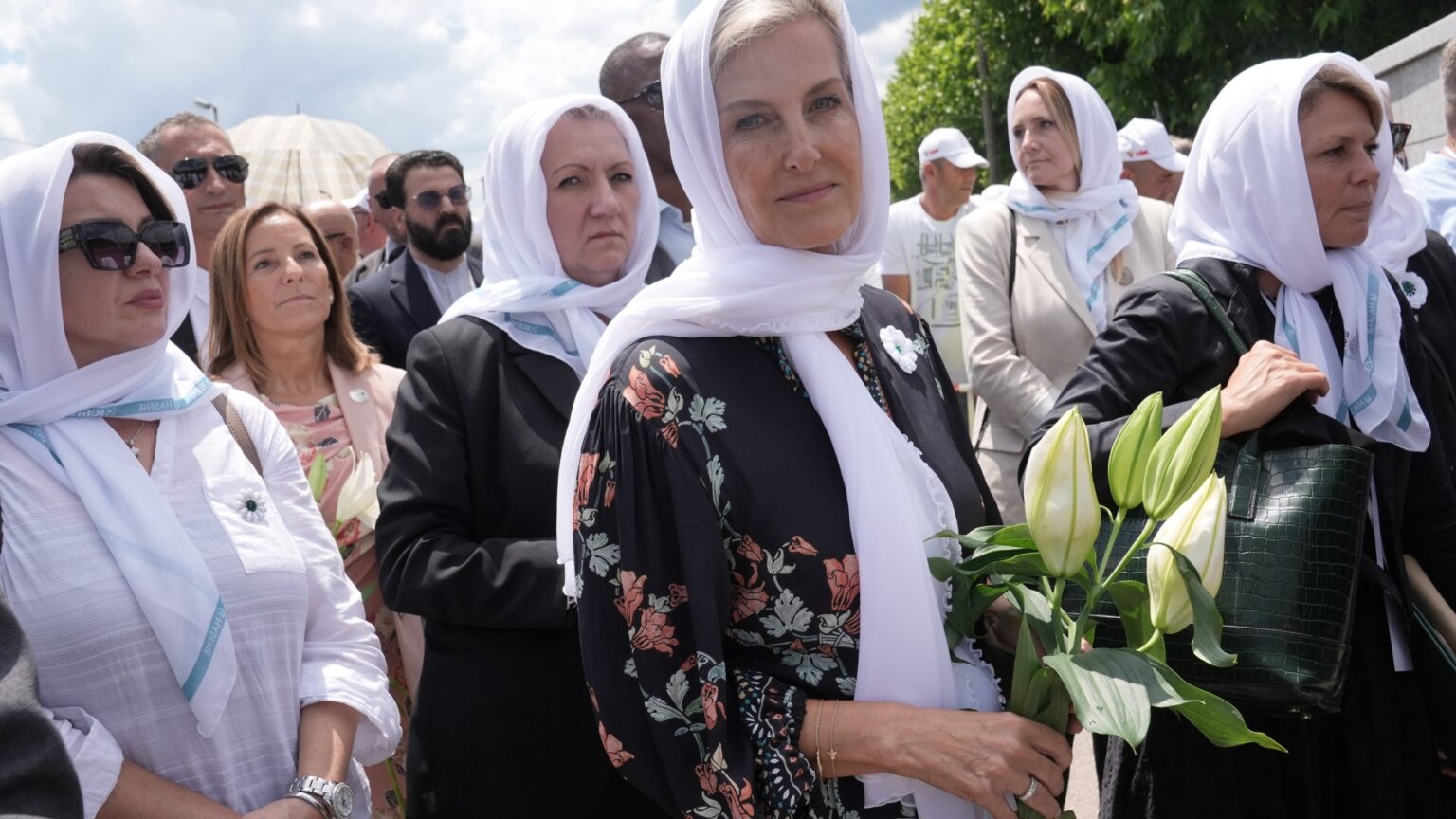
THE Duchess of Edinburgh brushed off suggestions she is the ‘Royal Secret weapon’ but admitted “I like to fly under the radar”.
She was speaking in Bosnia, where she hugged mothers fighting for justice after 30 years and laid flowers at a cemetery where 7,000 genocide victims are buried.
3
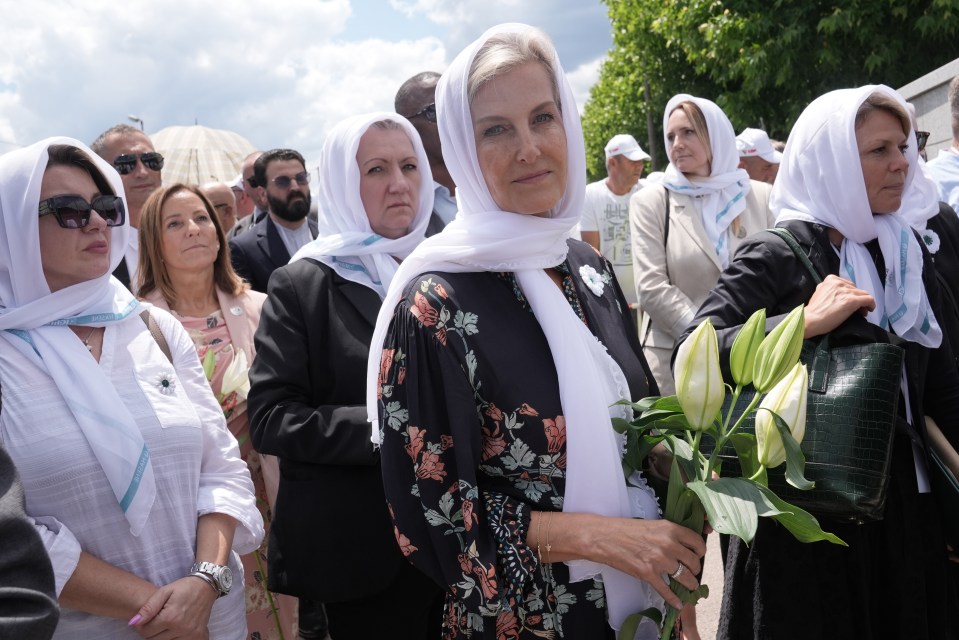
The Duchess of Edinburgh spoke at a service in the memory of thousands killed in the Srebrenica genocideCredit: PA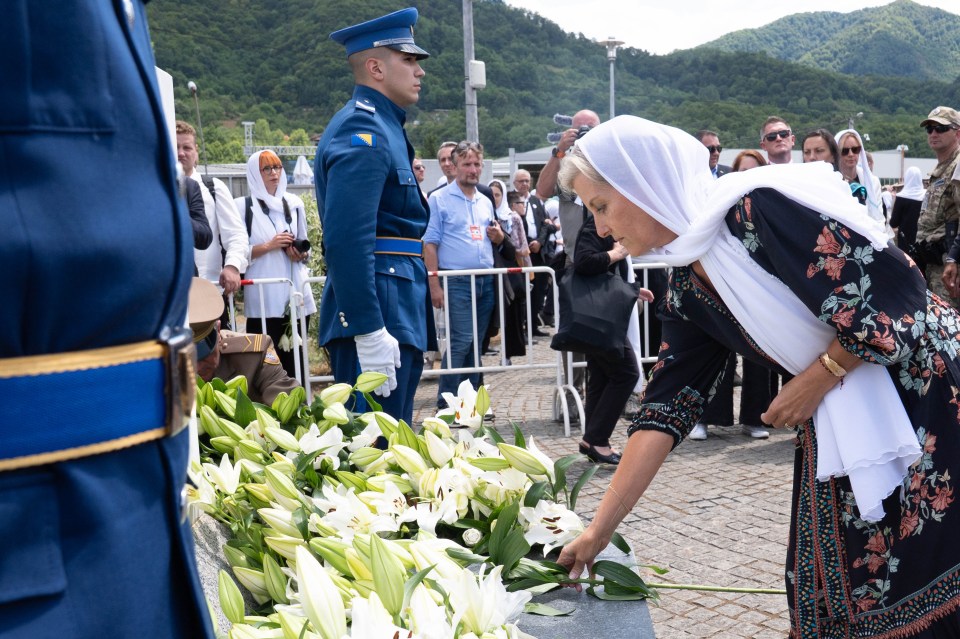
3
The Duchess laid a wreath commemorating the 30th anniversary of the atrocityCredit: PA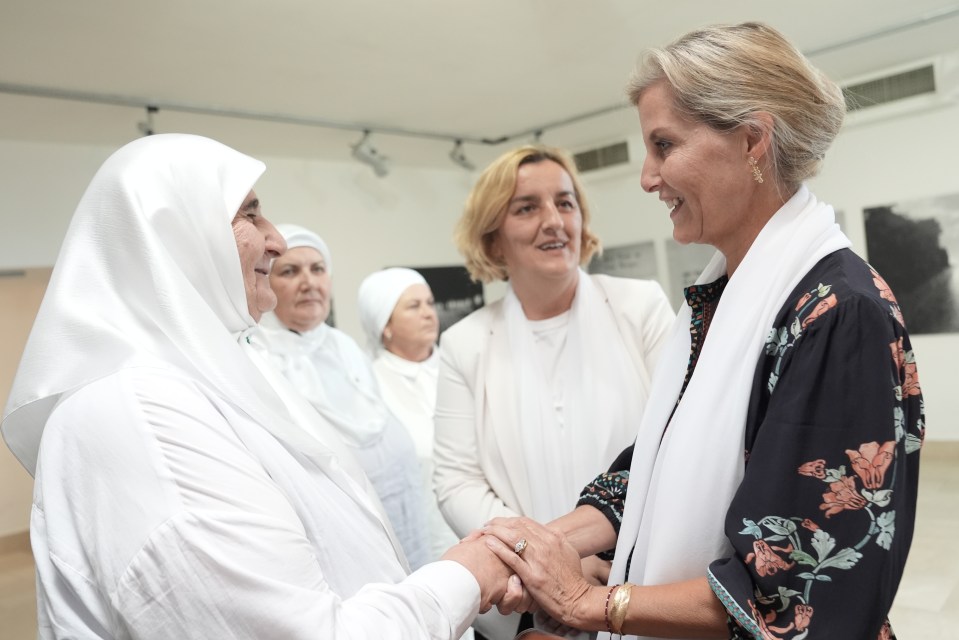
3
She also met with the grieving Mothers of SrebrenicaCredit: PA
She read a message of “hope” from the King and said “I hope that I make a difference”.
It is now more than two years since she was made the first Duchess of Edinburgh since the late Queen Elizabeth II.
She said it’s “emotional” and was “quite a big moment” to follow in her footsteps.
In the past year, Sophie, 60, has traveled to Chad in Africa to highlight the refugee crisis in the Sudan conflict.
READ MORE ON SOPHIE WESSEX
She was the first member of the Royal Family to visit Ukraine.
This week she marked 30 years since the Srebrenica genocide in Bosnia.
She works closely with the UK government on projects highlighting and tackling sexual violence on women in conflict zones.
Despite marrying the King’s younger sibling Prince Edward 26 years ago, she has often been dubbed “The Royal Family’s secret weapon”.
Speaking to The Sun on Sunday at the Srebrenica Genocide Memorial this week she laughed off the nickname, saying: “It’s all very well being a secret weapon but if no one knows, maybe it’s too secret.
She then added: “I suppose I should take it as a backhanded compliment.
Sophie Wessex weeps as she meets women raped in exchange for food & water on harrowing trip to war victims in Chad
“I don’t see myself in a frontline position per se, that said, admittedly there are fewer working members of the family these days so I suppose more and more are becoming less secretive.
“I just wonder what they are going to describe me as next.”
Sophie became Duchess of Edinburgh after Edward was named Duke on his 59th birthday in March 2023.
The last duchess was the late Queen who held the title for five years between her marriage to Prince Philip in 1947 and accession in 1952.
Asked about losing her former Countess of Wessex title she joked “I quite liked her”.
But speaking about taking on the late Queen’s title, said: “It was quite large shoes to fill.
“For me it was quite an emotional thing to sort of step into her shoes. It felt like quite a big moment.
“But of course being practical, my role and my husband’s role is to support the King, as it was to support the Queen, and we are fortunate because we are able to not be in a front and centre role.
“It allows us the flexibility to explore our own interests and then also be available to do things like this where the King asked if I would represent him here.
“It so happens it also covering an area of interest personally for me too.
“But yes, we are there to support and that will continue.”
I think if I can keep banging the drum it perhaps creates traction somewhere
Duchess of Edinburgh
There have been calls for Sophie to be given more responsibility and The Sun understands there are motives behind palace walls for her to have a greater role after the deaths of Queen Elizabeth II and Prince Philip and the banishment of Prince Andrew, Prince Harry and Meghan Markle, which all left a heavier workload for the rest of the family.
But over the years Sophie has quietly been working on serious and often traumatic topics such as women suffering sexual violence in conflict zones.
In Bosnia, she had a heart-to-heart with families pleading for help from local politicians to find and identify the remains of thousands who were slaughtered and are still missing from the 1990s conflict in Eastern Europe.
And at the Srebrenica Genocide Centre she embraced mothers who have fought tirelessly for justice from authorities.
Sophie said: “It can take its toll on emotions, that’s for sure.
“They are not easy subject matters, they never are.
“But every time I go somewhere it serves to strengthen my resolve to do as much as I can and to continue to tread this path because I have absolute faith in the women of the world to solve so many issues that we have alongside men, who of course, we can’t do it without.
She said: “It is always emotional, of course it is always emotional, but you have to see through the emotion to find the strength and it is always there.
“I hope that my activity in this area creates continuity”.
She added: “But I hope that I make a difference. It’s very hard because sometimes these issues are very overwhelming because of the scale.
“But I think if I can keep banging the drum it perhaps creates traction somewhere.
“It would be too easy to give up.”
And many of the people she met in Bosnia who shared their harrowing stories will be hoping she continues to tackle the difficult topics.