Share
Tweet
Share
Share
The rift between Kate Middleton and Meghan Markle, wives of Princes William and Harry, took root before their first meeting in January 2017, driven by media comparisons that cast them as opposites. According to royal biographer Tina Brown, British tabloids amplified aesthetic and moral differences between the then-Duchess of Cambridge and the former Suits actress, fostering animosity that led to public and private clashes. Key incidents, such as the 2018 dispute over Princess Charlotte’s bridesmaid dress and a lip gloss misunderstanding, deepened the divide, unraveling the once-promising “Fab Four” image. These events, magnified by relentless press coverage, marked a turning point in their relationship, with lasting effects on the British royal family, as detailed in books and documentaries. The media’s role in shaping this narrative created a backdrop of tension that persists today.
The press constructed a rivalry by portraying Meghan as a modern, feminist figure and Kate as the monarchy’s traditional face. This framing began before their first encounter, six months into Harry and Meghan’s relationship, setting the stage for ongoing friction.
Factors fueling early tensions:Media comparisons: Tabloids highlighted contrasting styles, fostering a narrative of competition.Cultural differences: Meghan’s Hollywood informality clashed with Kate’s adherence to royal protocol.Public scrutiny: Every interaction was dissected, amplifying minor discomforts.
These early dynamics shaped public and private perceptions, laying the groundwork for future conflicts.
First meeting and cultural clash
The initial meeting between Meghan and Kate in January 2017 was described as cordial at the time, but Meghan later shared a different perspective in the Netflix series Harry & Meghan. Welcoming Kate and William to her home, Meghan wore ripped jeans and was barefoot, offering warm hugs—an approach that jarred with British formality. She noted being surprised that royal etiquette extended to private settings, highlighting a cultural disconnect. This moment, though minor, set a tone of misunderstanding.
Royal historian Tessa Dunlop, in a Mirror interview, suggested Kate viewed Meghan as a “Hollywood disruptor,” challenging the monarchy’s traditions. Kate, deeply invested in her role, found Meghan’s informal style unsettling, while Meghan struggled with the rigidity of royal life, creating an early divide.
The lip gloss incident
A notable episode occurred before a Royal Foundation event in February 2018, when Meghan asked to borrow Kate’s lip gloss. As detailed in Harry’s memoir Spare (2023), Kate was taken aback but complied, though her discomfort was evident when Meghan applied it with her finger. This seemingly trivial interaction underscored deeper cultural differences, with Meghan feeling judged and Kate perceiving Meghan’s casualness as a breach of decorum.
The incident preceded a public appearance where Meghan spoke about women’s empowerment and the #MeToo movement, a topic not pre-agreed with Kate, William, or Harry. Tina Brown, in Palace Papers, notes that this divergence irritated Kate, who favored a neutral stance in public. The event marked the last joint appearance of the “Fab Four,” with future interactions limited to larger royal gatherings.
The bridesmaid dress dispute
A significant flashpoint was the 2018 disagreement over Princess Charlotte’s bridesmaid dress for Harry and Meghan’s wedding. In Spare, Harry recounts Kate messaging Meghan days before the ceremony, stating Charlotte’s dress was ill-fitting, causing the child to cry. Meghan suggested taking it to the Kensington Palace tailor, but Kate insisted all bridesmaids’ dresses be remade, escalating tensions. Harry found Meghan “sobbing” amid wedding planning stress, overwhelmed by the exchange.
Ajay Mirpuri, the tailor, told the Daily Mail that adjustments were made without issue, but he acknowledged the high-pressure environment of royal weddings. Kate later sent flowers and an apology, which Meghan accepted, though she noted in her Oprah interview that the incident left a lasting mark.
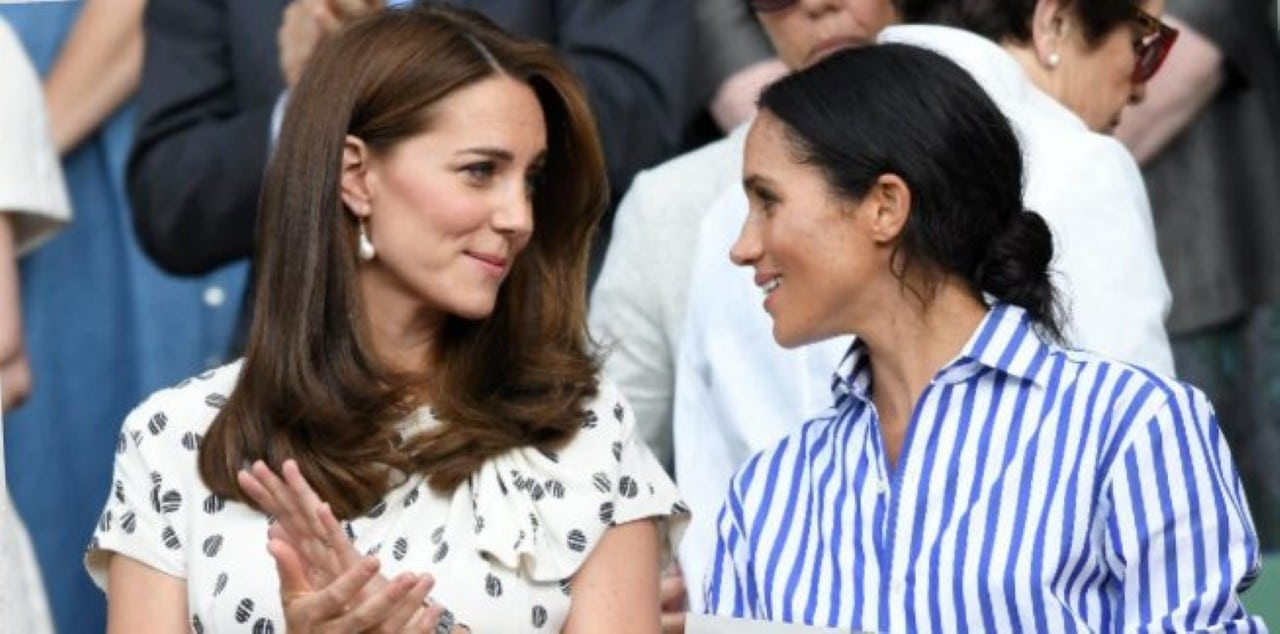 Kate Middleton and Meghan Markle – Photo: Instagram
Media’s role in escalating tensions
British tabloids played a pivotal role in intensifying the rift. By framing Meghan as an “exotic” newcomer and Kate as the monarchy’s steadfast figure, the press created a narrative of rivalry that fueled public fascination. Tina Brown highlights how tabloids thrived on pitting the women against each other, scrutinizing their appearances, behaviors, and even accents.
Elements driving media narratives:Sensationalist coverage: Articles exaggerated differences in style and demeanor.Public expectations: Kate’s established popularity contrasted with Meghan’s newcomer status.Internal dynamics: Sources suggest the royal family shielded Kate, leaving Meghan exposed to criticism.Amplified incidents: Minor moments, like the lip gloss and dress disputes, became symbols of deeper discord.
This media frenzy turned small misunderstandings into major stories, complicating any chance of reconciliation.
Strain at the Royal Foundation
The “Fab Four’s” 2018 Royal Foundation appearance was meant to showcase unity but instead exposed cracks. Meghan’s unscripted remarks on women’s empowerment, while well-received publicly, caught Kate off guard, as they deviated from the group’s agreed-upon tone. The decision to avoid future joint appearances followed, with the couples limiting interactions to broader royal events, as noted in Yes, Ma’am: The Secret Life of Royal Servants by Tom Quinn.
Quinn’s sources reveal both Meghan and Kate were emotionally affected by their disputes, with tears shed on both sides. The media, however, framed these moments as evidence of a bitter feud, overshadowing any attempts at resolution.
Contrasting backgrounds and personalities
Kate, who dated William for nearly a decade before marrying, cultivated a discreet, duty-bound image. Meghan, a successful actress with an independent streak, brought a more outspoken approach. Tessa Dunlop notes that Kate’s reserved nature, rooted in her close-knit family and support from her mother, Carole, clashed with Meghan’s desire to modernize the monarchy.
Anna Pasternak, writing for Tatler, emphasized Kate’s commitment to stability versus Meghan’s adaptability, shaped by her Hollywood career. This divide surfaced in disputes like the one over Charlotte’s tights at the wedding, where Kate upheld protocol and Meghan favored flexibility.
Public and private fallout
The 2021 Oprah interview saw Meghan clarify that Kate made her cry over the dress issue, not vice versa, as tabloids had claimed. Kate, per royal correspondent Katie Nicholl, felt “humiliated” by the public airing of the dispute, believing it had been resolved privately. The Palace issued a vague statement, avoiding direct engagement with Meghan’s claims.
Key points from the Oprah interview:Meghan confirmed Kate’s apology for the dress incident.Kate maintained silence publicly, adhering to her reserved approach.The royal family’s response avoided specifics, focusing on unity.
Omid Scobie, in OK! Magazine, noted Meghan and Harry felt the Palace protected Kate while leaving them vulnerable to media attacks, deepening their sense of isolation.
Public perception of the feud
Kate’s long-standing popularity, reflected in YouGov polls, contrasts with Meghan’s polarizing image. Tabloids often cast Meghan as the instigator, while Kate was portrayed as the wronged party. The Netflix series Harry & Meghan framed Meghan as constrained by royal rigidity, with Kate embodying that structure. Biographer Andrew Morton suggested Meghan avoids returning to the UK to escape the formalities tied to Kate’s role as Princess of Wales.
Attempts at reconciliation
Despite tensions, there were efforts to mend ties. Kate’s flowers and apology after the dress dispute were accepted, but the rift persisted. In 2022, after Queen Elizabeth II’s death, Kate and William invited Harry and Meghan for a joint public appearance to greet mourners, a gesture initiated by Kate to signal unity, per Robert Jobson. Sources described it as a challenging moment for Kate, reflecting the strain of their dynamic.
Harry and Meghan’s 2020 departure from royal duties, dubbed “Megxit,” cemented the “Fab Four’s” dissolution. Factors like media pressure and perceived lack of support drove their exit. The 2018 incidents, amplified by tabloids, played a significant role, as did differing personalities. Meghan’s absence from events like Charles III’s 2023 coronation underscores the ongoing distance, with Morton noting the two women have not spoken in years.