
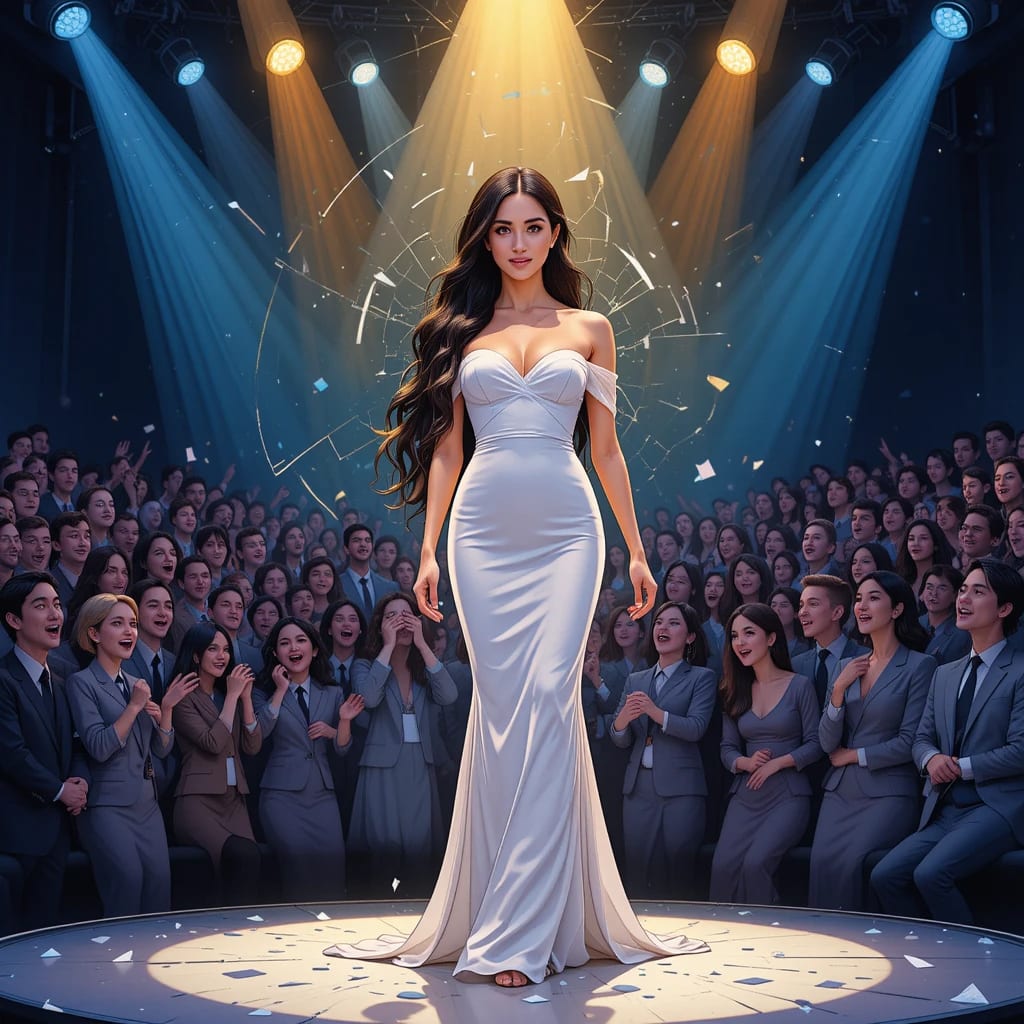
It started like every other celebrity appearance on The Tonight Show. A glossy smile, promotional chatter, a few polite laughs. Meghan Markle knew the drill. Late-night television was supposed to be harmless—a safe stage to remind audiences that she was more than a duchess, more than a headline.
But this night didn’t follow the script.
Jimmy Fallon, master of cheeky banter, delivered a line that was quick, sharp, and devastating.
“Some people are princess material. Others are yacht party material.”
The audience roared. Not with awkward titters, but with the kind of laughter that signals recognition. It was as if Fallon had ripped open a secret that everyone already knew but no one had dared to say aloud.
For Meghan, that single punchline didn’t just sting. It detonated.
—
When a Rumor Becomes a Spotlight
The “yacht girl” label had always floated around in the shadows of the internet—whispers tied to Meghan’s Hollywood past, scattered photos, party gossip. It was never proven, but it didn’t need to be. Online rumors don’t require evidence; they require oxygen. And Fallon had just given them a primetime stage.
For years, Meghan had fought to recast herself: actress turned duchess, then activist, then media entrepreneur. But the joke reframed everything in an instant. Instead of being a woman in control of her story, she was suddenly the butt of it.
The irony? This wasn’t Britain’s tabloids dragging her. This wasn’t an angry royal biographer or an anonymous “palace insider.” It was mainstream America—the very audience she had counted on to embrace her second act.
—
Viral by Morning
By sunrise, the clip was everywhere. TikTok edits stitched the punchline over paparazzi shots of Meghan in sundresses on yachts. Instagram reels mocked her Netflix show With Love, Meghan, overlaying slow-motion scenes of her stirring jam with Fallon’s quip echoing in the background.
Hashtags like #YachtGirlEnergy and #PRPrincess trended.
That’s the cruel efficiency of memes: they move faster than press releases, sharper than PR spin. A rumor you can deny. A meme you can’t.
—
Silence Speaks Louder
Normally, Meghan’s allies would have stepped in. A tweet from Oprah. A supportive Instagram story from a Hollywood friend. But this time? Nothing.
The silence was louder than the laughter.
Even Prince Harry stayed quiet. No clever clapback, no protective statement. Just silence. And in that absence, speculation grew. Was he embarrassed? Did he secretly agree? Was their partnership cracking under the strain of public ridicule?
For Meghan, the lack of backup was almost as damaging as the joke itself.
—
The PR Domino Effect
The timing could not have been worse. Season two of With Love, Meghan had just launched on Netflix. It was designed to humanize her: less duchess, more everyday woman. Relatable. Grounded. But in the shadow of Fallon’s joke, the series became meme material instead of meaningful content.
Critics had already called the show flat. Now audiences weren’t even judging it on its merits—they were watching through the filter of mockery. Viral edits paired vineyard walks with laugh tracks, as if the entire production was a parody.
When the public decides to laugh at you instead of with you, it doesn’t matter how polished your work is. You’ve already lost control of the frame.
—
Hollywood Turns Away
Behind the scenes, insiders described Meghan’s mood as furious—tantrums, late-night calls, demands for statements. But no strategy seemed big enough to erase what had happened.
Worse still, Hollywood began to retreat. Brands, producers, and influencers pulled back, wary of being associated with a figure suddenly branded “toxic.” In an industry built on optics, volatility is a death sentence.
Fallon’s one-liner had done what years of British tabloid hostility couldn’t: it made Meghan Markle bad for business.
—
More Than a Joke
What makes the moment unforgettable isn’t the comedy—it’s what the joke confirmed.
Audiences didn’t laugh because Fallon was witty. They laughed because the punchline echoed a suspicion already lodged in the public consciousness: that Meghan was always performing, always reaching, never quite fitting.
The power of that perception is brutal. You can outlast scandals. You can recover from bad projects. But once people decide you’re a punchline, your brand is no longer your own.
—
The Legacy of Laughter
Years from now, people may forget the details of her Netflix ventures or her speeches. They may forget which magazine covers once called her brave or groundbreaking. But they’ll remember Jimmy Fallon’s joke.
Because in the end, it wasn’t just a late-night laugh. It was the moment that turned Meghan Markle from a carefully managed persona into a meme.
And memes, unlike brands, don’t fade. They stick