
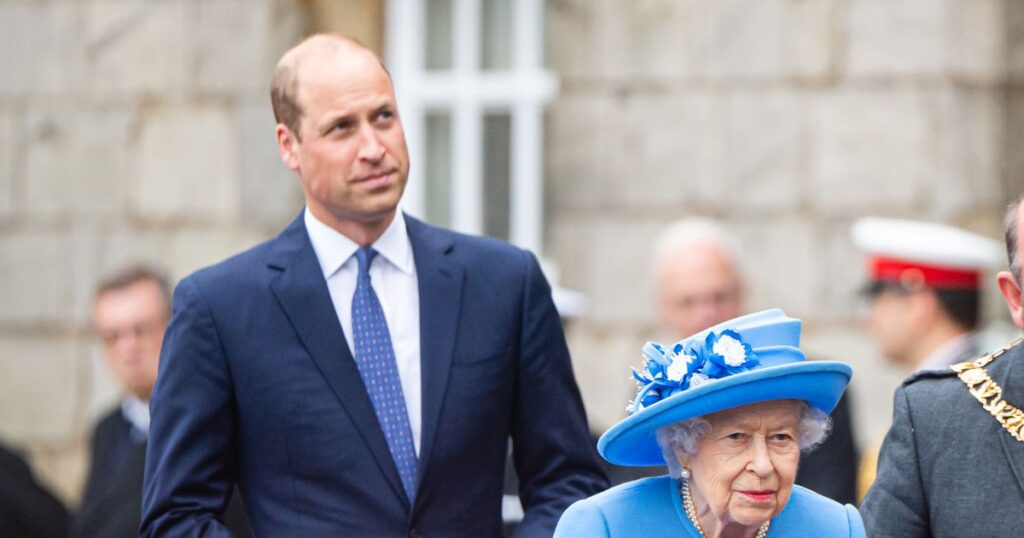
John Swinney insisted independence was a “matter for the people of Scotland to decide their constitutional future”.
09:03, 04 Sep 2025Updated 11:31, 04 Sep 2025
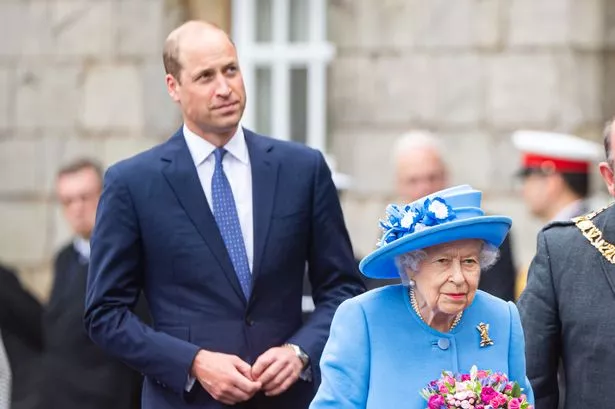 Queen Elizabeth II and Prince William(Image: Getty)
Prince William played a key role in convincing the late Queen to intervene in the 2014 independence referendum campaign, according to an explosive claim in a new book.
The heir to the throne, known as the Duke of Rothesay in Scotland, is said to have been among senior establishment figures who applied “pressure” on the monarch to speak out just days before the historic vote.
The Queen was famously quoted as saying she hoped Scots would “think very carefully about the future” – a form of words commentators believed was coded support for the Union.
The monarch made the remark to a member of the public outside Crathie Kirk, her place of worship when staying at Balmoral, just four days before the referendum on September 18.
David Cameron, the then Tory Prime Minister, later confirmed the Queen’s words were intended as a message of support for the Union. It came at a time the No campaign was in disarray following a bombshell poll which put support for independence above 50 per cent.
Cameron later claimed the Queen “purred” when he telephoned her on September 19 to inform her the pro-UK campaign had won the referendum.
But the role of William was unknown until revealed in a new book by Royal biographer Valentine Low. The respected journalist, well-known for his Palace contacts, claimed the Prince urged the Queen’s private secretary, Sir Christopher Geidt, to get her to say something.
“The pressure did not just come from Cameron,” Low writes In Power and the Palace. “Prince William also wanted the Queen to say something, and urged the Queen’s private secretary, Sir Christopher Geidt, to get her to intervene.
“Geidt and the cabinet secretary, Sir Jeremy Heywood, had… already been talking about the constitutional propriety of an intervention by the monarch, and between them they came up with the formula that the Queen would use when she stopped to talk to members of the public outside Crathie Kirk that Sunday.”
The No side won by over 10 percentage points despite trailing in the opinion polls with weeks to go.
READ MORE: Holyrood staff ‘checking toilet walls for spycams’ after hidden device claimsREAD MORE: John Swinney says SNP Government will end ‘student politics’ ban on funding for munitions firms
Speaking to reporters at an SNP event today, John Swinney said he “did not know the substance or the veracity of the claims made by the author”.
The First Minister added: “What I would say is it’s a matter for the people of Scotland to decide their constitutional future.”
Asked if he was concerned Prince William may try to influence a future referendum, Swinney repeated: “It’s a matter for the people of Scotland to decide their constitutional future, that’s who it should be up to.”
It comes after Nicola Sturgeon wrote about her impressions of Prince William after meeting with him in 2021, when she was still serving as First Minister.
In her political memoir Frankly, the ex-SNP leader spoke warmly of the late Queen but admitted feeling “aggrieved” at William after their meeting.
After Sturgeon’s “cordial” sit-down with the future king, where they did not talk about politics, she later discovered the Prince held a private meeting with Gordon Brown at the Palace of Holyroodhouse, across the road from the Scottish Parliament.
Sturgeon writes that the secret nature of the meeting, after Brown had set up an “anti-independence think tank”, had “inevitably raised questions”. A comment later issued by the prince’s office justifying the meeting was, in Sturgeon’s view, “to put it mildly, disingenuous”.
Asked if it was outrageous that William had intervened, Swinney added: “I simply think is what matters to this debate is the people of Scotland are sovereign, and they should decide on their future.”
To sign up to the Daily Record Politics newsletter, click here