
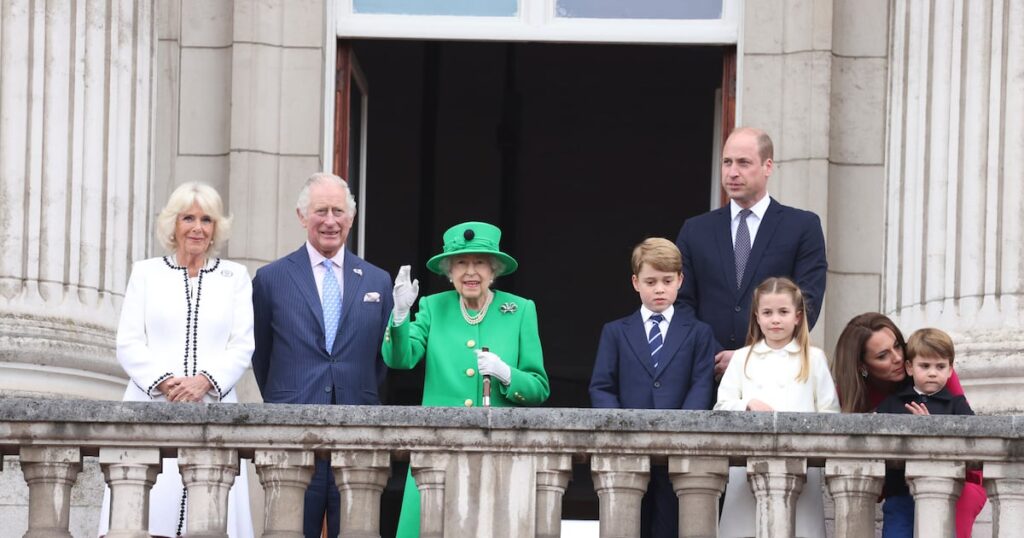
Afua Hagan is a contributor to CTVNews.ca, focusing on the Royal Family. Based in London and Accra, Hagan is a regular commentator on the royals across a variety of international outlets, and is a leading voice on diversity in Britain.
In the shadowy corridors of influence where Buckingham Palace meets Downing Street, Valentine Low, writer and former royal correspondent for The Times, lifts the gilded curtain.
His new book, Power and the Palace: The Inside Story of the Monarchy and 10 Downing Street, is already stirring headlines. It promises rare access, behind-the-scenes drama, and candid revelations about the tangled relationship between the royals and Britain’s political elite.
From whispers of royal displeasure in the wake of Brexit, to unspoken tensions between public duty and private ambition, Low’s reporting offers clarity on what’s at stake. Whether you’re a constitutional aficionado, a royal-watcher, or simply curious about how power is really wielded in modern Britain, here’s everything you need to know.
A teenage Camilla defends herself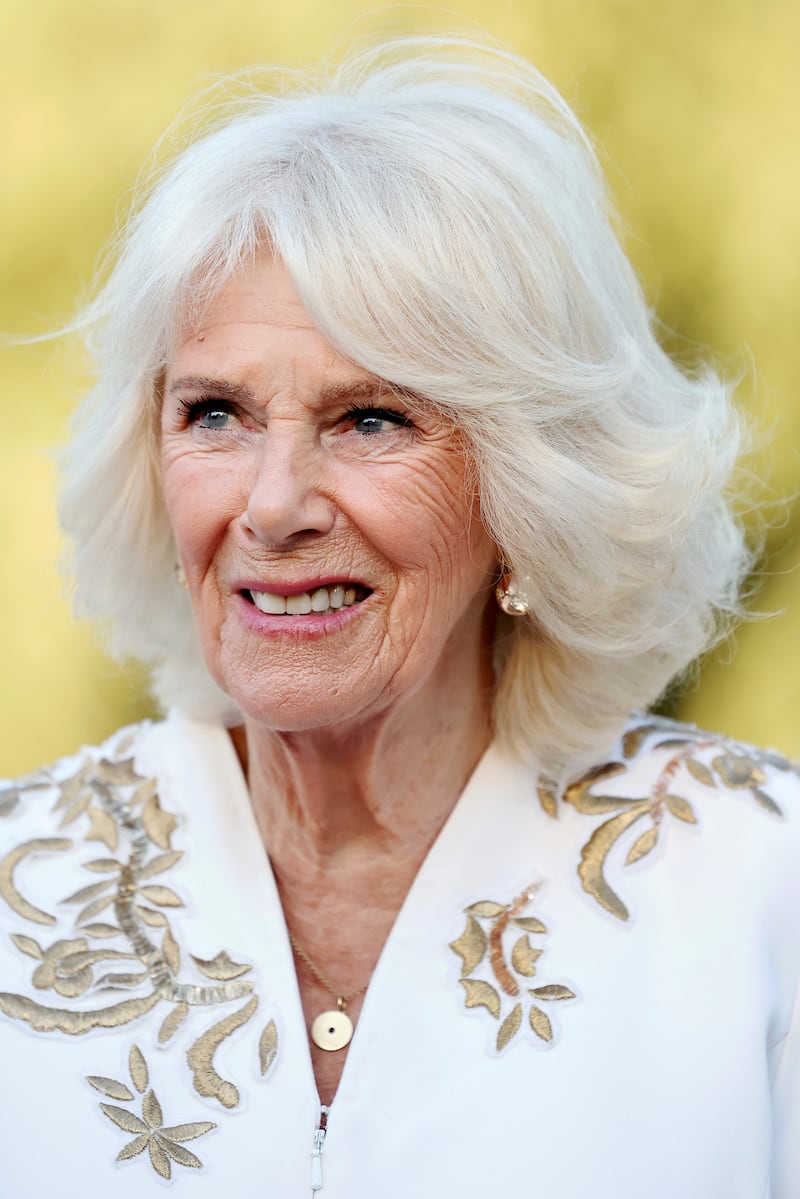 Queen Camilla Queen Camilla attends The Elephant Family Evening of Art and Conservation at Kew Gardens in London on May 13, 2025. (Chris Jackson/Pool Photo via AP)
Low investigates some pivotal experiences that moulded key Royal Family members, but one that stands out and is making waves is a compelling account involving Queen Camilla.
According to the book, during her teenage years, Camilla courageously defended herself against an assailant on a train, using her shoe as a weapon before alerting authorities.
As the author recounts in an interview with the BBC: “Camilla said, ‘I did what my mother told me, I took my shoe off and whacked him in the nuts with the heel.’’’
Low writes that Camilla then alerted a man in uniform as soon as the train arrived at London’s Paddington station, telling him, “That man just attacked me,” after which her attacker was arrested.
Low suggests this incident partly explains Camilla’s profound empathy for sexual violence survivors – a cause she has consistently supported. It illustrates how beneath the polished royal exterior lies a wealth of personal experience, some traumatic, that continue to shape the modern monarchy.
Prince William’s influence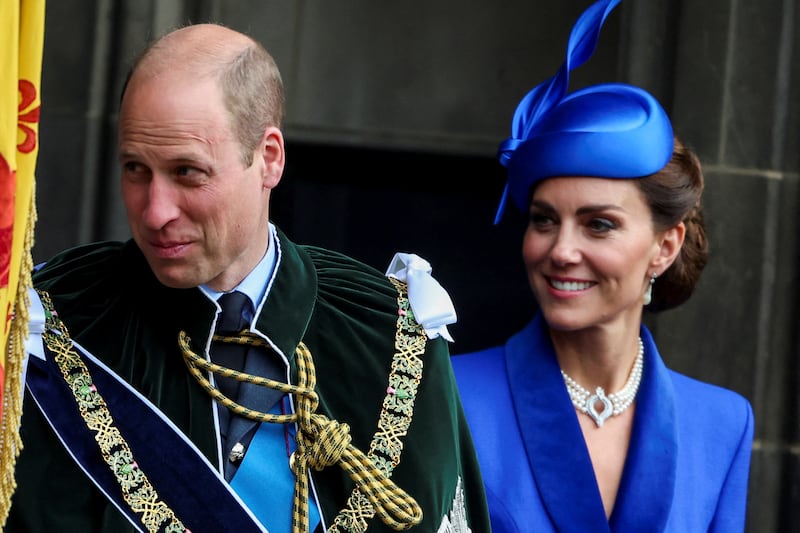 Prince William and Kate in Scotland Prince William and Kate, the Princess of Wales depart, after a National Service of Thanksgiving and Dedication for King Charles III and Queen Camilla, in Edinburgh on July 5, 2023. (Phil Noble/Pool Photo via AP) (Phil Noble/AP)
One of the book’s most striking disclosures involves Prince William seeming to exert some royal influence during the 2014 Scottish independence referendum. Low reveals that the then Duke of Cambridge encouraged Queen Elizabeth II to make a public statement at a crucial juncture, concerned about the United Kingdom’s future.
The Queen’s seemingly casual comment to a well-wisher outside church, advising Scots to “think very carefully about the future,” was widely seen as royal intervention, and Low indicates this was intentional. For an institution that zealously guards its political neutrality, this was remarkable. It also prompts a very pertinent question: How politically detached are the royals in reality?
What Queen Elizabeth thought of the EU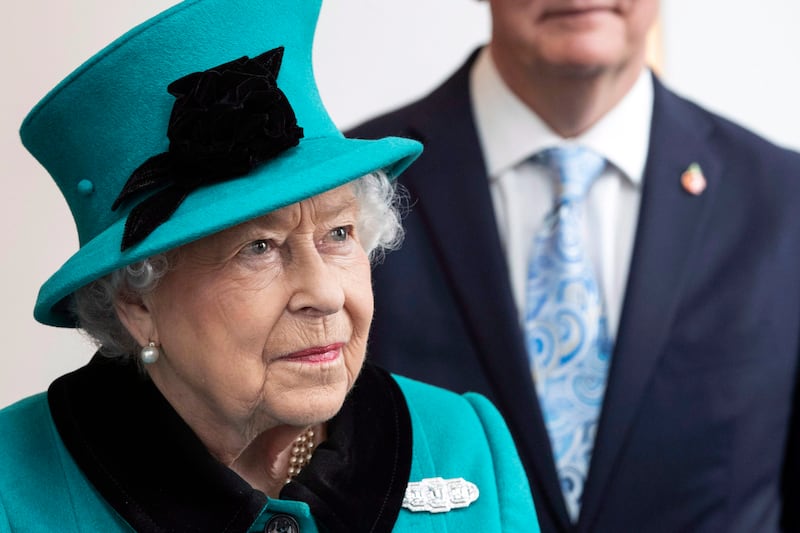 Queen Elizabeth II in 2018 Queen Elizabeth II looks on during a visit to open the new headquarters of Schroders plc, the multinational asset management company which was founded in 1804, in London, Wednesday, Nov. 7, 2018. (Heathcliff O’Malley/Pool Photo via AP)
The book also unveils the late Queen’s personal thoughts on Europe. While she maintained public silence during the turbulent Brexit period, Low reveals the Queen once confided to advisers of her belief in “sticking with the devil you know” regarding EU membership.
Meanwhile, she also reportedly expressed frustration with the bureaucracy of Brussels – the symbolic capital of the European Union — describing certain regulations as “ridiculous.” These insights reveal that even monarchs committed to neutrality harbour personal views – they simply understand the consequences of voicing them.
What Queen Elizabeth thought of prime ministers
We are also treated to what Low characterized as Queen Elizabeth II’s private thoughts about her prime ministers during her 70-year reign. The Queen’s weekly meetings with 15 prime ministers over the course of her reign showed a lot about what she valued and who she really was.
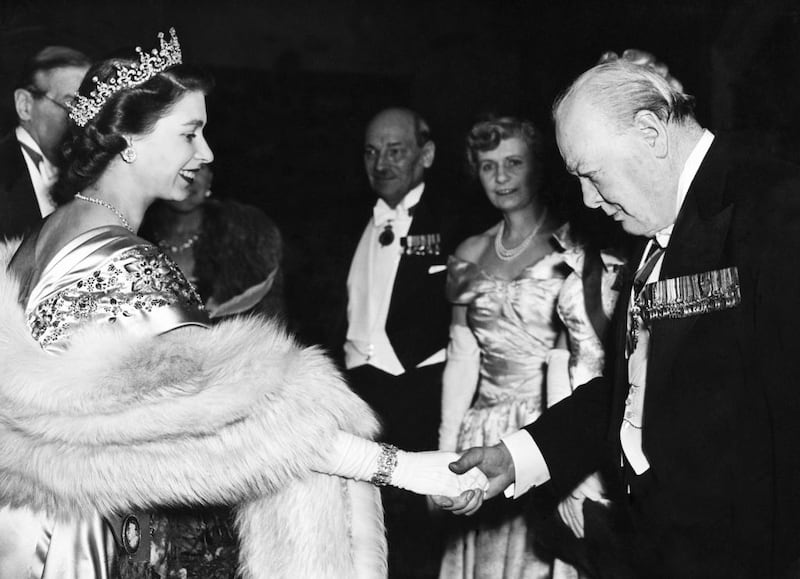 Princess Elizabeth Greeting Winston Churchill Princess Elizabeth greeting Winston Churchill at Guildhall on March 23, 1950 (Photo by Keystone-France / Gamma-Keystone via Getty Images)
Winston Churchill was, without a doubt, the Queen’s most cherished prime minister, according to the book. At the time he stepped down in 1955, she sent him a personal handwritten letter saying no future PM “will ever for me be able to hold the place of my first Prime Minister.”
Harold Wilson, who served over two periods in the 1960s and 1970s, turned out to be a surprising favourite of the Queen’s, despite their different backgrounds. Their weekly meetings lasted over two hours, and Low described the Queen as loving Wilson’s straightforward and genuine nature.
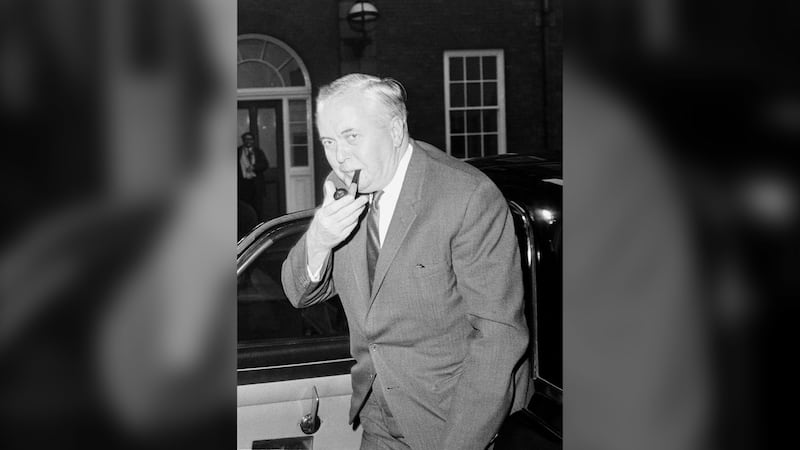 British PM Harold Wilson In this Jan. 9, 1969 file photo, British Prime Minister Harold Wilson arrives at the Commonwealth Prime Ministers Conference for the third day of the conference, at Marlborough House, in London on Jan. 9, 1969. (AP Photo/Dennis-Lee Royle, file)
John Major, meanwhile, made it into the Queen’s top three because they helped each other through tough times – her “annus horribilis” of 1992 happened right when he faced his own political battles.
PM ‘Hon John’ Major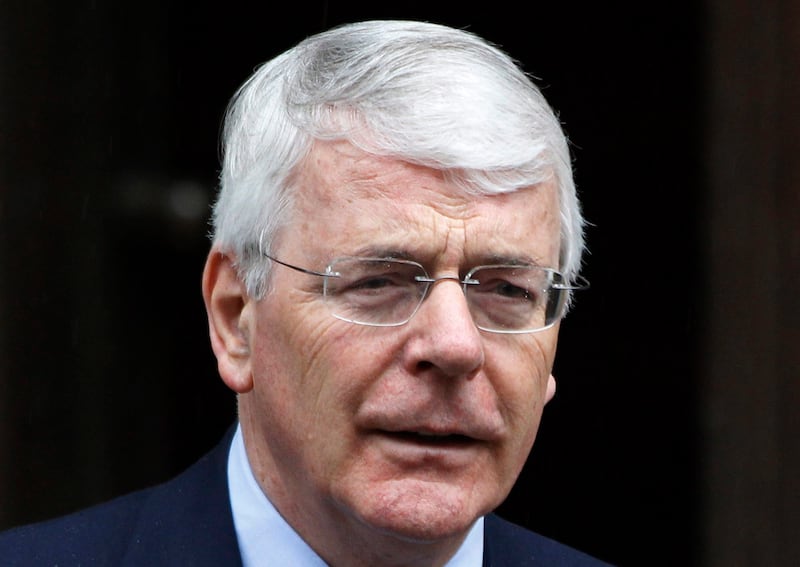 Former British PM John Major In this June 12, 2012 file photo, former British Prime Minister John Major arrives to give evidence to the Leveson inquiry at the Royal Courts of Justice in central London. (AP Photo/Lefteris Pitarakis)
Low’s book also reveals something remarkable about royal marriages and political figures stepping in to help solve marital problems. One of Low’s accounts takes us back to 1992, when prime minister Major became Princess Diana’s trusted advisor while her marriage to then-Prince Charles fell apart.
While he didn’t try to save the marriage, he reportedly worked to help make a peaceful separation possible. His main goal was practical – he wanted to protect the monarchy from any damage a messy divorce might cause. Diana connected well with Major, even calling him “the Hon John” and saw him as someone who could give her fair advice during these difficult times.
Major’s private secretary is quoted saying he showed real understanding and knew how to see the situation from everyone’s point of view. When Andrew Morton’s explosive book came out, Major announced the Wales’ separation to the House of Commons. He told Parliament that Diana could still become Queen someday, a prediction that ended up being wrong.
But Diana’s letters to the prime minister showed she appreciated his help, according to Major’s biographer, Anthony Seldon. Major stayed in touch with Diana until her death. After she passed away, he became a special guardian to princes William and Harry.
King Charles’ temper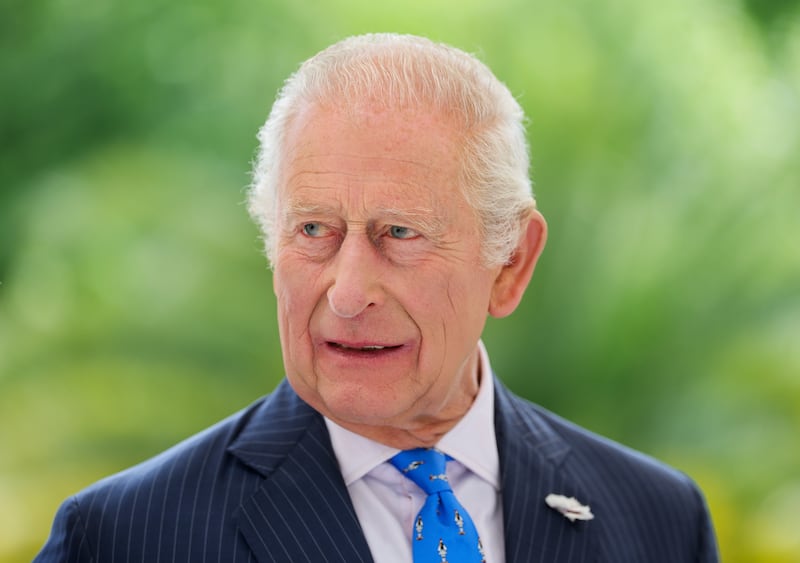 King Charles King Charles attends a nature and finance reception at Lancaster House in London, Wednesday June 25, 2025. (Chris Jackson/Pool Photo via AP)
When examining King Charles III, Low crafts an intricate portrait of a monarch who embodies both dedication and complexity. The King’s reputation for working extended hours, his meticulous attention to detail, and his fervent advocacy for issues ranging from environmental conservation to architectural preservation are well-documented.
However, Low also reveals a sovereign who can be short-tempered, occasionally frustrated, and heavily dependent on a close-knit group of advisers whose internal competitions often influence palace dynamics. For a monarch who has spent his entire lifetime preparing for the crown, mastering the delicate balance between asserting authority and maintaining diplomatic finesse remains an ongoing challenge.
Royal finances
The narrative then shifts to explore the monarchy’s financial landscape – perhaps the most delicate topic of all. Low analyzes how the royal institution has managed its fiscal relationships with consecutive governments, from complex tax negotiations to securing the crucial Sovereign Grant that enables royal operations.
While these financial intricacies might appear mundane, they are fundamental to the monarchy’s continuity: The institution’s sustainability relies not only on public support but also on carefully negotiated financial arrangements within Whitehall’s corridors.
What renders Power and the Palace particularly fascinating is its fresh perspective on the monarchy as a political entity – not in terms of partisan politics, but as an institution whose longevity depends on its ability to continuously evolve alongside political transformations.
In an age where republican sentiments simmer beneath the surface and institutional trust grows increasingly fragile, Low demonstrates that the Crown’s persistence is neither guaranteed nor effortless.
For those seeking insight into the monarchy’s contemporary relevance, this book delivers comprehensively. It presents a Queen who subtly guided the Union through precarious times, a King still carving out his royal identity, and a family inevitably entangled in politics despite its best efforts to maintain distance.
Moreover, it suggests that the monarchy’s greatest asset might not lie in political neutrality, but rather in its political adaptability – knowing precisely how far to bend without compromising its core integrity.
Low’s latest work pivots away from both sensationalism and blind reverence. Instead, it offers something more valuable: An astute analysis of how Britain’s most enduring institution manages power, embraces change, and weathers political storms.
In doing so, it underscores that the Crown isn’t merely symbolic – it remains, whether we like it or not, an integral component of the state machinery.
More from Afua Hagan: