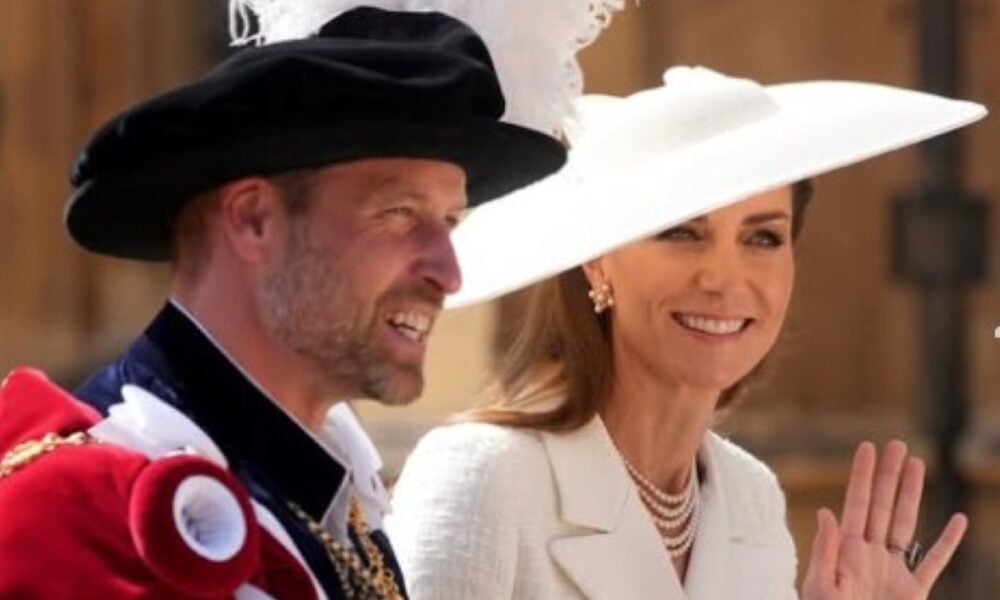
Share
Tweet
Share
Share
King Charles III, the 76-year-old British monarch, faces a significant worsening of his cancer, diagnosed in February 2024 after a procedure for benign prostate hyperplasia, accelerating preparations for royal succession led by Prince William and Princess Kate Middleton in London and other royal residences since early 2025, due to the need to maintain the continuity of the Crown’s functions amid a disease unresponsive to treatments so far. This negative development, revealed by sources close to Buckingham Palace, drastically reduces the king’s public appearances, from about 200 events in 2024 to fewer than 50 this year, transferring responsibilities to the direct heir and his wife, who now handle 80% of diplomatic and ceremonial duties, driven by the urgency to preserve the monarchy’s stability during a period of global challenges for the institution.
The news emerges in a context of limited transparency, typical of the royal family, but with clear signs of internal concern, such as increased planning meetings between advisors and the heir couple. William, 42, and Kate, also 42, who faced her own cancer diagnosis in January 2024 after abdominal surgery, show resilience by expanding their schedules, focusing on causes like mental health and early childhood education, impacting millions of beneficiaries. This transition occurs amid speculation about the exact type of Charles’s cancer, possibly treatment-resistant, fueling debates about the longevity of his reign, which began in September 2022 after Queen Elizabeth II’s death.
Reduction in Charles’s commitments: From 25 international trips in 2023 to fewer than 10 in 2024.Increase in William’s leadership: 10 diplomatic missions in 2025, including visits to France and Canada.Kate’s recovery: From 40 events in 2024 to 60 planned this year, emphasizing children’s programs.
These adjustments not only respond to the king’s declining health but also strengthen the monarchy’s modern image, with the couple achieving 75% public approval among Britons, compared to 55% for Charles, according to recent polls.
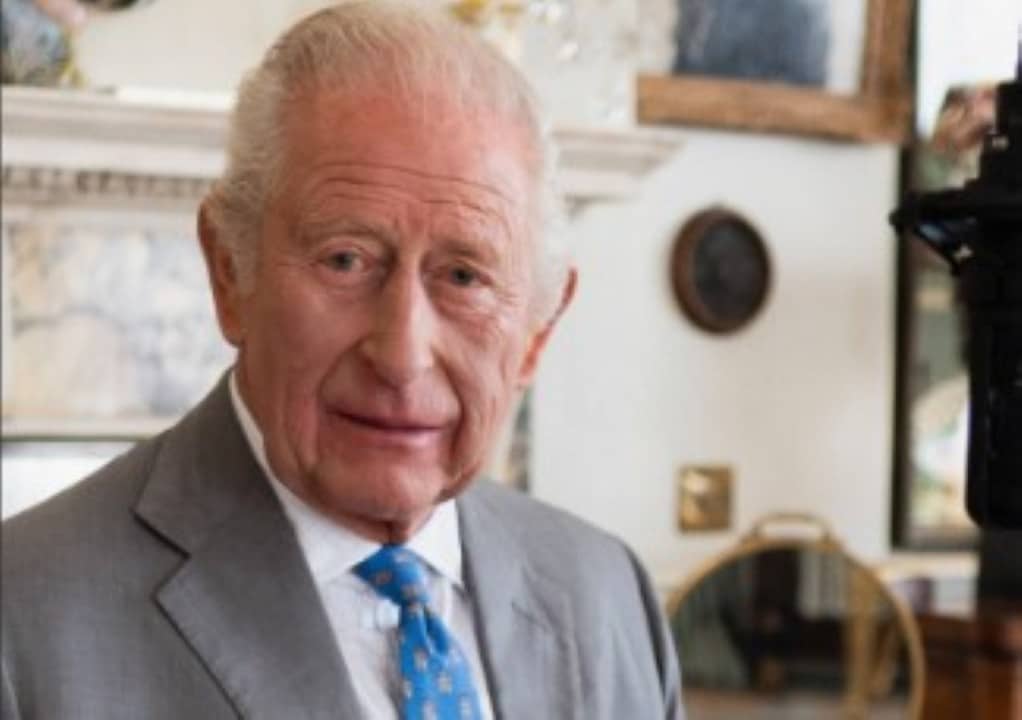 Rei Charles III – Foto: Instagram
The royal family, historically discreet about medical matters, has opted for sporadic updates, but the visible decline in appearances, such as absences at key summer events, reinforces the perception of a Crown in transition. William, managing the Duchy of Cornwall, which generates £20 million annually, now handles administrative tasks previously exclusive to the sovereign, while Kate balances her recovery with initiatives reaching 2 million children in 2024.
Changes in the Crown’s diplomatic routine
International responsibilities, once central to Charles’s calendar, are swiftly shifting to Prince William, who led missions in Paris for the Notre-Dame Cathedral reopening and in Alberta, Canada, representing British-Canadian partnerships. These trips, totaling 10 in 2025, mark a 30% increase from the previous year, reflecting a strategy to maintain ties with the Commonwealth, a group of 56 nations under the monarchy’s symbolic influence.
Kate selectively joins, prioritizing events aligned with her passions, such as the Spruce Meadows equestrian tournament, where she highlighted charitable collaborations. The couple thus fills gaps left by the king, whose medical schedule confines him to weekly meetings with the prime minister in London, limited to virtual or brief audiences.
This redistribution occurs amid tension for the institution, with six Commonwealth countries debating ending monarchical ties and 10 planning referendums by 2030. William, with his focus on sustainability and mental health, raised £20 million for related causes, using digital platforms to engage younger audiences, contrasting with Charles’s more traditional style.
William’s trips: Include visits to Australia and South Africa, boosting local economies.Kate’s initiatives: Early childhood programs expand to 15 countries, benefiting 500,000 families.Charles’s absences: Cancellations at UN summits and state receptions at Buckingham.
This diplomatic transition reveals a monarchy in evolution, with the heir assuming not only protocols but also informal negotiations, ensuring the Crown remains relevant in a multipolar world.
Family preparations for the future heir
Prince George, 12, the eldest son of William and Kate, enters a phase of greater exposure, with discussions about breaking a 30-year rule banning joint air travel for senior royals after that age to protect the line of succession in case of accidents. This rule, applied to William at 12, may be relaxed to prioritize family cohesion, valuing emotional well-being over rigid protocol.
Princess Charlotte, 10, and Prince Louis, 7, receive balanced attention, with strategies to avoid imbalances like those experienced by William and Harry in their youth. Kate, influenced by her own experience, emphasizes mixed education at schools like Lambrook, preparing them for future roles without premature pressure, while George enrolls at Eton College in 2026, following his father’s path.
These family adjustments integrate into the broader succession, with William conducting 20 meetings on foreign policy and estate management, signaling accelerated preparation. The line of succession, clear and unchanged, places George second after his father, with Charlotte and Louis third and fourth, reinforcing dynastic stability.
The couple’s approach contrasts with past generations, prioritizing normalcy: the children attend events like Wimbledon and the Women’s Euro, but with limits to preserve their childhood. This strategy, backed by advisors, aims to create resilient heirs capable of navigating modern challenges like media scrutiny.
Line of succession and historical parallels
The British succession structure, governed by the 2013 Succession to the Crown Act that abolished gender preference, places William as the immediate heir after Charles, followed by George, Charlotte, and Louis, a configuration gaining urgency with the king’s health. Historically, rapid transitions have shaped the Crown: in 1936, Edward VIII’s abdication for love of Wallis Simpson hastened George VI’s rise, while Elizabeth II’s death in 2022 crowned Charles at 73, the oldest in history.
These precedents illustrate how personal crises drive change, similar to the current moment, where Charles’s unremitting cancer echoes Edward’s short reign, potentially the briefest since. William, taking on 80% of duties, evokes Elizabeth’s preparation in the 1940s, but with modern tools like social media to amplify reach.
1936: Edward VIII’s abdication alters the monarchy’s course amid scandal.1952: Elizabeth II ascends at 25 after George VI’s sudden death.2022: Charles III begins reign at 73, focusing on environment and unity.
The current succession, influenced by the dual health challenges of Charles and Kate, prioritizes resilience, with the couple expanding charities with measurable impact, such as the 2 million children reached by Kate’s programs.
Public engagement and rising approval
William and Kate’s popularity, with 75% approval in 2025, bolsters the monarchy in a year of low approval for Charles, whose image falls to 50% due to absences. Polls show 70% of Britons see the couple as relevant to the future, contrasting with perceptions of a weakened king, strengthening their position in the transition.
Events like the Wimbledon final and school visits boost engagement, with social media posts reaching millions, focusing on accessible themes like child welfare. This digital strategy, absent in prior reigns, connects the Crown to younger generations, mitigating republican debates in the Commonwealth.
Kate, in remission from her cancer, plans 60 events, including launches of mental health reports influencing policies in 15 nations. William complements with speeches at global forums, raising funds for conservation, reinforcing a narrative of an adaptable monarchy.
William and Kate’s approval: 75% among 18-34-year-olds.Charity impact: £20 million raised for environmental causes in 2025.Key events: Participation in 150 joint engagements, surpassing 2024.
This public dynamic not only sustains the institution but also positions the couple as stabilizers in uncertain times.
Modernization of royal traditions
The royal family embraces flexibility in old norms, such as potentially revoking the travel rule for George, discussed with advisors to balance safety and family unity. This change, like the children’s mixed education, signals a less rigid Crown, aligned with contemporary values of equality and well-being.
William and Kate, shaped by their experiences, prioritize emotional health, contrasting with the rigidity of Charles’s youth. Programs like the Big Butterfly Count, engaging the public in environmental monitoring, exemplify this interactive approach, collecting data from thousands for ecological analysis.
These innovations extend to financial management, with the Duchy of Cornwall under William generating sustainable revenue for philanthropy, funding 500 community projects. Kate expands early childhood initiatives, reaching partnerships with local governments for early interventions.
Modernization addresses external pressures, like rising republicanism, by humanizing the institution and broadening its global appeal.
Challenges in estate and financial management
The transition involves managing vast assets, like Buckingham and Windsor palaces, now under greater oversight by William, who inherited the Duchy of Cornwall at 42, managing lands yielding £20 million annually for charity. This responsibility, intensified by Charles’s absence, includes renovations of historic properties, costing millions in maintenance.
Kate contributes by promoting accessibility, encouraging public visits to royal gardens for environmental education, attracting 1 million visitors in 2025. These financial measures ensure sustainability, with annual reports showing a balance between tradition and efficiency.
Key assets: Duchy of Cornwall spans 130,000 acres of land.Charity investments: 80% of revenue directed to social causes.Renovations: £100 million allocated for modernizing royal residences.
These administrative efforts reinforce the monarchy’s viability in a challenging economic context.