
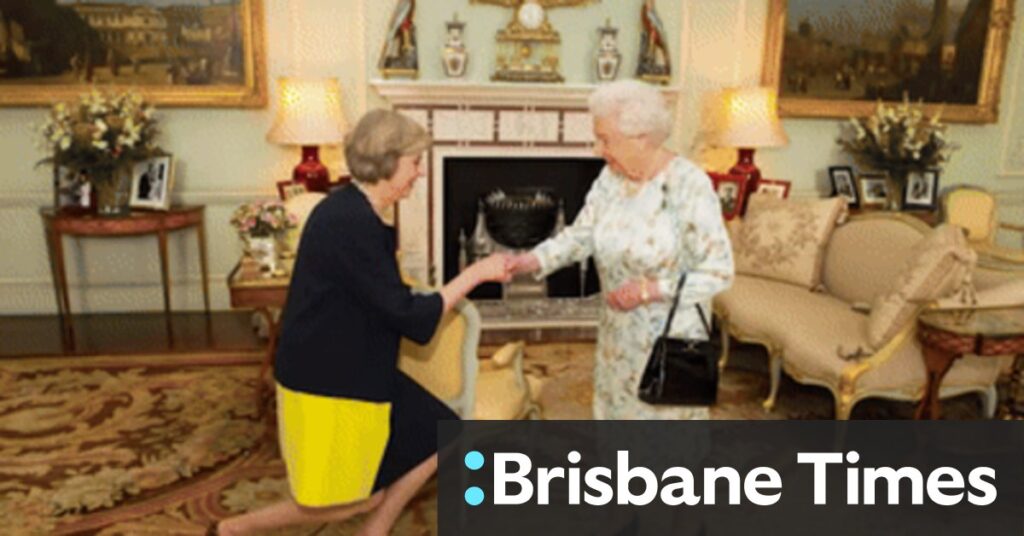
Laughing at the royal family is an age-old tradition, from jesters in medieval courts to Monty Python, The Windsors and Australia’s Rubbery Figures. Turns out the very notion of a king or queen is actually really quite funny. Nations led not by the person whose expertise and vision earned the job, but the person whose mum or dad just so happened to have the job before. Fronted on location – as Shaun Micallef so elegantly puts it – by their “local stunt double”, the governor-general. Authority conferred not by the democratic will of the people, but by arcane ceremony and glittering crowns. A population expected to keep fabricating the semblance of democracy by indicating consent through curtseys and bows. “It’s just weird to kneel in front of another adult,” laughs British comedian John Oliver on The Late Show with Stephen Colbert, describing the British royal family as “an emotionally stunted group of fundamentally flawed people doing a very silly pseudo-job”.
“The modern royals,” writes fellow comedian David Mitchell in Unruly: A History of England’s Kings and Queens, are “just a muted and low-key coda to the centuries of humiliation, incompetence, criminality and failure exhibited by their far more powerful predecessors”.
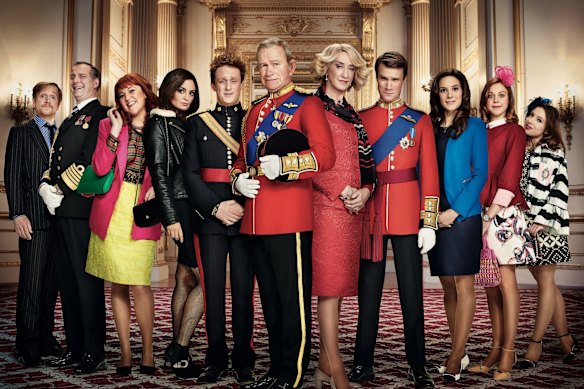
The Windsors is one program in a long tradition of finding the royals funny.Credit: NOHO Films
“And it truly is a wonder,” sings Australian comedian Sammy J in his beautiful Royal Lullaby, “That a colony down under, Will be subject to your whims, We give thanks to DNA, For wisely showing us the way, And picking out our Queens and Kings.”
Perhaps Lieutenant Frank Drebin, portrayed deadpan by the superb Leslie Nielsen, puts it best: “For no matter how silly the idea of having a queen might be to us,” he tells a royal visit media conference in the hit comedy The Naked Gun, “as Americans we must be gracious and considerate hosts”.
A democracy with all this at its apex is a nonsense – which makes pomp and ceremony crucial to its success: all that silliness needs serious camouflage. Entire workforces of public relations professionals and “royal watchers” work hard to humanise and glamorise imperial power.
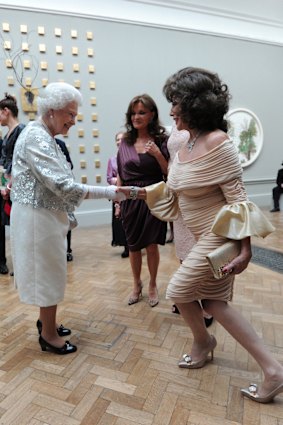
Joan Collins tries out her best curtsey.Credit: Getty Images
Because the human face that monarchy gives to non-democratic rule shines a reflected glory on its supporters while framing its challengers as disrespectful. It reinforces the class hierarchies that put us back in our place as “quiet Australians”, “comfortable and relaxed”, with no “ideas above our station”. When colonisation, privilege and power are given a human face, any criticism is reframed as a personal disrespect, thwarting progress. That anyone continues to tolerate this in contemporary Australia is truly astonishing – but such is the power of personifying power itself.
In 1930, then-prime minister James Scullin couldn’t ensure the most appropriate governor-general appointment without causing personal offence to George V. In 2024, disrespecting Charles’ cancer diagnosis was given as a reason to avoid criticism of the monarchy’s role in today’s Australia.
In 1900, the constitutional drafters couldn’t safeguard Australia’s legislative interests without risking offending Victoria. In 1999, disrespect for Elizabeth II was frequently cited as a reason to halt progress towards the future Australian republic. Across the decade to 2020, respecting the Queen’s “personal correspondence” was the argument against releasing the “Palace Letters” between Sir John Kerr and the Queen around the Whitlam dismissal.