
On December 9, 1992, Prime Minister John Major announced to the public that Prince Charles and Princess Diana would be separating.
The publication of Andrew Morton’s book, Diana: Her True Story, in June of the same year revealed the extent to which the Waleses’ marriage was struggling.
What followed were four years of Charles and Diana tearing each other apart before the world’s Press.
After the Tampongate tapes were released in 1993, Charles went on to give a TV interview with Jonathan Dimbleby in June the next year, in which he confessed to an affair with Camilla Parker Bowles after his marriage to Diana had ‘irretrievably broken down’.
Charles gave Dimbleby unprecedented access to private letters and diaries for the book The Prince of Wales, which was published in November that year.
The biography depicts Prince Philip as a domineering father who forced his son into a loveless marriage.
Journalist Tina Brown, who was editor-in-chief of The New Yorker magazine during this period, met Diana several times – including at a lunch with fashion tycoon Anna Wintour shortly before the princess’s death.
In her book, The Palace Papers, Brown wrote that Princes William and Harry listened to Major’s announcement in the headmaster’s sitting room at Ludgrove School. They had been warned by their parents in advance.
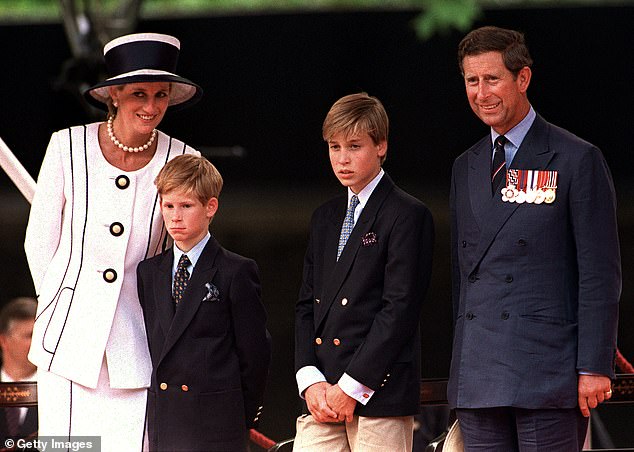
Princess Diana, Prince Harry, Prince William and Prince Charles at a VJ Day parade in 1994
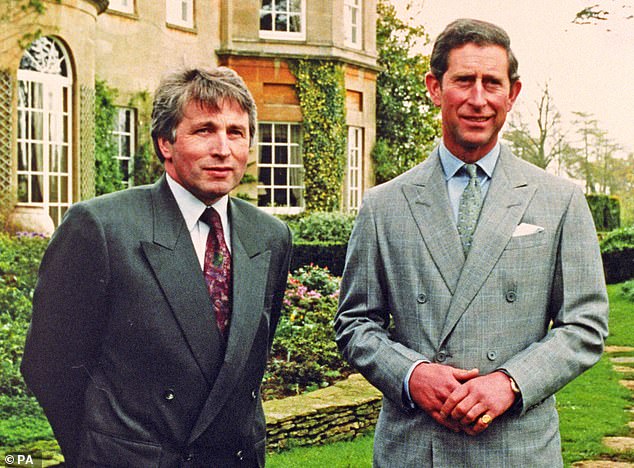
Charles and Jonathan Dimbleby at Highgrove during the filming of a documentary in 1994
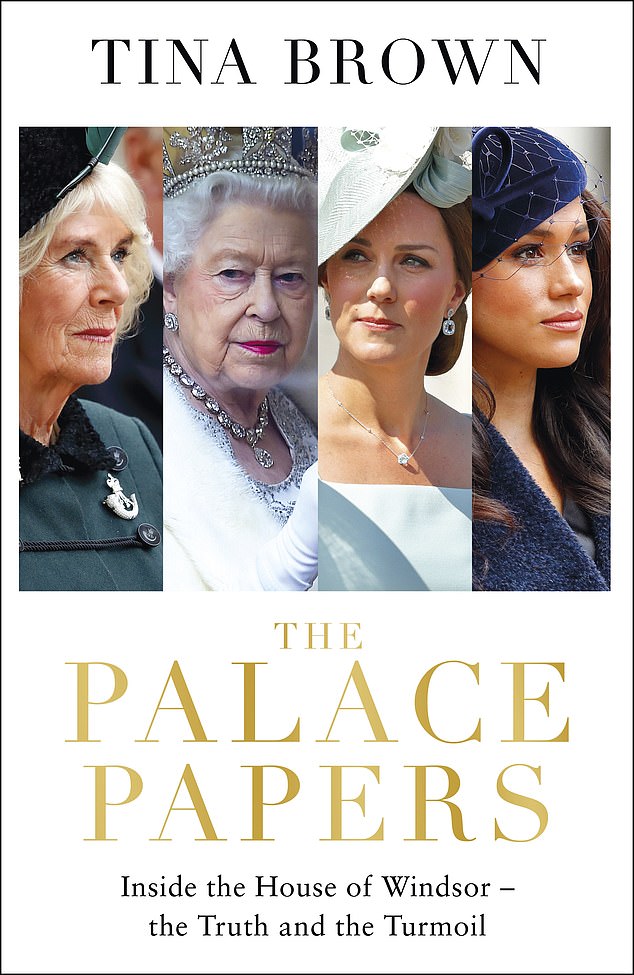
In her book, The Palace Papers, Tina Brown wrote that Princes William and Harry listened to Major’s announcement in the headmaster’s sitting room at Ludgrove School
‘I hope you will both be happier now,’ William said, according to Brown, ‘with heartbreaking maturity, after both boys had shed their tears.
‘They were heartsick at their father’s admission to Jonathan Dimbleby that he had been forced into marriage to Diana by Prince Philip, and that he had been unfaithful to Diana with Camilla.
‘On the morning of October 17, 1994, they were summoned to the headmaster’s study for a meeting with Diana, who had rushed to Ludgrove once again to perform damage control.
‘They wanted answers. According to Andrew Morton, William, then 12, asked her, “Is it true, Mother? Is it true that Daddy never loved you?”‘
Brown added that while Ludgrove made every attempt to shield the boys from the ‘deluge of dirty laundry’, William used to slip into his protection officer’s room to watch how his parents’ problems were covered on television.
In 1995, Diana hit back at Charles in a BBC Panorama interview. She detailed the extent of the troubles between the two, including the famous line: ‘There were three of us in the marriage, so it was a bit crowded.’
‘[Journalist] Martin Bashir’s Panorama interview inflicted more wounds,’ wrote Brown.
‘William, then only two months into his first term at Eton, chose to view the broadcast alone in housemaster Dr [Andrew] Gailey’s study.
‘After a year of turmoil on the home front, William was already in a fragile state.
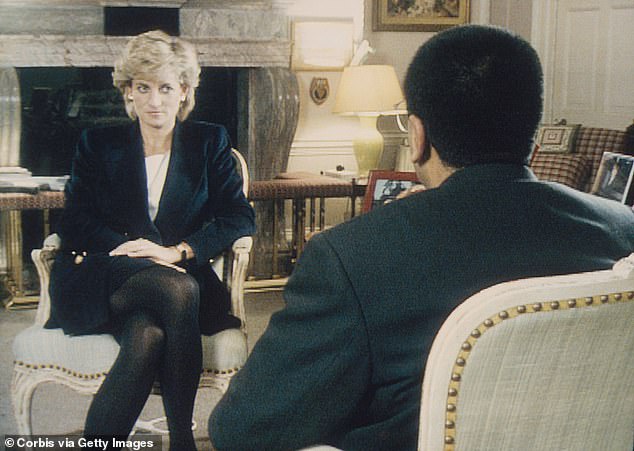
Martin Bashir interviews Princess Diana in Kensington Palace for BBC Panorama in 1995
‘The Queen told a Palace source that she was worried he was going to have a breakdown. His housemaster was worried too.
‘According to Ingrid Seward, when Dr Gailey heard that the interview was going to air, he called Diana and urged her to prepare William in person for what was coming.’
‘Is that really necessary?’ she reportedly replied.
‘Much had changed since she had rushed to Ludgrove to comfort her emotionally bruised eldest son after the Dimbleby interview,’ Brown wrote.
‘Her intrigues were consuming her, and she preferred not to consider their consequences. Only when Gailey pushed did she agree.’
In recent years, Dimbleby has openly slammed Bashir over using alleged ‘deception and lies’ to secure an explosive interview with the ‘troubled’ Princess Diana.
When the interview with Diana was broadcast 30 years ago, it was watched by 23million viewers.
It has been alleged that Bashir won the trust of the late royal through his use of questionable methods, including producing fake bank statements showing payments of thousands of pounds from newspapers to ‘traitors’ allegedly ‘spying’ on the Spencer family.
In allegations also made by her brother, Earl Spencer, Bashir is said to have played on Diana’s paranoia by telling her lies about the Queen’s health, Charles being ‘in love’ with William and Harry’s nanny Tiggy Legge-Bourke and Diana’s staff betraying her to MI5 and newspapers during his attempt to secure the interview.
Dimbleby, who interviewed the Prince of Wales in 1994 for ITV’s Charles: The Private Man, The Public Face, added: ‘It can be done by a variety of means. But none of them should involve deception and lies.’
A month after her interview, the Queen urged the separated couple to divorce, which they did in 1996.
Just one year later, Diana died in a car crash in Paris, aged 36.