
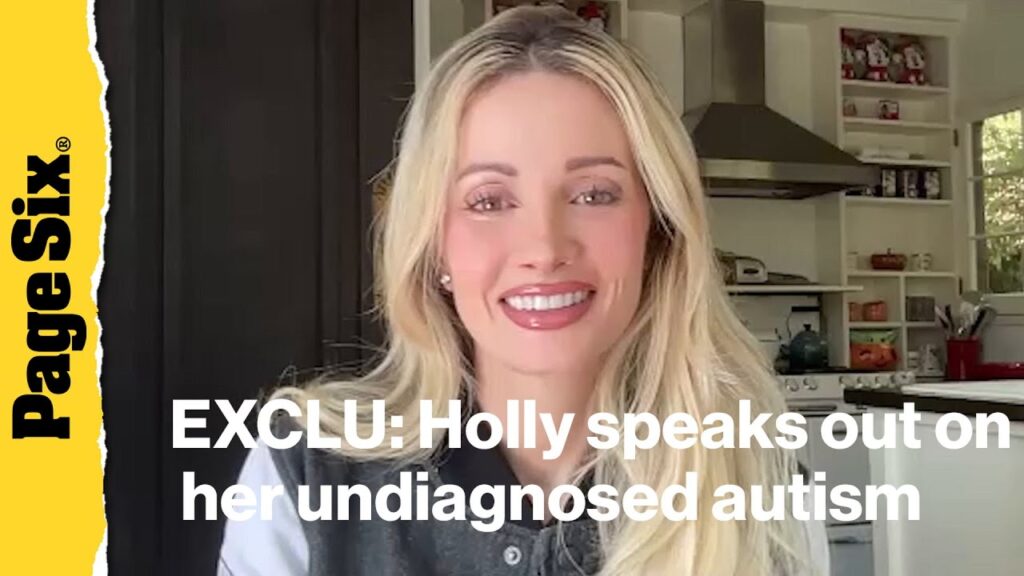
Holly Madison believes her undiagnosed autism landed her at the Playboy Mansion
I’m so impressed by your story like start to not even finish but where you are. You’ve been on so many journeys. Um and one of the things is you were diagnosed with autism as an adult. Yes. Um how old were you when you received your diagnosis? Oh my gosh, it was only four years ago. So I was already 42. So been living my whole life with it and everything. But you know, now I understand myself better. So I’m so happy I went and got the diagnosis. What made you think to go that down that route of like, let me see if something’s going on. Like, let me just check in. You know, I always knew I had certain social difficulties and difficulties relating to people and I would always make all kinds of excuses for it. Like maybe it’s cuz I I grew up in a really really remote place in Alaska basic like almost off the grid. So, I always kind of blamed it on blamed it on that even though my sister didn’t really seem to be worse off for it. So, that didn’t really make sense. But my mom was talking about it to my ex-husband and saying that she had suspected when I was little that something was going on and that, you know, as time went on, she thought, you know, it was asberers as they called it then. And I started to look into what that was and what some of the symptoms of it were and some of the signs. And I thought, “Wow, this really sounds like me.” And I was very curious about it. And finally found somebody who did adult diagnosis. and I did a series I think it was a series of like seven appointments with the doctor to um figure it out and get the diagnosis. Wow. So when you received the diagnosis, what was going through your head? Was it like relief? Were you shocked? What what was kind of happening for you? It was definitely relief at that point because I’d been um turned on to the idea for a couple years at that point and I’d been doing a lot of research and coming across a lot of creators on social media who were dealing with the same thing which is always helpful. So it was just it was nice to be able to know and I felt like if this was something I was going to talk about publicly I had a responsibility to you know get the diagnosis and see for sure if that’s what it was or not. So yeah. Well, that’s that’s probably a lot to process even if you had your suspicions. Um, did any part of you consider not sharing this publicly or were you always like this is my platform and I’m going to speak about this? You know what’s weird is I feel like I should be a private person. Like I feel like that’s kind of like my temperament, but it’s just hasn’t gone that way in my adult life. Like I’ve always kind of been attracted to like these experiences. I wanted to do that kind of required you to put yourself in the public eye. And you know, I had, you know, some experiences with the downsides of being in the public eye as anybody would. And after I had my kids, I went through this phase where I was a complete hermit. I just wanted to like write fiction under an assumed name. I didn’t want to do anything else publicly. I just went through this phase where I was completely over it. And then um when COVID hit, you know, I was other than trying to homeschool the kids and kind of failing at that. I did, but um other than that, I was bored and like what can I do that’s productive? So I started a Tik Tok, I started a YouTube and just got really comfortable sharing with people and just felt like that was my journey and that there’s going to be something you know further down the road or you know later on where that kind of exposure will come into play and you know I can help people or do something with that because it’s just what I felt drawn to in a way even though part of me is very private. So, I just kind of got used to like being really transparent with my audience and not hiding anything. I am very private about my kids, but that’s about it. Everything else is pretty much fair game. And I remember I first talked about, you know, this is before I had my formal diagnosis, but I was first talking about suspecting I was on the spectrum um when I did my first Call Her Daddy interview in 2021 because I really felt like it played into my story. I was just kind of telling my story about coming to LA and getting involved with Playboy and like falling in love with a much older man. And I feel like having the difficulty I did connecting with people for so long made me feel like when I, you know, was meeting somebody who was like older and more experienced and maybe a little bit better at manipulating people, I thought, “Oh, wow.” You know, maybe I’m meant to be with an older man. Maybe this is what it is. It just like felt like love. And I think um maybe I wouldn’t have thought that or maybe I would have handled myself a little differently had I known what I was dealing with with myself and you know been able to address my social skills better and things like that. you know, I don’t have any regrets about where my life took me, but I I do think it’s an interesting piece of my story for sure. And it definitely kind of I think sheds some light on, you know, where my feelings were at and my motivations and why um I had certain impressions about things. I just think it’s an interesting part of the whole journey. To look back on such a monumental experience in your life and be able to have a different perspective on it knowing what you know now is just like mind-blowing and very impressive. Did you tell your kids about your diagnosis? And if so, how did you relay that information to them? You know, their dad actually did because one day my daughter came up to me and she goes, “Mom, I know you’re autistic, but I’m still which sounds so funny, but like she’s a little kid, so that’s so sweet. That’s so cute. Oh my gosh, that’s amazing. And what like what an awesome little girl you’re raising, you know? Yeah, she’s so sweet. I mean, I really didn’t have to do anything. Like, it was when I was getting the diagnosis, their dad kind of took the initiative and like, you know, told them what that was and bought them some books and, you know, you know, told them there might be some kids at your school or some kids you meet that have this and, you know, this is what your mom’s dealing with. So yeah. Wow. You have an awesome partner. Um co-parent. That’s that’s for sure. That was actually when I was getting my diagnosis. I was talking to the doctor, you know, she was like, “What do you want to get out of this?” And I’m like, “Well, you know, like I’m at that time I was 42.” I’m like, “I’m 42. Like I’ve lived my whole life like this. I feel like I’m pretty comfortable with who I am, but I just want to know that what I’m dealing with isn’t affecting my parenting.” because sometimes being on the spectrum, you know, not only can you have social difficulties, but you can have difficulties expressing expressing emotions um the way a neurotypical person would. So, I just wanted to make sure and I wanted the help of her and I wanted the help of my ex-husband and everybody around us. You know, if you notice anything, let me know if I’m not being as expressive as I could be. And everybody’s just really helpful with that. Wow, that’s phenomenal. you have such a support system and you for sure but you advocated for that you know so I think that’s you know kudos to you again like I said you know you spoke about having or experiencing body dysmorphia um that I’m sure a lot of women young women can relate to but you obviously were in a much more specific situation you were on a pedestal for the entire world um how did you heal from that situation I don’t know that I’m healed from that honestly. I’ve just more skewed toward a health like I’m super into anything health biohacking things like that. So I really focus on that and try not to focus so much on like the appearance of it all or you know I mean they say it’s not healthy to like be on a scale but I have to admit I get on a scale regularly because I do have dysmorphia. So, there’s a part of me that’s like, “No, I need to see something that’s like a little bit more subjective and, you know, tells me what I weigh because I can’t trust my own judgment.” It’s not um probably what other people would think is like the healthiest part of my personality, but looking at where I came from, I don’t think anybody could really expect it to be any different. But also, like it’s in a way though, it’s also not that deep too. like taking care of my appearance and looking a certain way and wearing certain clothes. That’s almost like a hobby for me. I’m not really doing it for anybody else at this point. Yeah. And I think that’s so empowering. Thanks. It really is. Um and I unfortunately I can relate to a lot of what you’re describing. I’ve had my experiences with body dysmorphia and eating disorders and all that. So, I really can relate. And I wanted to sort of ask, how do you tune that out specifically with regard to raising a daughter? Oh, I made a decision really early on that I didn’t want my daughter to fall into any of the traps that I fell into. So, I have never spoken about diet or anything like that or weight or anything in front of her. If I’m trying to talk about like not eating sweets or eating healthier, I just talk about that for, you know, health sake and approach it from a health perspective, I don’t want her falling into any of like the over obsession with appearance. And I think me and her dad have been pretty good at like filtering that out. Yeah. Wow. Good. That’s amazing. Um, I asked honestly I was like just from a personal level I was very curious because I’m sure it’s you know obviously boys and men can experience body dysmorphia too. Um, but I think there’s just the societal pressures on women are on another level. Um, yeah, it still creeps in for sure. Like I’ll catch her saying something like, “Oh, how do I get rid of my belly?” And I’m like, “First of all, no, you don’t need to. And second of all, you’re 12.” Then you know that’s what you’re supposed to look like.
Holly Madison believes her undiagnosed autism landed her at the Playboy Mansion when she was a young and impressionable 21-year-old.
The former Playboy Playmate, 45, received her diagnosis in 2023 after first publicly sharing her suspicions two years prior.
She tells Page Six in an exclusive interview that the news didn’t come as a shock (in fact, she recalls feeling “relief”), as she always knew she had “certain social difficulties and difficulties relating to people.”
Read more at https://pagesix.com/?post_type=article&p=8564974&preview=true
#hollymadison #playboy
Page Six is your source for celebrity news, gossip, entertainment, pop culture, photos, video and more.
Catch the latest news and gossip here:
https://pagesix.com/
Follow us on:
Facebook – https://www.facebook.com/pagesix/
Twitter – https://twitter.com/PageSix
Instagram – https://www.instagram.com/pagesix/
Check out We Hear, our Page Six podcast!
And Page Six Style has the latest news on celebrity style including fashion trends, red carpet photos, and beauty tips.
Catch the latest news here: https://pagesix.com/style/
Follow us on:
Facebook – https://www.facebook.com/pagesix/
Twitter – https://twitter.com/PageSix
1 Comment
This is a big possibility!