
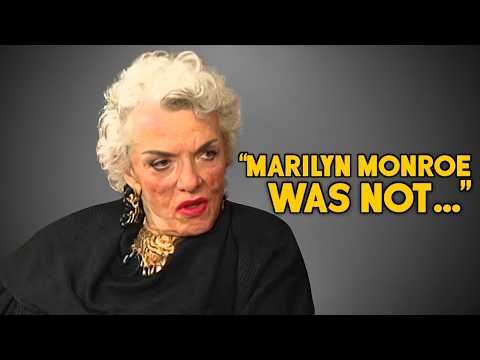
Before She Died, Jane Russell Breaks Silence on Marilyn Monroe Truth
Did you think suicide when you heard she died? I I had no idea. She had um just a tremendous amount of sympathy and empathy and feeling for people situations and uh she was always a little unhappy and mad at the big the big boys. You know, Jane Russell wasn’t just remembered as one of classic Hollywood’s most glamorous and captivating stars. She also shared a close friendship with Marilyn Monroe. Russell, who died in 2011 at the age of 89 from respiratory failure, built a career that placed her among the greats of her era. Audiences knew her from memorable films like The Outlaw, The Paleface, His Kind of Woman, and of course, Gentlemen Prefer Blondes. The movie that first paired her with Monroe and cemented their bond. By the time she passed, Russell stood as one of the last shining icons of Hollywood’s golden age. She carried a truth that had been buried for decades. To the world, Marilyn was the ultimate Hollywood dream. But behind the dazzling smile and seductive charm, Jane saw a much darker side. In her final days, she could no longer stay silent. With a voice filled with frustration and betrayal, Jane exposed the painful secret of her best friend, tearing away the glamorous mask Marilyn had shown the world. It wasn’t just a confession. It was a raw and emotional revelation that shocked everyone who believed in the fairy tale image of Marilyn Monroe. Before we start, if you are a fan of Marilyn Monroe or Jane Russell, then don’t forget to subscribe to our channel. Jane Russell’s journey to Hollywood stardom began far from the glamorous lights of the silver screen. Born Ernestine Jane Geraldine Russell on June 21st, 1921 in Minnesota, she was the only daughter in a family of five children. Growing up with four older brothers who shaped her into a spirited and adventurous tomboy. From a young age, Jane displayed a strong sense of independence, learning to navigate life with resilience and determination. Her father, who had served as a first lieutenant in the US Army, later managed a soap factory, instilling in Jane a sense of discipline and work ethic. Her mother, a former performer in a traveling show, nurtured Jane’s creative instincts, introducing her to the arts and encouraging her imagination to flourish. In 1930, the Russell family moved to California’s San Fernando Valley, hoping for better opportunities and a fresh start. There, Jane attended Vanise High School, where her vivacious personality and natural charm began to stand out. Initially, she dreamed of pursuing a career in design, imagining a life filled with creativity and artistry. But life had other plans for her. The sudden death of her father at the young age of 46 brought a profound shock to the family, forcing Jane to confront hardship far earlier than most teens. The loss not only left a void in her life, but also demanded that she mature quickly and shoulder responsibilities beyond her years. Just a few years later, when Jane was only 18, she faced another lifealtering event. She became pregnant. In an era when abortion was illegal and dangerous, she found herself with limited options. Jane underwent a procedure that went tragically wrong, nearly costing her life. The ordeal left her permanently unable to have children, a reality that haunted her throughout her life. Yet, instead of succumbing to despair, Jane channeled her pain into compassion and advocacy. Her personal tragedy fueled her later work in adoption, making her a passionate supporter of children’s welfare and a vocal advocate for adoption initiatives. During these challenging years, Jane worked tirelessly to support herself, taking on jobs as a receptionist and pursuing modeling opportunities. Her mother, recognizing Jane’s flare for performance, encouraged her to explore acting, prompting Jane to study drama seriously. She trained at the renowned Max Reinhardt Theatrical Workshop, where she learned under the guidance of celebrated actress Maria Uspenskaya. This intensive training honed her skills, instilled a deep respect for the craft of acting, and laid the foundation for her future in Hollywood. Jane’s early life was marked by hardship, resilience, and determination. Every challenge, from the loss of her father to her near fatal medical ordeal, shaped the woman who would become one of Hollywood’s most unforgettable stars. Her story is not just one of glamour and fame, but of courage, perseverance, and an unyielding spirit that turned personal tragedy into a lifelong mission to make a difference. Marilyn Monroe once came into possession of a collection of manuscripts belonging to Reinhardt. She had intended to present them as a thoughtful gift to her acting coach, Natasha Lites. However, her decision sparked harsh criticism from the press. To quiet the uproar, Monroe eventually agreed to return the papers by selling them back to Reinhardt’s son at the same price she had paid. Ironically, Reinhardt’s son later turned around and resold the collection to a university, this time making a considerable profit. But let’s step back to Jane Russell, Monroe’s close friend. Russell’s Hollywood journey began in the 1940s when the eccentric filmmaker Howard Hughes signed her to a 7-year contract. Hughes, fascinated by the striking 19-year-old, cast her in The Outlaw, a western he had written himself. Russell played Rio, a captivating woman caught between Doc Holiday and Billy the Kid. Determined to showcase her curves, Hughes even designed a special bra for her. But Jane flatly refused to wear it. Jane Russell became known as one of Hollywood’s most alluring figures, a smoldering beauty whose presence on screen was impossible to ignore. Her striking curves and confident charm captivated audiences and co-stars alike, even earning her the chance to share the spotlight with Marilyn Monroe. Later in her career, when Howard Hughes cast her in The Outlaw, he pushed boundaries in a way no one expected. He designed a daring bra for Russell to wear under a sweater, hoping to emphasize her figure. The bold move caused an uproar, and the film’s promotion was met with scandal. In fact, the poster for The Outlaw, which showed Russell reclining in a haystack with her skirt provocatively raised and a gun in her hand, was considered so risque that the movie was banned for years. Today, only one original copy of that infamous poster is believed to be in existence. Instead, Hughes arranged a now legendary photo shoot that transformed her into one of World War II’s most famous pinup icons. The film enraged sensors, forcing Hughes to battle for years to get it released. Hughes, infamous for his relentless advances toward women, also tried his luck with Russell. But Jane wasn’t about to become another conquest. When he invited her to his quarters one evening, she stood her ground and told him to keep his hands to himself. Instead, she found love elsewhere and married NFL player Bob Waterfield in 1943. Years later, in her 1989 book, Marilyn Monroe and the Camera, Russell recalled the very first time she met Monroe. She was at a dance when Jim Doerty, Monroe’s husband at the time, called her over. He wore a police uniform and beside him was a young Norma Jean curled into his arm. The moment felt a little awkward, but it left a lasting impression on Russell. Although the outlaw made Jane a star, her contract with Hughes limited her career. He kept a tight leash, refusing to let her appear in films without his approval. While she managed to star in His Kind of Woman in 1946, she was otherwise stuck promoting The Outlaw until its eventual release. By the late 1940s, Russell briefly shifted into music before returning to acting. Then in 1953, her career intersected with Marilyn Monrose in a way that would forever cement their friendship and their shared status as two of Hollywood’s most iconic bombshells. Jane Russell showed the world a side of Marilyn Monroe that few ever got to see. While the two iconic actresses shared the screen in the 1953 classic Gentlemen Prefer Blondes, and their on-screen chemistry was magnetic. Their lives outside Hollywood were worlds apart. Despite these differences, a unique friendship blossomed between them. At first, Jane was simply dazzled by Marilyn’s extraordinary beauty, the kind of presence that seemed to light up every room she entered. But as they spent more time together, Jane began to see past the public persona of the glamorous movie star, and discovered a woman who was far more delicate and sensitive than anyone might have guessed. Beneath the confident, alluring exterior, Marilyn was shy, vulnerable, and deeply affected by the harshness of the world around her. Jane recalled one telling moment that revealed this vulnerability. During a kissing scene with actor Tommy Nunan, some men later asked him what it was like to kiss Marilyn. His crude, thoughtless reply, like being swallowed alive, was enough to send Marilyn running to her dressing room in tears. Jane, having grown up around boys and understanding their often careless behavior, immediately sensed that Marilyn had been unprepared for such callousness. This moment, small as it may have seemed, revealed a profound truth. Behind the screen siren image was a woman who could be deeply hurt by thoughtless words. When it came to Marilyn’s untimely death, Jane Russell’s perspective was strikingly clear and unflinching. She insisted that Monroe did not take her own life. Jane pointed to concrete reasons for her belief. Marilyn was planning to marry Joe Deaggio, one of the biggest sports icons of the time, and had recently signed a new movie contract, signaling that her career and personal life were moving forward. These hopeful developments, Jane argued, made the idea of suicide nearly impossible. Instead, she suspected that there were darker forces at play. Jane spoke of dirty tricks and hinted that powerful figures, including Jack and Bobby Kennedy, both of whom had been romantically linked to Marilyn, might have had a hand in her death. Jane’s convictions were not merely theoretical. Shortly after Marilyn’s passing, she encountered Bobby Kennedy in person. She described the moment vividly, recalling a chilling gaze that seemed to mark her as an adversary. But Jane, known for her strength and poise, refused to be intimidated. Even in the presence of one of Hollywood’s and America’s most powerful figures, she stood her ground, unafraid to meet his hostility head on. Ultimately, Jane Russell’s reflections offer a deeply personal and intimate glimpse into Marilyn Monroe’s life. They reveal a woman who was more fragile and human than the world ever knew, while also highlighting Jane’s unshakable sense of justice and courage. Her belief that Marilyn’s death was no accidents a layer of intrigue and controversy, showing how Hollywood glamour often masks the tragedies and secrets lying beneath the surface. Through Jane’s eyes, we see Marilyn not just as a legendary movie star, but as a vulnerable, real person whose life and death left a lasting mark on those who knew her best. Jane Russell was a woman of remarkable strength and independence, never one to hold back her opinions when she felt compelled to speak. Yet, when it came to her personal life, she was fiercely private, guarding her heart with the same intensity that made her a Hollywood icon. Throughout her life, she firmly denied any romantic involvement with the enigmatic Howard Hughes and remained notably quiet whenever asked about her rumored relationship with Frank Sinatra. Despite this discretion, she was more open when it came to her friendships. Her bond with Liza Minnelli and David Guest, for instance, was wellknown. Russell celebrated their love by attending their lavish wedding, fully supporting her friends. But when the couple’s marriage eventually ended in a bitter and public divorce, Russell did not hesitate to side with David, showing her loyalty and moral compass in difficult times. Russell’s own love life, however, was not without heartbreak. Her third husband, John Peoples, a successful real estate professional, had been her partner for 25 years. When he passed away in 1999, the loss hit Jane profoundly, leaving a void that shook her deeply. Struggling to cope with the grief, she turned to alcohol as a source of comfort, a habit that quickly grew into a serious problem. Despite the challenges, Jane’s resilience ultimately shone through. At the age of 79, she made the courageous decision to enter rehab, confronting her struggles head on. After completing a 30-day program, she emerged determined and committed to change, managing to remain sober for the rest of her life. Jane Russell’s love life was far from simple, filled with both deep passion and heartbreaking loss. Her second marriage to Roj Barrett in August 1968 ended in tragedy just three months later when Barrett suddenly passed away from a heart attack. Jane was devastated, calling his death one of the darkest and most painful moments of her life. This brief marriage came in the aftermath of her long and tumultuous first marriage to Robert Waterfield, which had lasted over 25 years. Jane had known Barrett since childhood, and even back then, they had shared an undeniable crush on each other. As fate would have it, their paths crossed again in adulthood, leading to a romantic connection that blossomed despite the complications of Jane’s ongoing marriage. She later admitted that she had engaged in an affair with Barrett while still married to Waterfield, adding layers of complexity to her already complicated personal life. Meanwhile, Robert Waterfield had his own secrets. Despite swearing that he had always been faithful, Jane discovered he had been having an affair with her own secretary. The betrayal cut her deeply, shattering the trust in their marriage and ultimately leading to their divorce. Though their marriage ended in pain, Robert and Jane had shared a bond through adoption. They adopted three children together, providing the family they couldn’t have biologically. Jane’s early life experiences deeply shaped her dedication to helping children. At just 18, she suffered a botched abortion that nearly cost her life and left her infertile for the rest of her days. Rather than allowing this tragedy to define her, she turned her focus to adoption and children’s welfare. She went on to found the World Adoption International Fund, an organization devoted to giving children loving homes around the world, a cause that became a lifelong mission for her. Beyond her personal life, Jane also held strong opinions about the mysteries of Hollywood. She was convinced that her close friend Marilyn Monroe did not die by suicide. This belief has sparked debate for decades, leaving fans and historians alike wondering what really happened. Was Marilyn murdered, or did she tragically take her own life? Jane’s outspoken nature about her friend’s death shows the depth of her loyalty and her unwillingness to accept the official story without question. Now, we want to hear from you. What do you think really happened to Marilyn Monroe? Share your thoughts in the comments below. And before you leave, make sure to give this video a like and hit that subscribe button to stay updated on more stories from Hollywood’s past.
Before She Died, Jane Russell Breaks Silence on Marilyn Monroe Truth
Jane Russell wasn’t just remembered as one of classic Hollywood’s most glamorous and captivating stars—she also shared a close friendship with Marilyn Monroe. Russell, who died in 2011 at the age of 89 from respiratory failure, built a career that placed her among the greats of her era. Audiences knew her from memorable films like The Outlaw, The Paleface, His Kind of Woman, and, of course, Gentlemen Prefer Blondes—the movie that first paired her with Monroe and cemented their bond. By the time she passed, Russell stood as one of the last shining icons of Hollywood’s golden age.
Video Disclaimer
The content presented in our videos is intended solely for entertainment purposes. While we may draw upon facts, rumors, and fiction, viewers should not interpret any part of the content as factual or definitive information. Please enjoy responsibly
All information in this video is compiled from reputable and reliable news sources. However, the content is intended solely for informational purposes 🧠 to help viewers gain a broader understanding and perspective on famous figures 🌟. This content is not intended to offend or harm anyone 🕊️.
We do not claim that all the information in the video is entirely accurate or complete. However, we do not distort or misrepresent the origins of the information we present 📜.
Copyright Disclaimer: – Under section 107 of the copyright Act 1976, allowance is mad for FAIR USE for purpose such a as criticism, comment, news reporting, teaching, scholarship and research. Fair use is a use permitted by copyright statues that might otherwise be infringing. Non- Profit, educational or personal use tips the balance in favor of FAIR USE
6 Comments
FUCK THIS LYING NARRATOR
I never thought she killed herself.she was
murdered. she was a lovely girl.
Why do these narrators give a long winded introduction to hear their own voices. Get to the point, time waster and let us know what Jane has to say.
Whoever made this video did not get the facts straight. Marilyn Monroe devioced her 1 st husband Jimmy Dougtry while she was modeling for Blue Book Modeling Agent. When Marilyn Monroe died, she had been married andevioced from Joe DiMaggio and had been devioced from her 3 husband Aurther Miller . Just before she died, she had been having a afair with JFK and Bobby Kennedy.
I always liked Jane in the movie she made with Jim Mitchem
If Jane Russell really broke her silence before she passed, then her words about Marilyn Monroe must hold incredible weight—coming from someone who knew her beyond the Hollywood myths, it could change how we see Marilyn forever.