
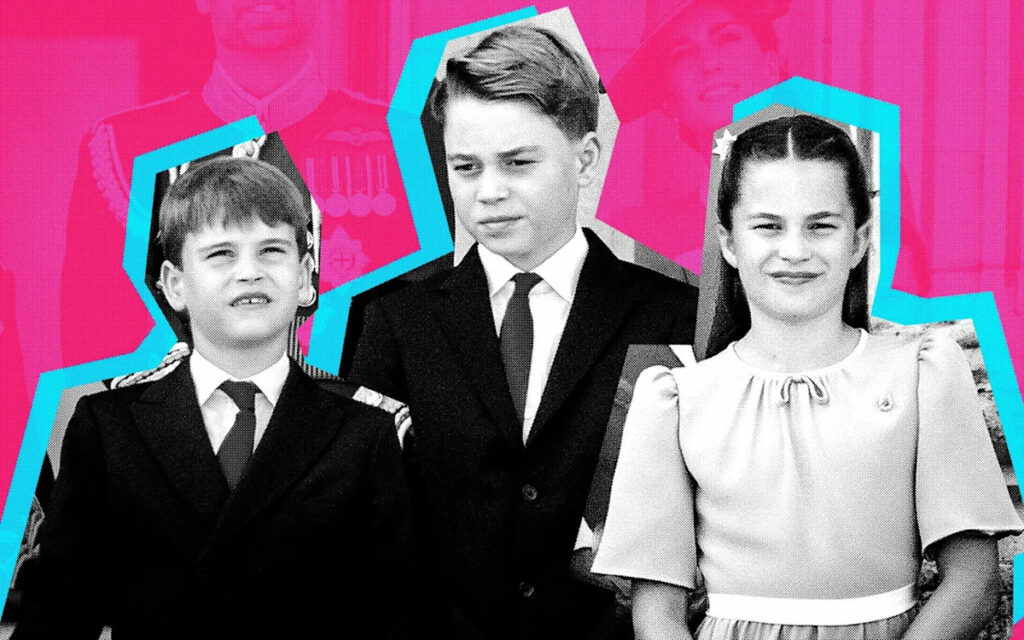
A glance at the Albert Hall’s royal box on Saturday night offered a window into the future. For those wondering what the monarchy – already slimmed down, and getting slimmer by the week – might look like in years to come, the line-up may have given some indication. On the back row: the Duke and Duchess of Edinburgh. On the front row: the King, the Queen, the Princess of Wales and Prince George.
Joining his mother at the event while Prince William made his way back from Brazil, Prince George seemed terribly grown up all of a sudden, stepping in to attend a high-profile appointment on the royal calendar with apparent ease.
Behind him were his great aunt and uncle, whose daughter Lady Louise celebrated her 22nd birthday at university in St Andrews that same day. Fast forward 15 years and you feel those seats could easily be filled with the Wales children (who, by then, would be in their twenties) and by the children of the Duke and Duchess of Edinburgh, Louise and James, Earl of Wessex. But who else might join them?
Balconies and boxes were once filled with scores of Windsors. But these days, they tend to look rather less busy. Public appetite for the Firm appears to be shrinking, too. A razor-thin majority (51 per cent) of Brits now believe the monarchy is important to the UK, according to the latest British Social Attitudes Survey, down from 86 per cent four decades ago.
The King, seemingly keen to initiate reform, has been clear in his vision for a monarchy bolstered by a small, efficient central unit of working royals. But what does that mean for the younger cohort who could one day step into their shoes? Will it fall to Prince George, Princess Charlotte and Prince Louis to hold the fort alone, or will they be flanked by cousins? And what is to become of those members of the Royal family who are Windsors in name but not in job description?
The inner circle
It is, of course, impossible to know how old Prince George will be when his father becomes King, but with the benefit of two siblings so close in age to him, you can imagine the three Wales children operating as a unit in years to come.
Just as the Princess Royal and Prince Edward (and, before his great unravelling, Andrew Mountbatten-Windsor) have always shared the load, keeping up patronages, sporting and military responsibilities, and representing the monarch at home and overseas, it is possible that Princess Charlotte and Prince Louis could walk down that same path.
“I would think Princess Charlotte will be a bit of a shining star,” says Ingrid Seward, editor-in-chief of Majesty Magazine, adding that the 10-year-old already “seems to be the commanding personality amongst the three of them”. Meanwhile, she says, “I see Prince Louis as attracting a lot of attention.”
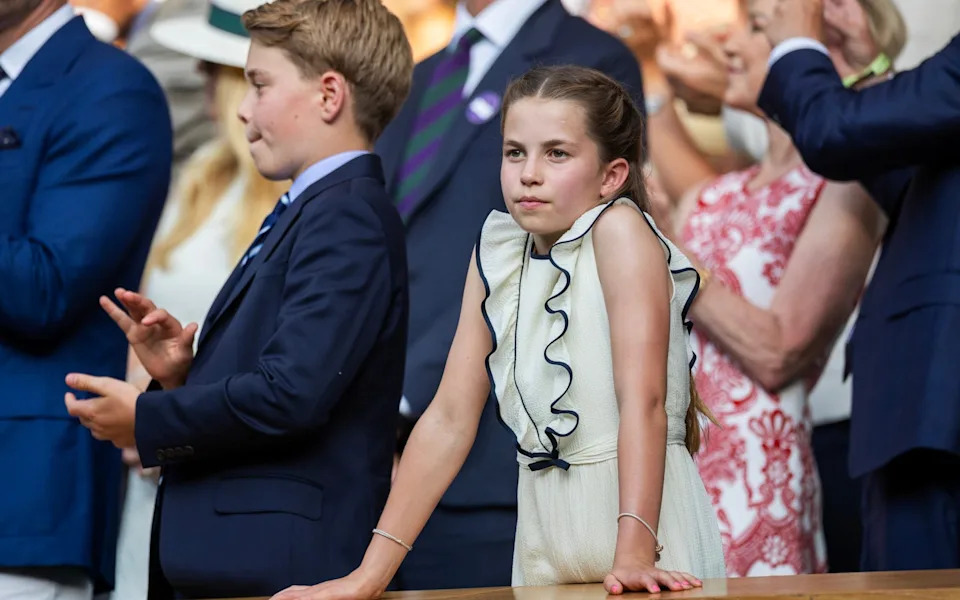
Princess Charlotte at Wimbledon in July – 2025 Tim Clayton
It is too early to say whether they will go on to become full-time working royals, but you can imagine that, as King, William may welcome the support of all three of his children, while Prince George could benefit from standing alongside his siblings.
Of course it depends, somewhat, on what vision the Prince of Wales has for the monarchy. When Queen Elizabeth’s children were growing up, there was no question that all four of them would go on to hold central roles in the Firm. The same isn’t necessarily true for the next generation.
“The monarchy has evolved in a way that perhaps we didn’t think it would back then,” says Joe Little, managing editor of Majesty Magazine.
Princess Charlotte and Prince Louis may go on to become working royals, he says, but it isn’t a given. “It may be that Charlotte and Louis do not fully function as working members of the Royal family, but perhaps now and again are there to bolster them [and otherwise] lead relatively private lives if that is possible, given their proximity to the throne.”
The cousins
The Duke and Duchess of Edinburgh remain key figures whose work supporting the King and Queen is considered as important as ever. What role their children might play in the Firm of the future remains to be seen.
Lady Louise and the Earl of Wessex (who turns 18 next month) are not first cousins of George, Charlotte and Louis. But as their full cousins will probably still be living in California, could there be a need for reinforcements?
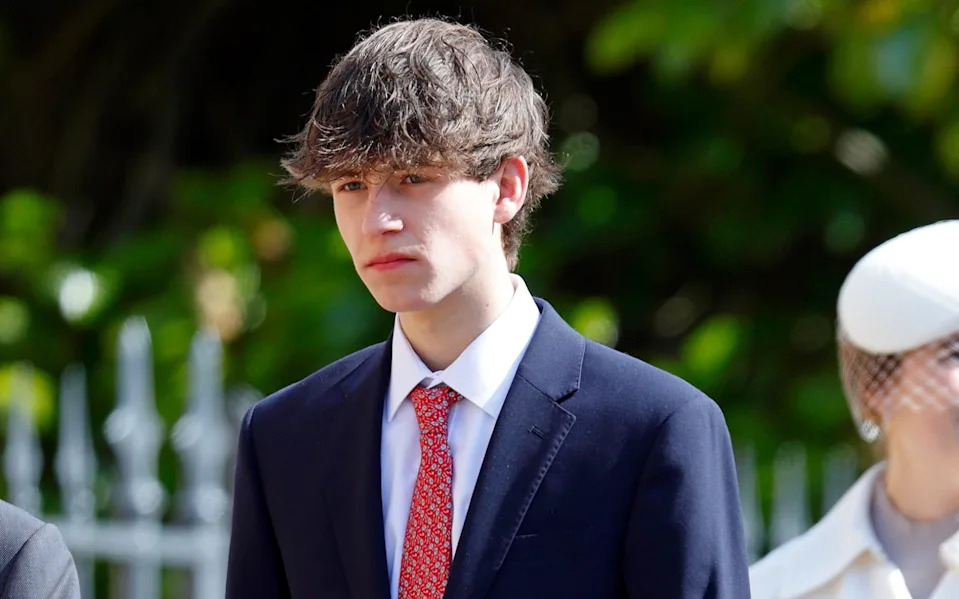
James, Earl of Wessex, is part of a younger generation of royals growing up largely outside the spotlight – Max Mumby/Indigo
To outsiders, Lady Louise looks the most likely to follow a traditional path. She was close to her grandparents, inheriting her late grandmother’s love of horses and her grandfather’s interest in carriage riding.
At university, she joined the Officers’ Training Corps and on Sunday appeared at the St Andrews Regiments’ Day Parade, looking smart and sombre as she marched alongside fellow cadets.
On her LinkedIn page (which has since been taken down), she is reported to have expressed an interest in army life post-graduation, writing: “I am interested in pursuing a career in the military, diplomacy, or law.” She may not be expected to carry out royal duties full time, but she certainly seems to have the right temperament for it.
“I have a feeling that Louise may perform some sort of philanthropic or charity or military role,” says Little. “We saw pictures of her on Sunday [at the parade] and I feel that seems to be in her genes in the same way that carriage driving is in her genes – and that she inherited from the late Duke of Edinburgh.”
Princess Beatrice’s daughter, Sienna, four, and Princess Eugenie’s sons, August, four, and Ernest, two, don’t have titles, and as neither Beatrice nor Eugenie are official working members of the Royal family, it’s hard to see why their children would be.
However, both women have combined independent careers with charity work, and Beatrice is one of the seven Counsellors of State who undertake official duties on behalf of the King if he is not able to do so, while Eugenie is a mentor in the King’s Foundation.
As for Zara Tindall’s three children (Mia, 11, Lena, seven, and Lucas, four), it seems extremely unlikely they will have any sort of official role given their mother has never been a working royal.
But that doesn’t preclude them from the sort of philanthropy you might expect from those close to the crown. Royal children “have been brought up around a very philanthropic life in the way that normal kids aren’t”, says Seward.
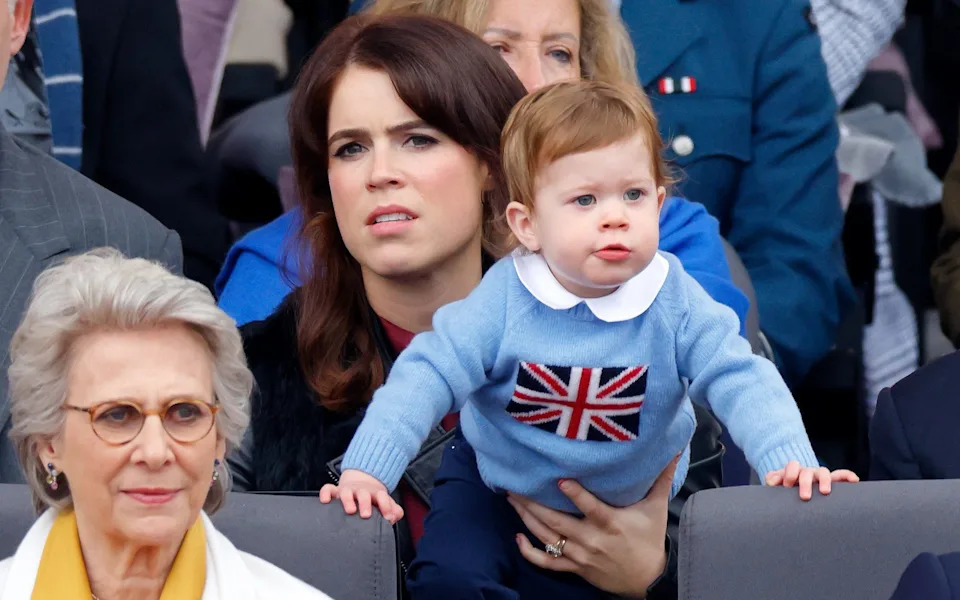
Princess Eugenie with her son, August, in London, June 2022 – 2022 Max Mumby/Indigo
“The Tindalls just seem super sporty so they might well get involved with charities that relate to what their parents do. They probably will because they’re quite high profile.”
Little suspects they will “remain on the periphery of the Royal family and appear at big occasions, but not have working roles”.
The young Windsors
And what of the rest of the younger cohort? The numbers of working royals might be dwindling, but the pages of Tatler’s Little Black Book are as well populated with younger members of the wider Royal family as they have ever been.
Eighteen-year-old Albert Windsor (son of Lord and Lady Nicholas Windsor) made his debut this year as, the title said, “the British monarchy’s newest eligible bachelor”.
Then there are the children of David Armstrong-Jones, 2nd Earl of Snowdon, Margarita and Charles. Last month, Margarita spoke to The Telegraph about her jewellery designs, talking fondly of her late grandmother, Princess Margaret, who she said was “big and bold” in her fashion choices.
“She wasn’t precious. And she was definitely a big earring woman.” A patronage at the British Fashion Council, perhaps? Or a vice-chancellorship at Central Saint Martins?
Elsewhere, there are the Windsors – Marina, Amelia and Edward – and the Taylors – Columbus, Cassius, Eloise and Estella. They share one of the hardest working royals, the Duke of Kent, as a grandfather.

Cassius Taylor and Amelia Windsor could both have a role to play – Dave Benett/Getty Images for Rave to Save | Max Cisotti/Dave Benett/Getty Images for Harpers Bazaar
But aside from Amelia, who has a public platform as she is a model, and Cassius, who was once dubbed the “bad boy Royal” (mostly, it seems, because he has been a DJ and has spent some time in the gossip columns), they have maintained private, civilian lives, simply popping up semi-regularly at Royal weddings.
But though they might not be working royals, they are “still a name”, says Seward. And there are plenty of charities and organisations who could benefit from royal support.
“The Royal family is so reduced that there are a lot of charities that would like to have royal patrons that won’t have them anymore, so I think maybe there is an area for all the kids here,” she says. “There is a world of opportunity.”
Try full access to The Telegraph free today. Unlock their award-winning website and essential news app, plus useful tools and expert guides for your money, health and holidays.