
Most people assume the line of succession to the British throne is straightforward, with the eldest child of the current monarch next in line to the throne, and so on.
However, a little-known rule that is spelled out on the official website of the British Royal Family shows the succession to the throne is actually regulated by the British Parliament, and therefore could be used to stop someone from acceding to the throne.
And it is now thought the rule could even be used to block Andrew Mountbatten-Windsor from ever becoming King.
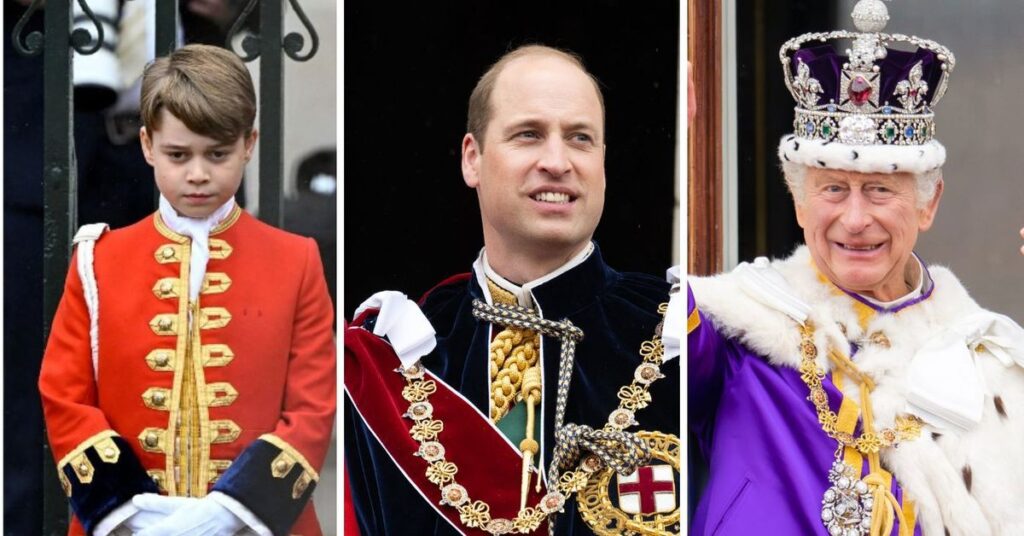
 Most people assume the line of succession is set in stone, but that isn’t entirely sure. (Getty images/WireImage)
While Andrew is currently a distant eighth in line to the British throne, many have called for him to be removed from the royal family’s line of succession.
But while it was largely assumed it was not possible, a look at the Act of Settlement confirms it is actually Parliament that determines the title to the throne.
The British royal family’s official website Royal.UK says succession to the throne is not only regulated through descent, but also by Parliamentary statute.
“The order of succession is the sequence of members of the royal family in the order in which they stand in line to the throne,” the website states.
READ MORE: Final humiliation as Andrew’s name is updated on royal website
READ MORE: King Charles gives Beatrice and Eugenie more roles
READ MORE: William’s rare compliment to wife Catherine
 The current line of succession sees Prince William succeed his father, followed by Prince George. (Getty)
It said the basis for the succession was determined in the 17th century and culminated in the Bill of Rights (1689) and the Act of Settlement (1701).
“When James II fled the country in 1688, Parliament held that he had ‘abdicated the government’ and that the throne was vacant,” the website explained.
“The throne was then offered, not to James’s young son, but to his daughter Mary and her husband William of Orange, as joint rulers.”
The website said “it therefore came to be established not only that the sovereign rules through Parliament, but that the succession to the throne can be regulated by Parliament.”
 King James II fled England, causing a rupture in the line of succession. (Getty)
It also said “a sovereign can be deprived of his/her title through misgovernment”.
The website said the Act of Settlement included a number of rules about who could inherit the throne.
“The Act laid down that only Protestant descendants of Princess Sophia – the Electress of Hanover and granddaughter of James I – are eligible to succeed. Subsequent Acts have confirmed this,” the website said.
 Only direct descendants of King James I can accede to the British throne. (Imagno/Getty Images)
“Parliament, under the Bill of Rights and the Act of Settlement, also laid down various conditions which the sovereign must meet.
“A Roman Catholic is specifically excluded from succession to the throne.
“The sovereign must, in addition, be in communion with the Church of England and must swear to preserve the established Church of England and the established Church of Scotland.
“The sovereign must also promise to uphold the Protestant succession.”
 Andrew Mountbatten-Windsor is currently eighth in the line of succession. (royal.uk)
Sydney University Associate Professor Cindy McCreery is an historian with a special interest in the British royal family and the monarchy’s line of succession.
She said the British Parliament could in fact step in to change the line of succession at any time.
“It’s definitely possible,” she said.
“It would have to be some sort of emergency.
“It would really only be in a case of a dire or extreme circumstance, such as that someone had committed a criminal act or was about to commit a criminal act.”
 Associate Professor Cindy McCreery is an historian with a special interest in the British monarchy and succession. . (University of Sydney)
And that is where this gets interesting.
Andrew has already been accused of criminal acts, something he has strenuously denied.
In fact, in 2022, he gave up his military affiliations and royal patronages after he agreed to a large civil settlement payout to Virginia Giuffre after she accused Andrew of “sexual assault and battery”.
Giuffre died earlier this year by suicide.
However, there are growing calls in both the UK and the US for Andrew to be investigated over his friendships with convicted sex offender Jeffrey Epstein, who died in jail in 2019, and Ghislaine Maxwell, who is behind bars on the US after being found guilty in 2021 of child sex trafficking and other offences.
For a daily dose of 9honey, subscribe to our newsletter here.
 Andrew has now been stripped of all his titles and stylings but remains in the line of succession. (Samir Hussein/WireImage)
Associate Professor Cindy McCreery said that while the ins and outs of the Act of Settlement was taught in British schools, most Australians would be unaware a monarch could be stopped from acceding to the throne.
Associate Professor McCreery said the events of 1688 caused a “rupture in the British monarchy” which resulted in the Act of Settlement.
“At the time, it was an extreme emergency. James II had fled the country,” she said
Since then, she said there had been “smooth transitions” in the monarchy for hundreds of years.
Even the 2013 amendments to the Succession to the Crown Act, which put an end to male primogeniture and reversed a ban on the heir to the throne marrying a Catholic, was done in consultation with the Royal family.
 Changes to the Succession to the Crown Act meant Princess Charlotte was not pushed down the line of succession behind her younger male sibling Prince Louis. (Getty)
“It was something that the Royal Family very much wanted,” she said.
The Succession to the Crown Act (2013) amended the provisions of the Bill of Rights and the Act of Settlement to end the system of male primogeniture.
The Act applies to those born only after October 28, 2011, which is why Princess Charlotte is currently third in line to the throne after her father and older brother, George, and not behind her younger brother Louis.
The Act also ended the provisions by which those who marry Roman Catholics were disqualified from the line of succession.
The changes came into force in all 16 Realms in March 2015.

The uncanny lookalikes in the British monarchy’s history
With Andrew’s fall from grace now all but complete, having been stripped of all the “style, titles and honours” of prince, and forced to move out of his home of 20 years Royal Lodge, time will tell if the British Parliament will take the one final step and remove him from the line of succession as well.
FOLLOW US ON WHATSAPP HERE: Stay across all the latest in celebrity, lifestyle and opinion via our WhatsApp channel. No comments, no algorithm and nobody can see your private details.