
The proposed relocation of the Royal Mews may seem like a
simple matter of logistics, but symbolically it speaks to something
far larger: the Royal Family’s gradual retreat from the capital.
For an institution so tightly bound to the image of Buckingham
Palace, every shift away from London raises the same question – are
the royals quietly leaving their historic heart
behind?
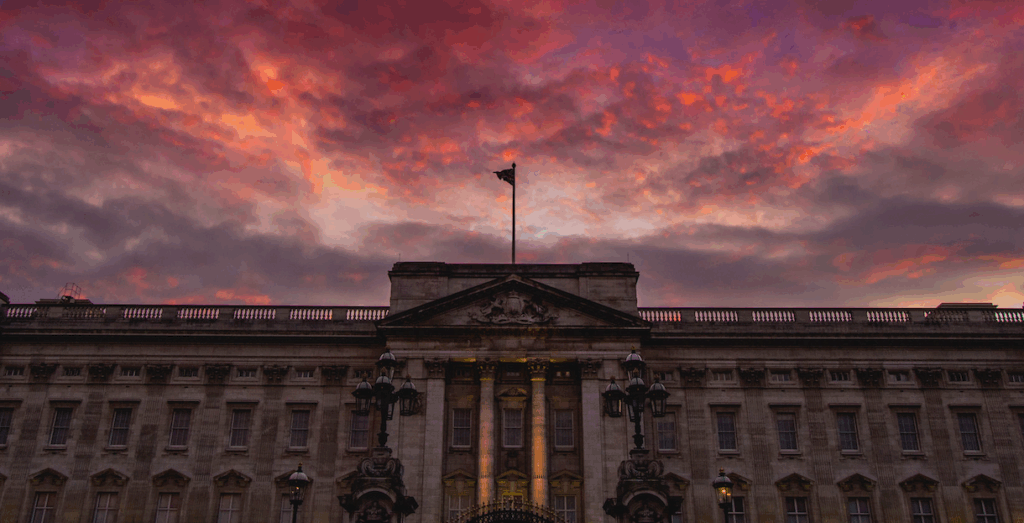
Buckingham Palace remains the official headquarters of the
monarchy, the backdrop to Trooping the Colour, the Changing of the
Guard, and those balcony appearances that define royal spectacle.
But for decades now, it has been more office than home. Tourists
peer at its façade imagining grandeur within; insiders know it
functions more like a vast administrative complex, buzzing with
staff but largely devoid of domestic warmth.
No one demonstrated this better than Queen Elizabeth II. In the
latter part of her reign she effectively abandoned Buckingham
Palace as a residence, settling permanently at Windsor. She
returned to London only for duty – the odd audience, investiture or
major state event – before withdrawing again to the Berkshire home
she preferred. Her choice was framed as practical, even necessary,
but it also revealed a truth long acknowledged privately within
royal circles: Buckingham Palace is a workplace, not somewhere to
live.
King Charles has quietly continued the trend. Despite years of
speculation that he would take up full-time residence at Buckingham
Palace as monarch, he has remained firmly at Clarence House when in
London. Courtiers insist that extensive building works at the
Palace play a part, but the broader reality is hard to ignore: the
King does not want to live in Buckingham Palace any more than his
mother did.
Which is why the relocation of the Royal Mews feels significant.
The Mews is not simply a stable block; it is an integral piece of
royal machinery, housing ceremonial carriages, vehicles, and staff
who keep state occasions running with military precision. Its home
is historically entwined with Buckingham Palace itself. Moving it
elsewhere is not just a logistical adjustment – it is a symbolic
decoupling.
It suggests that the locus of royal life is drifting westward:
Windsor, Highgrove or Sandringham for the King, and Clarence House
rather than the Palace for day-to-day London life. The public face
remains rooted in SW1A, but the private existence of the monarchy
increasingly lies elsewhere.
For an institution that trades so heavily on its visual
continuity, this shift matters. Buckingham Palace will always be
the monarchy’s most recognisable emblem, but if the royals do not
live there, work there consistently, or house their core operations
there, its role becomes more theatrical than real – a backdrop
rather than a base.
The Royal Mews may simply be the latest operational unit to pack
up and move, but it also reinforces a broader pattern. The monarchy
is not abandoning its ceremonial duties in London. But as a family,
as a functioning household, they are undeniably edging away from
it.
In that sense, the relocation of the Royal Mews is not just a
practical decision. It is another quiet acknowledgement that the
royal centre of gravity has shifted – and London, for all its
symbolism, is no longer truly where the Royal Family lives.