


Tracy Morgan, Paul Simon, other stars celebrate SNL 50
The three-hour “SNL 50” anniversary special featured throwback skits, including a song from Adam Sandler looking back on the show’s history.
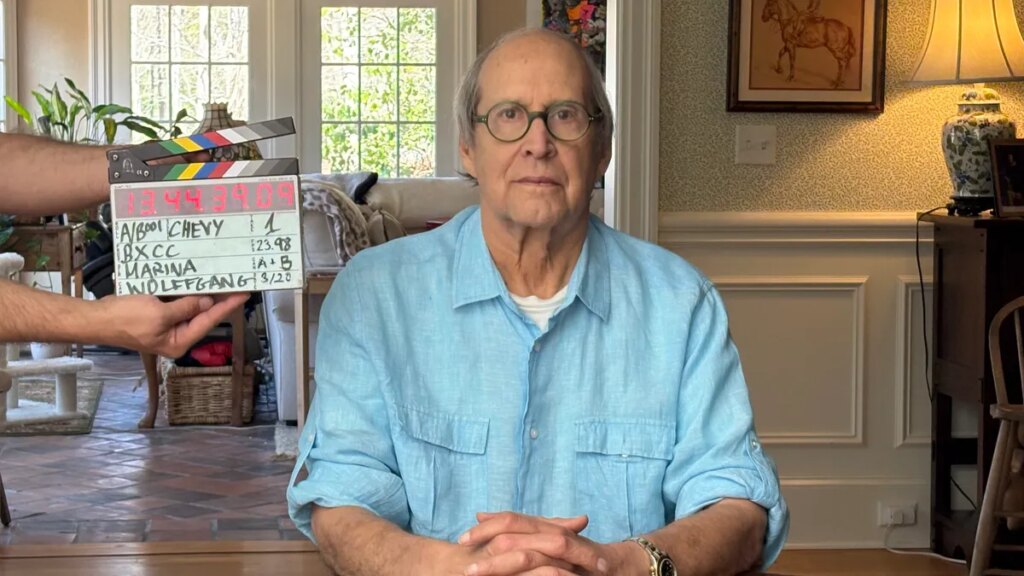
Chevy Chase is the subject of CNN’s upcoming documentary premiering Jan. 1, “I’m Chevy Chase and You’re Not.””I’m Chevy Chase and You’re Not” delves into the actor’s personal life, as well as his complicated showbusiness legacy.”It’s a tough watch for him,” director Marina Zenovich tells USA TODAY. “We didn’t sugarcoat anything.
Filmmaker Marina Zenovich’s reputation preceded her when recruited to direct CNN’s documentary about Chevy Chase’s life.
“I’ve made films about complicated men,” Zenovich says in an interview with USA TODAY. Her documentaries run a gamut of subjects, including comedians like Richard Pryor and Robin Williams, acclaimed director-turned fugitive Roman Polanski, and cancer survivor and blood-doping denier Lance Armstrong.
“I think in (‘Lance’) you could see that I was willing to kind of go toe-to-toe with someone.”
In “I’m Chevy Chase and You’re Not” (premiering New Year’s Day, 8 ET/PT), Zenovich enters the metaphorical ring with the 82-year-old controversial comedian who coined the titular phrase on the debut season of “Saturday Night Live.” Chase’s wit proved winning at the box office with successes including “Caddyshack,” National Lampoon’s “Vacation” films and “Fletch.”
But off-screen, Chase developed a reputation.
Terry Sweeney, the first openly gay cast member on “SNL,” recalls Chase being “a monster” when he returned to host in 1985. He “insulted everybody,” Sweeney says in the book “Live From New York” and suggested a sketch in which Sweeney contracted AIDS and is weighed weekly.
“So then he ended up having to apologize and actually coming to my office,” Sweeney says. “He was really furious that he had to apologize to me.”
And the behavior continued. “Home Alone” director Chris Columbus attributed his exit from the 1989 classic “National Lampoon’s Christmas Vacation” to Chase’s behavior. Dan Harmon, creator of NBC’s six-season comedy “Community” (2009-2015), in which Chase was killed off in the fifth installment, told The New Yorker in 2018 that Chase was envious of his costar Donald Glover, “and the way he expressed his jealousy was to try to throw Donald off. I remember apologizing to Donald after a particularly rough night of Chevy’s non-P.C. verbiage…”
Zenovich gets a taste of Chase’s snarl mere minutes into her film when she says she’s trying to figure the actor out. “It’s not going to be easy for you,” he warns her. “You’re not bright enough. How’s that?” he says with a smile.
Zenovich is stunned at his bluntness. “Well, you asked,” Chase says. “I know you’re not going to put that on the air, and I hope not. But my answer is I’m complex, and I’m deep, and I can be hurt easily, and I react spontaneously to people who want to figure me out, as it were. As somebody who will hold up my guard, I’m not going to let anybody figure me out, per se.”
“The minute he asked me that, I was like, ‘Oh my God, I have an in,'” Zenovich says. “You know, ‘People think you’re an a–hole.’ And he was like, ‘What?’… He was not aware.”
Zenovich reveals to USA TODAY what it was like interviewing Chase, his thoughts on the film, and whether the director felt she got to the heart of the man.
Question: What was challenging about making this documentary?
Answer: I felt like Chevy was willing to go there. But because he protects himself, because of his years of trauma, he’ll only go so far. He’ll go there. There are some people who won’t go there at all, but he wants to go there. He wants to try to understand himself, but we all have limits for self-preservation.
In the press notes, you say, “I had to have a thick skin interviewing (Chase), and it certainly wasn’t easy at times. He can be kind and gracious, but he’s also a self-confessed ‘angry child’ in an 80-something year old body.” What was your experience interviewing him?
He called me a b—- at a certain point, [but] everything with him is a joke. I have to have a thick skin, but when it’s over, I’m like eating a burger and fries because it’s not easy! It’s not freakin’ easy! You’re just completely depleted… You’re on, so it’s exhausting! You have to turn them on.
So that’s why he’s opening up, but he’s deflecting and trying to shut down because he’s protecting himself, but he wants to open up! So it’s this dance, and that’s the beauty of making these films. It’s just trying to get at the humanity and trying to understand people. But it is hard.
Do you think you were able to figure Chevy out even while he was so guarded?
I feel like I was because we get into his backstory, and the key to Chevy is what happened to him as a kid. (As a child, Chase was abused by his mother and stepfather.) I’ve ended up using the word trauma so much, and the word trauma is so overused that it’s almost lost its potency. But I think he was quite traumatized as a kid, and he did the best he could with what he had.
I love that line by his friend Peter Aaron, who says, “Chevy, you’re not using your God-given talents.” It gives you chills. He’s very cocky and confident, but I don’t think he really believed it himself. So he was this interesting package of a gorgeous, talented young man who was kind of broken inside.
When you ask Chevy about interacting with Terry Sweeney, he’s very insistent that things did not happen as Sweeney described. But his daughter, Caley, says his memory is affected by his health issues. Do you feel like that influences his denial at all?
It does influence his denial. I think it explains it. I think it’s twofold. He has a hard time apologizing − although everyone around him would say he’s the first person to apologize. So it’s a bit of a mixed message. But I think what happened with his memory loss plays a huge part. The circuitry kind of stopped and restarted again, and maybe some things got lost. Especially those things you don’t want to remember.
What does Chevy think of the film?
At the premiere, he was very vulnerable and talking about being insecure and having anxiety (after the film played), and it was fascinating because it really opened up people to be more honest about their own insecurities and how they feel. I think the film really humanizes him, and that’s what I’m proud of.
It’s a tough watch for him. I mean, his wife talks about waking him up still, and he remembers his mother hitting him. We didn’t sugarcoat anything.
At the end of your film, Chevy offers you an apology “just for being who I am.” Do you feel like you were owed an apology? Did it catch you off guard when he said that?
It did. It was a little vulnerable moment where he, instead of doing a bit, he kind of opened his heart, and I appreciated it.
This interview has been edited and condensed for clarity and length.