
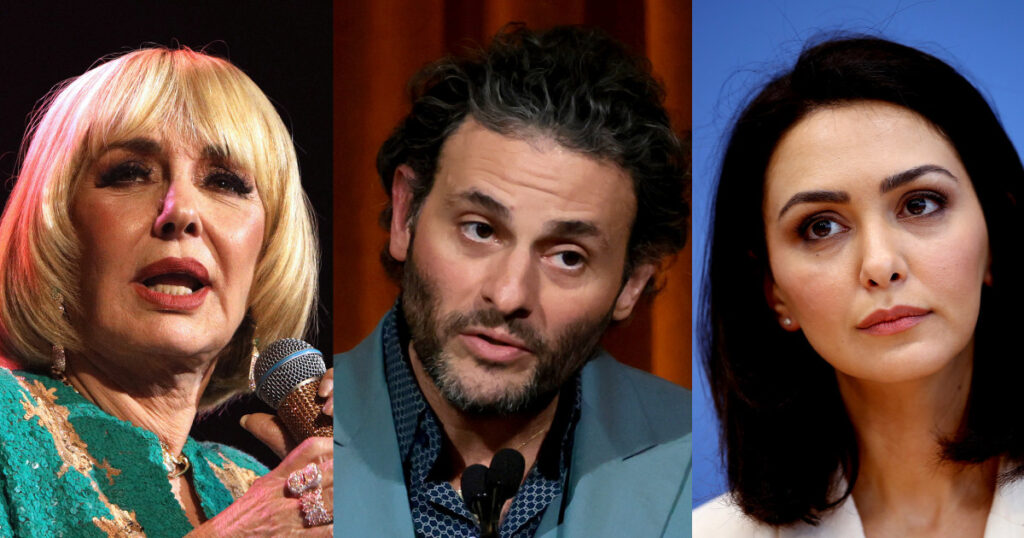
About 26 years ago, Iran’s biggest female pop star left her homeland to tour internationally after years of being banned from publicly performing by the theocratic regime.
But Googoosh, now 75, refuses to be silenced. In the face of the Iranian government’s deadly crackdown on protesters amid an internet blackout, the music icon on Tuesday became the latest prominent Iranian celebrity to call for widespread support of the country’s people.
On Instagram, where Googoosh has 6.8 million followers, the singer posted a copy of a letter she wrote to President Donald Trump dated Jan. 12, in which she asked him to “act on the promise” he made to the Iranian people to help them.
“Today, defenseless people inside Iran are crying out to you, asking for help as they face these ongoing crimes against humanity,” she wrote, adding that they have “endured poverty, blackouts, water shortages, censorship, imprisonment and mass emigration.”
If they are silenced, we must speak
Actor Arian Moayed
It’s a plea echoed by many in the worldwide Iranian diaspora who find themselves both heartbroken and cautiously hopeful about the unrest in Iran. In many cases, Iranians abroad hail from families who fled Iran in 1979 after Shah Mohammad Reza Pahlavi was ousted and Ayatollah Khomeini took power.
Pop culture figures with Iranian roots have been among the most outspoken critics of the Islamic Republic, as they try to utilize their massive followings and notoriety to raise awareness about the violent crackdown against protesters and the country’s complicated history.
“Right now, nobody in Iran can see this video,” “Succession” cast member Arian Moayed said in a video posted to Instagram on Tuesday. “They can’t send a message, or make a call. Even landlines are silent … Iranian people are fighting for their lives and their future in the dark. If they are silenced, we must speak. Be their voice. Ask your representatives to act now.”
For years, many who stayed in the country have pushed for change amid political and economic turmoil. In 2022, the death of Mahsa Amini — a 22-year-old woman arrested by the morality police for allegedly not wearing her hijab properly — triggered widespread protests led by women and young people across the country. The “Women, Life, Freedom” movement, like in many past protests, led to brutal government retaliation, according to Human Rights Watch.
The 2009 presidential election also sparked massive protests, which have been referred to as the “Green Movement.”
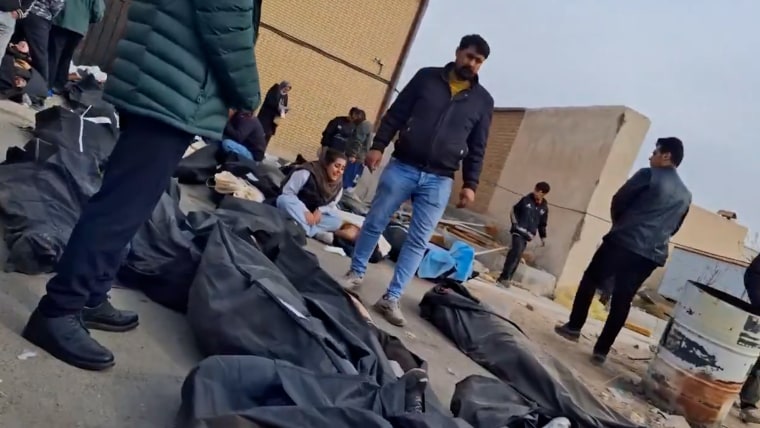
But this time the repercussions for people opposed to the regime — who have spent three weeks protesting in the streets across all of Iran — appear to be far more brutal. Human Rights Activists News Agency, a U.S.-based human rights group, estimates that Iranian authorities have killed at least 2,500 people as of Tuesday. (The agency relies on supporters inside Iran for information it then compiles and releases to the public. Iranian authorities have not provided an official death toll.)
White House officials have said that Trump is considering a range of options in Iran. In a message to protesters on Truth Social, Trump’s social media platform, on Tuesday, the president wrote that “HELP IS ON ITS WAY.” He did not provide details about what that might entail.
While many within the Iranian diaspora remain divided over the future of the country — and whether foreign intervention is the best path toward Iranians’ freedom — most appear to agree: The current government is not the answer.
“The majority of Iranians alive today have never known a secular Iran,” actor and human rights activist Nazanin Boniadi wrote in an essay for The New Statesman. “They did not grow up in a country where women chose their own attire freely, where tourists filled its streets, where the nation was integrated into the world rather than isolated from it—and where an Iranian passport conferred dignity rather than stigma. That Iran has been systematically erased, replaced by an Islamic Republic of death and destruction.”
On Sunday, as many Hollywood A-listers began rolling up to the Golden Globes in Beverly Hills, thousands of Iranians in Los Angeles rallied just a few miles away outside of the Federal Building in a demonstration supporting the Iranian people. In the sea of protesters were some cast members from Bravo’s “The Valley: Persian Style,” which depicts the lives of Iranian Americans in L.A.
“Today’s protest was incredible!!” wrote Reza Jackson, a cast member from “The Valley,” in a caption to a video of the Jan. 11 protests. “SO MANY ppl came out, from kids to seniors and even dogs. We are so strong when united like this with a single aim of kicking out the regime.”
Amid censorship in the country, artists have continued to release works that try to capture the tense political climate and resilience of civilians.
In the last two years, Iranian dissident filmmakers Jafar Panahi and Mohammad Rasoulof have both released films that were praised by Western audiences and Hollywood awards groups.
“We are deeply concerned for the lives of our fellow citizens, our families, and our colleagues and friends who, under these circumstances, have been left defenseless,” Panahi and Rasoulof said in a joint statement Tuesday.
The two men have been repeatedly arrested and even banned from making films by Iranian officials in an apparent punishment for practicing their artistic craft and speaking out against the government.
Panahi is currently in the U.S. promoting his Oscar contender “It Was Just An Accident,” which he filmed in secret in Iran and then took to last year’s Cannes Film Festival, where it won the top prize. The film follows a group of former Iranian political prisoners who agonize over whether to take vengeance on a man they believed tortured them.
Rasoulof’s “The Seed of the Sacred Fig,” a thriller about a Revolutionary Court investigator who begins to terrorize his wife and daughters, likewise drew critical acclaim.
When he returns to Iran, Panahi faces a one year prison sentence and a two-year ban on leaving the country. Rasoulof fled Iran ahd has lived in Germany since 2024.
“We call on the international community, human rights organizations, and the independent media to immediately find ways to facilitate access to vital information in Iran by enabling communication platforms, and monitor what is happening in Iran,” Panahi and Rasoulof wrote.
“History bears witness that silence today will have regretful consequences in the future.”