
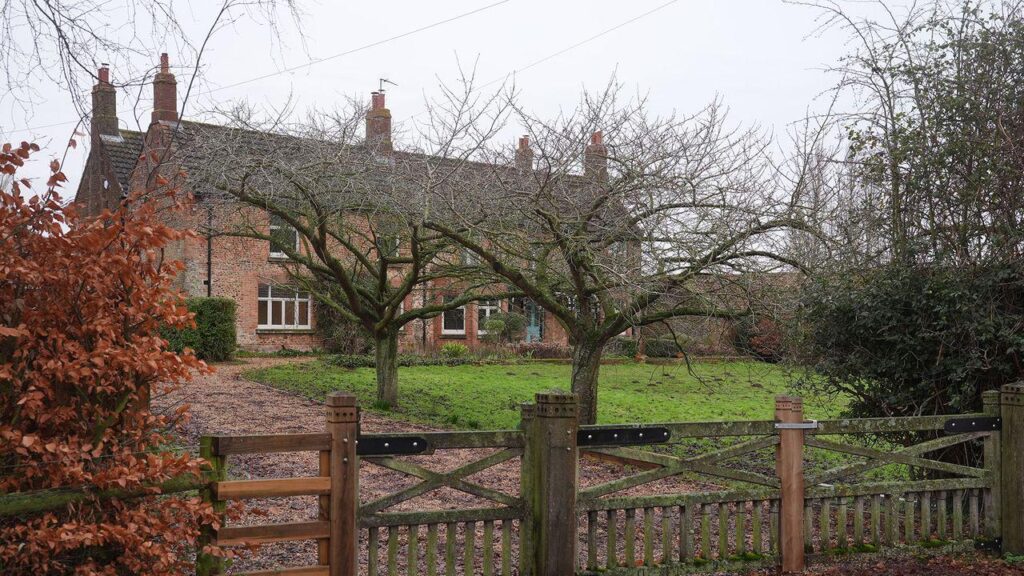

There are no books written about Marsh Farm. In fact, it’s barely even mentioned in books written about the Sandringham Estate: Most of the material written about the estate skips over the dilapidated farmhouse entirely, in favor of grander, more historically relevant homes. The book that does mention a property of that name, The King’s Homeland, published in 1904, does so briefly and not favorably: “For a few minutes' stroll along the rough marsh roadway, which branches off from the main road through the village near a farmhouse known as the Marsh Farm, will bring him to the embankment, or sea-wall, which protects the reclaimed land from the sea. But he must not expect to find beyond this sea-wall a shingly beach or a stretch of golden sand, for not of such are the shores of Wash. Instead he will see, if the tide be out, an apparently limitless expanse of gleaming—and often steaming—ooze.”
Amenities at Marsh Farm appear to be a dramatic step down from the Royal Lodge: five bedrooms, two reception rooms, and a kitchen in desperate need of a remodel. “Not much is known about it. It’s quite boggy, a bit of a shell. It’s not finished yet,” Robert Jobson, author of The Windsor Legacy: A Royal Dynasty of Secrets, Scandal and Survival says, adding that Royal Lodge was a “huge mansion.” While sister Anne maintains Gatcombe Park and an apartment in St. James Palace, and brother Edward’s Bagshot Park is reported to have an astonishing 120 rooms, Andrew’s eviction to Marsh Farm shows just how much he’s gone from prince to relative pauper.
When Andrew does move, he can do it in secret: Sandringham has a no-fly zone over it, which means no camera-wielding drones—although there have been reports of construction materials outside Marsh Farm. The visual of his spectacular domestic fall from grace will just have to be left up to the imagination.
Posted by vanityfairmagazine