
It’s safe to say I am and forever will be a Catherine O’Hara fan. I’ve watched and re-watched Schitt’s Creek four times over, and while the entire cast is impeccable, O’Hara steals the show every single episode with her portrayal of Moira Rose.
I loved her in The Studio with Seth Rogen, in which she plays former studio boss Patty Leigh, and she was grotesquely fabulous as Delia Deetz in Beetlejuice. And I’ve just ordered her life story from Amazon.
But it’s her role as Kevin’s mom Kate McCallister in Home Alone, and those opening scenes in their fantastically chaotic family home that endure because, to me, she was the dream mother – relaxed, warm, and welcoming, if, admittedly, forgetful. She will be greatly missed.
You may like

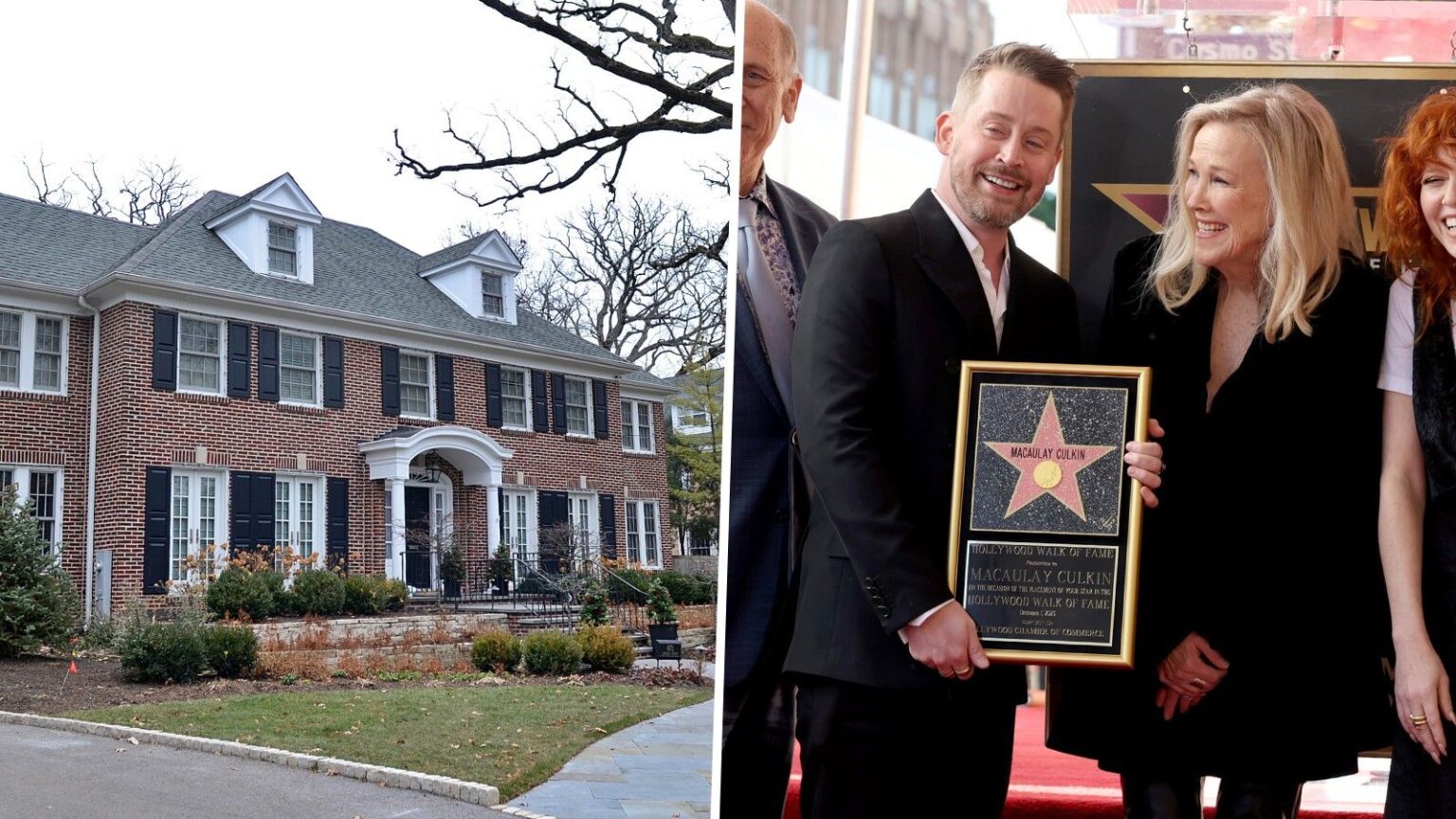
You can’t take a tour of the Home Alone house, which is owned and occupied by a family, but fans do, politely, take photos of the exterior
(Image credit: Getty Images)
The house, like O’Hara, became something of an icon after the movie’s release in 1990. I think this is because the red-brick Georgian home in Winnetka, Illinois, was never just a piece of scenery or a backdrop: it was doing quiet, essential work, grounding the chaos, selling the emotional stakes and giving Home Alone its enduring sense of warmth, believability and heart. I can’t be the only one who fantasized about one day living in a home like that.
And it seems that O’Hara was just as fond of the house as movie fans like me were, and still are.
Reflecting on Home Alone in a 2024 interview with People, it wasn’t her famously loving relationship with her on-screen son Kevin, played by Macaulay Culkin, the hilarious slapstick or the nerve-grinding stunts she singled out first – it was the house: ‘I thought the house was pretty amazing. Oh Lord, yeah,’ she said, laughing off decades of speculation about how the McCallisters could possibly afford it.
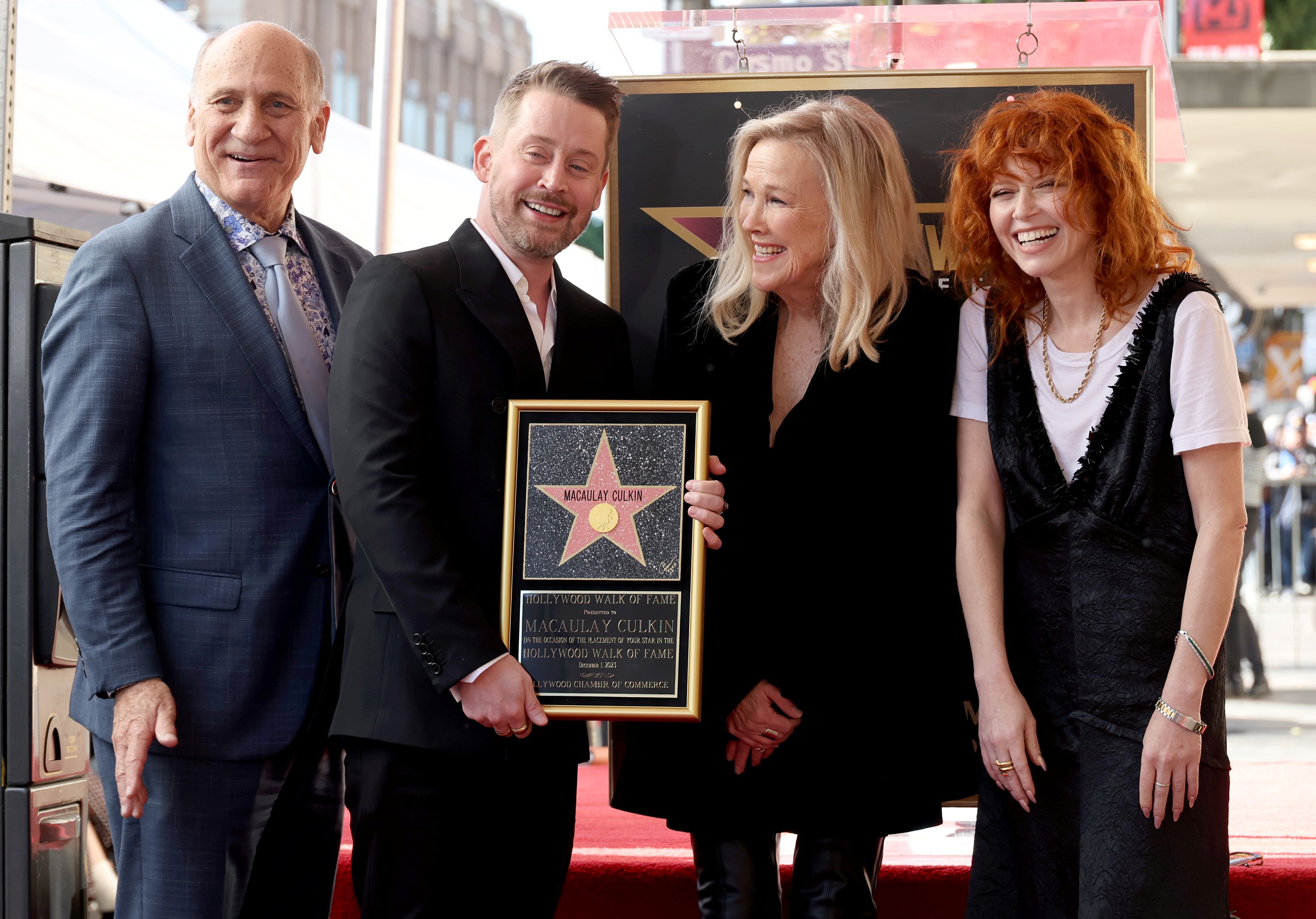
Macaulay Culkin, with screen mom Catherine O’Hara, Steve Nissen, President and CEO of HCC, Catherine O’Hara and Natasha Lyonne, is honored with a star on the Hollywood Walk Of Fame
(Image credit: Getty Images)
Thirty-six years later, the house remains an unlikely design reference point, with its warm woods, layered patterns, and lived-in charm, inspiring that cozy, family-friendly feel that most of us aspire to still today.
Home Alone director Chris Columbus had spent weeks scouting before he found the house. He was determined the house should reflect the family that lived there: large, affluent, but very human.
The house he chose was a real home, lived in by a real family, who stayed in the home during much of the filming, though the basement scenes were shot at a nearby high school.
The central staircase was a key factor in the house ‘securing the part’, as was the downstairs layout – no contemporary open-plan fantasy, which wouldn’t have given Kevin many places to hide. Instead, it offers a broken-plan layout, with distinct rooms, though with visual connection, a kitchen that’s clearly a working space, not a showroom, and bedrooms that feel private and personal. The McCallister house understood zoning before zoning was cool.
You may like
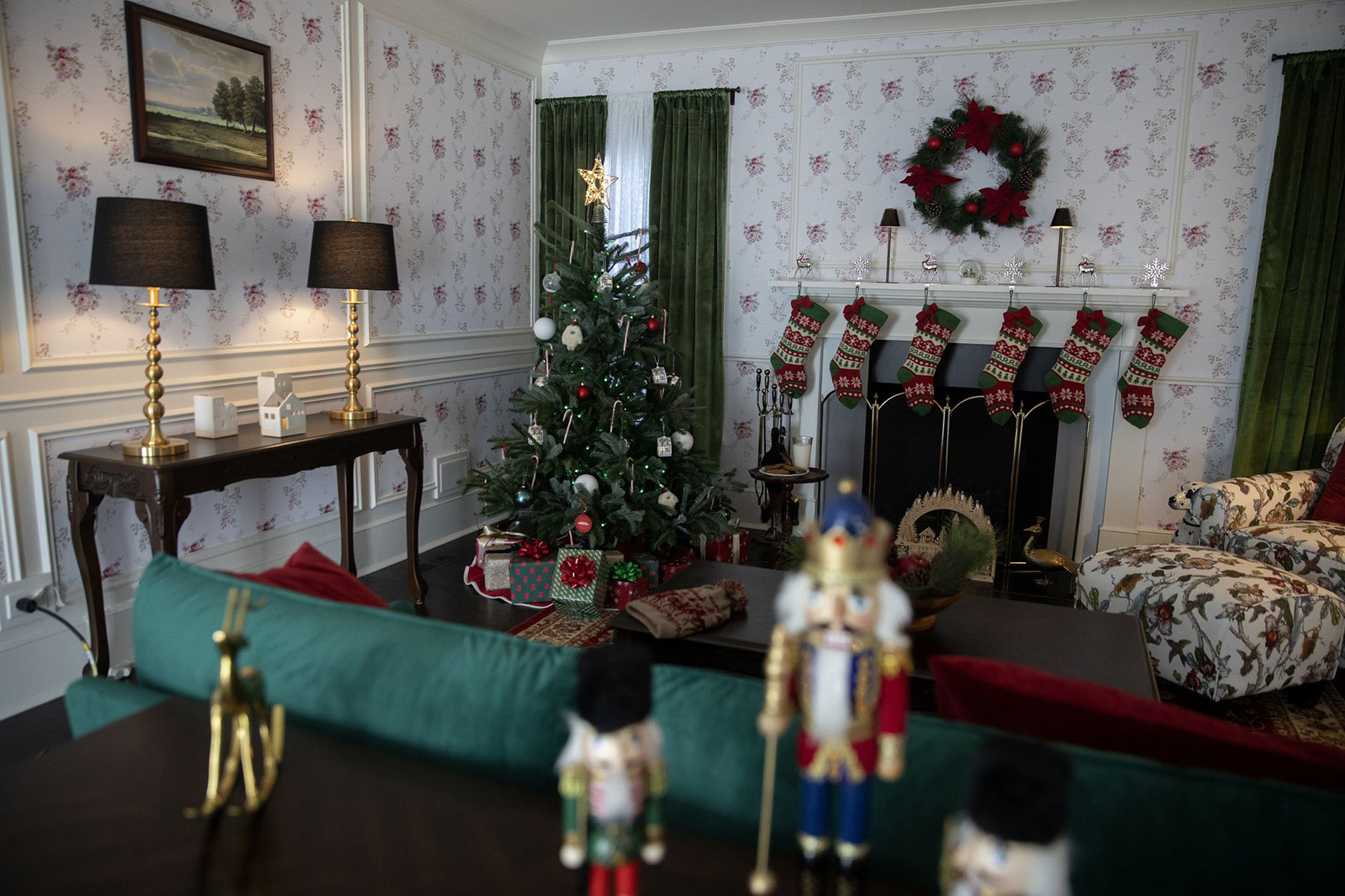
The Home Alone house was listed on Airbnb for an overnight stay. Kevin McCallister’s big brother Buzz McCallister (Devin D. Ratray) welcomed five lucky families into the infamous home to experience a McCallister Christmas
(Image credit: Getty Images)
Long before minimalist white boxes, bouclé overkill and (fairly loud) attention given to ‘quiet luxury,’ the McCallister house showcased design features we’ve all come back around to: warm woods; patterned walls; layered textiles; and rooms that feel used, not styled.
In Home Alone, the wallpaper isn’t decorative fluff – it’s architectural. Familiar plaids and florals, both enjoying a revival (think: Morris prints), define rooms; pattern adds warmth without clutter.
And while, to many, it might be a tad maximalist and a tad non-Instagram perfect, with its array of furniture, art, lamps, books and rugs, its repeating patterns and limited colors (a warm neutral-ish heritage palette, enlivened with Christmas decor) are pretty restrained.
Design experts might even say that the consistent warmth of the color scheme was part of the scene-setting strategy: the reds signalling welcome, the greens calm, and the creams and woods lifting and lightening, and adding texture. And yes, these heritage shades are all back in fashion again.
More than anything though, the house feels luxurious without feeling fragile. The furniture isn’t precious, the rooms aren’t styled to death – it can survive children, dogs, Christmas – and the chaos of a home invasion. It’s the ultimate flex in 2026; it’s a house you can actually live in.
Over the years, Catherine O’Hara joked about fans’ obsession with the McCallisters’ wealth (‘Maybe they inherited it’, she is quoted as saying), gently dismissing theories about Kate McCallister’s career (despite writer/producer John Hughes and director Chris Columbus imagining her as a successful fashion designer, hinted at by the mannequins in the basement).
But what was clear was her affection for the house itself. It helped her play Kate as a mother who felt real: overwhelmed, loving, frantic, grounded. The house didn’t compete with the performance, it supported it.
That’s the quiet genius here. The house holds emotion. And that’s exactly what great design does.
You can shop the Home Alone house style at Pottery Barn (furniture and home decor); MacKenzie Childs (home decor), and even at the Amazon New Traditional storefront. We don’t think Moira would approve, but Kate might.