
Static Media
Billionaire. Sociopath. Supervillain.
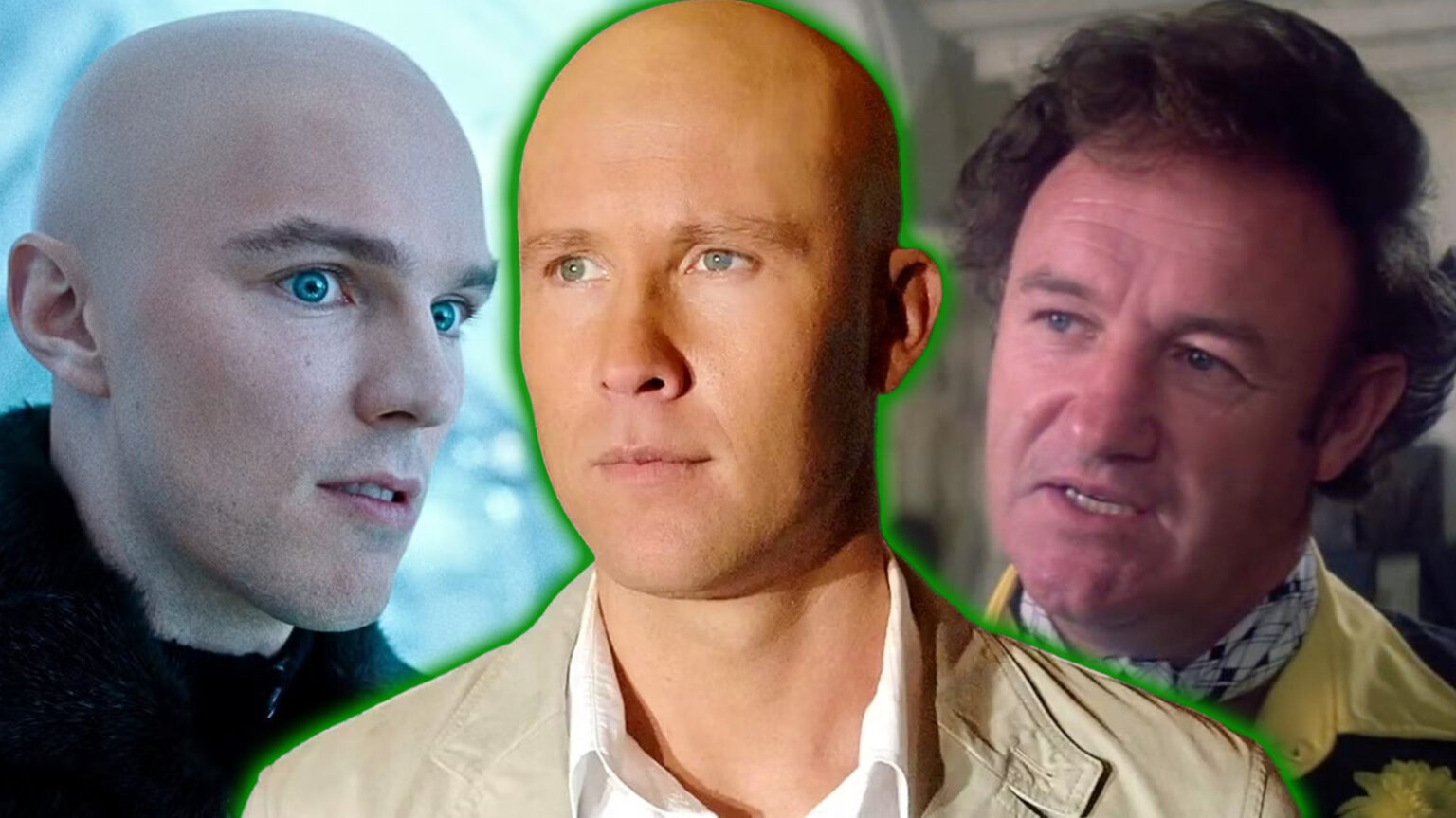
While Tony Stark and Bruce Wayne might be more beloved, Lex Luthor is the comic book billionaire. Defined by his enormous wealth, insatiable greed, and narcissistic need to be the hero of everyone’s story, he increasingly becomes a mirror that reflects the actual psychology of the most ruthlessly powerful people in the real world.
His most popular live-action adaptations have reimagined him accordingly. In the ’70s and ’80s, he was depicted as a comically craven real-estate mogul in Richard Donner’s “Superman” films. In the early 2000s, he was brought to the small screen in “Smallville” as a self-righteous upstart being pulled further into the darkness by the most insidious temptations of greed. Most recently, he returned in James Gunn’s DC Studios debut as a mass-manipulator jealous of the alien goodness he can recognize in everyone but himself.
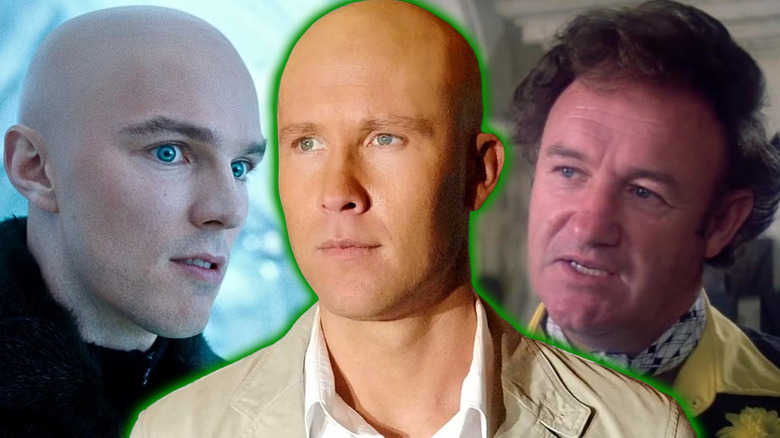
Behind every one of these iterations is an actor, who has often taken the character to stranger places than you might expect. From the crazed criminal mastermind to the straight-laced boardroom brawler, we’ve ranked every version of Lex Luthor based on the strength of the performance, its impact on pop culture, and how well it brings to life the supergenius we love to hate from the comics.
12. Scott James Wells (Superboy)
Salkind Productions
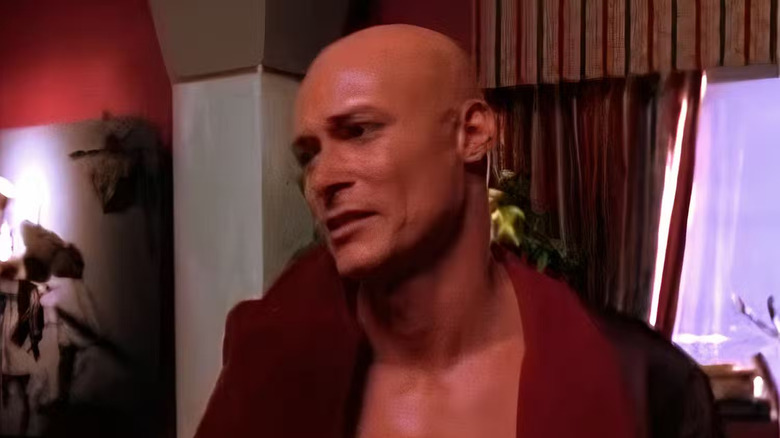
In 1988, following the rise and fall of the Christopher Reeve era of the “Superman” franchise, producers Alexander and Ilya Salkind took the Man of Steel to the small screen. Titled “Superboy,” the resulting syndicated series was not unlike its popular successors “Smallville.” Clark Kent (originally played by “Melrose Place” actor John Haymes Newton) and his supporting cast — Lex Luthor included — were depicted as young adults, mostly college students at “Shuster University.”
Scott James Wells took on the role of Lex Luthor in season 1, and there’s little worth noting about his performance. While Wells does a fair job of playing a handsome and affable antagonist who could realistically charm the people around him, his Lex is interchangeable with any number of preppy rich villains from schlocky teen dramas. When the role does ask him to take on a more arch characterization, Wells fails to come across as threatening, powerful, or terrifyingly egomaniacal. Wells and Newton were both replaced after the 1st season of “Superboy,” the series as a whole receiving a much-needed (though debatably successful) creative overhaul.
11. Sherman Howard (Superboy)
Salkind Productions
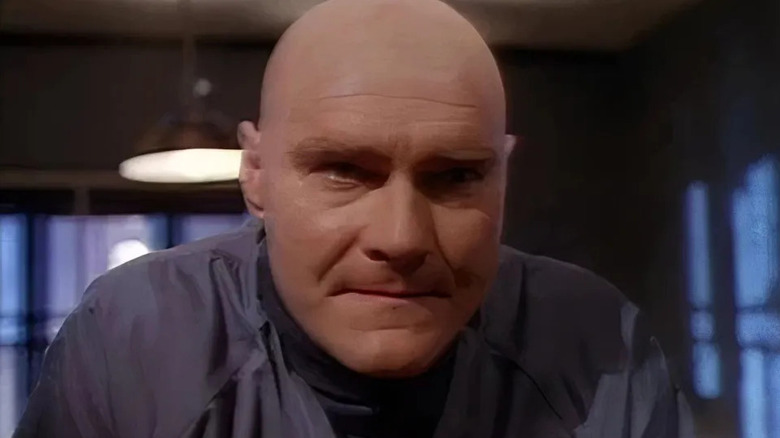
After deciding to completely rework the show, the Salkinds hired “Ryan’s Hope” and “General Hospital” actor Sherman Howard to play Lex Luthor. Where Scott James Wells once served as the series’ duplicitous, slyly evil villain, Howard arrived in full force as the hokey comic book supervillain. “Superboy” as a whole shifted toward this louder, more cartoonish tone.
To his credit, Howard is undeniably committed to his version of the character, bringing an energy that had been lacking in the previous season. The quality of that energy and whether or not it was right for Luthor is debatable. Howard’s Lex is an over-the-top caricature of a mentally unstable evil genius, his over-the-top line delivery competing for campiness with the villains of the 1966 “Batman” series. This bizarre direction for the character can’t be blamed on the actor himself, who is very clearly being pushed toward this goofy lunacy by the script.
For instance, in certain moments that allow him to be a bit more buttoned-up, Howard is actually quite plausible as a traditional Lex Luthor. The actor was even later cast to voice a Luthor-esque character on “Batman Beyond,” where he played the evil billionaire Derek Powers. If this voice performance is any indicator, Howard might have been a decent Lex under different circumstances.
10. Jon Cryer (Supergirl)
The CW
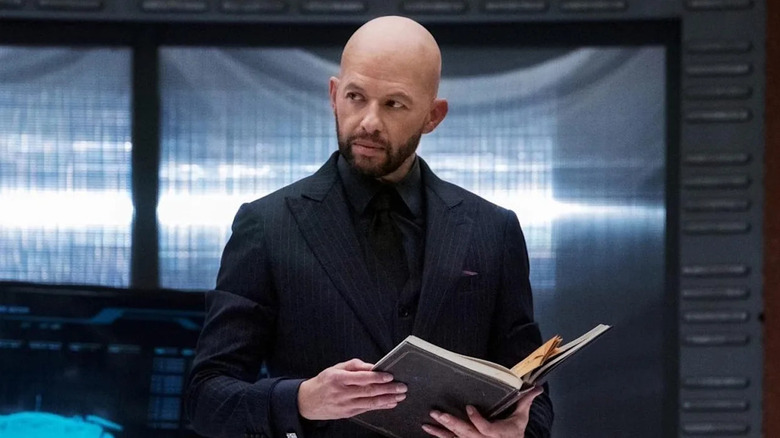
At the very least, it can be said that Jon Cryer’s turn as Lex Luthor on “Supergirl” was quietly redemptive for the actor. After all, far earlier in his career, he had a mercifully forgettable supporting role in the worst “Superman” movie ever made. But as is the case with the vast majority of performances in the CW’s Arrowverse, Cryer’s potential as this iconic character was at the mercy of the wild peaks and valleys of the show’s writing.
He isn’t an obvious choice for the character based on his past work (and we’ll frankly never understand why every TV show to feature Luthor post-“Supergirl” saddled the notoriously hairless villain with beards of varying styles), but Cryer is a fine actor more than capable of playing a comic book criminal mastermind — but he doesn’t bring much more than that to the role. Of the actors who have embodied a more impish Lex Luthor (characterized in contrast with the widely beloved animated version voiced by Clancy Brown — flamboyant and openly maniacal, with immovable smirks and tenor voices delivering lines the Joker might also say), Cryer’s is the least dynamic.
He oscillates between sarcasm and screaming with little moderation, which actually works perfectly for the soapy dialogue of the CW. But when it comes to the action set pieces centered on his Lex — most of which are already under-supported in terms of staging, choreography, and visual effects — Cryer feels like a misfit. Lex Luthor as a character might’ve been at odds with the tone of the Arrowverse by that point, but if they needed an actor who could do the melodrama, sci-fi speak, and “Power Rangers”-style action, Cryer’s casting was a poor choice.
9. Jesse Eisenberg (Batman v. Superman: Dawn of Justice)

Warner Bros. Pictures
What can be said about Jesse Eisenberg’s Lex Luthor that hasn’t already been ranted about on forums and social media for the past decade? We take no pleasure in adding to the monumental dogpile. When the actor was cast fresh from “The Social Network,” it seemed clear to everyone that Zack Snyder was going to take a big swing at updating Lex Luthor (arguably the quintessential fictional billionaire) for an era when his tax bracket was being increasingly dominated by computer nerds-turned-tech entrepreneurs. This character would possess all the traits of the classic Luthor, but he would be contemporarily contextualized. His unbelievable wealth is not spent on suits and offices, but on indoor basketball courts and juvenile personal styling; his outsized ego is embodied by an awkward and obviously antisocial personality; he still feels the need to pontificate about his own greatness, but he lacks the gravitas to do so compelling.
On paper, this is actually an intelligent and unfortunately prescient way of rethinking the character, and for what they were trying to accomplish, Eisenberg knocked it out of the park. At the same time, while updating characters is necessary to the longevity of the superhero mythos, this Luthor leans so far into deconstruction that he’s entirely unrecognizable. When he descends into full mania, Joker dialogue and all, the characterization feels so out of touch with the film’s central aim that it plays a substantial role in the overall failure of “Batman v. Superman.” Eisenberg is well aware that fans dislike his Lex Luthor, and he has even worried that it stifled his career.
8. Titus Welliver (Titans)
HBO Max
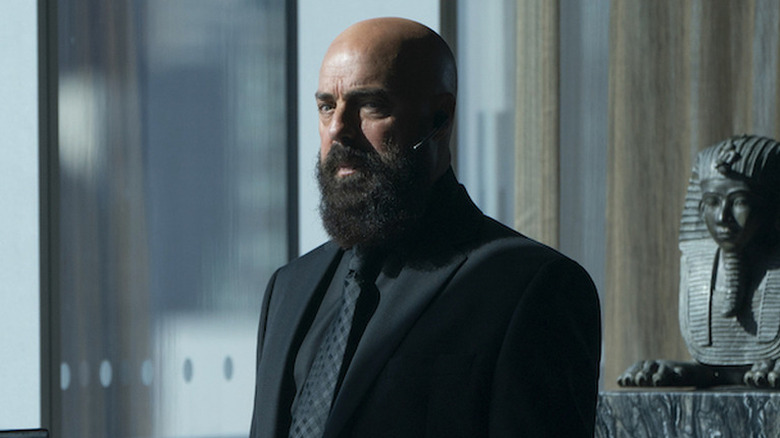
Some readers may have an issue with us listing Titus Welliver this high on this list, despite him only playing the character in a few scenes on “Titans” — to those readers, we say, go rewatch those scenes. Welliver’s limited screen time belies his effectiveness as Superman’s infamous arch-nemesis. In another world, it wouldn’t be hard to imagine him as the perfect candidate for the Arrowverse’s needs. Where Jon Cryer’s Lex Luthor can barely contain his gleeful villainy, Welliver’s is cool, yet imposing and plausibly charismatic. Eisenberg justly played each scene as though his character was desperately trying to prove his brilliance to anyone he shares a room with — Welliver plays him as though he has nothing to prove.
Admittedly, this may be owed to the character’s specific and restrained use in the series. Welliver’s Lex is introduced and killed off in the season premiere of “Titans” season 4 — its last season before it was concluded along with “Doom Patrol.” The only real drawback of this iteration of the character is that we have so little of him compared to everyone else on this list. (Welliver even manages to make the TV-Lex-beard look good.) Had the series continued, it wouldn’t be all that hard to imagine the “Bosch” star being written back into the story somehow — this specific storyline with Superboy does revolve around his adventures in cloning, after all. As it stands, this is as high as we can reasonably rank a brilliant but brief take on Lex Luthor.
7. John Shea (Lois and Clark: The New Adventures of Superman)
ABC
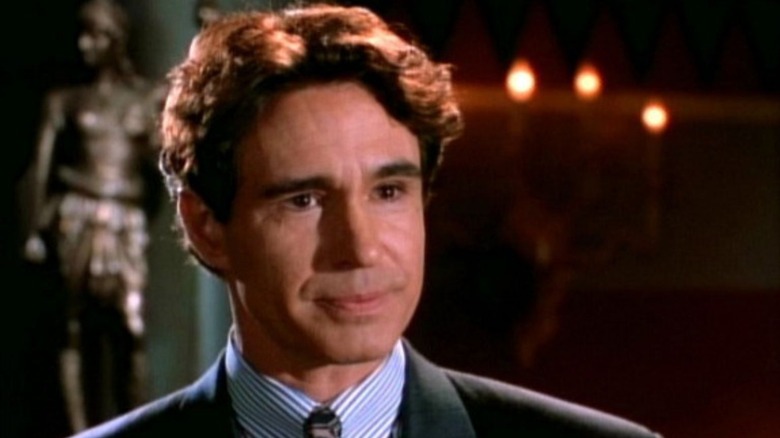
As “Superboy” continued to evolve and search (arguably somewhat chaotically) for its place in the sky, Warner Bros. had already begun to shift its focus toward a new “Superman” television series that would take the character a bit more seriously. The year after the former series was cancelled, ABC began airing “Lois and Clark: The New Adventures of Superman,” which featured decidedly mature versions of the characters and finally shifted the setting from random fictional institutions in Florida to the heart of Metropolis. In doing so, it strikes a tone far closer to that of the original 1978 “Superman” film, which was further supported by the casting of John Shea as Lex Luthor.
An Emmy Award-winning character actor (best known at the time for performances in TV films and miniseries), Shea was the most visibly confident portrayal of Lex Luthor since Gene Hackman. The series began with the character as the main villain, closer to his roots as a publicly beloved businessman secretly carrying out criminal plots to amass power. The biggest change specific to the series was the introduction of a love triangle between Lex, Lois Lane (Teri Hatcher), Clark Kent (Dean Cain), and Superman. Even with Cain often doing awkward or unremarkable work as his scene partner, Shea is able to carry the tension of their rivalry on his own. Over the course of the series, the actor is able to portray Lex’s gradual unraveling, showcasing real, justified range in a character that easily gets stuck in one tone.
6. Lyle Talbot (Atom Man vs. Superman)
Columbia Pictures
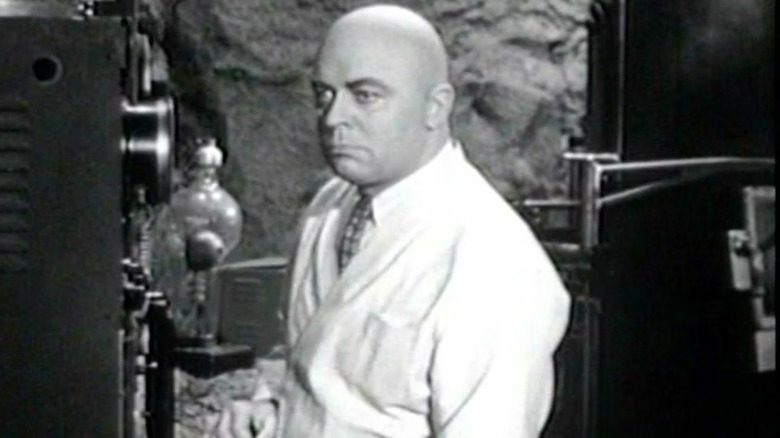
Of all the inclusions on this list, Lyle Talbot’s Lex Luthor feels the most like it was cut-and-pasted from the pages of a comic book. The fact that the actor’s career began to take off at large with the introduction of sound in filmmaking makes perfect sense, his cutting baritone voice well suited for such imposing roles as the DC Comics villain (coincidentally, it was also perfect for the role of Commissioner Gordon in 1949’s “Batman and Robin”).
Of course, at the time, he wasn’t nearly as complex of a character. Adapted from the original Golden Age “Superman” comics, the film serial “Atom Man vs. Superman” depicts Lex Luthor at his most basic and hand-wringing, and the dramatic aims of the overarching story are relatively shallow. With better material, it would be easy to argue that Talbot — with his uncanny resemblance to the Golden Age Luthor and keen understanding of his physicality and tone — deserves to be in the top 5.
5. Kevin Spacey (Superman Returns)
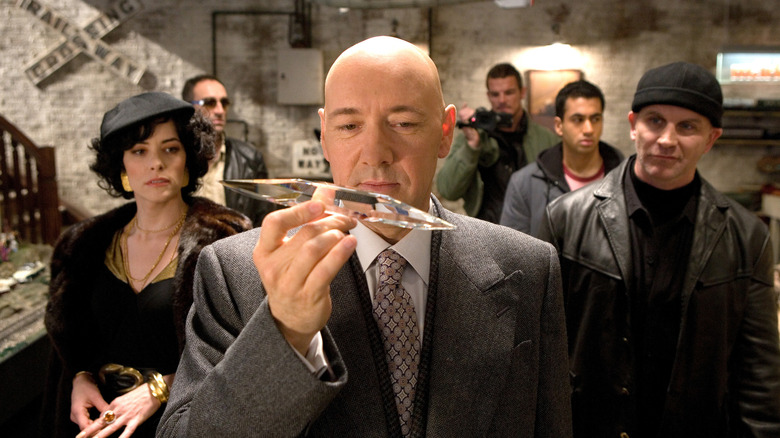
Warner Bros. Pictures
Long before the disgraced actor’s career ended in allegations and erasure from Ridley Scott’s “All the Money in the World,” Kevin Spacey was something of an inspired choice to play Lex Luthor in Bryan Singer’s “Superman Returns.” He had played multiple criminal masterminds prior to being cast in the 2006 film, earning critical acclaim for playing serial killer John Doe in “Se7en” and master manipulator crime lord Keyser Söze in “The Usual Suspects,” but this character required a kind of evil audiences had only seen hints of from Spacey.
Putting aside his court cases for a moment, Spacey succeeds in this role by doing exactly what one would expect Spacey to do with it. It’s far from his most surprising or interesting performance, but it unquestionably works. He’s convincingly domineering, brilliant, vicious, and maniacal, playing Lex with a venom not seen in Gene Hackman’s portrayals. The film as a whole is broadly disappointing, with none of the actors granted the writing or direction necessary to do remarkable work. Even so, Spacey’s Lex is distinctly effective.
4. Michael Cudlitz (Superman and Lois)
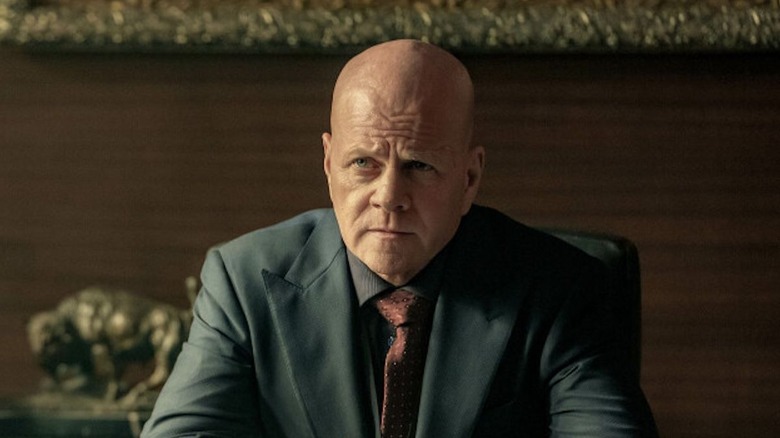
The CW
After his role in “Supergirl” and the “Crisis on Infinite Earths” crossover event, Jon Cryer was excited about the opportunity to continue playing Lex Luthor, especially in the series “Superman and Lois.” Debuting in 2021, it spent its first two seasons avoiding Superman’s arch-nemesis in favor of exploring his life in Smallville, his relationships with wife and sons, and other threats that were more closely tied to the ambitious themes and ideas it wanted to explore. As such, when Lex was finally introduced in season 4, the story had already moved so far beyond the aims of the Arrowverse that (from the outside) it wouldn’t have made much sense to bring Cryer back in any case.
Instead, Michael Cudlitz was cast to play a slightly reimagined version of the character tailored to the specific narrative goals of “Superman and Lois.” The “Walking Dead” alum played Lex as a billionaire-turned-crime lord who largely fought Superman (Tyler Hoechlin) from behind a vast criminal network. Despite being able to dodge accountability for his many crimes, he was successfully framed for murder by a rival, with Lois Lane’s (Elizabeth Tulloch) reporting playing a major role in his eventual incarceration.
This set of circumstances creates a wholly unique Lex that only Cudlitz could play so well, one who needs to echo the businessman fans know, but with a rougher edge having survived a brutal prison sentence. At the same time, Cudlitz mines every ounce of humanity he can from the tragic elements of his backstory and uses them to credibly complicate the normally black-and-white morality of his conflict with Superman. It may not be comic-book accurate, but it’s exceptionally compelling nonetheless.
3. Nicholas Hoult (Superman, 2025)

Warner Bros. Pictures
Deciding on the precise order for our top three Lex Luthors was surprisingly difficult. Weighing the power of the performance, the level of comic-book accuracy, the strength of the writing and directing, and overall impact left us with three solid #1 choices that each excelled where other iterations faltered.
For our money, Nicholas Hoult is the most comic-book accurate Lex Luthor we’ve ever seen. Poetically cast by James Gunn after attempting to audition for Superman himself, Hoult captures the boundless narcissism and jealousy of the character perfectly. Yes, he gets somewhat of an unfair advantage getting to play the role in a film with the budget, scope, and vision of a 2020s superhero film, but Hoult’s performance is so vivid in its pain that he’d be compelling in any film or television series mentioned below.
Audiences get to see in the film’s climactic moments just how genuinely small and hopeless Superman makes him feel, his need to rid the world of the Man of Steel thus rendered as an existential crisis hiding behind the myth of a higher calling. It’s a truly superhuman level of pettiness. “Superman” was quickly regarded as one of Hoult’s best films, and if he continues to play the character with such passion, he could easily rise to become the definitive live-action Lex Luthor.
2. Gene Hackman (Superman, 1978 and beyond)
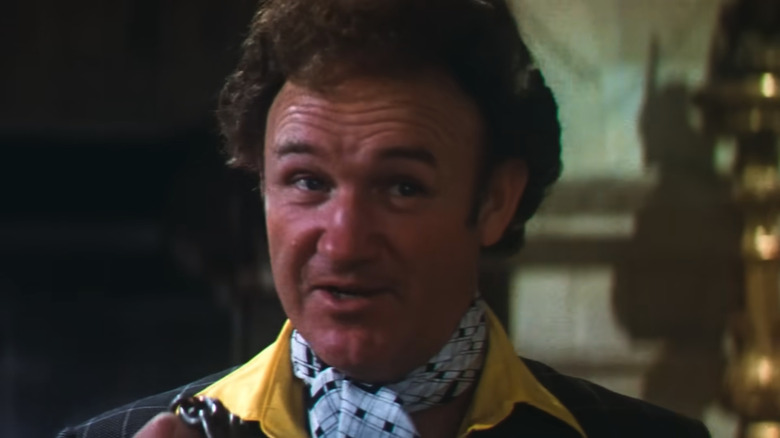
Warner Bros. Pictures
Though contemporary audiences may take issue with its deviation from the source material, the late Gene Hackman remains the favorite Lex Luthor of many. This is especially true of those who grew up watching the 1978 Richard Donner film and its sequels.
Admittedly, he doesn’t much look the part, as the actor refused to shave his head for the role and had to be tricked by Donner to even shave his mustache. He also benefited greatly from sharing the screen with Christopher Reeve, perhaps the best Superman of all time. But none of that can take away from what Hackman brought to “Superman” as a veteran actor, turning in a performance just as enchanting, charismatic, and memorable as his best work.
Hackman’s Lex Luthor is the most successfully comedic on this list, as well as the peak of the various attempts to portray the character’s delicate instability. Motivated entirely by a lust for power, his amusingly cartoonish attempts at profiting from chaos are made genuinely threatening by Hackman’s commitment to the reality of the film. As the cultural ubiquity of comic books and their characters lead us to take earlier, imperfect attempts for granted, Hackman must not be forgotten. That he was able to make such an impact as Lex Luthor at that time is one of the many reasons he might’ve been the greatest actor in film history.
1. Michael Rosenbaum (Smallville)
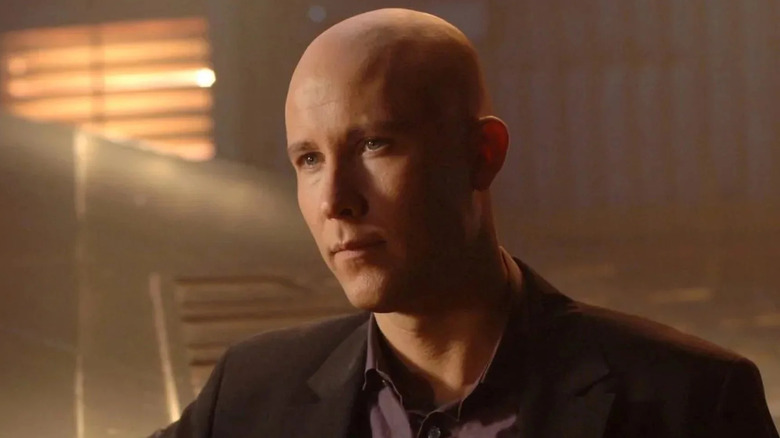
The CW
Though he may not have played the role in a state-of-the-art blockbuster or come to it with the prestige of three Academy Award nominations under his belt, it is ultimately hard to argue that Michael Rosenbaum isn’t the definitive live-action Lex Luthor actor as of writing. His audition alone is impossible to dismiss. In true Lex Luthor fashion, Rosenbaum went into the audition with the calm control of someone with nothing to prove, who didn’t care if he booked the role or not — in part because… he genuinely did not care if he booked the role or not.
This level of confidence is apparent in Rosenbaum’s take on the character. He doesn’t treat the material as though he’s above it — rather, he doesn’t try so hard to make Lex seem charismatic or intimidating. He just is. Each scene he’s in is an example of that old acting adage that the audience doesn’t believe an actor is the king because he says he is, but because of how he lets other actors treat him. When Rosenbaum is supported by material that trusts the power dynamics and relationships he shares with other characters — particularly Tom Welling’s Clark Kent and John Glover’s Lionel Luthor — he imbues Lex with more power, humanity, and dramatic depth than any actor on this list.