
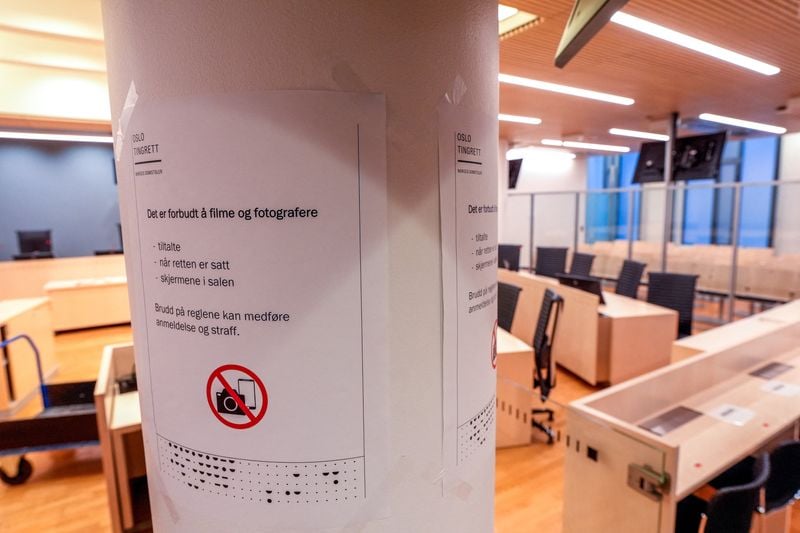
Trial Overview and Family Impact
OSLO, Feb 3 (Reuters) – The son of Norway’s crown princess will stand trial on Tuesday on charges of rape, domestic violence, assault and drug possession, among other crimes, one of several cases that have shaken the Norwegian monarchy.
Marius Borg Hoiby, 29, son of Crown Princess Mette-Marit and stepson to Crown Prince Haakon, could face multiple years in prison if found guilty of the most serious of the 38 charges brought against him.
His lawyer Petar Sekulic told Reuters he did not admit criminal guilt for the charges of rape or domestic violence, but did admit guilt for some of the less serious matters.
“He will give a detailed explanation about this in court,” Sekulic said.
Charges Against Marius Borg Hoiby
The case is scheduled to run until March 19. Hoiby is scheduled to testify on Wednesday.
On Sunday Norwegian police detained him on suspicion of causing bodily harm, wielding a knife and violating a restraining order. A court ruled on Monday Hoiby could be held in custody for four weeks. His lawyer told Reuters he was considering an appeal.
CROWN PRINCE AND PRINCESS WILL NOT ATTEND COURT
The court case is the most serious crisis to hit the Norwegian royal family in peacetime, according to historian Trond Noren Isaksen, though Hoiby does not have a royal title and is outside the line of succession.
Family’s Response and Public Sentiment
The start of the trial also comes days after his mother Mette-Marit apologised for her “poor judgment” for maintaining contacts with the late U.S. sex offender Jeffrey Epstein after he was convicted of child sex crimes in 2008.
Crown Prince Haakon and Crown Princess Mette-Marit are not planning to attend court proceedings, Haakon said in a statement, adding he trusted the justice system to be fair and proper.
About Marius, Haakon said: “We love him, he is an important part of our family. He is a Norwegian citizen, so he has the same responsibilities as everyone else, as well as the same rights,” he said.
Haakon expressed sympathy for the alleged victims. “We think about them, we know many are going through a difficult time,” he said.
Context of the Royal Family’s Challenges
The Nordic country is a constitutional monarchy in which the king is the formal head of state while political power rests with parliament and the government.
MULTIPLE COUNTS
Among the charges against Hoiby are one count of rape with sexual intercourse and three counts of rape without intercourse, some of which he filmed on his telephone, the prosecution said.
In January, it added new charges, including of possession and transport of 3.5 kg (7.72 pounds) of marijuana.
In 2024, police named Hoiby as a suspect of physical assault against a woman with whom he had been in a relationship.
Hoiby, in a statement to the media at the time, admitted to causing bodily harm to the woman while he was under the influence of cocaine and alcohol and of damaging her apartment. Hoiby said he regretted his acts.
ONE OF MANY PROBLEMS FACING THE MONARCHY
The trial comes at a time of multiple challenges for the family, in addition to the ongoing scrutiny Mette-Marit is receiving for her ties to Epstein.
King Harald, 88, Europe’s oldest living monarch, cut back activity in 2024 after being hospitalised to treat an infection and later receiving a pacemaker.
Mette-Marit is in need of a lung transplant after being diagnosed with pulmonary fibrosis in 2018, a chronic disease that causes scarring in the lungs and leads to a reduced oxygen uptake.
Meanwhile, King Harald’s daughter, Martha Louise, stepped down from official royal duties in 2022 to allow her to more freely pursue her own business ventures, and said both she and her husband, an American self-styled shaman, would refrain from using her title as princess in a commercial setting.
They both received criticism last year for starring in a Netflix documentary chronicling their daily lives, including their wedding, and for being critical of the king and queen.
“This must be seen in the context of all the controversies caused by Princess Martha Louise and her husband and that age and health issues have made it more difficult for the royal family to fulfil their duties, which has affected their visibility,” said historian Isaksen.
Still, the monarchy remains popular. Some 70% of Norwegians support the monarchy as an institution, according to a Norstat poll for public broadcaster NRK conducted in January among 1,030 people and published on Friday. Only 19% want another form of government.
(Reporting by Gwladys Fouche and Nora Buli; Editing by Alison Williams)