
(Credits: Far Out / YouTube Still)
Mon 2 February 2026 17:15, UK
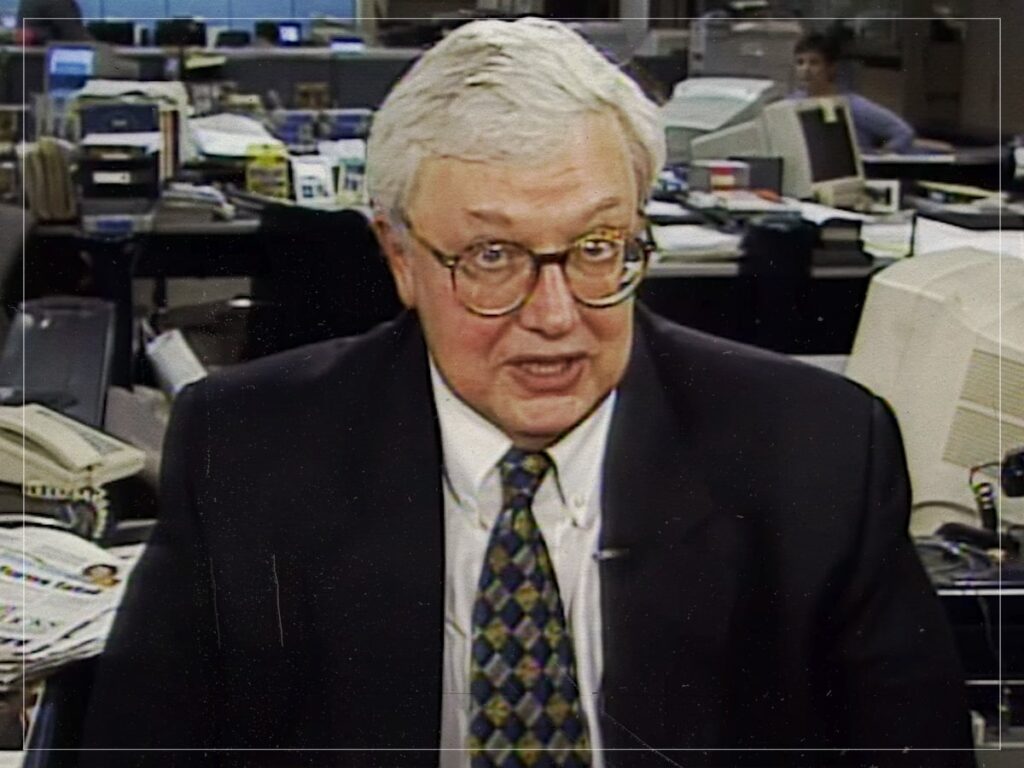
Some movies start strong before losing momentum, others kick off with a bang and peak before the opening credits, certain films open on a weaker footing before eventually finding themselves, and then there are the unlucky films that begin terribly and get worse with each passing minute, with Roger Ebert having the misfortune of having to sit through one of the latter examples.
In an ideal world, a picture will maintain a level of quality from its first to last minutes, but that’s rarely the case. History is littered with terrible flicks that have at least one, if not more, incredible scenes, while there are also the unfortunate features that blow their wad too early before failing to hold the audience’s attention.
No filmmaker wants to find themselves responsible for something that sucks from the opening frame and continues to slide downward into disaster, but Alex Cox managed it with 1987’s Walker, at least according to Ebert. It stung more because Repo Man and Sid & Nancy had established him as a talented auteur, and maybe it’s telling that his fourth feature was the first one he hadn’t written himself.
The story had plenty of potential, too, with Ed Harris cast in the title role of William Walker, who mounted an unauthorised invasion of Nicaragua and declared himself the nation’s president. To make a weird true-life tale even weirder, Cox intentionally loaded the movie with anachronistic details. It was a polarising period piece, but there was no debate over which side of the fence Ebert landed on.
“Some bad movies are in no hurry to announce themselves,” he opened a zero-star review. “But Walker declares its badness right from the opening titles with gushers of blood streaming from the wounds of men who are appearing (the opening credits promise us) in a ‘true story.’”
Calling a movie a travesty once is bad enough, but doing it twice in quick succession underlines how much Ebert loathed Walker, which never recovered from its shaky introductory scenes and continued to offend the critic by wasting good actors and an intriguing premise on a big-screen abomination.
As far as he was concerned, Harris was “done in by the script, the direction, and certainly by the agent who negotiated his presence in this travesty.” Meanwhile, he felt much the same about Marlee Martin, in what was her first onscreen credit since she’d won the Academy Award for ‘Best Actress’ in Children of a Lesser God.
Ebert noted that she’d followed up her “triumph” with “a role that is a demeaning travesty,” in which she’s bumped off by the end of the first act. As a result, Harris is left “virtually alone to negotiate a pointless and increasingly obnoxious exercise in satire,” or at least that’s what he thinks Cox was going for.
He wasn’t sure, though, since he also pointed out that “this movie is apparently intended as a comedy or a satire,” a descriptor he didn’t understand since “it has no laughs.” Walker has its fans, albeit only among those who can get on Cox’s extremely specific wavelength, but it’s an understatement to say that Ebert wasn’t one of them.
Related Topics