
(TNND) — This last week has demonstrated, once again, that politics and pop culture are deeply intertwined.
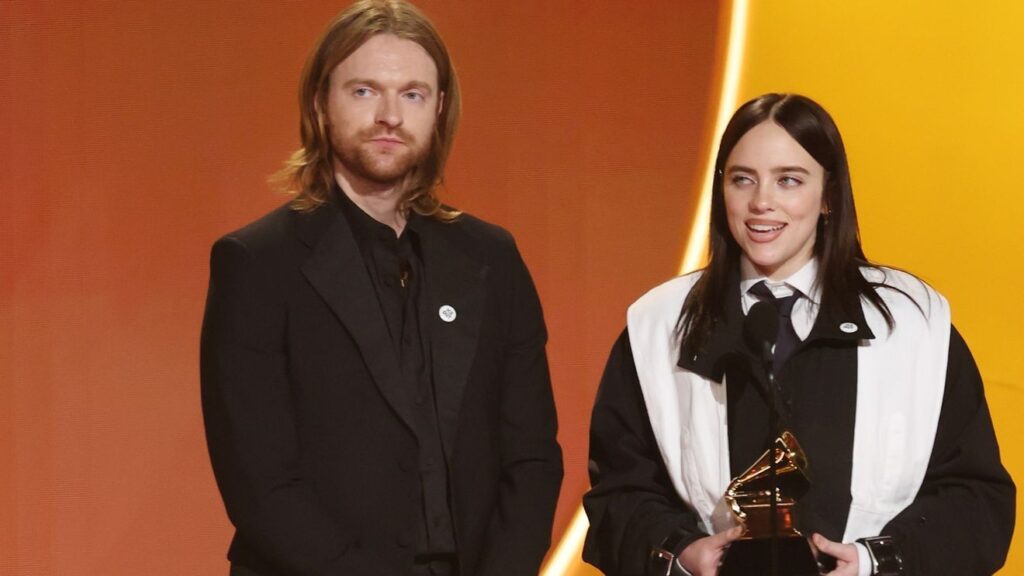
Bad Bunny and Billie Eilish got both applause and backlash for speaking out against U.S. Immigration and Customs Enforcement during their Grammy speeches over the weekend.
Tuesday, conservative lawmakers lambasted steaming giant Netflix for allegedly promoting a liberal viewpoint in its programming.
“Politics and pop culture are very much traveling side by side,” said Adam Klein, who teaches on the media, government and propaganda at Pace University in New York. “And we could extend that out to say that there’s entertainment in both for people, and I don’t think that they see them differently today.”
Some entertainers, including Eilish, have criticized the Trump administration’s immigration crackdown in Minnesota and elsewhere.
“No one is illegal on stolen land,” the singer said on stage at the Grammys, receiving applause from her fellow entertainers in attendance. “And, yeah, it’s just really hard to know what to say or what to do right now, and I just, I feel really hopeful in this room. And I feel like we need to keep fighting, and speaking up, and protesting. And our, our voices really do matter. And the people matter. And (expletive) ICE is all I want to say.”
Texas Republican Sen. Ted Cruz seized on Eilish’s “stolen land” comment during the hearing Tuesday, which was focused on the proposed Netflix-Warner Bros. merger.
Cruz called the entertainment industry “corrupt” before telling Netflix co-CEO Ted Sarandos, who was testifying at the hearing, that his streamer has long been a “left-wing company.”
“Your founder, Reed Hastings, is one of the biggest Democrat donors in the country, including giving millions recently to the massive gerrymander in California,” Cruz said, “making it one of the most gerrymandered states in the union, because your founder desperately wants a Democrat House of Representatives.”
Cruz asked Sarandos if Americans could trust Netflix not to leverage a merger simply to distribute allegedly biased content to a wider audience.
“When they turn on TV, they’re (tuning) in to be entertained,” Sarandos said of Netflix’s customers. “And if we fail to entertain them by trying to promote propaganda or … anything other than entertainment, we fail.”
Missouri Sens. Eric Schmitt and Josh Hawley, both Republicans, also took the opportunity to accuse Netflix of liberal favoritism.
Schmitt called Netflix “woke.”
And Hawley accused Netflix of promoting “a transgender ideology” through its children’s programming.
Peter Loge, who is the director of the School of Media and Public Affairs at George Washington University, said the merger hearing should have kept the focus on the economic impacts of the deal, “not whether or not members of Congress like the politics of the people doing the merging.”
“That’s allowing congressional politics to dictate what people should buy in an open marketplace,” Loge said. “That’s anti-capitalistic and anti-democratic.”
Both Klein and Loge said the entertainment industry has been political since the start.
And both pointed out that, while Hollywood is more closely aligned with liberal ideology, there are plenty of conservatives who have called Hollywood home.
Ronald Reagan, Arnold Schwarzenegger, Sonny Bono and Fred “Gopher” Grandy (of “Love Boat” fame) all spent time as elected Republicans after careers in entertainment.
Nicki Minaj, Kid Rock, Lee Greenwood and Dr. Phil McGraw are among the celebrities now supporting President Donald Trump.
“There are a lot of celebrities on the left and on the right who are speaking their mind in politics,” Loge said. “And just because you’re famous doesn’t mean you lose your right to free speech. You might lose some fans. But you don’t lose your right to say stuff.”
Loge said the culture war has heated up in recent years, especially on the political right.
Political parties have become more focused on personal identities, he said.
Politicians need the public’s attention to raise money, get votes and win elections.
Loge said an easy way to do that is to make people angry. And pop culture grievances give politicians one avenue for striking that nerve among voters.
“The most precious commodities we have are time and our attention, and making something controversial and making it a big deal is a great way to get a little slice of that time and attention,” Loge said.
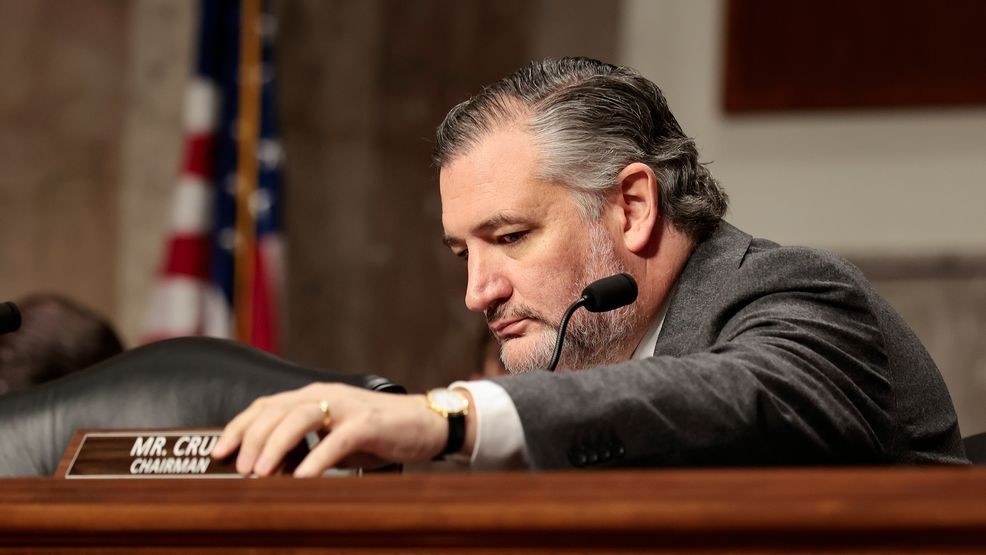
FILE – Sen. Ted Cruz (R-TX) attends a hearing December 17, 2025, in Washington. (Photo by Heather Diehl/Getty Images)
Klein said an old saying was that politics flows downstream from the culture.
He’s not so sure about that anymore.
The two seem to be influencing each other every day, fueled by the partisan echo chamber of social media, he said.
“When someone like Bad Bunny is named the Super Bowl halftime performer, instantaneously, people go to their respective political corners online and are responding to it or outraged by it,” Klein said.
Do celebrities need to worry about alienating fans if they get too political?
“Yeah, some do. I mean, some celebrities lose support. You know, fans will abandon them, and then fans will come back,” Loge said. “That’s up to them. Just like if you put a yard sign up supporting a candidate in your neighborhood, some of your neighbors might stop inviting you to a potluck, and others might quietly slip you a nice bottle of wine.”
Klein said keeping quiet can be just as risky as speaking out for celebrities, who might face backlash from some groups for not taking advantage of their powerful voice.
“They’re kind of damned if they do and damned if they don’t,” Klein said.