
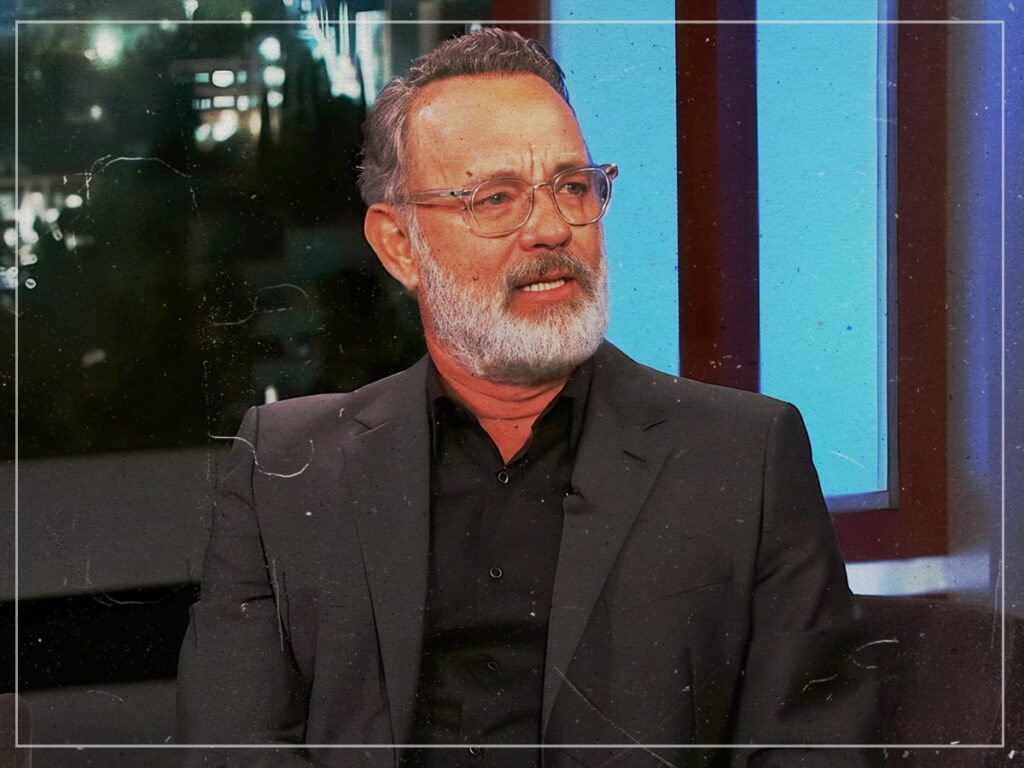
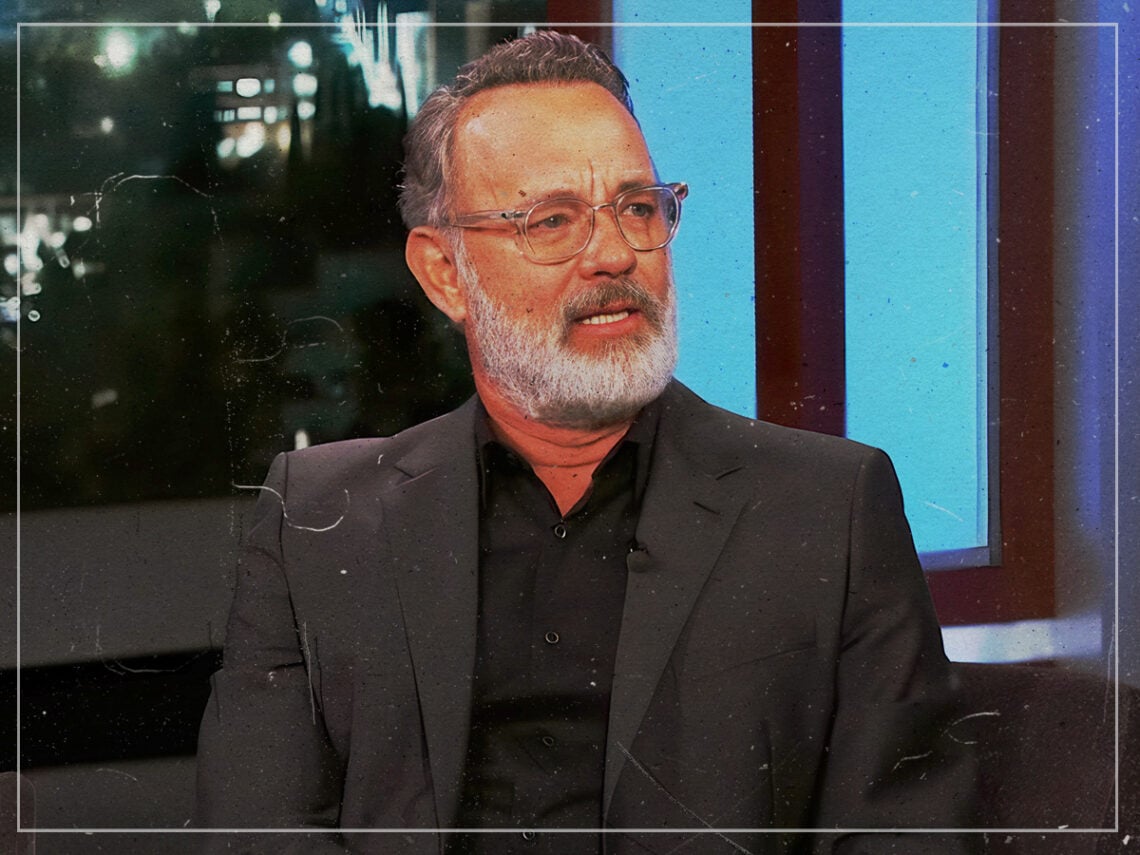
(Credits: Far Out / YouTube Still)
Thu 12 February 2026 19:12, UK
Music was always meant to be temporary. Even though record industries have made a mint out of selling the back catalogues of the biggest artists in the world, the genesis of rock and roll was about making the kind of music that could resonate with people at the moment, rather than being carried on like hymns for generations to come.
This attitude gave the music its essential pop and fizz, inspiring a legion of youngsters with its vital devil-may-care spirit. Among the most inspired was Tom Hanks. As a young kid who was constantly moving from city to city as a youngster, rock and roll became an endearing company.
In this way, it did achieve wider resonance in his life (and just about everyone else’s too). That’s how despite its temporary nature, rock and roll endures. The best icons of the genre have, therefore, achieved timelessness. And Hanks was convinced that George Harrison’s music would be played long after he was gone.
When Hanks was a little kid, he was already an avid fan of what was coming out of the American rock scene. Before The Beatles and The Rolling Stones arrived across the Atlantic, the sounds of Elvis Presley were already sending shockwaves through the rock and roll world, bringing with it the kind of excitement that normally had to be reserved for activities behind closed doors.
For Hanks, it was about more than just music. Every time people got the opportunity to play their singles in the car, they were interested in celebrating life in those three minutes, either singing about the lives they were living or the ones they wanted to live but never got the chance to.
Once America went into its dark age following the assassination of President Kennedy, the world seemed just a little bit brighter when The Beatles played The Ed Sullivan Show for the first time. Even though Paul McCartney and John Lennon were the main breakout stars behind the band, Harrison was always in the background planning the right time to strike.
Since he wasn’t as interested in writing pieces at first, Harrison would normally reserve his vocal showcases only a few times per album, making tracks that were much more dour than his bandmates on tracks like ‘Don’t Bother Me’. By the time the group had become a studio entity in the late 1960s, though, Harrison had become a seasoned songwriter who was perhaps even better than Lennon and McCartney, making tracks that hit you right in the gut like ‘While My Guitar Gently Weeps’.
Life after the Fab Four
After freeing himself from The Beatles in the late 1960s, Harrison blossomed on All Things Must Pass, making songs with a spiritual bent to them like ‘Behind That Locked Door’ and ‘Beware of Darkness’. Even though Hanks could appreciate the Fab Four as a complete entity, he knew that Harrison’s words about salvation and spiritualism weren’t just part of the 1960s dream.
When Harrison got his star on the Hollywood Walk of Fame, Hanks said that the former Beatle’s music was immortal, saying, “[The Beatles] were when the world turned. That’s when we escaped the doldrums and moved on to a brighter, better future…every record was an event, every cut was an opera. Their entire story told ours. All things must pass, sure, but George is going to live forever.”
Hanks’s claim has continued to hold true right through to today, with songs like ‘Isn’t It a Pity’ and ‘What Is Life’ having the same emotional resonance with people hearing it in 2024 as they did hearing it in 1970. Harrison may not have envisioned being the leader of a generation, but if he had the platform, he figured that he might as well use it to change the world for the better.
As Harrison put it himself, “I think people who truly can live a life in music are telling the world, ‘You can have my love, you can have my smiles. Forget the bad parts, you don’t need them. Just take the music, the goodness, because it’s the very best, and it’s the part I give most willingly.”