
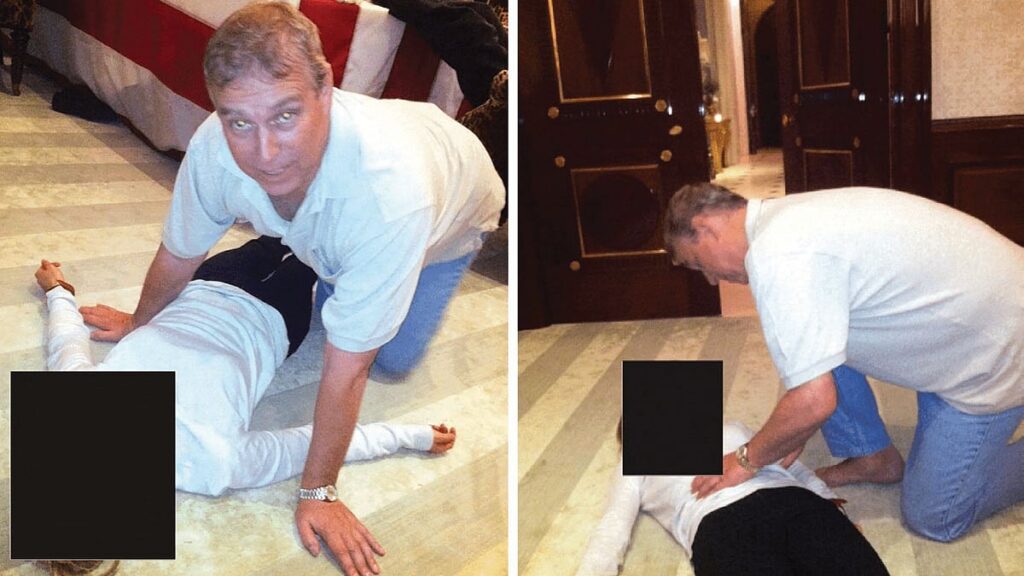
To sum this up in all its horror, the various activities of the late Jeffrey Epstein have placed both our royal family and our current government in real jeopardy, mostly for the sin of poor judgement, but also for personal failings that ill befit anyone with a leadership role in our society. This is bone jarringly shocking, and even more so because on the other side of the Atlantic, none of the male powerbrokers who clustered around Epstein for access to girls and money have, as yet, been called to account for their activities. So far, Ghislaine Maxwell, a woman, has served prison time, and Andrew and Fergie have suffered career terminations. Brits all.
American ‘royalty’, it seems, is immune, while ours is not.
Power most certainly corrupts, as the activities of Epstein himself, Mandelson, Maxwell and the ex-Yorks amply testify. But power also protects, for as long as you can hold onto it, and a great many prominent figures, it seems, still have enough of it to avoid retribution.
So, should we feel sorry for Andrew? Was his great sin that he got caught, or that he wasn’t bright enough to appreciate the risks he was running? After all, he’s only the last in a long string of royal personages who would never have risen above middle management in any of the organisations they patronised. No. His greatest failing has always been not a lack of talent but his persistent, unshakable sense of entitlement.
British author Andrew Lownie meticulously chronicled this unattractive quality in a blockbuster biography called Entitled:
The Rise and Fall of The House of York, published in 2025. Ominously,
Lownie has accumulated so much unused material that the paperback edition, due to be out shortly, is set to be much longer.
Andrew Mountbatten-Windsor is as finished as finished can be.
His fate gives new meaning to the phrase ‘royal descent’. But there
are further questions, which are very alarming for the royal family.
As a senior royal, Andrew had royal protection officers by his side 24 hours a day, and though they would not have followed him behind every closed door, they would have known where he was and whom he was with at all times. They would have known that Andrew was at Maxwell’s house that evening, and who else was in the building. Lownie has said in interview that MI6 took evidence of Andrew’s alleged corruption to the late queen, but she would not act upon it. This is potentially highly damaging, as it now seems possible that he may prove to be as guilty of leaking national secrets as Mandelson.
By implication, the security services and senior royal officials knew about everything Andrew was up to for years. The question, therefore, is whether they protected the late queen from full knowledge of what was going on, or whether she chose to protect the man who was, by all accounts, her favourite son.
Who, if anyone, will publicly dare to ask, let alone answer, that question?