
The documentary film genre isn’t what it used to be. Gone are the days where any person in a position of power or influence would willfully give access to an independent journalist to tell their story. Now the documentary genre, or perhaps more accurately, the hagiography genre, is filled with access-driven projects in which the subject often gets final say over what is and isn’t included in the film.
Unfortunately, there simply isn’t any incentive for an athlete, celebrity, or other person of interest to cede editorial control. Why let someone else tell your story if there’s a production company willing to pay you for access and give you final cut?
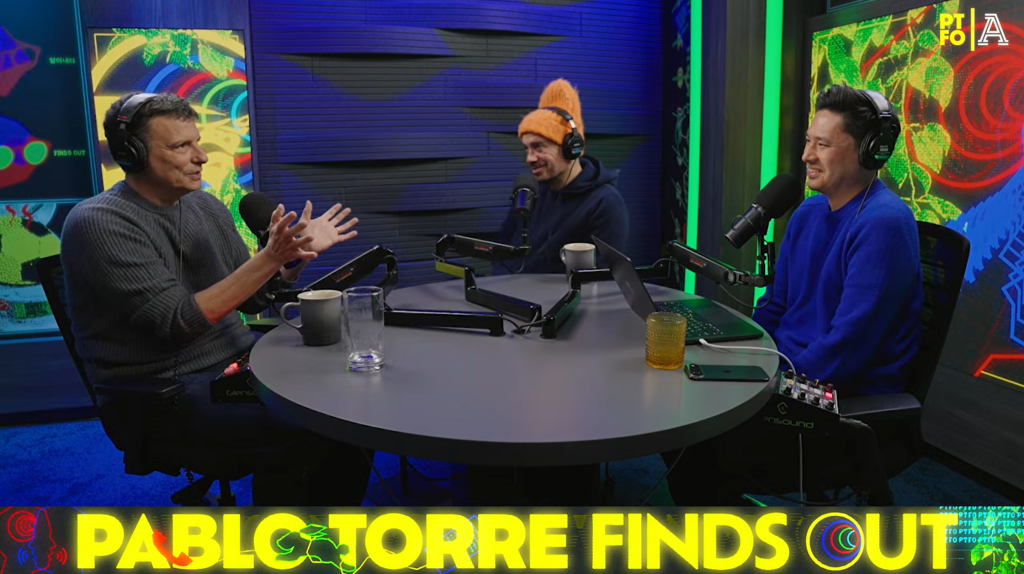
That’s at least how The New Yorker editor David Remnick and Emmy Award-winning documentarian Ezra Edelman feel about the current state of documentaries. Appearing on a recent episode of Pablo Torre Finds Out, Remnick and Edelman decried access-driven films. Remnick specifically discussed a meeting he had with LeBron James and his longtime business partner Maverick Carter in which he pitched a profile, but was then shutdown by a Lakers public relations officer who said it’d be better to tell James’ story “in our voice.”
“What they don’t want is the intermediary of a writer or a filmmaker of any independence.”
—David Remnick and Ezra Edelman on a failed meeting with LeBron James and the slow death of access journalism pic.twitter.com/Vc2BhiWYcH
— Pablo Torre Finds Out (@pablofindsout) February 13, 2026
“They knew what I wanted,” Remnick said of James and Carter. “I wanted to do a real profile in the real sense. He was lovely, it was really fun, and I thought, ‘I’m in like Flynn.’ And it’s not like I was asking for the world. I wanted to come out to LA, watch him play a bunch of games, and get some interview time and move around a little bit. And it seemed like it was going to happen.
“Three days later, a nice guy in the PR realm comes to me and says, ‘Look, David. We can’t do this. Because if we want to get our message to our fans, we’ll go on social media and say Political Message A, Commercial Message B, Comment on C, and it’s done and it’s in our voice. Done. And if we want to do a documentary, we’ll do that thing.’ … Here was the killer thing that, my heart shattered, ‘If we want to tell our story, we’ll call so-and-so ghost writer of the moment, and it will guarantee we tell our story the way we want it told.’ What they don’t want is the intermediary of a writer or a filmmaker of any independence.”
In other words, there’s a lot more Untold than 30 for 30 getting made right now.
“I was called naive last week by somebody. It was just basically not acknowledging that the universe that we live in now, ‘Yeah athletes get paid to make movies.’ And so it’s fine that you’re principled, but grow up a little bit,” Edelman, who directed O.J.: Made in America, told Remnick. “I’m like, ‘I’m sorry, what happened to journalism? And I’m sorry, what happened to actually having some level of independence between the subject and a filmmaker.’ Anybody who has any level of power, money, fame, as a result, they have some modicum of control.”
Great “documentaries” are no longer products of a rigorous journalistic process made to enlighten and educate viewers. They’re vehicles by which subjects can tell their story however they want it, and the filmmakers primary job is to make the project entertaining rather than informative. The best documentaries, of course, are able to be both entertaining and informative. But those opportunities simply do not exist in the same way they used to.
“The thing I think about when I read your writing or watch your films,” host Pablo Torre jumped in, “is how great it is when someone who’s not the subject observes the subject and gets to decide what’s actually interesting. The subject is often not the best arbiter of what is interesting about them.”
“They’re also not a great arbiter of the truth,” Edelman replied.
Remnick simply concluded, “It’s a human transaction.”