
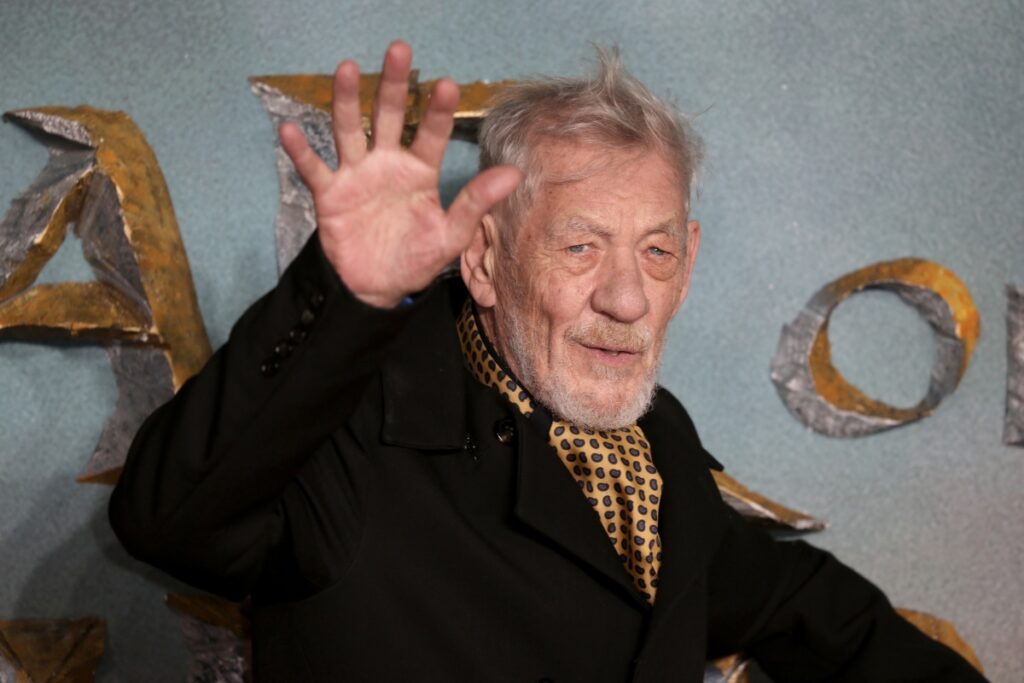
He gave us Gandalf and Magneto, yet the gold has never found his mantle. Is this Hollywood’s blind spot or its brutal logic at work?
Sir Ian McKellen can silence a room with a glance, yet the Academy has never called his name. Across 135 films, from a staff-wielding wizard to a steel-bending mutant, he collected only two nominations, for Gods and Monsters and The Fellowship of the Ring. So what kept the statue out of reach: fierce competition, the bruising politics of Oscar campaigns, or something more personal he has openly pondered as a gay trailblazer? This look back weighs the matchups, the machinery, and the devotion of fans who long ago crowned him regardless.
A legacy of brilliance: why Ian McKellen has won hearts but not the Oscar
For decades, Sir Ian McKellen has been a towering presence in the world of cinema. With a career spanning decades and, at 86, an incredible 135 films, his performances have captivated audiences worldwide. And yet, this iconic British actor, celebrated for bringing Gandalf and Magneto to life, has never claimed the elusive Oscar. Why is that?
Unforgettable roles and defining moments
Few actors have made contributions as memorable as McKellen’s. His portrayal of the mighty Gandalf in The Lord of the Rings trilogy enchanted fans, while his nuanced depiction of Magneto in the X-Men franchise redefined what a cinematic villain could be. McKellen’s acting talent is evident in quieter, character-driven performances too, like his role as the tortured filmmaker James Whale in Gods and Monsters. Indeed, his ability to seamlessly shift between blockbusters and indie gems is a testament to his extraordinary range.
Despite these achievements, McKellen has only received 2 Oscar nominations: one for Gods and Monsters in 1999 and another for The Lord of the Rings: The Fellowship of the Ring in 2002. In both instances, he delivered performances that left critics applauding. But with competition like Roberto Benigni and Jim Broadbent, the industry’s unpredictable voting tendencies often pushed the coveted award just out of McKellen’s grasp.
How does the Oscar race really work?
Winning an Oscar is about more than sheer talent, sometimes it comes down to timing, politics, and industry strategies. McKellen’s nominations came during years marked by razor-thin competitions. For example, his performance in 1999 faced a massively hyped race dominated by Harvey Weinstein’s aggressive campaigning machine (a practice widely criticized today). The outcome? Players with strong backers and carefully executed campaigns often emerged victorious, leaving incredible talent like McKellen behind.
Interestingly, awards can also be shaped by broader trends within the industry. In McKellen’s case, being an openly gay actor during a time of slower progress in LGBTQ+ representation might have quietly impacted attitudes within the voting pool. Yet, McKellen has always spoken candidly about his pride and thankful acknowledgment of nontraditional markers of success, like the unyielding admiration of millions of fans.
The fans and Sir Ian himself
Critics and fans alike continue to marvel at McKellen’s ability to bring complexity to every role. Online, his fan community showers him with love, with sentiments like “a living legend” and “our Gandalf forever.” For his part, McKellen has reflected on the topic of Oscars with characteristic humility, once saying to Scene Mag, “It doesn’t bother me.” It is clear that for him, the craft itself and the impact it leaves is its own reward.
So, is it injustice or inevitable fate that McKellen has no Oscar statuette to his name? For many, the absence of such recognition does not diminish his immense talent or his legacy in pop culture. In the hearts of his audience, he already reigns supreme.