
You’re scrolling at 3 a.m., and your brain is already half-dreaming when you see it.
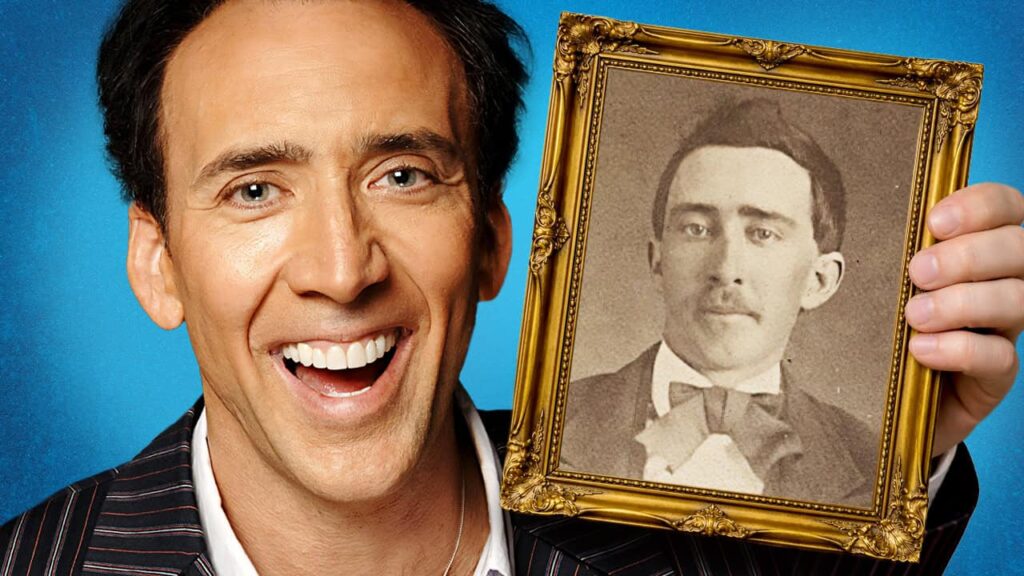
A dusty black-and-white photo. A face from 1860-something. A man who looks familiar.
Then the caption hits: “Nicolas Cage is a vampire.”
And honestly? For a few seconds… you believe it. The photo is that close. Your brain and imagination want nothing more than to embark on a real-life mystery across time.
You keep scrolling and clicking, only to discover that quite a few major players in the entertainment industry have doppelgängers from the past.
But why? How did this phenomenon take over our fragile minds, warp our sense of time, distort our beliefs about mortality, and expand our fascination with celebrity?
Welcome to one of the internet’s favorite genres:
The Immortal Celebrity Time-Traveling Vampire Clones From Hell.
Pop Culture Has Prepared Us for This
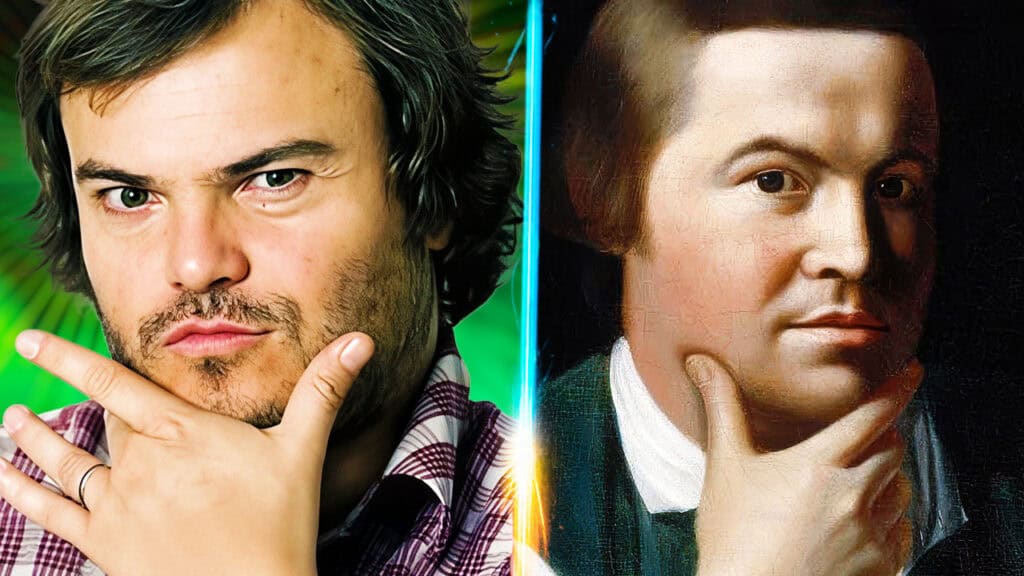
Seeing these famous faces decorating artifacts from the past makes it feel like we’re living in The Twilight Zone. One episode in particular comes to mind: “Queen of the Nile.” It tells the story of an actress who, through an Egyptian curse, does not age and reinvents herself every few decades.
A more recent example would be Marvel’s The Eternals, where one of the immortal beings poses as his own descendant after too many years pass.
It’s a classic fable that echoes through society from time to time. And now, through the mighty power of the World Wide Web, we’ve unleashed an avalanche of supposed real-life examples of these time-defying fantasies.
Celebrities are often known for desperately trying to preserve their image — in photos and in flesh. Add in conspiracy theories about blood-sucking, youth-absorbing elites, and suddenly it works on multiple levels.
I like to call them: Hollywood Highlanders.
The Nicolas Cage Photo
A vintage photo of a Civil War–era man bearing an uncanny resemblance to Nicolas Cage once went viral. Fans joked he might actually be immortal — and honestly, it’s hard not to double-take.
The photograph is believed to show a Confederate prisoner taken in 1864 at Johnson’s Island prison camp in Ohio. A vintage photograph collector listed the image on eBay for $1 million, claiming it was proof that Cage is an undead being who “reinvents” himself every 75 years.
Cage has, of course, played a vampire before — more than once — and even addressed the photo on Letterman. Some also claim he resembles Emperor Maximilian I of Mexico.
Coincidence? Almost certainly. But it’s a fun one.
The Travolta Time Warp
Another historical photo from roughly the same era shows a man who looks strikingly like John Travolta. Naturally, this led people to imagine Cage and Travolta locked in a Face/Off battle through time.
Some even speculate it could be a post-mortem photograph. Reincarnation is, notably, a belief within Scientology — just saying.
Keanu Reeves: The Immortal King
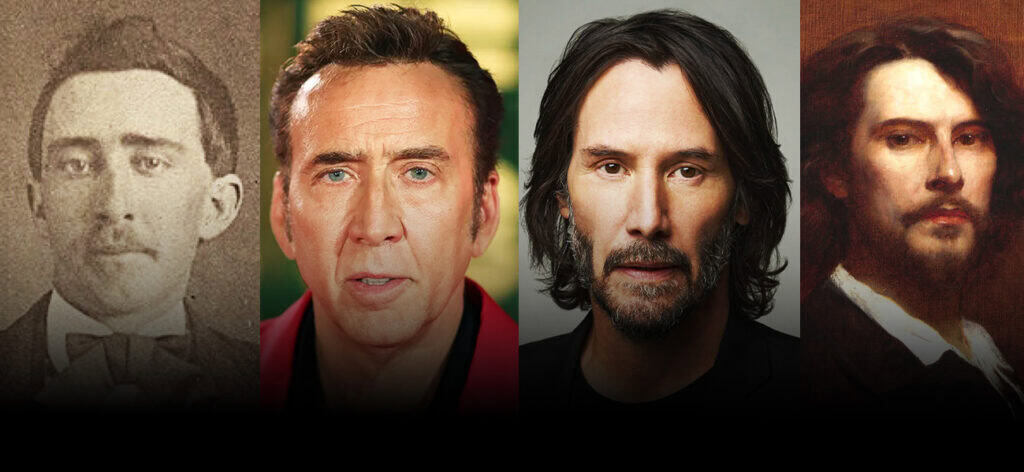
Keanu Reeves appears everywhere: in a Renaissance painting, a 1530 portrait of an unknown man, and most famously in an 1875 image of French actor Paul Mounet.
Mounet was born in 1806 and died nearly a century ago… or did he? The resemblance is so striking it has inspired full-blown conspiracy theories, especially since Mounet reportedly died under mysterious circumstances and his body allegedly vanished.
Some legends even suggest Reeves resembles Charlemagne.
Renaissance Doppelgängers
A 17th-century painting by Diego Velázquez features Sebastián de Morra, a 1644 court jester to Philip IV of Spain, who could easily pass as Peter Dinklage’s ancestor — or time-traveling twin.
Speaking of Philip IV, some say he looks suspiciously like Mark Zuckerberg in a rather unflattering 1623 painting.
Raphael’s Self-Portrait with a Friend (1518–1520) has also been claimed to feature a friend who looks remarkably like Oscar Isaac.
And in Raphael’s The Cardinal and Theological Virtues, one figure bears an uncanny similarity to Sylvester Stallone. Same jawline. Same intense stare. Just missing the cry for “Adrian!”
Hollywood All Over History
The list keeps growing:
Jay-Z has a 1939 Harlem lookalike photographed by Sid Grossman.
A Civil War–era Dr. Andrew Sanders looks like Matthew McConaughey.
A 1960s yearbook photo of Judy Zipper looks remarkably like Leonardo DiCaprio.
Alec Baldwin and President Millard Fillmore are almost indistinguishable.
Jennifer Lawrence resembles classic Egyptian actress Zubaida Tharwat.
A 1930s photo shows a man who looks like Eddie Murphy.
A portrait of Louis Vuitton looks like Zach Galifianakis.
Philosopher Arthur Schopenhauer resembles Johnny Depp.
A 1628 portrait of Johann Vogt resembles Robert De Niro.
Lorenzo de’ Medici looks oddly Arnold Schwarzenegger-esque.
Queen Latifah resembles author Zora Neale Hurston.
A young Nicolae Grigorescu looks like Orlando Bloom.
Rupert Grint mirrors Scottish painter Sir David Wilkie.
Rose Wilder Lane resembles Maggie Gyllenhaal.
Young Albert Einstein shares similarities with Shia LaBeouf.
Mahir Çayan died in 1972… and Jimmy Fallon was born a year later.
Andrew Garfield resembles Leon Trotsky.
Bruce Willis looks like General Douglas MacArthur.
Conan O’Brien appears to have served as Union soldier Marshall H. Twitchell.
And it goes on. And on. And on.
At some point, it stops being coincidence and starts feeling like a cosmic joke.
The Clone Conspiracies
There are even full conspiracy theories suggesting celebrities such as Paul McCartney, Bob Dylan, Avril Lavigne, and Eminem died years ago and were quietly replaced by clones or doubles.
It’s not just about lookalikes anymore. It’s about identity, mortality, and the fear of losing icons.
The Simple Explanation
Of course, skeptics point out the obvious: sometimes people just look alike.
Human faces follow patterns. Genetics recycle certain combinations. Our brains are face-detection machines that would rather be wrong than miss a match.
We see figures in the stars. Creatures in clouds. Faces in toast.
So naturally, we see Keanu Reeves in a 19th-century Frenchman.
What This Really Says About Us
This trend exposes something deeper. We want our icons to be bigger than time. We don’t just want celebrities to be famous — we want them to be mythic. We want their faces to become symbols that survive eras.
Maybe that’s the poetic twist. It’s not that movie stars are immortal. It’s that our need for mythology is.
Somewhere in a quiet archive, a photograph waits — a frozen moment of a stranger who lived, laughed, and vanished like everyone else. And yet we resurrect him with a single joke, allowing his spirit to linger a little longer. It’s basically reincarnation via meme culture.
Every face is an empty canvas. Every picture tells a story. And when pieces of that story are missing, we invent the rest.
Not because we believe it.
But because we want to.

Subscribe to our weekly newsletter