
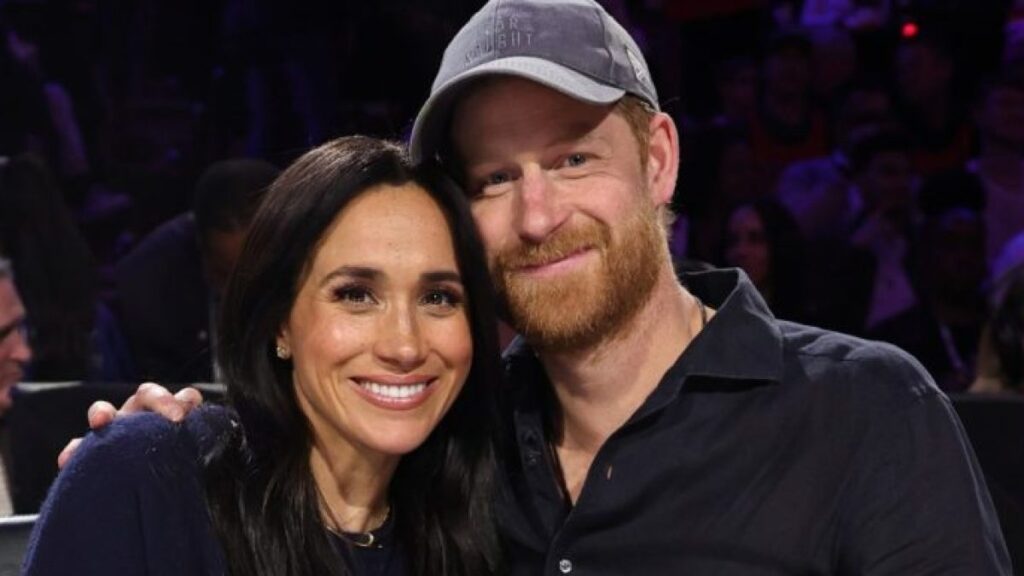
The House of Windsor does not treat every member of their team equally – the private security and half-in, half-out working royal status that the Yorks enjoyed was not granted to the Sussexes
Among the “unprecedented” straplines and historic searches for royal ne’er do wells, mentions of one man and his missus were striking for their absence.
Harry and Meghan scarcely got a look in during the extensive coverage of Andrew Mountbatten-Windsor’s arrest. The optics were striking: when asked to hunt in the drawer of royal sinners, commentators went as far back as Charles I (so inflexible and near Catholicism he ultimately lost his head), but very few hit upon the Duke of Sussex, for the obvious reason he hasn’t really done anything wrong.
It was an uncomfortable reminder that Harry’s exodus and his subsequent memoir and Netflix series unleashed a disproportionate tidal wave of establishment wrath, when all the while, Andrew had been hiding in plain sight.
The “Prince” was photographed strolling around Central Park with convicted paedophile Jeffrey Epstein in 2010 – and continued as a working royal until his infamous BBC interview with Emily Maitlis on 2019.
Those were nine long years of privilege, protection and a platform from which he trolled Virginia Giuffre (the woman who accused him of sexual assault and with whom he reached a financial settlement with in 2022, and has always denied any wrongdoing) and told a series of bare-faced lies about his relationship with Jeffery Epstein.
Throughout this period, Andrew was a fully paid-up member of the firm, enjoying a luxury life in a giant mansion alongside his half-in-royalty-half-out ex-wife Fergie, last seen attending an official event at Buckingham Palace as recently as May 2025.
No such luck for poor old Harry and Meghan, who have been chafing in exile ever since they were unequivocally told that their own half-in-half-out royal model was not an option.
You would be forgiven for thinking that the House of Windsor does not treat every member of their team equally – such are the pitfalls of hereditary monarchy.
Late in the day, thanks to the bravery of the survivors of Epstein’s sex trafficking network pushing tirelessly for the publication of files associated with the investigation paedophile, the royals have caught up.
Andrew’s position within that gilded royal cage had started to come unstuck from 2019, but compared with Harry – cut off financially, booted out of Frogmore Cottage and ghosted by his family – the former Duke of York’s removal has been glacial.
The implicit messaging is clear: the royal family find it easier to turn a blind eye to the (potentially illegal) misdemeanours of a prince than handle public criticism from a prince.
Compounding Harry’s isolation was his suggestion the British media were part of royalty’s problem. How dare he call out the cosy relationship between monarchy and the fourth estate!
The UK press gorged on Duke of Sussex; the universal whipping boy for “woke” culture, he became their despised turncoat, a spoilt brat who failed to realise how lucky he was. The myopic hate and attention levelled at Harry and Meghan was wholly misplaced given the pair were no longer part of the royal machine, and therefore not accountable to the British taxpayer.
Yet it conveniently took the pressure off the monarchy, an unreformed, insanely rich institution that waded through a series of top-heavy, expensive public ceremonies – a jubilee, two funerals and a coronation – like an ostrich with its head in the sand.
Irrespective of whether he is found guilty of misconduct in a public office, Andrew’s extensive friendship with a notorious paedophile is impossible to uncouple from his indisputable royal status: 66 years ago the former prince was the first child born to a reigning monarchy in over 100 years – a privileged position that protected him for far too long.
Instead, our richest royal family in modern British history glide on, desperately hoping sufficient distance from Mr Mountbatten-Windsor will make the crisis go away. Unlikely, given the latter is currently sheltering in Sandringham, one of monarchy’s most famous private estates.
When Andrew was arrested, the police arrived at the door of Wood Farm; by all accounts, his neighbouring new home, Marsh Farm, is still undergoing renovations, including the installation of security cameras. A small detail but a salient one, given the struggle Prince Harry has had to reinstate his family’s police protection when the Sussexes travel back to Britain.
Nothing happens overnight in the Royal Family. Change, including their popularity, shifts incrementally, but the direction of travel is not good.
Over the last 40 years, support for monarchy has slumped from 80 per cent to around the 50 per cent mark – a danger zone for an institution that relies on public goodwill, not political votes.
Given the Andrew story will get worse before it gets better, the Windsors would be wise to consider reaching out to Harry and Meghan, a conciliatory gesture that might just shore up support among the younger generations who have been so repelled by recent events.
Meanwhile, if the establishment media want to save the institution they make so much money writing about, a focus on increased royal transparency in all political and financial matters would be a good start. Never has it been more important to throw back the curtain and let in daylight.
Dr Tessa Dunlop is the host of the podcast Where Politics Meets History