
O
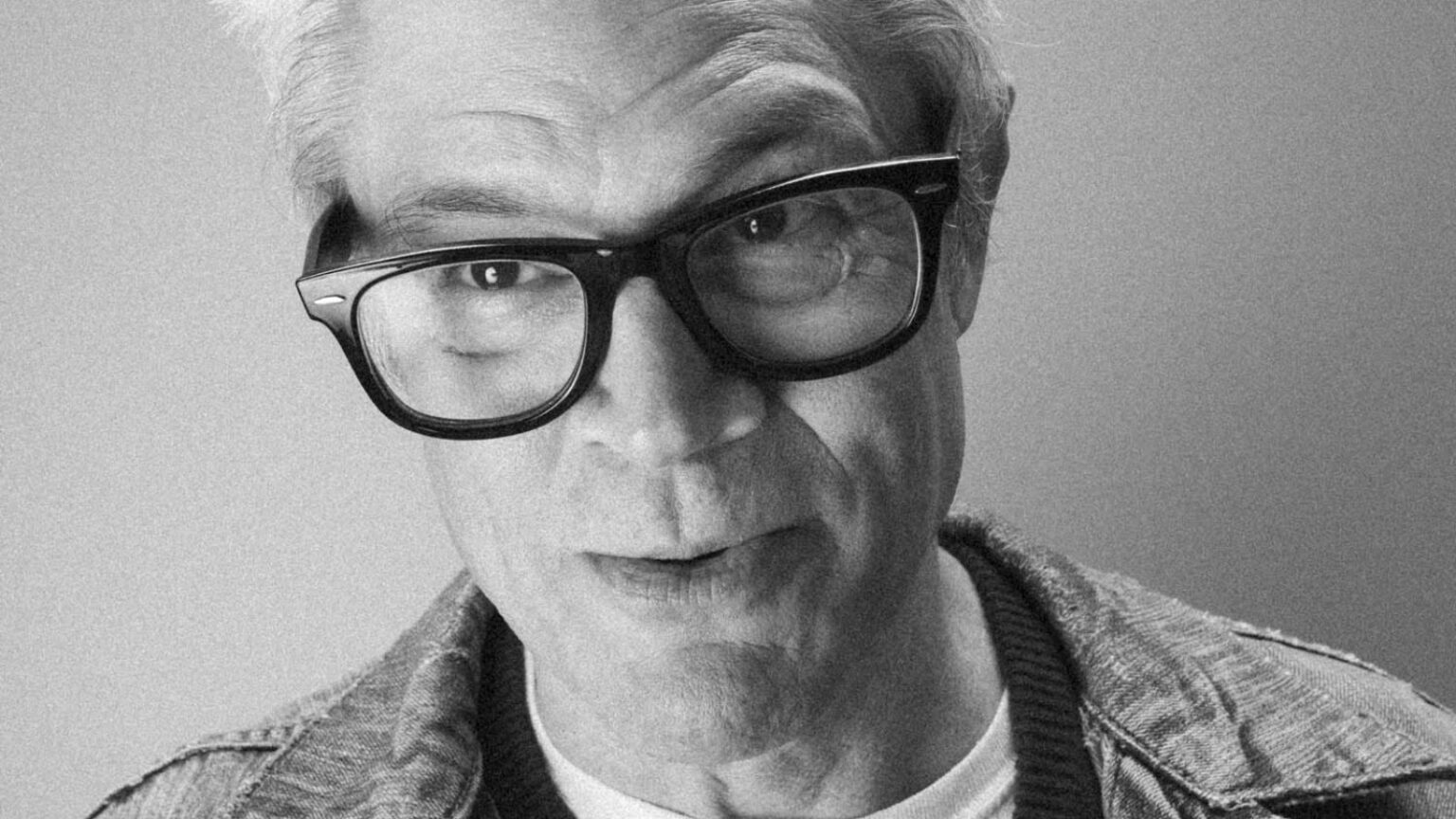
n a recent Tuesday afternoon, Johnny Knoxville stood on a concrete retaining wall and surveyed the expansive scene before him. There were smatterings of desert bloom. There were patches of rocky soil and scruffy brush. There were tantalizing pockets of cactuses. But mostly, there was a vertiginous drop-off, the steepest of slopes careening down to six-lane La Brea Avenue, where Los Angeles traffic zoomed by at an unholy clip. It was, in other words, a tempting locale in which to insert a human being into a barrel and roll said barrel down the hill. Or, better yet, a porta-potty! An inflatable sumo-wrestler suit? A human hamster wheel? The possibilities were endless, but—
“Face me a little more,” instructed a photographer, perhaps interrupting Knoxville’s reverie. “Let the sunlight come on your eyes.”
“Uh, you had me at ‘Cum on my eyes!’ ” Knoxville replied, turning away from the danger and flashing that slightly unhinged, crocodile grin.
It has been more than 25 years since Philip John Clapp met an unwitting America, showing up in a series of low-fi videos in which the aspiring actor (who had professionally taken the name of the Tennessee town where he grew up) did such things as tase himself, engulf himself in pepper spray, and shoot himself in the chest point-blank with a .38-caliber handgun wearing only the cheapest of bulletproof vests (“I could only afford the cheapest vest they made,” he’s been known to say). Filmed for Big Brother, the skateboarding magazine published by pornographer Larry Flynt, the videos arrived at the exact cultural moment when peak suburban ennui collided with the notion that fame simply required attention rather than talent. The subsequent MTV series Knoxville created with director Jeff Tremaine and producer Spike Jonze — plus a ragtag cast assembled largely from knuckleheads Knoxville knew from Big Brother — took its cues from Looney Tunes by way of Evel Knievel, with a smattering of dick jokes and scatological humor thrown in. They lobbed things at one another’s penises. They lit fireworks out of their buttholes. They cooked up vomit omelets. They faced a bull named Mr. Mean. And they found themselves launched, cannon-style (sometimes literally), into international fame and infamy (after only three seasons — and despite getting MTV’s then-best ratings — Jackass had so provoked the ire of party poopers like Sen. Joseph Lieberman that the show ended).
Editor’s picks
Since then, the Jackass empire has grown to include four feature-length “documentaries,” several scripted films, and more spin-offs than broken teeth (well, actually, who’s counting?). It has become the sort of cultural icon that both reflects and shapes the society around it. And despite shattered bones, grievous concussions, and aging bodies, it has persisted. This summer, the team will release the fifth, and allegedly final, Jackass movie. Now 55, and only a few days away from the start of filming, America’s elder statesman of sadism, our master of mayhem, looked back, with emotion, on Jackass’ quarter century.
Watch the video interview below
You’ve got a new Jackass movie coming out this summer. Do you think this is a good idea?
Well, it never was a good idea! It was just fun. You know how you have ideas that are terrible but are fun? This would be that.
I’ve read that the cast always wants to do a new movie, and you’re the one who says, “Now is the time.” And you never really know when that’s going to happen until it does.
I’ll say, the first movie was Jeff and Spike’s idea when I quit the TV show, and there was a lot of going back and forth between MTV and us. But on [movies] three and four, I just got a feeling. I can’t explain it. I’m constantly writing ideas and emailing them to myself, and at some point, I’m like, “I need to shoot these. I have to get it out of my system.”
Related Content
So at this point, you’ve written all the stunts for Jackass 5.
We got it about 80 percent figured out. We’ll figure out the rest when we get there. Sometimes we have rainy-day ideas, when we can’t shoot what we were going to shoot. One day it was just, “OK, go get Superglue!” We got a great bit just with me and the guys messing around with Superglue.
How do you decide who does which stunt?
Well, different guys have different specialties. [Chris] Pontius looks great naked. Dave England will get infuriated if anybody else does anything with the poo-poo. That’s his bag. I like blunt-force trauma, bulls. And if you need a little guy, we got Wee Man.
What’s your favorite animal to fuck with?
Bulls. One thousand percent.

SINNA NASSERI
Why?
Because they hate you. They absolutely hate you, and you’re going to get footage guaranteed. And I don’t have to do anything. All I have to do is stand in one spot and [then] move.
Let’s take stock a little bit, because I know not all of the footage you record ends up being released. Has anyone ever lost a finger in the filming of Jackass?
Not a whole finger, but maybe a tip. I don’t know. There’s been a lot of weird injuries.
What about a toe?
I mean, we’ve broken toes, but I don’t know if they’ve lost them.
An ear?
No. No. No losing the ear. No one cares about losing an ear or a toe!
A testicle?
Well, Dave England only has one. And we do have an idea around that that we’ve been trying to shoot for 15 years, and we’re trying to pull off our white whale for Jackass 5. I don’t want to give it away.
And he’s game?
He is. It’s just the fucking lawyers.
You had your eye pop out twice.
Were you trying to get to my one injury by asking [about] all the body parts? My littlest finger?
You broke your penis. It happens.
It happens.
“If you become comfortable with worst-case scenarios, you’re free.”
So that was a stunt where you were trying to back flip a motorcycle, and the handlebar landed in a very inopportune area [technically, he broke his urethra].
It broke its handlebars off in my gooch. And [motocross athlete] Travis Pastrana runs up and goes, “I have never seen that happen.” He’s a little excitable, that young man.
I want to go back to your eye. How far out did it get?
It didn’t hang, but it was bulging way out, and I’m like, “That doesn’t seem right.” So I poked it back in, and —
You poked it back in?
Yeah. Maybe not the right move.
How is it today?
It’s all right. I can see.
SINNA NASSERI
Is there a stunt you want to do that you think you’ll never get to do?
[Pauses.] I don’t want to get emotional. I can’t … [starts to tear up]. Goddamn, I hate when this happens.
I was going to ask when the last time you cried was, but—
No, it’s all the time these days.
Same.
I can’t mess around with bulls anymore.
And that makes you emotional.
Yeah, it’s terrible. I just want to play with them. I’m trying not to indulge in those thoughts.
Let’s get into that need to pull back from the thrill-seeking mindset. You’ve talked about doing therapy and being like, “I’ll talk about anything except this.”
[It’s] how I make my living. Don’t take food out of my children’s mouth.
But you have recently decided to start talking about it.
Yeah, a little. Yeah.
“The older you get, the less people want to see your penis. I know that.”
What led to that change?
Well, after all the concussions, I can’t do [those stunts] anymore.
Sixteen concussions.
I realize it’s not the healthiest thing. So I can look at that now, as opposed to not wanting to.
When you look at that thrill-seeking part of you, do you have a sense of where it comes from?
All your experiences and your childhood is how you end up how you are.
What are the experiences from your childhood that led you there? Your dad was a funny guy, but he wasn’t a daredevil.
He was funny. He was very funny, and he was either on or off. He’d be checked out, but then — snap — he’s right back on. He also liked the whiskey a little, so that wasn’t fun.
Would you say overall you had a happy childhood?
It was either moments of extreme happiness, or if dad was on the whiskey, it was … those times were tough, and you never knew when that was going to happen.
Your mom was a Southern Baptist Sunday-school teacher?
She did teach Sunday school some. I grew up in the Southern Baptist church, having to go to church and all that. You’re seven, eight, just having to go and sit there and be quiet and listen about burning in hell. It was a lot. I think that’s maybe one of the reasons I hate being told what to do so much.
When did you start doing pranks?
Well, my father was always doing pranks on his employees, and sometimes on us growing up. I’d be woken up by water in my face, and then he just starts going into a story or jokes. He just wanted me up. He would make Ex-Lax milkshakes for his employees and stage gunfights. He was hell on wheels.
Like, with real guns?
Well, he would give them blank guns and tell two guys at the Christmas party, “You guys get in a fight and start yelling and then take out the guns and start firing at each other.” The blanks.
So you come by this honestly.
Yeah. A lot of crazy characters in my childhood. They all worked for my father. I thought it was normal. I didn’t have any clue.
Were your parents strict at all?
OK, that’s a difficult question because my mom insisted I behave, but she only liked men who misbehaved. I got so many mixed signals. I mean, not just my father, for example, but all his friends; she just thought they were the sweetest boys. And they were a wild bunch. Just fights left and right, and [she’d go,] “Oh, they’re sweeeeeet!”
SINNA NASSERI
But Mom was tough. She would get angry and just black out, and there was no fear. Dad was a little more measured, although he got in his share of scraps, too. Before I was born, my mom was uptown driving with my sisters in the back — they were, like, five and seven — and there was a big, old-school Seventies gang fight going on with bats and chains, guys in a parking lot just beating the hell out of each other. And my mother drives into the middle of the gang fight in her old silver Cadillac, and she’s like, “Hey, you boys! You boys stop that right now! Stop acting ugly!” And all these dudes just stopped and walked away because no one had ever talked to them like that.
I love that story.
Yeah, she was tough. But sweet. But tough. She expected me to behave, but liked people who misbehaved.
I feel like you have perfectly walked that line, because you misbehave, but by all accounts are also a very nice, polite person.
Well, I don’t think the fellas would say that!
One of the reasons Jackass has had such longevity, though, is because it’s not just about doing dumb, dangerous shit. It’s about the camaraderie.
Don’t forget male nudity.
Well, actually, I was going to ask. You’ve got a bit of a mandate going on with that in the other films.
You had me at “man date.”
I assume you’ll keep that going in Jackass 5?
It just seems like there’s more penis in each film. Though the older you get, the less people want to see your penis. I’ll tell you that right now. When we were filming Jackass Forever, we were like, “God, there’s so much cock. We’re, like, halfway through. Let’s go easy on the cock the rest of the movie.” And then two days later, we’d be on set filming something, and we’re like, “Eh, it’s funnier if he’s naked.”
Going back to the early days of Jackass: You were basically casting your friends and people you knew from the skateboarding magazine Big Brother.
Yeah, Jeff was the editor of Big Brother. He’s now the director of Jackass, and also won Best Eyes in high school, Jeff did. Beautiful blue eyes. I was writing for the magazine, and a lot of the people from Jackass came from there. Pontius was constantly getting hired and fired by Jeff at Big Brother. And they did articles on Wee Man. Rick Kosick was the photographer for Big Brother. He shoots for us now. And it’s how we met Steve-O. And then we kind of teamed up with Ryan Dunn and Bam [Margera], because they were doing [stunt] videos.
“If you have a backup plan, you’re already backing out.”
Did you win any awards in high school?
Biggest flirt.
You played Danny Zuko in your high school’s production of Grease. You’d never been in a play before that?
No, and I can’t sing at all!
So what made you want to audition? Presumably competition was stiff, right?
No, no, there was very little competition at South Young High School. My T-birds were all so stoned the whole time. But I was friendly with the teacher. She came on later in the year and sometimes we’d go to bars after school, and we kind of … it happened that way.
How “friendly,” Mr. Biggest Flirt?
Uh … I was friendly.
Were you surprised when you got the part?
No, because I was so young and stupid. Not that I’m a genius now. But, actually, some of the people in the play could sing and play instruments. I had no idea that the people I went to school with could do these certain things. And it was a lot of fun and one of my most fond memories, even though I sucked.
A couple of years later you’d move to L.A. to try to be an actor. Was Grease the moment you were like, “OK, I’m going to give this a shot”?
No, no, no. It was before that. I was like 14-ish. My cousin gave me On the Road, and it blew my mind and made me want to get out.
Why acting in particular, though? Because there are other ways to get out of Knoxville, Tennessee.
Well, I knew that I wasn’t cut out to do a repetitive-type gig. I just couldn’t. And I felt like, “I’m going to get in trouble if I stay here.”
So luckily you came to L.A., and you didn’t get in any trouble at all.
Yeaaaaaaaah.
What did your parents say?
They were very supportive the whole time, but they thought I’d come out here to get it out of my system and I’d be back. But I couldn’t. And I had no backup plan, because I thought at the time, “If you have a backup plan, you’re already backing out.” So I’m like, “Yeah, I’m just going to be out here until something happens.”
Once things did start happening, they happened so fast. The first episode of Jackass aired in October of 2000, and within a matter of weeks, you were on the cover of Rolling Stone.
Yeah, that was wild. To go from working in a restaurant and two, three months later, you’re on the cover of Rolling Stone? It was a lot for an old cow-puncher like me.
You got our writer arrested.
Erik! Yeah. He liked it!
At what point did you realize, “My life forever is different now”?
I don’t want to sound kiss-ass, but going from waiting tables to being on the cover of Rolling Stone was pretty mind-shaking. And meeting [David] Letterman for the first time.
Did you have anxiety about—
Yes, I have anxiety.
How did you deal with it?
Honestly, back then, I dealt with my anxiety by whiskey and forward motion. By not dealing with it.
I’ve read that during the making of the second movie things were kind of going off the rails.
The second movie, that’s when everyone was at their worst. Very naughty. That was a couple of years before we put Steve-O away [in rehab]. A lot of booze, a lot of drugs, a lot of rambunctious behavior.
SINNA NASSERI
How did you reel it in?
I guess I had gotten most of it out of my system — not all of it, but most. By the time the third [movie] comes around, what am I? Forty?
When you started out, could you ever have imagined that you would be still doing it at that age?
We didn’t even think it was going to get on television. And it almost didn’t. It got shut down during the pilot, and we’re like, “We knew it. They’re not going to air this.”
How did it get shut down?
We were doing a prank at a hardware store in West Hollywood. And I put on an orange prison outfit and dirtied up my face and was handcuffed and ran in acting like I was an escaped convict, trying to get someone to help me saw my cuffs off. And the cops — three or four carloads of cops — showed up. A couple of our crew got arrested.
And the first policewoman who shows up on the scene, she jumps out but doesn’t put her car in park, and it runs into a telephone pole. I’m like, “Oh, now they’re really mad.” So MTV shut us down.
How did you get it going again?
I don’t know. The lawyers dealt with it. They’re like, “OK, you can start filming again.” So we thought, “OK, it might be on the air, but no one’s going to watch.” We were constantly surprised. We didn’t think anyone was going to go to the movie. So we’re very grateful, but always surprised.
What are you thinking when you wake up in the morning the day you’re going to do a big stunt?
By that time, I just want to be there doing it.
Because you want it to be over?
No, I just want to do it. I have to get it out of my system.
What’s the bigger rush — the adrenaline before or the adrenaline after?
I would say during — while getting stomped or while something is exploding on you. You’re a little euphoric afterwards.
What’s it like being inside a cannon?
Well, I had to sign the NDA. The only thing [about] getting shot out of a cannon is just the impact if you hit the water wrong or if you don’t hit the net. That’s a problem. That’s a forever problem.
You’ve personally done some of the most dangerous stuff that’s ever been in Jackass.
I got to where I liked it. I loved it. They had to have an intervention with me on the second film. On the weekends, I was just like, “Let’s go do something.” I’m just running into stop signs full speed.
“Catastrophic thinking, ruminating — my mind just fell off a cliff.”
What was the intervention like?
They said, “Hey, we’re going to do some edits tomorrow. Let’s be at the office.” And I walked in, and it was Jeff, Spike, I think Pontius was there, the producers. And they’re like, “We got to talk.” A lot of the guys cried in Jackass Number Two, but that’s the only time I cried.
You seem like you’re getting emotional talking about it now.
I’m the worst these days. It’s tears over silly things all the time.
What’s causing the emotion?
I don’t know. I love it. It’s a big part of me. When we’re filming, I’m just obsessed.
You’re talking like it’s in the past, but you’re about to start again.
And it’s going to be fun. Well, for me. Not for the guys. It’s going to be terrible for them [laughs].
Do you guys have a safe word?
No! Wee Man’s safe word is “Jeff! Jeff! Jeff!” He always gets very angry at Jeff, the director. Yeah, there’s no safe words.
Do you ever feel like you’ve taken it too far?
I don’t know what that is, honestly. I don’t know if Jeff and I know what that is. I ask my wife, Emily, a lot. She’s good at helping me with that.
There’s been a lot of tragedy with this cast — addictions, Ryan Dunn dying in a drunk-driving accident. It’s so clear that you all love one another. How do you balance that responsibility to people you really care about, but who you’re also putting into situations that are—
Funny.
But also potentially life-altering.
Well, we all … Was I always the best role model? No. I don’t know if any of us were. As far as being responsible, we all have to be responsible for our own actions and be able to recognize and accept that. You do what you want to do.
And people can say no.
Yeah, but if they say no, they’re going to end up doing it.
Why? How?
Because if they’re really scared to do it, that’s like, you’re practically raising your hand to do it. Jeff is going to figure out a way. He’s going to take you aside and be your buddy, or he’s going to take you aside and give you a stern talking to, or he’ll come at you, like, five or six different ways.
Let’s talk about bulls again. The bull tossing you in the last movie — that’s hard footage to watch. That concussion was really hard to recover from, right?
Yeah. That took five or six months to recover.
SINNA NASSERI
You were having delusions, real traumatic brain-injury stuff.
Yeah, yeah. It was catastrophic thinking, ruminating, the whole world was closing in. I have a lot of sympathy for myself then, because your brain’s feeding you terrible information. My mind just turned against me over five or six months. People would tell me, “Your brain is playing tricks on you.” I’m like, “No, no, it’s happening.” But nothing is happening. My mind just fell off a cliff.
But then I got on medicine, and it started turning around. I started feeling like myself again. And then, you slowly come out of it. But I can remember exactly how I felt then and everything that was happening in my head. It was frightening.
It must have been really hard on your kids, your family.
Hard on anyone around me.
You’ve said before that your son kind of has the Jackass gene.
He’s funny and excitable, but cares about his well-being a little more than I did. Which is wonderful. He just passed his driver’s license test! I drove him to it this morning. God, I was more nervous when he was taking the driving part of the exam than I am in front of a bull.
Really?
Yeah, because he wants it so bad, right? I’m the worst driver, but I was helping him this morning.
Did they recognize you?
They recognized me because I go to that same DMV to get my license. Sometimes they’ll let me dress up as a priest, or last time, I had my shirt off. So I like the people there, and I’m really happy he passed.
Is he out driving right now?
No, he’s in school right now, but he’s going to be driving tonight. My oldest daughter, Madison, she’s a realtor in Austin. Our real last name’s Clapp, so I got a billboard for her in Austin that says “The Clapp that you want,” and it has her number for real estate. I’m pretty happy about those two things.
Is it a surprise?
No, she sent me a picture of her standing in front of the billboard as it was going up. So, yeah, I’m really proud of my kids. And Arlo Bear [Knoxville’s third child], she’s really good at painting.
You produced a documentary about a coal-mining clan called The Wild and Wonderful Whites of West Virginia, and you’ve talked about doing one on David Allan Coe. Is that happening?
Well, I don’t know. If you can get the money for us, it might happen. He’s just a wild figure — and not just [when it comes to] country music. He was incarcerated most of the time from nine years old to [28], gets out, becomes a [member] of the outlaw motorcycle gang, got into polygamy, had nine wives at one time, recorded some very, very naughty songs — like, offensive. And one of the best things he did is in the Eighties, he’s like, “You know what? I’m going to become a magician.” And he started doing magic and ventriloquism. I have a great picture of him all in leather with a big belt — just a big bear of a man — with his little ventriloquist doll. Like, the scariest ventriloquist you’ve ever seen.
You’re doing a Jackass podcast. You’ve got Fear Factor going on.
I’m having a lot of fun shooting Fear Factor because it’s a real prick gift I have, and I like sharing it with the Fear Factor contestants.
But I really bonded with the cast, because some of them are really terrified of things, and I’m just trying to help them through it a little. I didn’t think I was going to be as big of a help on Fear Factor as I ended up being. I will be of no help to the Jackass guys.
“These days, it’s tears over silly things all the time.”
So is everyone raring to go on Jackass 5?
They are until they get on the set. Then it’s like, “Oh, no. What are we doing?” But by that time, it’s too late [laughs].
Bam was fired during the filming of Jackass Forever for violating a clause in his contract around drug use. What’s going on with him?
I hear he’s doing a lot better and that makes me happy, because we’ve been through so much together and I love him. I’m happy he’s doing well.
When you started out, did you feel invincible?
No, I felt pretty vincible. Didn’t really feel bulletproof, but I didn’t really care. You just have to become comfortable with the worst-case scenarios. It’s not the healthiest thing, but if you become comfortable with the worst-case scenarios, you’re kind of free.
But fear is a helpful instinct.
Yeah. Yeah, it wasn’t that fear was not present. It’s just, you can just kind of metabolize it. Put it away.
You said in your Rolling Stone cover story that you did not think Jackass would last that long. But you’re 25 years in now.
This will be the last one. This is the natural place to end. So it’s going to be absolutely awful.
What do you do with yourself when Jackass is over?
Same thing I do day-to-day, be a dad, play with our crazy dog, hang out with my wife, work a little.
Is there anything I haven’t asked you that I should have, Johnny?
I think there were some things you asked me that you should not have! Naw, I’m just kidding!
I hope everything goes really well with Jackass 5. Or not? What should we hope for?
You hope it doesn’t go well at all! Should be a fucking train wreck. That’s what you should hope for. I think we designed it that way.
ALEX MORRIS is a senior writer at Rolling Stone covering pop culture and politics. She wrote the Paul Mescal cover story in October.
Production Credits
Photographic assistance: THOMAS PATTON. Video director of photography: GRANT BELL. Camera operator: CONNOR BELL. Audio: GRAY THOMAS-SOWERS. Production Assistant: TONY ASHLEY.
Editor: RYAN JEFFREY