
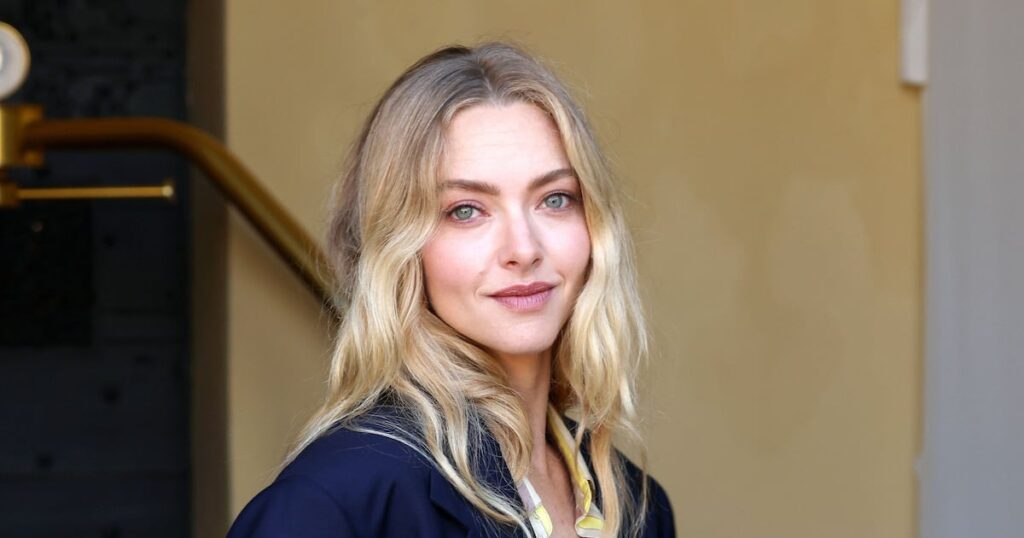
“I said to my husband: ‘Maybe we could look into some land outside of Dublin’,” Amanda Seyfried tells me. “Because we both love Ireland so much.”
Okay. Well, I’m sure she’d be very welcome. Plenty of movie stars have spent time in the country. Has she been there recently?
“Not since, umm, 2018. The pandemic ruined everything for travel. It’s the only way I could see myself not being an American in America. Standing my ground and being like: ‘You can’t f**king ruin this: my home.’ If I could just get all the animals on a boat. Do you think that would be possible … to Ireland?”
This is really not my area of expertise. I imagine import regulations might complicate the transportation of a menagerie from her farm in upstate New York to any part of Ireland. But who knows?
Speaking to the charming Seyfried, currently promoting Mona Fastvold’s extraordinary The Testament of Ann Lee, is quite an adventure. Perched on a chair at the centre of a Soho hotel room, chewing energetically on a croissant, she takes the conversation wherever some inner wind dictates. How did we get to her becoming a latter-day Noah? I’m not entirely sure. We were chatting about the Trojan work she and her husband, fellow actor Thomas Sadoski, do for War Child, the child protection charity, and somehow drifted into global despair.
[ The Testament of Ann Lee: Oscar snub for steely Amanda Seyfried is a mysteryOpens in new window ]
“My poor husband has had to take a back seat in his career for me to be able to go off and do Ann Lee,” she says. “It’s always going to be a struggle with two artists. I am not working right now. When I get back from Berlin he’s going to be able to go back out on the road a little bit and do the things he loves to do. It’s just like … how the world is going. I just don’t know.”
Anyway, we will get back to that, but it is worth having a good chew at The Testament of Ann Lee. Compact and wide-eyed, Seyfried, now 40, made her name with hit comedies and mainstream musicals. Though she already had a healthy juvenile career, Mean Girls, from 2004, counted as a major breakthrough.
As I enter, Seyfried is discussing shoe options for the London premiere that night. Looks like rain.
“I mean, anything is better than what I’m experiencing on the farm. It’s like zero degrees when we wake up,” she says.
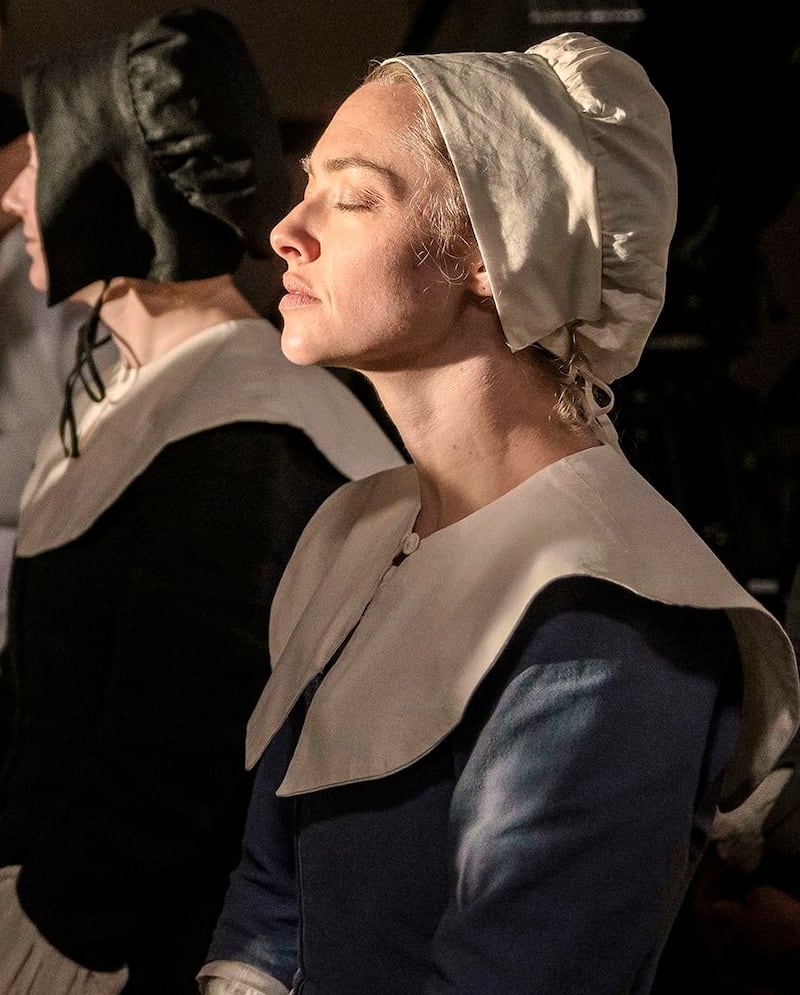 Amanda Seyfried in The Testement of Anne Lee. Photograph: Searchlight Pictures
Right, the farm. So, she shares the rural idyll with husband, two children and various rescued ducks, chickens, goats, cats and horses.
“It’s nature. You have space and the energy coming from animals. The needs of animals really simplify things.”
That must have helped her connect with Ann Lee. The film follows the protagonist, who lived from 1736 to 1784, as she and her followers farm land in the same state where Seyfried now tends her distressed goats.
“Yeah, anything like that that can help,” she says, before going on to mention one of her favourite poets. “But I didn’t really think about that in connection to her. My affinity for all things that Mary Oliver has created made it easier for me to connect with someone like Ann Lee, who’s just so pure. The portrayal that Mona wrote is just such a pure person who doesn’t want or need for anything. She is this faithful, devoted young woman who had some trauma and then comes out the other end, believing she’s the second coming.”
I was lucky enough to see the film on its world premiere at the Venice Film Festival. This was 12 months after Brady Corbet’s The Brutalist – which Fastvold co-wrote with the director, also her romantic partner – created a sensation in the same venue. There are connections. But The Testament of Ann Lee is a significantly more off-centre experience.
[ This century’s The Godfather: How Brady Corbet made the staggering film The BrutalistOpens in new window ]
“I think the best moviegoing experiences usually spotlight the abstract nature of humanity,” she says. “We’re all f**king weird, you know. You don’t want someone to barge into your apartment or house when you’re not expecting it. They don’t know what they’re going to find.”
Sorry? What now?
“We are a weird species. We are a creative species. We are an incredibly complex species. Those stories don’t have to be so epic or so dramatic to be interesting. This happens to be pretty epic. But that’s because Mona very deliberately wanted to honour her life with an epic tale. Like what like most men get.”
Good point. Where is the female epic on a par with Ben Hur or Lawrence of Arabia or Dr Zhivago? The Testament of Ann Lee is, among other thing, a celebration of female charisma on a grand scale. Aspects of the Shaker aesthetic – notably their insistence on sexual abstinence – do not much register with contemporary thinking, but, in the film’s telling, this is a communal sect that respects female agency.
“That equality among gender and race, especially in 18th century, was hard to configure,” Seyfried says. “Yet she did it. People bought into it because they understood the power of that and wanted to be free within the society. And, now, we’re still going to vacillate on that ideal. There is so much fear – and fearmongering – in America right now. People are making decisions based on fear and not based on a bigger purpose of supporting each other, of loving thy neighbour. I mean, that’s literally in the Bible.”
Amanda Seyfried was born to a working-class family in Allentown, Pennsylvania in 1985. Her dad still works at a hospital. She began modelling at the age of eight – featuring in print commercials for apparel companies – and went on to study opera before securing a recurring role in the CBS soap opera As the World Turns. Speaking to the New Yorker recently, she (faintly chillingly) noted she entered the business in a “very, very pre-Me Too” era. Young female actors had little recourse if they were asked to do something uncomfortable.
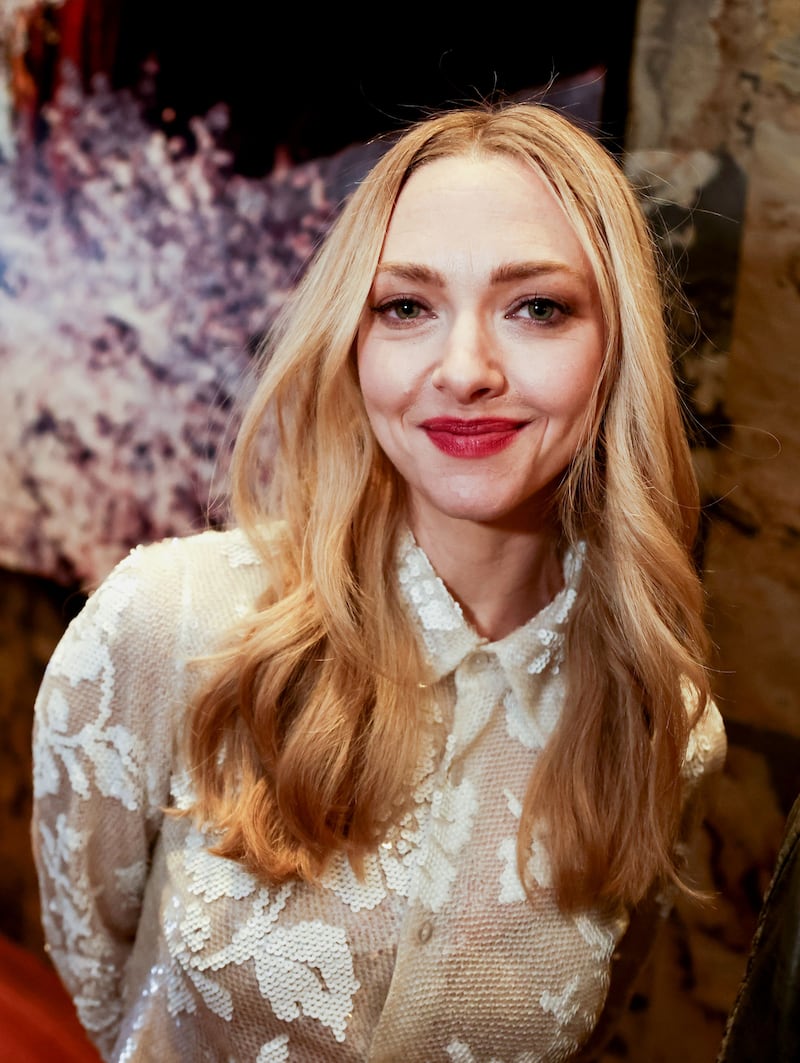 Amanda Seyfried at CinemaCon in Las Vegas, Nevada, last year. Photograph: Greg Doherty/Getty Images for Lionsgate
She remembers being sacked from a prominent TV role when still a teenager.
“It’s f**king awful,” she says. “I understood that I was in in a very adult business. But it doesn’t take away from the fact that I come home from school, I’m doing my homework, and my mom’s like: ‘You didn’t get the role. They’re not going to have you back.’ I already got the role and now they’re taking it away from me. That was hard. They wrote me off after three days of work. Okay, I wasn’t very good. I was very uncomfortable. I was too insecure, and that was partly because I was young.”
Does she have any advice for young people going into the industry now? No amount of chaperones can protect you from the sort of distress she describes above.
“I guess the practical advice is: it’s really hard not to take things personally,” she says. “It’s usually the furthest from personal. These decisions that get made between the casting directors and the directors, the studio heads, or network heads – or whoever you’re auditioning for – it’s rarely ever about you. That’s hard to say to a 15-year-old, but it is true. And the more hobbies you have, the better. I think hobbies have saved my life.”
I can’t pretend to know Amanda Seyfried, but, after 15 minutes in her eccentric company, “hobbies have saved my life” strikes me as an unbeatably characteristic comment. So what does she get up to when blizzards are battering the farmhouse in midwinter?
“I brought so many with me to London for the plane ride,” she says. “I’m making hanging baskets right now. I have wax, thread and floral wire and glue. And I am a massive crocheter. I make hats and sweaters. I knit scarves, and you name it. Embroidery. I make paper-star garlands and origami. It fills me with so much excitement. I am so inspired by colour and fabric and textiles. It’s my life.”
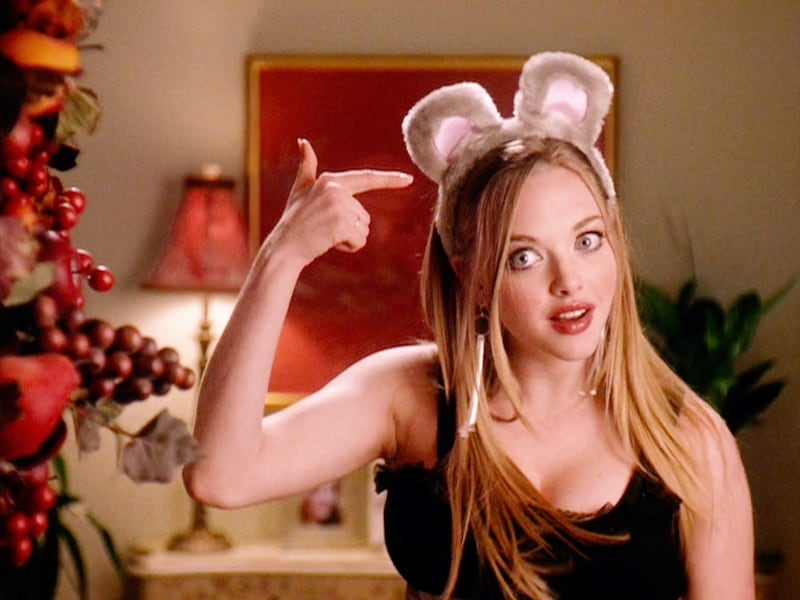 Amanda Seyfried in Mean Girls
At any rate, with the help of her hobbies, Seyfried looks to have done a good job of managing a diverse career. Early success in Mean Girls and Mamma Mia! could have wedged her in a stereotype. She has the sort of airy energy that suits light comedy. But she made a point of taking unlikely swerves.
“I think it’s always scary when you jump into a different genre,” she says. “In the beginning, I remember doing the movie called Chloe by Atom Egoyan, and knowing that was kind of a risk.”
[ Oscar nominee Rose Byrne: ‘When I go through passport control in Ireland they say welcome home’Opens in new window ]
This was 2009. Few did, indeed, expect her to appear in an erotic thriller with Liam Neeson and Julianne Moore. The film was not an enormous success, but she had put down a marker. She wasn’t just the teen queen or the song-and-dance girl.
“Yes, people weren’t expecting that,” she says. “And then I really soon realised that the less people are expecting, the easier it will be to disappear into the roles. I just want the audience to go on the ride. That’s my job. And sometimes people play the same role for too long. And I think it gets trickier. I’m also lucky that I didn’t get stuck on a TV show. You meet a lot of people who get stuck on TV shows that keep going and they’re contracted.”
There is a sense of irrepressible energy to Seyfried. Her head is jagging back and forth. She is curling up on the seat. This is someone who likes to keep herself on the move.
“I’m so busy philanthropy-wise,” she says.“I’m always getting involved in something new. Things are dire in the States. So, you do what you can with the money you have, and the access you have. And, obviously, we want to teach our kids that the more you have, the more you give. I use my time and energy volunteering for lobbyist groups to get more women in office. And there’s just so much to be done.”
[ ‘I share this with my daughter’: Jessie Buckley wins best actress at 2026 BaftasOpens in new window ]
I don’t think she is serious about pointing the ark towards Ireland. It sounds as if she has an agreeable life on the other side of the Atlantic. With her baskets and her activism and her animal companions.
“When I’m at home and the kids go to school, I sit on my heating pad in the window box,” she says. “I watch the deer come in, around back by the bird house, and I hear the chickens and the peacocks. And it’s like heaven on Earth.”
The Testament of Ann Lee is out now