
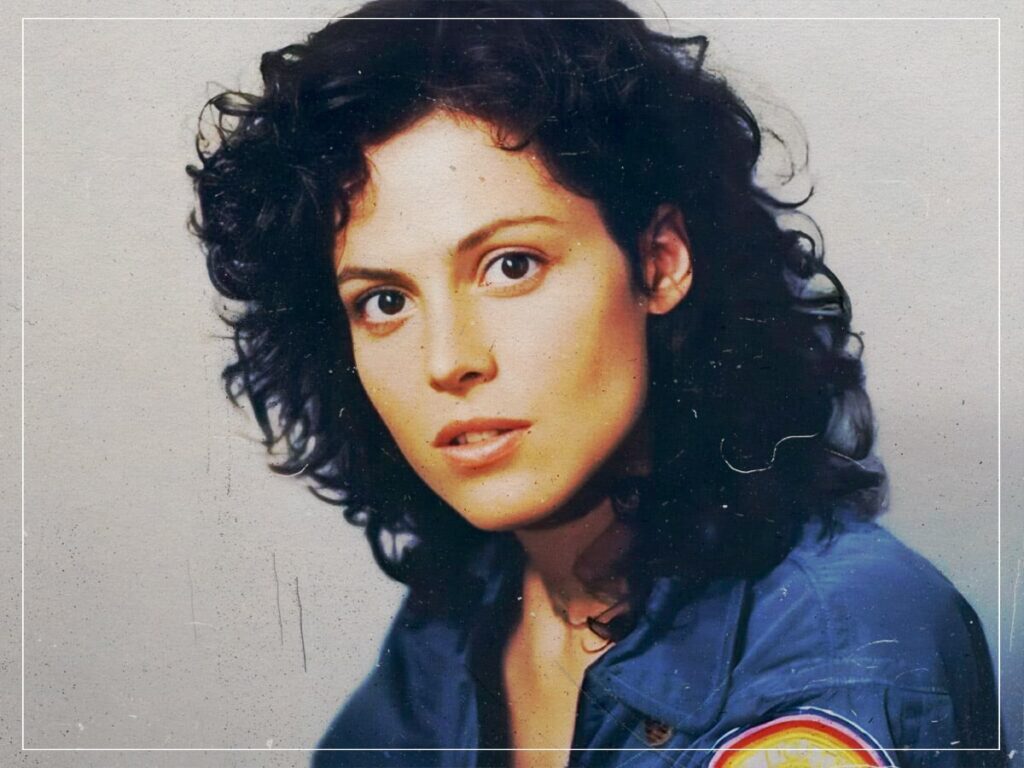
(Credits: Far Out / Alamy)
Sun 1 March 2026 4:30, UK
When the great history of science fiction at the movies is finally written, there will be an entire chapter dedicated to Sigourney Weaver, whose impact on the genre, from Ghostbusters to Avatar to her upcoming appearance in The Mandalorian and Grogu, has been undeniable.
As Ellen Ripley, the protagonist of Ridley Scott’s Alien, she became one of the first leading ladies of the genre, a role which evolved into a full-blown action hero (and I use that word specifically) with James Cameron’s Aliens seven years later, but one sci-fi movie on Weaver’s CV that’s easy to overlook is 2015’s Chappie.
Directed by Neill Blomkamp, the movie serves as the finale of an unofficial trilogy also including District 9 and Elysium. It’s about a super-intelligent law enforcement robot (voiced by Sharlto Copley) who falls into the hands of a group of gangsters, and finds Weaver plays Michelle Bradley, the CEO of the company that made Chappie.
In spite of its heritage and strong cast, with the film also featuring Hugh Jackman, Dev Patel, and the band Die Antwoord, everything about Chappie was a disappointment. Critically and financially, it didn’t stack up to Blomkamp’s previous efforts, and reviewers felt that the South African filmmaker had finally reached the end of the road. The movie was full of big ideas, but none of them reached their potential; at least Blomkamp had some support from within his own ranks.
During a panel event at New York Comic Con, Weaver spoke very highly of the director, saying that she enjoyed her time on Chappie so much that she had considered returning to the Alien franchise with Blomkamp helming a new instalment. That never happened, of course, with the former’s low scores a potential reason, but this sparked a passionate defence of the movie from its star, who believes that critics don’t know what they’re doing when it comes to sci-fi.
“They were still, and maybe they still are, evaluating science-fiction films based on their special effects,” she said. “Chappie’s just a real story about a robot who wants to be a real boy like Pinocchio. And so they completely misunderstood it and, I think, underestimated it.”
This is where I have to step in and defend my fellow movie nerds, as the special effects and the visuals were one of the few things that most reviewers liked about the movie, with some praising production designer Jules Cook for his work, while Time Out described its “stunning urban landscapes” in a generally positive review.
Most people who saw the film decried its barebones story and clunky themes, highlighting that the whole ‘robot who learns to be a human’ storyline has been done to death in cinema, wherein to compete with the likes of Wall-E and AI Artificial Intelligence, you have to do something special, which Chappie didn’t.
While you have to admire Weaver for standing up for her work and someone she admires, she’s picked entirely the wrong hill to die on, for the film didn’t get bad reviews because critics didn’t like how it looked, but because it was a bad movie.