
(Credits: Far Out / WSM radio / Decca Records)
Tue 3 March 2026 3:00, UK
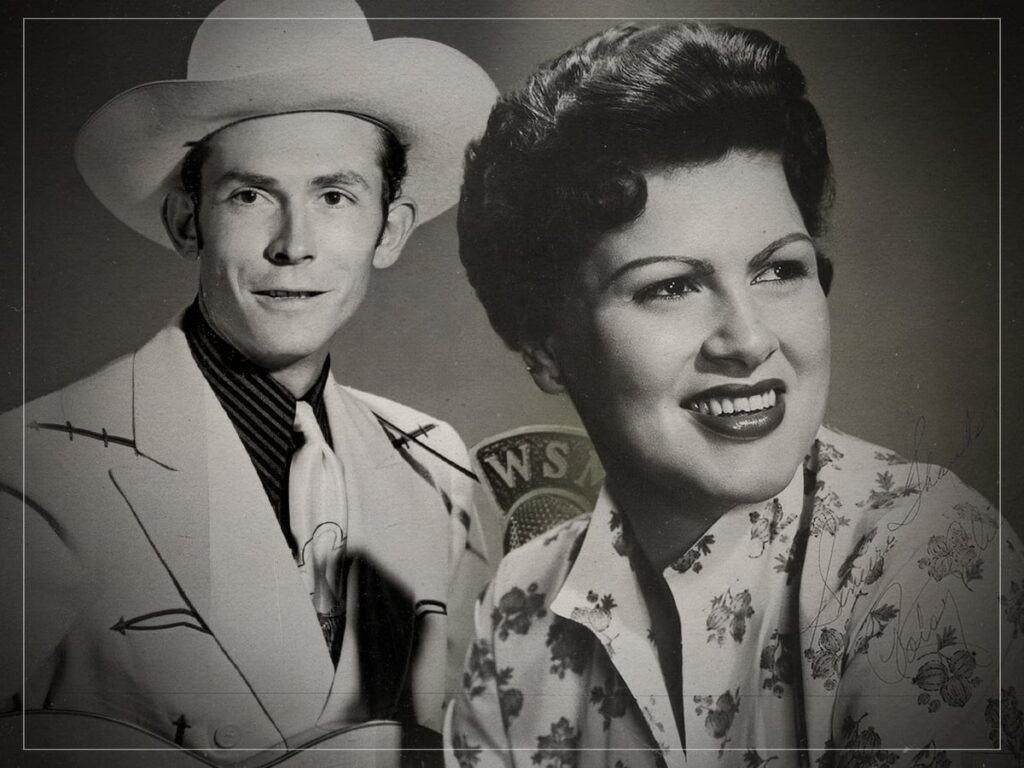
Five years ago, an original concert poster promoting a Hank Williams show at the Canton Memorial Auditorium in Ohio, New Year’s Day 1953, sold for $150,000, but the most interesting thing about this piece of memorabilia, as fans of the influential country legend will know, is that Hank never played the gig, dying en route to the venue at 29.
People who bought tickets to that concert in Canton still saw a show that night; however, as the other musicians booked for the New Year’s Jamboree took the stage, unaware at first that their headliner was gone, but once the word did reach them, it was determined that the show must go on.
A local radio DJ named Cliff Rodgers went up to the microphone to inform the gathered crowd that Williams had died, which generated a big laugh; it had to be a joke. But Rodgers was straight-faced and sombre, and the audience soon realised the gravity of the situation. That’s when the cowboy singer Harold Franklin ‘Hawkshaw’ Hawkins grabbed a guitar and led his band in a tribute to their friend, playing Hank’s song ‘I Saw the Light’, and encouraging the fans to join in.
Hawkins was well-suited to the situation as the 31-year-old singer was a World War II vet who’d fought in the Battle of the Bulge. He was accustomed to losing friends and staying calm in a horrible moment and was also a calming presence to the people who knew him well as one of the most famous figures on country radio in the 1950s, the host of the Jamboree show on West Virginia’s WWVA station, broadcast across much of the eastern US.
As one newspaper reported at the time, ‘Hawkshaw’ Hawkins was “one cowboy radio entertainer who can qualify as a true cowboy. Owning his own stable of western horses, the 6’4” singer trick rides, ropes, and is a fast manipulator of the big bullwhips. He is equally at home astride his favourite pony or standing before a microphone pouring out the songs which have made him famous”.
Despite his radio fame and a string of top ten country hits in the late ‘40s and early ‘50s, Hawkins had never quite reached the level of Hank Williams, and as a new generation of country stars emerged in the late ‘50s and into the ’60s, Hawkins saw a gradual decline in his own sales numbers. He was still admired by a lot of these younger artists, though, and remained a fixture on the touring circuit.
In the early winter of 1963, ten years after the death of Hank Williams, he learned about the death of another country music friend, a DJ named ‘Cactus’ Jack Call. Later, in March, he joined one of the biggest country stars of the moment, Patsy Cline, to perform at a memorial concert for Call in Kansas City. Hawkins was booked to fly home to Nashville on a commercial jet afterwards, but he gave his ticket away to another performer, Billy Walker, who was called away for an urgent matter, in turn, taking Walker’s place on a private plane that had been hired for Cline.
On March 5th, 1963, when Cline’s plane crashed during harsh weather over Camden, Tennessee, just 90 miles from its destination, everyone on board was killed, including Patsy, Hawkshaw, Lloyd ‘Cowboy’ Copas, and the pilot Randy Hughes. Hawkins’ wife, singer Jean Shepard, was pregnant at the time, and gave birth to their son, Harold Jr, a month afterwards.
Three days before his death, Hawkins’ latest single, ‘Lonesome 7-7203’, landed on the US country charts, and two weeks later, it became the first and only number-one song of his career, a fitting way for fans to say farewell to a great star of his day, a singer best remembered now as a coincidental footnote in the deaths of two of country’s all-time icons.