
March 8, 2026 — 5:00am
Save
You have reached your maximum number of saved items.
Remove items from your saved list to add more.
Save this article for later
Add articles to your saved list and come back to them anytime.
Got it
AAA
The arrest this week of pop star Britney Spears in California for drink-driving was a hark-back to the ’000s, albeit one with fewer geopolitical consequences than that other noughties hark-back we had this week: war waged in the Middle East.
The media treatment of Spears’ latest arrest was markedly different to the shaming and flaming that she received on a weekly basis nearly two decades ago, when her evident mental health struggles fed the bottom lines of weekly gossip magazines.
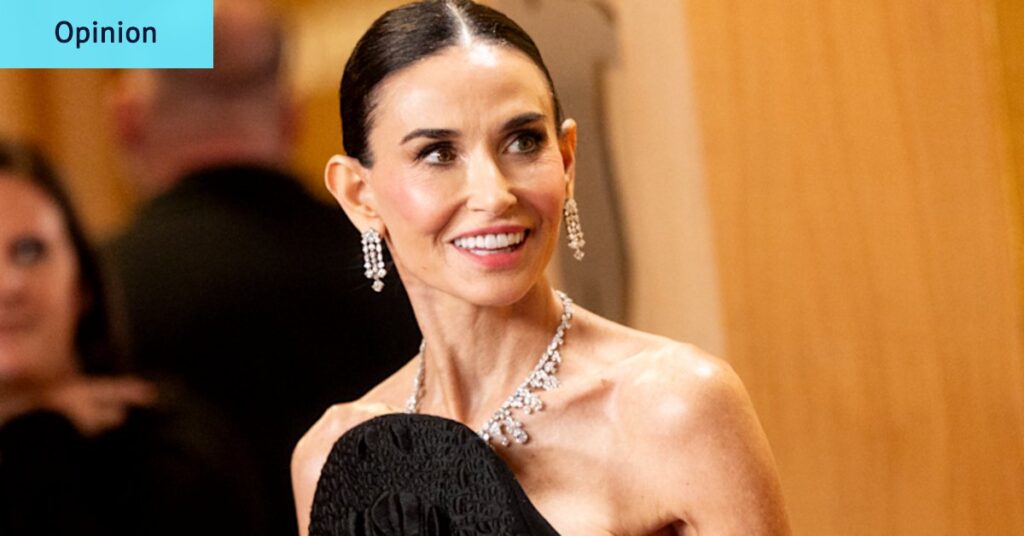
 Demi Moore attends the 32nd annual Actor Awards earlier this month. Emma McIntyre/FilmMagic
The very concept of weekly gossip magazines is now quaint, swallowed by countless Instagram reels, Reddit threads and TikTok accounts.
Way back then, Spears, along with other noughties starlets like Lindsay Lohan, Jessica Simpson and Paris Hilton, was flayed for her erratic, substance-fuelled behaviour. But also, and mostly, for her body.
It is difficult to even explain to anyone under the age of about 35, but back then women bought magazines which photographed and heavily policed the cellulite, fat rolls, body shape and the weight of famous women. If they were fat, they were shamed for it; if they responded to the fat-shaming by developing an eating disorder, they were shamed for that too.
Their bodies were scrutinised with a quasi-scientific fervour; dissected with the eye of a forensic pathologist. It was entertainment, and we considered it a trashy but basically harmless pastime.
This scrutiny was performed by (mostly) women in the media, and it was consumed, avidly, by women in the general public.
In 2007, Spears appeared at the MTV Video Music Awards in what was touted as a comeback appearance. The New York Post’s next day headline was “Lard and Clear”.
“The bulging belly she was flaunting was SO not hot!” wrote E! Online.
The editor of US Weekly, a high-circulation American gossip magazine, said of Spears that “in that ensemble, you just can’t have an ounce of anything extra. Many women wouldn’t eat for days if they were wearing that”.
Spears looked great (in my opinion), and anyway, who cares – she was there to sing.
Nearly 20 years, a new-wave generation of feminism, a body-positivity and a #metoo movement later, it is now considered inappropriate to comment on the bodies of female celebrities.
As Chantal Fernandez wrote in New York magazine, “Nitpicking other women’s bodies feels taboo and regressive”.
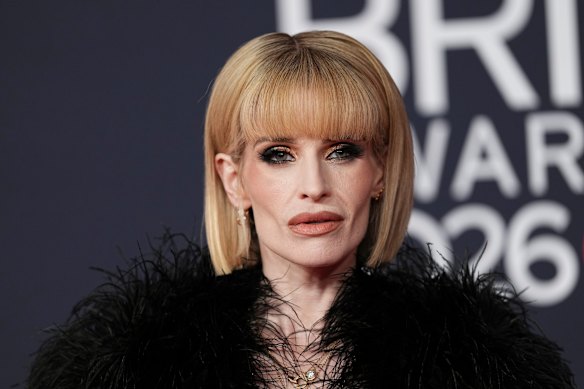 Kelly Osbourne at the Brit Awards in February.Scott A Garfitt/Invision/AP
And yet. Now we have developed a sort of inverse form of body scrutiny.
The Ozempic-fuelled return of extreme thinness on runways and red carpets is regarded with anxiety by many onlookers. However, we all know body-shaming is uncool, and the policing of women’s bodies is a retrograde feature of past media discourse. And yet, we cannot ignore what we see.
This week at the Actor Awards, actress Demi Moore walked the red carpet looking extremely thin, to the point where she looked ill. The headlines were about her “dramatic red carpet look” and “extreme new look”.
Meanwhile, Kelly Osbourne, the reality TV-star daughter of recently deceased rock idol Ozzy Osbourne, looked even more thin and sickly when she walked the red carpet at the Brit Awards.
When this was remarked upon by various online commentators, she defended herself in an emotional Instagram post, targeting the people “kicking me while I’m down, doubting my pain, spreading my struggles as gossip, and turning your back when I need support and love most”.
Osbourne said she was grieving the loss of her father, and it had impacted her health.
There has also been plenty of online tut-tutting at the thinness of the two stars of the Wicked movies, Cynthia Erivo and Ariana Grande, who reportedly represent “thinspiration” for some young women and girls with eating disorders.
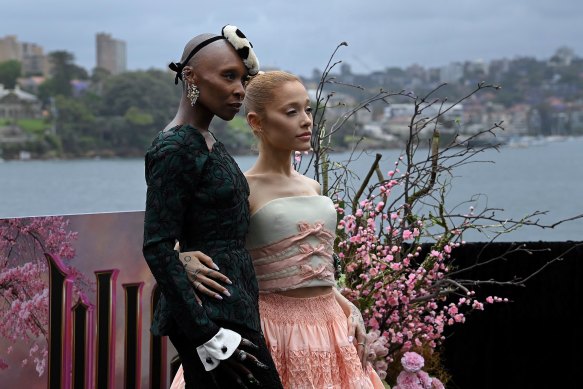 Cynthia Erivo and Ariana Grande at Mrs Macquarie’s Chair in November. Kate Geraghty
Grande has addressed the criticism by saying that “the body that you’ve been comparing my current body to was the unhealthiest version of my body”.
She said she was “at the lowest point of my life when I looked the way you consider ‘my healthy,’ but that, in fact, wasn’t ‘my healthy.’”
It seems ridiculous, not to mention banal, to be talking about the bodies of individual women so closely, particularly when there are far greater problems in the world, like the starvation of entire populations for geopolitical reasons. But it is interesting to debate what is going on at a wider cultural level.
Women’s bodies have always been policed, and in the case of more patriarchal societies, that policing is often done by men, or male authorities.
Last week, the Family Planning Association celebrated its 100th anniversary – a timely reminder that it is not so long ago that a woman needed her husband’s permission to be prescribed birth control, and that in NSW, abortion was only decriminalised seven years ago.
Women’s bodies have always been political – some commentators in the US link the return of an ultra-thin and traditionally feminine body ideal to the rise of MAGA.
There is even a political debate around the boutique-fitness fad of Pilates, which some say encourages women to become small and lean, as opposed to, say, weightlifting, which is more likely to make women strong and big.
What seems clear is that the body positivity, fat-positive fad of the early 2020s is over.
Related Article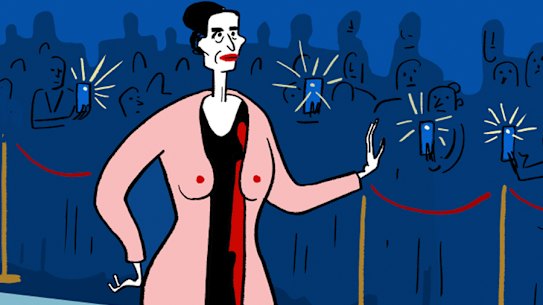
Fashion labels have now returned to thin-type for their runway shows, and the celebrities we look to for fashion inspiration or light entertainment, are shrinking before our eyes.
In a dubious measure of equality, young men and boys are being influenced by social media-driven trends like “looksmaxxing”, which encourage them to diet, work out and even smash their cheekbones (true!) to get the “ideal” bone structure. This is not what I would call progress.
The fact that it no longer feels appropriate to pick fault with women’s bodies probably does represent progress.
But the fact that many women – even and especially those with the most cultural power – still feel corralled into a certain type of body type, most likely shows we have a long way to go.
Get a weekly wrap of views that will challenge, champion and inform your own. Sign up for our Opinion newsletter.
Save
You have reached your maximum number of saved items.
Remove items from your saved list to add more.
From our partners