
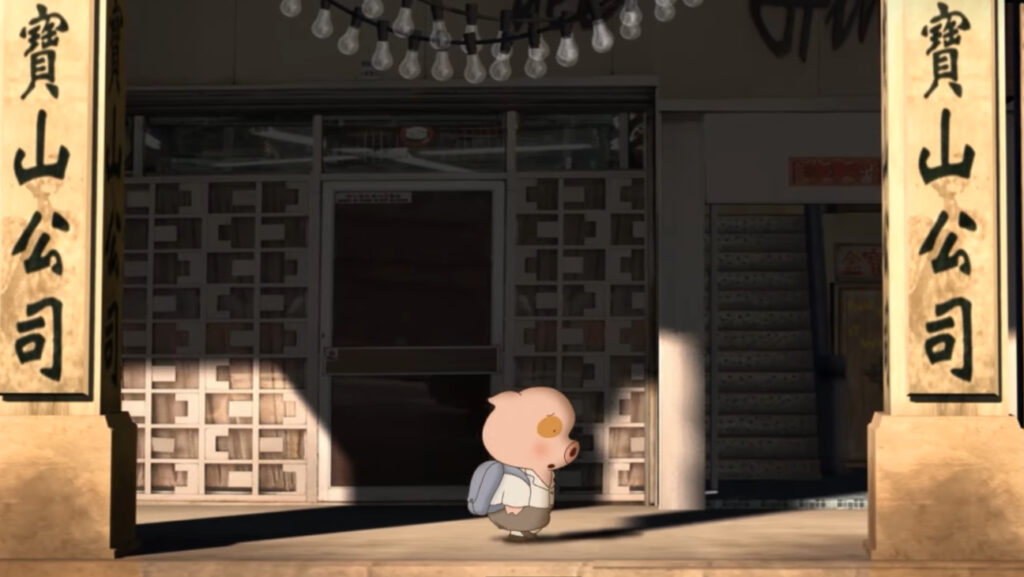
It’s been 25 years since a gutsy little pig from Hong Kong captured the imagination of the animation world and the hearts of audiences everywhere.
The release of the Toe Yuen-directed My Life as McDull (Bliss Pictures) in 2001 marked a watershed moment in Chinese-language animation, with the film about a young pig and the trials of his life going on to become the first from Hong Kong to win the Grand Prix at the Annecy International Animated Film Festival, while also picking up the Golden Horse Award for best animation. Its local box office take of around $2 million captured headlines, too, not least because the film held Harry Potter and the Philosopher’s Stone at bay — for a few weeks, at least.
That overperformance came in more innocent times for Chinese animation. The massive $2.2 billion collected globally by the Beijing Enlight Pictures-produced Ne Zha 2 last year has forever changed the landscape for Chinese animation. Across 2025, animated films took in $3.57 billion at the China box office — with Ne Zha 2 taking the lion’s share of what was a record share that accounted for around 50 per cent of total ticket sales in the country.
Just how big the business has become is being reflected this week at Hong Kong Filmart with a series of seminars and panels covering everything from the rising impact of AI on the genre, to how the films can now be marketed, given the cross-over potential of IP merchandising hook ups with established brands.
Samuel Choy produced My Life as McDull, and the six McDull films that followed, and says the changes to the Chinese animation industry since have been “so complicated it’s hard to put into just a few sentences.” He says My Life as McDull was among the first Asian movies to show that audiences were keen to explore the boundaries of animation.
“Our movie was a 100 per cent Hong Kong production which received overwhelming positive responses in terms of box office, critiques and major film awards,” he says. “The most frequent praise was that the film was ‘very unique and original’, setting it apart from mainstream American and Japanese animation.”
Filmart has rallied some heavy-hitters for its showcase “The Power of IP in Animation” panel on Thursday, putting the likes of Sai Abishek (Warner Bros. Discovery’s head of factual entertainment, lifestyle & kids – South Asia) and Daisy Shang (executive president Fantawild Group and chairwoman Fantawild Animation) on stage and promising they will “explore market trends and growth opportunities across the globe.”
The McDull team are providing an example of just how wide the revenue market can now be set — they’re currently developing a stage performance based on My Life as McDull, while also producing a spinoff animation from the McDull IP. The Excreman – On the Road, that is being showcased at Filmart, is based around a character “born after McDull overindulged at a Christmas party … a humble being made of poo” and Choy says it “reflects the everyday lives of ordinary characters, but in a darker, more unconventional way that explores humility from a different perspective.”
Another highlight at Filmart is likely to be “The Case Study of Another World – Global Co-investment and Collaboration of Hong Kong’s Animation” session on Thursday, with producer and scriptwriter Polly Yeung (Point Five Creations) digging into the success of that Hong Kong-produced animation, which also won at the Golden Horse Awards, and was featured in the Midnight Specials at the 2025 Annecy International Animation Film Festival.
Filmart has tapped into the industry uptick by reframing its IP Catalogue into a marketplace where filmmakers can explore collaborations – and the results reflect just how strong interest is, according to event organizers, the Hong Kong Trade Development Council.
“The online IP Catalogue serves as a strategic tool for transforming growing interest in animation into real business opportunities,” explains Candas Yeung, associate director of the service promotion department at the HKTDC. “Last year, over 10 percent of projects on the IP Catalogue were animation IPs, published by more than 80 exhibitors across Chinese mainland, Asia, and Europe. Animation became the second most-viewed content category, clearly demonstrating strong demand from buyers and distributors for animated content. This year, we are refining the IP Catalogue’s matchmaking capabilities to ensure these projects connect with the right partners who can bring compelling animation stories to audiences throughout Asia and beyond.”